“Everything was flat and dry and gray; a dusty wind blew from the south.”
— Opening description of the town of Anarene.

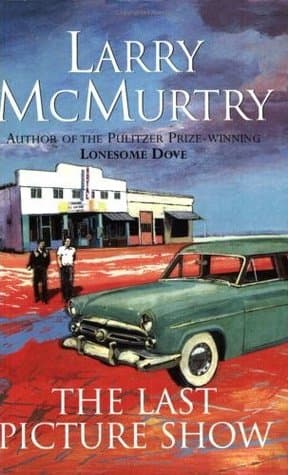
Larry McMurtry (1966)
Genre
Literary Fiction / Historical Fiction
Reading Time
280 min
Key Themes
See below
Sign in to track this book
In 1950s rural Texas, three teenagers navigate first love, forbidden desire, and the decline of their dying hometown as the last picture show closes.
The novel begins in Thalia, Texas, a desolate town in the early 1950s. The only entertainment left is the pool hall, the cafe, and the old picture show. Sonny Crawford and Duane Moore, best friends and football co-captains, are seniors with little hope for life outside Thalia. They spend their days cruising empty streets, playing pool, and awkwardly chasing girls. Sonny's home life is bleak, living with his distant father and sick mother. Their small-town life is marked by boredom, a sense of loss, and stagnation, reflecting the town's slow death. The boys focus on football and the promise of sex, often discussed with Sam the Lion, who owns the pool hall and picture show.
Sam the Lion, an aging, wise, and somewhat sad figure, is important in Sonny and Duane's lives. He owns the pool hall, picture show, and cafe, making him a center of the community. Sam often shares his thoughts and old stories with the boys, giving them a glimpse beyond Thalia, though his own life shows quiet acceptance. He represents a sense of dignity and a link to a more authentic Texas past that is quickly fading. His presence contrasts with the aimlessness of the younger generation, and his death is a major turning point, symbolizing the final decay of the town's spirit and its last meaningful past.
Sonny, feeling more and more isolated and wanting connection, starts a secret affair with Ruth Popper, the middle-aged wife of his high school football coach. Ruth is a quiet, overlooked woman, living a life of unfulfilled desires and emotional neglect. Their relationship begins slowly, driven by mutual loneliness and a desperate need for intimacy. For Sonny, it is a step into adulthood and a source of emotional comfort he lacks elsewhere. For Ruth, it is a brief return of passion and an escape from her dull life. Their affair is a secret, adding tension and risk to Sonny's already complicated life, and showing the widespread desperation for connection in Thalia.
Duane Moore is deeply involved with Jacy Farrow, the town's most beautiful girl, from a wealthier family. Their relationship has strong physical attraction, frequent fights, and Jacy's manipulative ways. Jacy, bored in Thalia, uses her beauty and social standing to control Duane and other boys. She constantly seeks excitement and attention, often leading Duane on only to push him away. Their relationship shows the social classes in the small town, with Duane's working-class background clashing with Jacy's privileged, but stifling, upbringing. Their unstable romance reflects the wider frustrations and limited choices for young people in Thalia.
In a desperate attempt for excitement and to lose their virginity, Sonny, Duane, and a few other boys, including Billy, a mentally challenged boy, drive to Mexico. The trip is a failure, marked by cheap tequila, tawdry prostitutes, and disappointment. Duane and Sonny have a big fight after Duane, drunk and angry, hurts Billy. The experience leaves them feeling emptier, showing that escape from Thalia's boredom is hard to find. This bad trip further strains the tense friendship between Sonny and Duane, revealing their frustrations and the limits of their small-town world, while also showing their immaturity.
Jacy Farrow, increasingly bored with Duane and her small-town life, actively seeks sexual experiences. She manipulates a rich oilman, Abilene, into taking her to a motel, hoping to lose her virginity, but he refuses, seeing her as too young. Later, at a pool party, she encourages a group of boys to undress her, a humiliating experience that leaves her emotionally hurt. These events show Jacy's desperate attempts to assert herself and find excitement, even if it means putting herself in vulnerable situations. Her experiences reflect the limited ways for self-discovery and the dangers in a society that objectifies young women, especially where opportunities are few.
Sam the Lion's death is a deep loss for Thalia and for Sonny and Duane, who saw him as a father figure and source of wisdom. His passing symbolizes the final decline of the town's spirit and the end of a way of life. After Sam's death, his will says the picture show must close, as he believes movies are no longer worth watching. The closing of the picture show, the last public entertainment, is a strong metaphor for the town's decay and its loss of connection to the wider world. It leaves the young people with even fewer options and reinforces the bleak future in Thalia.
After Sam the Lion's death and a period of growing aimlessness, Sonny impulsively marries Charlene Duggs, a quiet girl from his class. The marriage is driven more by a desire for stability and belonging than by real love. It is a quick decision, made without much thought, and quickly proves to be a mistake. Charlene is sweet but uninspiring, and Sonny soon realizes that marriage does not provide the escape or fulfillment he wanted. This decision further complicates Sonny's life and shows his struggle to find meaning in a town that offers so little. The marriage quickly becomes another burden, not a solution.
Duane, increasingly restless and unhappy with Thalia and his relationship with Jacy, decides to join the army. This choice is his attempt to break free from the stagnant town and find a future beyond its limited horizons. His departure is important, as it cuts his ties with Jacy and ends his close friendship with Sonny. Duane's leaving symbolizes young people leaving Thalia, seeking opportunities and a different life elsewhere, even if it means facing the uncertainties of military service. His departure leaves Sonny even more isolated in the dying town.
Billy, the gentle, mentally challenged boy who often cleans the pool hall, is accidentally hit and killed by a truck on the highway. His death is a tragic and meaningless event that further shows the bleakness and indifference of life in Thalia. Billy was an innocent figure, often a silent observer of the town's dramas, and his death affects Sonny deeply. It is another strong symbol of the loss of innocence and the widespread decay that haunts the town. For Sonny, Billy's death is a sad reminder of how fragile life is and how pointless their struggles are in a place that seems to be slowly destroying itself.
After his failed marriage to Charlene and Duane's departure, Sonny feels increasingly lost. He seeks comfort and stability by returning to Ruth Popper. Their affair restarts, marked by a renewed sense of shared loneliness and a desperate need for connection. For Sonny, Ruth represents a familiar intimacy and a refuge from the chaos of his young life. For Ruth, Sonny's return offers a brief break from her isolated existence. Their renewed relationship shows the repeating nature of their desires and the lasting power of their bond, even amid the town's decay. It suggests that despite their attempts to move on, they are drawn back to what is familiar and comforting.
In the novel's sad final scene, Sonny sits alone in the deserted, dusty picture show, which has been closed for some time. He thinks about his life, his friendships, his relationships, and the changes that have swept through Thalia. He thinks about Duane, Jacy, Sam the Lion, and Ruth Popper, recognizing their impact on him. The silence and emptiness of the old theater reflect the state of the town and his own feelings of loss and uncertainty. The "last picture show" itself symbolizes the end of an era, the fading of dreams, and the harsh reality of a future with little promise for those who remain in Thalia. Sonny's quiet thoughts capture the novel's themes of growing up amid decay and the bittersweet nature of memory.
The Protagonist
Sonny moves from boyish aimlessness to a more mature, though still uncertain, acceptance of Thalia's decay and his place within it, marked by a growing sense of responsibility and loss.
The Protagonist/Supporting
Duane's arc is defined by his restless desire for escape, culminating in his decisive departure from Thalia to join the military.
The Supporting/Antagonist
Jacy's arc moves from naive manipulation and a pursuit of sexual experience to a more jaded understanding of her limited options, though she ultimately finds a way to leave Thalia.
The Supporting
Ruth's arc shows a brief reawakening of passion and self-worth through her affair, only to return to her quiet, lonely existence, tempered by the memory of her connection with Sonny.
The Supporting
Sam's arc is largely static, serving as a wise anchor whose eventual death marks the definitive end of an era for Thalia.
The Supporting
Billy's arc is tragic and brief, serving as a symbol of lost innocence and the town's indifference to its most vulnerable.
The Supporting
Genevieve's arc is largely static, a consistent and pragmatic presence in the declining town.
The Supporting
Coach Popper remains largely unaware and unchanged, serving as a static representation of male indifference.
The Supporting
Charlene's arc is brief, serving as a catalyst for Sonny's realization that marriage isn't his immediate solution.
The novel clearly shows the decline of Thalia, a fictional Texas town. This theme appears through the closing of the picture show, the only remaining entertainment, and the general lack of economic and social options. Young people, especially Sonny and Duane, feel trapped by the town's stagnation; many eventually leave or accept a bleak future. The dust, empty streets, and crumbling buildings create an atmosphere of obsolescence and forgotten dreams, symbolizing the end of a way of life in post-World War II America. Sam the Lion's death and the picture show's closing directly highlight this theme, marking the definitive end of Thalia's cultural heart.
“Nothing ever changes in Thalia. Except the people.”
At its core, the novel is a sad coming-of-age story set against a background of decline. Sonny, Duane, and Jacy all deal with the move from adolescence to adulthood, marked by their first sexual experiences, the realization of life's harshness, and the disappointment that comes with maturity. Sonny's affair with Ruth Popper, Jacy's manipulative pursuit of sex, and the boys' bad trip to Mexico all contribute to their loss of innocence. The death of Billy, the mentally challenged boy, is a particularly stark and tragic symbol of this theme, representing the vulnerability of innocence in a world that often seems uncaring. The characters learn that adult life in Thalia offers few easy answers or real fulfillments.
“When you're a kid, you think you'll live forever. Then you grow up and you realize you won't.”
A strong sense of loneliness affects nearly every character in Thalia. Sonny feels isolated from his distant father and sick mother, and later, from his friends as they drift apart. Ruth Popper lives a life of deep emotional neglect from her husband, leading her to seek intimacy with Sonny. Even Jacy, despite her popularity, is very lonely and desperate for attention. The characters' sexual encounters are often driven more by a desperate need for connection than by real love. The barren landscape of Thalia reflects the emotional emptiness many characters feel, showing their longing for understanding and belonging in a desolate place.
“There was nothing to do in Thalia but drink beer and make love, and there was hardly anybody left to do either.”
Many characters in 'The Last Picture Show' dream of escaping Thalia, but these dreams often turn out to be false. Duane eventually leaves for the army, but his future is uncertain. Jacy manages to leave, but her journey is full of manipulation and emotional harm. Sonny, despite his attempts at marriage and his affair, stays rooted in the dying town, seemingly unable to break free. The boys' failed trip to Mexico, meant as an adventure and sexual experience, only results in disappointment and more conflict. This theme suggests that while physical escape is possible for some, the emotional and psychological scars of Thalia are harder to remove, and true escape from one's circumstances is a complex, often impossible, goal.
“It was just a town, but it was their town, and they couldn't get out of it.”
A central symbol of the town's dying culture and connection to a wider world.
The picture show, and its eventual closing, is the most prominent symbolic plot device. It represents the last vestiges of entertainment, imagination, and connection to the outside world in Thalia. Its decay mirrors the town's own decline, and its eventual closure after Sam the Lion's death signifies the definitive end of an era and the final severing of Thalia's ties to any vibrant culture. It serves as a physical location for the boys' youthful experiences and a powerful metaphor for lost dreams and the bleak future.
Gathering places that represent community, mentorship, and a fading past.
Like the picture show, Sam the Lion's pool hall and cafe are more than just locations; they are the social hubs of Thalia. They are places where the community gathers, where the boys receive life lessons from Sam, and where the town's gossip and dramas unfold. These establishments represent a sense of tradition, community, and mentorship that is slowly eroding. Their continued existence, even in a state of disrepair, initially offers a faint hope, but their eventual fate is tied to the town's overall decline.
The dusty, desolate environment reflecting the emotional barrenness of the town.
The harsh, dusty, and desolate Texas landscape is a pervasive plot device that acts as a mirror to the emotional and economic barrenness of Thalia. The endless, wind-swept plains and the lack of greenery contribute to a sense of isolation, stagnation, and hopelessness. This setting amplifies the characters' feelings of being trapped and their yearning for something more. The physical environment underscores the themes of decay and the limited prospects available to the inhabitants, making the town itself a character in the story.
A fleeting source of local pride and a temporary escape from Thalia's ennui.
High school football serves as a significant, albeit temporary, plot device. For Sonny and Duane, it's a source of identity, local pride, and a brief reprieve from the overwhelming boredom and lack of opportunity in Thalia. It offers a structured activity and a sense of purpose during their senior year. However, once the season ends, the boys are left with nothing, highlighting the superficiality of this 'escape' and the stark reality of their limited futures beyond the gridiron. It underscores the fleeting nature of youthful glory in a dying town.
“Everything was flat and dry and gray; a dusty wind blew from the south.”
— Opening description of the town of Anarene.
“Nothing ever changed in Anarene, except the seasons.”
— A recurring thought about the unchanging nature of the town.
“A lot of things had died in this part of the country, and been buried, and left their ghosts behind.”
— Reflecting on the decline of the town and its past.
“You can't go home again, they say, and maybe it's true.”
— A character contemplating the impossibility of returning to the past.
“The last picture show, they called it, and it was the last alright.”
— Referring to the closing of the local movie theater.
“If I'd known how much trouble you were gonna be, I'd have stayed in bed.”
— Sam the Lion to Duane after a mishap.
“A person has to take what comes. You can't spend your life wishing things were different.”
— Ruth Popper offering advice to Sonny.
“It was as if all the joy had drained out of him, leaving only the memory of it.”
— Describing Sonny's feelings after a significant loss.
“There wasn't much to do in Anarene, Texas, except to get into trouble.”
— A general observation about the limited opportunities in the town.
“The wind was always blowing, picking up dust and carrying it across the flat land.”
— Another atmospheric description of the constant wind.
“It was a good place to be young, if you didn't mind the boredom.”
— Reflecting on the contradictory nature of growing up in Anarene.
“Pretty soon you'll be wanting to get out of this town, just like everyone else.”
— A character predicting Sonny's eventual desire to leave Anarene.
“Life just goes on, whether you want it to or not.”
— Ruth Popper's stoic acceptance of life's continuous flow.
“He felt a sudden, sharp ache of loneliness, a feeling that had become familiar to him.”
— Sonny's recurring feeling of solitude.
Ready to see how well you understood this book? Take our interactive quiz with 10 questions.
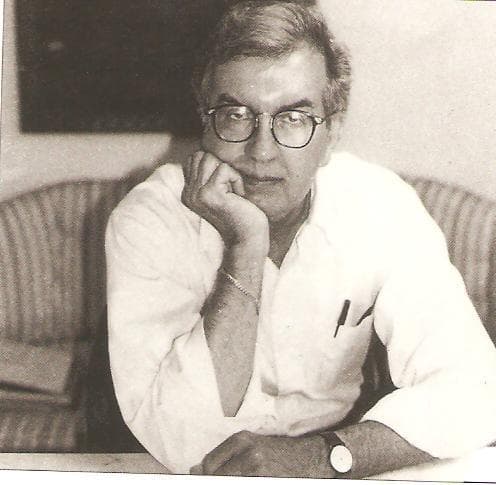
Larry Jeff McMurtry was an American novelist, essayist, prominent book collector, bookseller and screenwriter whose work was predominantly set in either the Old West or contemporary Texas. His novels included Horseman, Pass By (1962), The Last Picture Show (1966), and Terms of Endearment (1975), which were adapted into films. Films adapted from McMurtry's works earned 34 Oscar nominations.







