“The air, itself, was so pure that it seemed to enter the body with the exhilarating effect of a draught of wine.”
— Describing the pristine wilderness of the American frontier.

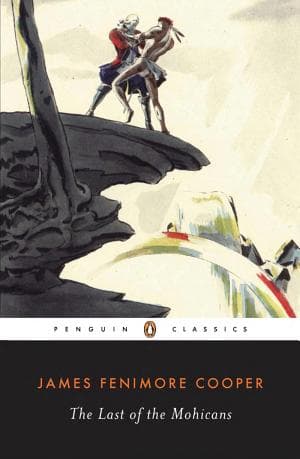
James Fenimore Cooper (1986)
Genre
Historical Fiction
Reading Time
500 min
Key Themes
See below
Sign in to track this book
During the French and Indian War, two English sisters, guided by the scout Hawk-eye and the last Mohicans, travel through a dangerous wilderness, pursued by a Huron warrior, as war threatens to end an old way of life.
In 1757, during the French and Indian War, Major Duncan Heyward escorts Colonel Munro's two daughters, Cora and Alice, from Fort Edward to their father at Fort William Henry. Their guide is Magua, a Huron Indian who claims loyalty to the British. Magua secretly hates Colonel Munro, who once publicly whipped him. Unbeknownst to Heyward and the sisters, Magua leads them into an ambush, planning to give them to the French and get his revenge. As they travel, the group becomes uneasy about Magua's strange route and behavior, signaling the danger they face.
Magua's betrayal becomes clear when he leads Heyward, Cora, and Alice into an ambush by his Huron warriors. As hope fades, the frontier scout, Natty Bumppo (Hawk-eye), and his two Mohican companions, the chief Chingachgook and his son Uncas, rescue them. Hawk-eye and the Mohicans, who had been tracking Magua, intervene just in time. They lead the group to a hidden cave behind a waterfall, a temporary safe place from the pursuing Hurons. This meeting begins the alliance that will guide the Munro sisters through the dangerous frontier.
After escaping Magua's ambush, Hawk-eye, the Mohicans, Heyward, Cora, and Alice continue their journey. They travel through the wilderness, facing constant threats from enemy patrols. They eventually reach Fort William Henry, which is under siege by French forces led by General Montcalm and his many Indian allies. The sisters are briefly reunited with their father, Colonel Munro, who looks aged and stressed by the siege. Their relief is short-lived, as the fort's situation is bad, with dwindling supplies and Montcalm's overwhelming forces. The brief rest shows the grim reality of their circumstances.
Colonel Munro, facing impossible odds, agrees to surrender Fort William Henry to General Montcalm under honorable terms, allowing the British garrison and civilians to retreat safely. However, as the British column marches out, Magua incites his Huron warriors to ignore the surrender terms. A brutal attack follows, with the Hurons attacking the retreating British soldiers and their families. Amid the chaos, Magua captures Cora and Alice Munro, along with Major Heyward and David Gamut, a singing master. Magua intends to take Cora as his wife and get further revenge on Colonel Munro; the others are his prisoners.
Hawk-eye, Chingachgook, and Uncas, having seen the attack and the sisters' recapture, immediately pursue Magua and his Huron group. Magua, expecting their pursuit, divides his captives. He takes Cora and David Gamut with one group, intending to bring Cora to his village. Alice and Major Heyward are taken by another group of Hurons. This division makes rescue harder, forcing Hawk-eye and his companions to choose which trail to follow first. The chase becomes a race against time, with the sisters' fate uncertain.
Following the trail of Alice and Heyward, Uncas, disguised as a Huron, enters the Huron village where they are held. He plans their escape. However, his true identity is discovered when a tattoo on his chest, a turtle, shows him to be the last chief of the Mohicans. His capture is a setback, but his noble manner and the recognition of his status earn him some respect, even among his enemies. This moment shows Uncas's leadership and the lasting power of his family heritage.
With Uncas captured, Hawk-eye and Chingachgook, helped by David Gamut's brave singing, plan to rescue Alice, Heyward, and Uncas from the Huron village. Gamut, pretending to be a harmless madman, distracts the warriors with his hymns, creating an opportunity for the others. Hawk-eye, disguised in Indian war paint, and Chingachgook expertly enter the village under cover of darkness. They free Alice, Heyward, and Uncas, escaping into the wilderness, leaving the Hurons in disarray. This daring rescue shows their teamwork and skill, but Cora's fate remains unknown.
Magua, still wanting Cora as his wife, takes her to a Delaware tribe village, seeking their council and hoping for their support. The Delawares, though generally neutral or allied with the British, follow old customs. Unbeknownst to Magua, Hawk-eye, Chingachgook, Uncas, Heyward, Alice, and Gamut also arrive at the Delaware village, having tracked Cora. They request an audience with Tamenund, the wise elder chief of the Delawares. The stage is set for a confrontation over Cora's destiny, where tribal laws and personal revenge meet.
Before Chief Tamenund, Magua formally presents his case for claiming Cora. Following old customs, Tamenund initially rules in Magua's favor, upsetting the British and Mohicans. However, Uncas steps forward and reveals the turtle tattoo on his chest, showing his royal lineage as the last of the Mohican chiefs, a family line that once held influence over the Delawares. Tamenund, recognizing the old symbol and Uncas's nobility, is moved. He reconsiders his judgment, allowing Uncas and his allies to leave with Cora, defying Magua and upholding the old ties between the Mohicans and Delawares.
Enraged by Tamenund's decision, Magua gathers his remaining Huron warriors and attacks the retreating Mohican and British party. A fierce battle happens in the wilderness. During the fight, Uncas defends Cora against Magua and his men, but Magua's knife kills him. Cora, rather than surrender to Magua, chooses to fall to her death from a cliff, or is killed by a Huron warrior, after Uncas's death. Hawk-eye and Chingachgook pursue Magua. Hawk-eye, with a precise shot, kills Magua, who falls from the same cliff, ending his terror but not before the loss of Uncas and Cora.
After the final, devastating fight, the survivors mourn the deaths of Uncas and Cora. Colonel Munro is heartbroken by his daughter's loss. Chingachgook, the last living Mohican, grieves his son, Uncas, marking the end of their tribe. Hawk-eye, affected by his friend's loss, offers condolences to Chingachgook. The scene is full of sorrow and thought about the costs of war and the vanishing way of life for the native tribes. The future of the frontier, now without the 'last of the Mohicans,' is uncertain for all.
The Protagonist
Hawk-eye remains largely steadfast in his principles, but his experiences reinforce his belief in the inherent nobility of the Mohicans and the destructive nature of unchecked human conflict.
The Protagonist
Uncas's arc is one of tragic heroism, culminating in his valiant death defending Cora, signifying the end of his revered lineage.
The Supporting
Chingachgook endures the ultimate tragedy of losing his only son, becoming the literal 'last of the Mohicans,' a symbol of his tribe's extinction.
The Protagonist
Cora's arc is one of increasing resilience and self-sacrifice, culminating in her tragic death as she chooses death over dishonor.
The Supporting
Alice endures severe trauma but is ultimately rescued, finding love and safety with Major Heyward.
The Supporting
Heyward's arc involves a gradual enlightenment about the realities of frontier life and warfare, moving from conventional military thinking to a pragmatic appreciation of wilderness skills.
The Antagonist
Magua's arc is consistently one of escalating vengeance and cruelty, culminating in his death as he pursues his final acts of revenge.
The Supporting
Munro's arc is one of suffering and loss, as he faces military defeat and the ultimate tragedy of losing his daughter, Cora.
The Supporting
Gamut largely remains consistent in his character, serving as a source of comic relief and unexpected aid through his devotion to music.
The novel shows the contrast between European colonial society (British and French) and various Native American cultures (Mohican, Huron, Delaware). It explores different values, laws, and understandings of land, war, and honor. Hawk-eye, as a 'man without a cross,' lives between these two worlds. The attack at Fort William Henry, where European rules of war are ignored by Native American allies, is an example of this theme. The book also shows divisions within Native American tribes, like the Mohicans against the Hurons.
“''I am a man without a cross... I have no tribe, and I don't want one. I am a white man, and I can shoot a rifle better than any redskin, but I love the woods and the ways of the redskins better than the towns and the ways of the palefaces.''”
Cooper romanticizes the American wilderness as a place of moral purity, freedom, and spiritual connection, separate from the problems of European civilization. Hawk-eye and the Mohicans live in harmony with nature, using its resources and respecting its laws. The advance of European settlers, driven by conquest and material gain, harms both the environment and the indigenous way of life. The forests are a backdrop for beauty and brutal conflict, showing nature's indifference to human struggles and its eventual control.
“''The whole district is a garden of paradise! What a pity that it should be so soon swept away!''”
The novel explores racial identity and prejudice through interactions between white and Native American characters. While Cooper often idealizes Uncas and Chingachgook, he also shows the 'savage' side in characters like Magua. 'Blood' and family line are important, especially for Uncas as the last Mohican chief and Cora's hinted mixed heritage. Prejudice is seen in Europeans' general dislike for Native Americans, but also in the Mohicans' and Hawk-eye's distinction between 'good' and 'bad' tribes, challenging simple ideas of race.
“''There is a difference in the blood, though it may not be plain to the eye. The Mohicans are a great race, and their blood is pure; but the Hurons are dogs, and their fathers were born of a lie.''”
Heroism is central to the story, shown in various ways. Hawk-eye's skill and moral strength, Uncas's brave defense of Cora, and Cora's choice of death over dishonor are examples. Major Heyward, though less skilled, also shows courage in protecting the sisters. Acts of heroism often involve sacrifice, especially the giving of one's life for a cause or loved ones. The deaths of Uncas and Cora show the high cost of heroism in a brutal war and the impact on those left behind.
“''My day is come!''”
Magua's pursuit of revenge against Colonel Munro for a past humiliation drives much of the plot. His desire to make Cora his wife is a key part of this revenge. This contrasts with the Mohicans' and Hawk-eye's pursuit of justice, aiming to rescue the innocent and punish the wicked. The novel questions the nature of justice in a lawless frontier and shows the destructive cycle of revenge, which ultimately consumes Magua. The theme is also explored in tribal warfare, where old grievances fuel ongoing conflicts.
“''The Huron is a dog, and the Mohican is a dog, but Magua is a wolf!''”
Idealized portrayal of Native Americans, embodying purity and connection to nature.
Cooper employs the 'Noble Savage' archetype, primarily through Uncas and Chingachgook. These characters are depicted as inherently virtuous, brave, honorable, and deeply connected to the natural world. They possess superior tracking skills, wisdom, and a moral code often contrasted with the perceived corruption and artificiality of European civilization. Uncas, in particular, embodies this ideal, with his physical prowess, dignity, and tragic death solidifying his status as a symbol of a vanishing, purer way of life. This device serves to highlight the perceived loss of innocence and the destructive impact of colonial expansion.
Characters who highlight each other's contrasting traits.
The novel uses foil characters to emphasize particular traits and themes. Cora and Alice Munro are foils: Cora is dark-haired, strong-willed, and independent, while Alice is fair-haired, delicate, and dependent, highlighting different aspects of femininity and resilience. Similarly, Uncas and Magua serve as foils, representing the 'noble' and 'savage' extremes of Native American character, respectively. Hawk-eye, as a 'man without a cross,' acts as a foil to both the European officers and the full-blooded Native Americans, bridging and contrasting their worlds.
The natural environment plays an active, shaping role in the narrative.
The vast, untamed American wilderness is not merely a setting but an active force in the story. Its dense forests, hidden caves, treacherous rivers, and mountains dictate travel routes, provide cover, and present constant challenges. Survival skills, such as tracking, hunting, and navigating by natural signs, are paramount, making characters like Hawk-eye and the Mohicans indispensable. The wilderness also serves as a symbol of freedom, danger, and a spiritual realm, reflecting the beauty and brutality of the frontier and shaping the characters' actions and fates.
The narrative focus on the extinction of a significant cultural line.
The central plot device, explicitly stated in the title, is the theme of the 'last of a kind.' Chingachgook and Uncas represent the final members of the Mohican tribe, a once-proud and powerful nation. Uncas's death signifies the complete extinction of this lineage. This device evokes a sense of profound melancholy and nostalgia for a vanishing way of life, emphasizing the irreversible impact of historical events and colonial expansion on indigenous cultures. It imbues the Mohican characters with a tragic grandeur, making their actions and sacrifices even more poignant.
“The air, itself, was so pure that it seemed to enter the body with the exhilarating effect of a draught of wine.”
— Describing the pristine wilderness of the American frontier.
“My father fought for the French in the old war. He was a brave man, though a red-skin.”
— Magua speaking about his father, revealing his complex identity and past.
“I am a man without a cross. The pale-faces make their talk, and the red-skins make their talk; but I am of neither.”
— Chingachgook lamenting the diminishing presence of his people.
“Accursed be the man who first brought into these wilds the scourge of war!”
— Hawkeye expressing his disdain for the conflict between Europeans.
“The gifts of our colors may be different, but God has so placed us in this world that we may all live in friendship.”
— Uncas speaking of unity between different races.
“There are no two beings of the same nature under the canopy of heaven.”
— Hawkeye reflecting on the individuality of all creatures.
“The whole design of this nation is to exterminate us.”
— Magua expressing his bitter understanding of the colonial intentions.
“A Delaware, a Mohican, and a white man, are all children of the Great Spirit.”
— Chingachgook asserting the shared humanity of different peoples.
“I am a man of no tribe, and whose heart is never for a moment quiet.”
— Hawkeye describing his independent and restless spirit.
“The trail is open, and the feet of the young men are ready.”
— A war cry, symbolizing readiness for battle and vengeance.
“The Great Spirit has made us of different colors, but he has given us the same hearts.”
— Uncas emphasizing the shared emotional capacity across races.
“Such is the fate of the last of the Mohicans!”
— Chingachgook's mournful realization of his son's death and the end of his line.
“Death is but a sleep, and the grave is but a bed.”
— A philosophical reflection on death, perhaps from a native character.
“The gifts of our colors may be different, but God has so placed us in this world that we may all live in friendship.”
— Uncas speaking of unity between different races.
Ready to see how well you understood this book? Take our interactive quiz with 10 questions.
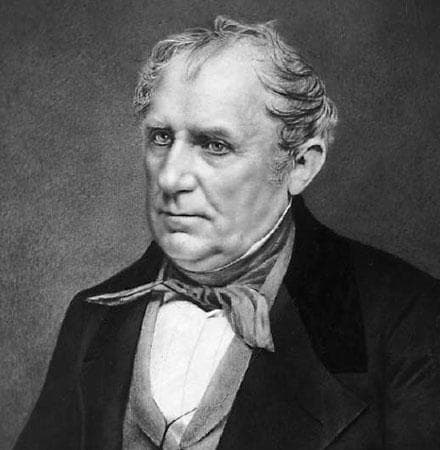
James Fenimore Cooper was an American writer of the first half of the 19th century, whose historical romances depicting colonial and indigenous characters from the 17th to the 19th centuries brought him fame and fortune. He lived much of his boyhood and the last fifteen years of life in Cooperstown, New York, which was founded by his father William Cooper on property that he owned. Cooper became a member of the Episcopal Church shortly before his death and contributed generously to it. He attended Yale University for three years, where he was a member of the Linonian Society.