“I am Uhtred, son of Uhtred, and this is my story.”
— Opening line, establishing the protagonist and narrative voice.


Bernard Cornwell (2004)
Genre
Historical Fiction
Reading Time
700 min
Key Themes
See below
Sign in to track this book
A nobleman, taken by Vikings as a child, must choose between his birth culture and his upbringing during 9th-century England's fight for survival, all while trying to take back his family home, Bebbanburg.
In 866 AD, Uhtred, a ten-year-old Saxon noble from Bebbanburg, sees Danish Vikings arrive on Northumbrian shores. His older brother, also named Uhtred, dies fighting the Danes, making young Uhtred the heir. His father, Ealdorman Uhtred, goes to fight the Viking forces led by Earl Ragnar the Fearless. During the battle at Eoferwic (York), Uhtred's father dies. Ragnar captures Uhtred. Impressed by the boy's defiance, Ragnar decides to take him in instead of killing him. Uhtred goes to Ragnar's settlement, where he slowly starts to live like a Dane, bonding with Ragnar's family and adopting their pagan customs and warrior code, though he still dreams of getting Bebbanburg back.
Under Earl Ragnar's care, Uhtred grows up with Ragnar's children, especially Ragnar the Younger and Thyra. He learns to fight with a sword and shield, to sail, and to respect the Norse gods, while also being taught by the priest Beocca, who later returns to Wessex. Uhtred struggles with his mixed identity, feeling loyal to Ragnar and his family, who treat him as one of their own, but also remembering his Saxon heritage and Christian faith. He becomes close friends with Brida, a Saxon girl also adopted by the Danes, and falls in love with her. He takes part in raids and fights, proving himself a good warrior and earning the Danes' respect, but the memory of Bebbanburg still affects him.
Years later, on a peaceful winter night, a rival Danish warlord, Kjartan, and his son Svein of the White Horse, attack Earl Ragnar's hall. Kjartan, driven by old grudges and wanting Ragnar's wealth, sets the hall on fire. Ragnar the Fearless and most of his family and household burn to death. Uhtred and Brida escape the fire. Seeing the terrible act, Uhtred feels great grief and a strong desire for revenge. He makes a sacred promise to avenge Ragnar's death, vowing to kill Kjartan and Svein. With no home or family among the Danes, Uhtred, now an adult, must find a new path, his future tied to his promise.
After Ragnar's hall is destroyed, Uhtred and Brida, now without a home, travel south to Wessex, the only independent Anglo-Saxon kingdom left, hoping to find a place. They first look for Father Beocca, who is now a priest in King Aethelred of Wessex's court, Alfred's older brother. Beocca, recognizing Uhtred, helps them meet the royal court. Uhtred, despite his Danish upbringing and pagan beliefs, offers his sword to King Aethelred, hoping to gain favor and maybe use Wessex's resources to eventually reclaim Bebbanburg and avenge Ragnar. Here he first meets Prince Alfred, a religious and educated man, whom Uhtred initially dislikes for seeming weak.
Uhtred, with Brida, begins serving King Alfred, who becomes King of Wessex after Aethelred's death. Their relationship is tense. Alfred, a religious Christian, dislikes Uhtred's paganism, arrogance, and lack of respect, while Uhtred sees Alfred as a weak, overly religious, and demanding lord. Despite their personal dislike, Alfred sees Uhtred's great skill as a warrior and strategist, making him a key asset in the ongoing war against the Danes. Uhtred fights in several skirmishes and battles, showing his skill and gaining a reputation, even as he struggles under Alfred's strict rule and constant attempts to convert him.
During a important part of the war, the Danes under Halfdan and Guthrum launch a major attack into Wessex. The Saxons, led by King Alfred and his brother Aethelred, meet them at the Battle of Ashdown. Uhtred, despite his dislike for Alfred, fights fiercely and bravely, leading a charge that helps change the battle. His understanding of tactics and raw fighting ability prove very valuable, helping greatly in a rare and important Saxon win against the strong Danish forces. This battle confirms Uhtred's reputation as a strong warrior serving Alfred, though the underlying tension between him and the king remains.
Alfred, wanting to control Uhtred and make him more a part of Wessex society, arranges for him to marry Mildrith, a religious Christian Saxon noblewoman. As part of the marriage, Uhtred gets land and a debt to the Church, which he dislikes. His relationship with Brida becomes difficult, and she eventually leaves him, unable to accept his (even if superficial) conversion and service to Alfred. Uhtred's life becomes complicated by his new lord's demands, his wife's faith, and the constant threat of Danish invasion. He struggles with money problems and his ongoing desire for revenge against Kjartan and Svein, feeling more and more trapped by his situation.
The Danes, determined in their ambition, continue to conquer England. They take Mercia and East Anglia, establishing their rule and moving further into Saxon lands. Wessex, under King Alfred, is the last place of Anglo-Saxon resistance. The Great Heathen Army, a large force of Danish warriors, threatens to take over the entire kingdom. Alfred's position becomes very difficult, with his forces spread thin and his people losing hope. Uhtred, despite his personal complaints, sees the great danger to Wessex and, by extension, to any chance he has of getting Bebbanburg back or fulfilling his promise, making him commit to Alfred's cause.
The Danish leader Guthrum launches a sudden winter attack, overwhelming Alfred's forces and making the king run away. Alfred, with a small group of loyal followers, including Uhtred and Beocca, retreats to the remote marshes of Athelney. This time is one of great difficulty and despair for Alfred and his kingdom. Uhtred, despite his dislike for Alfred's religiousness, stays loyal, seeing the king's determination and the strategic importance of his survival. In the marshes, Alfred, with Uhtred's advice, starts to plan his return, gathering his remaining forces and sending out calls for help.
From Athelney, Alfred plans a great comeback. He sends messengers through Wessex, calling on the scattered fyrd (local militias) to gather at a secret spot. Uhtred helps a lot in this effort, using his knowledge of the land and fighting skills to help secure routes and protect the gathering forces. His presence and fighting ability help build confidence among the Saxon warriors. Slowly, a large army starts to come together, made up of men from all over Wessex, united by their wish to drive out the Danes and restore their kingdom. This moment is a turning point, as Alfred gets ready for a final fight.
The Saxon forces, led by King Alfred and his commanders, including Uhtred, fight the main Danish army under Guthrum at the Battle of Ethandun. This is the story's main battle. Uhtred, fighting in the shield wall, shows great leadership and bravery. His tactical ideas, combined with his fierceness in combat, are key to breaking the Danish lines. The Saxons win a stunning and decisive victory, crushing Guthrum's army and making them retreat. This battle saves Wessex and secures Alfred's rule, marking a major turning point in the Anglo-Saxon fight against the Danes.
After the win at Ethandun, Alfred surrounds Guthrum and his remaining warriors. Eventually, Guthrum surrenders and, as part of the peace terms, agrees to be baptized as a Christian, with Alfred as his godfather. This event shows a temporary peace and the growing influence of Alfred's plan for England. Uhtred, though he helped win, remains restless. He has helped Alfred secure his kingdom but is still bound by his promise to avenge Ragnar and his lifelong goal to reclaim Bebbanburg. He knows his path is far from over, and the fight for his family home and his true identity continues, setting up future conflicts.
The Protagonist
Uhtred transforms from a young captive into a skilled warrior, grappling with his dual identity and ultimately choosing to fight for Wessex, though his personal goals remain paramount.
The Supporting
Alfred evolves from a beleaguered king on the brink of defeat to a strategic leader who secures his kingdom's future and sets the foundation for a unified England.
The Supporting
Brida remains steadfast in her pagan identity and Danish loyalties, eventually parting ways with Uhtred as his path diverges into Saxon service.
The Supporting
Ragnar establishes Uhtred's Danish identity and provides the catalyst for his future quest through his tragic death.
The Supporting
Beocca remains a constant, moral presence in Uhtred's life, serving as a link to his Saxon past and a voice of reason.
The Supporting
Mildrith attempts to bring Uhtred into the Christian Saxon fold but ultimately highlights his inability to fully embrace that life.
The Antagonist
Guthrum leads the Danish forces in their attempt to conquer Wessex, is decisively defeated, and ultimately accepts baptism, signifying a shift in the power dynamic.
The Antagonist
Kjartan's act of betrayal sets in motion Uhtred's quest for vengeance, making him a primary target for the protagonist.
The Antagonist
Svein's participation in Ragnar's murder establishes him as one of Uhtred's sworn enemies, a target for his vengeance.
Uhtred's struggle with his mixed identity, as a Saxon noble raised by Danes, is central to the story. He is always torn between his birthright and the culture that formed him. He speaks Danish, fights like a Dane, and worships their gods, but he wants to reclaim his Saxon inheritance of Bebbanburg. This inner conflict shows in his relationships, loyalty, and beliefs, as he questions where he truly belongs in a divided England. His journey is about trying to bring these two opposing worlds together within himself.
“My name is Uhtred. I am a Northumbrian by birth, a Dane by upbringing and a Wessexman by oath. I am a warrior, and I will die a warrior.”
The idea of vengeance is a strong force for Uhtred. The brutal murder of his adoptive father, Earl Ragnar, by Kjartan and Svein, makes Uhtred promise to seek revenge. This personal quest for revenge often clashes with his duties to King Alfred and the wider political situation, but it remains a constant reason for his actions. The story explores the difficult morality of vengeance, whether it is right or an all-consuming obsession, and how it shapes Uhtred's character and choices.
“I would kill them, given the chance, and I would make it slow. I would take my time. I would make them wish they had never been born.”
The book clearly shows the harsh clash between pagan Danish culture and Christian Anglo-Saxon society. Uhtred shows this conflict, being pagan by upbringing but serving a religious Christian king. Their different gods, customs, and laws are a constant source of tension and misunderstanding. Alfred's vision of a Christian England united under one God contrasts sharply with the Danes' polytheistic, warrior-focused way of life. This theme highlights the deep social divisions and the fight for cultural and religious power in 9th-century England.
“God, or the gods, what did it matter? There was always a price to be paid.”
Under Uhtred's personal story is the larger history of England's beginning. King Alfred's strong will to defend Wessex against the Danish invaders and his vision for a united Anglo-Saxon kingdom are central to this theme. The book shows the political moves, strategic battles, and great sacrifices needed to create a single nation from separate, war-torn kingdoms. Uhtred, despite his personal complaints, becomes an unwilling but key participant in this founding moment of English history.
“He wants one kingdom, one king, one God. He wants England.”
Uhtred recounts his life story from an older, experienced perspective.
The entire novel is narrated by an older Uhtred, looking back on his youth and early adulthood. This allows for a blend of immediate action and reflective commentary. The older Uhtred often interjects with insights, foreshadowing, and judgments about his younger self's actions and the people he encountered. This device provides a unique voice, revealing Uhtred's evolving wisdom and biases, and adds a layer of depth to the historical events he describes, as he is both a participant and a chronicler.
A sacred vow that binds Uhtred's actions and motivations.
The 'oath' is a powerful and recurring plot device, particularly Uhtred's sacred vow to avenge Earl Ragnar's death. In this historical context, oaths were binding and carried immense weight, often dictating a warrior's entire life path. Uhtred's oath to Ragnar, and later his reluctant oaths of fealty to Alfred, shape his decisions, force him into conflicts, and drive his long-term goals. It is a constant reminder of his obligations and the source of much of his internal conflict and external action.
Symbolic representations of Uhtred's warrior identity and his loyalties.
The sword and shield are more than just weapons; they are potent symbols of Uhtred's identity as a warrior, his skill, and his allegiance. His mastery of these tools represents his Danish upbringing and pagan strength. The shield wall itself is a recurring visual and tactical device, embodying the brutal reality of Dark Age combat and the communal spirit of warriors. Uhtred's proficiency with these items underscores his place in the world and his effectiveness in both Saxon and Danish armies, despite his shifting loyalties.
A symbolic ancestral home representing Uhtred's lost heritage and ultimate desire.
Bebbanburg, Uhtred's ancestral fortress, functions as a powerful symbol throughout the novel. It represents his lost Saxon heritage, his birthright, and his ultimate ambition. Though he is raised by Danes, the memory and desire to reclaim Bebbanburg are constant motivators for Uhtred. It is his true home, the place he believes he belongs, and its recovery would signify the culmination of his journey and the reconciliation of his fractured identity, even if it is not achieved in this first book.
“I am Uhtred, son of Uhtred, and this is my story.”
— Opening line, establishing the protagonist and narrative voice.
“Fate is all.”
— A recurring phrase and core belief of Uhtred and many characters, especially pagans.
“The Saxons believed in one god, a god who was forever sending his son to be killed. My gods were better. My gods were alive.”
— Uhtred's youthful perspective on Christian vs. pagan beliefs.
“A man is what he does, not what he says he is.”
— Uhtred reflecting on actions versus words, often in the context of leadership or loyalty.
“We fight for the land, for the soil, for the graves of our ancestors. We fight for England.”
— A rallying cry, encapsulating the struggle for a unified England against the Danes.
“Swords are for killing, not for showing off.”
— Uhtred's pragmatic view on weaponry and its purpose.
“To be a king, you must first be a warrior.”
— Uhtred's assessment of Alfred's early struggles and the demands of leadership in a brutal age.
“There is no shame in fear, only in letting it stop you.”
— A lesson learned or observed by Uhtred about courage and overcoming fear in battle.
“I was a Dane by training, a Saxon by birth, and a warrior by choice.”
— Uhtred's internal conflict and self-identification, highlighting his dual heritage.
“He was a good man, Alfred, but he was also a king, and kings have to make hard choices.”
— Uhtred's complex feelings about King Alfred, acknowledging his virtues and the burdens of his office.
“The world changes, and we must change with it, or be left behind.”
— Uhtred's observation on adaptation and the inevitability of change in the political and social landscape.
“A shield-wall is a living thing, breathing, moving, pushing, holding.”
— Description of the primary battle formation, emphasizing its organic and formidable nature.
“Love is a dangerous thing, it can make a man weak.”
— Uhtred's sometimes cynical, sometimes resigned view on the vulnerabilities brought by love.
“The future is not written, only the past.”
— A counterpoint to 'Fate is all,' suggesting agency and the ability to shape one's destiny.
Ready to see how well you understood this book? Take our interactive quiz with 10 questions.
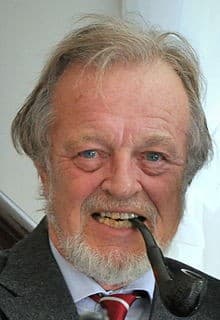
Bernard Cornwell is a prolific British author celebrated for his masterful historical fiction. He is best known for his Sharpe series, chronicling the Napoleonic Wars, and his Warlord Chronicles, which reimagines Arthurian legend. Cornwell's work is lauded for its meticulous research, gritty realism, and compelling narratives.







