“The cornfield stretched out before me, an endless sea of green that whispered secrets only the wind could understand.”
— Main character, Rowan, surveys the ominous cornfields of her hometown.

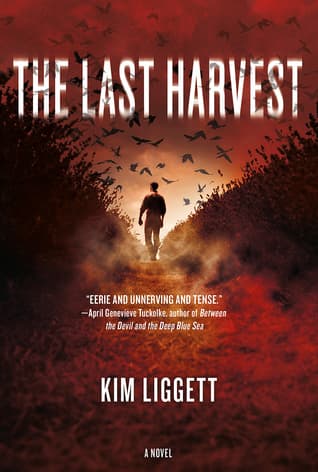
Kim Liggett (2017)
Genre
Thriller / Mystery / Young Adult
Reading Time
360 min
Key Themes
See below
Sign in to track this book
A year after his father's strange death, a star quarterback sees sinister glances, gruesome rituals, and the terrifying possibility that his dad's 'devil worship' accusations were real, or that he's going crazy.
Seventeen-year-old Clay Tate is haunted by the one-year anniversary of finding his father, John Tate, dying on the barn floor of the Neely Cattle Ranch, clutching a crucifix and muttering "I plead the blood." The official cause of death was a heart attack, but Clay suspects foul play. His father had accused the powerful Preservation Society of devil worship. Midland, Oklahoma, views Clay with pity and suspicion, fearing he might go insane like his father. Clay tries to move on, but the past keeps intruding, making it hard to tell if he's paranoid from grief or if there are real threats.
As the anniversary passes, Clay has several unsettling encounters. Ali, his longtime crush and daughter of a prominent Preservation Society member, suddenly starts pursuing him romantically after a year of silence, leaving Clay confused. At the same time, Tyler Neely, his former rival and son of the Neely Cattle Ranch owner, begins acting unusually friendly. These sudden changes in behavior from people connected to the Preservation Society make Clay more suspicious. He feels their new attention is not coincidental but part of a larger, sinister plan related to his father's death.
Clay finds hidden notes and research his father had collected, detailing Midland's history and the secret Preservation Society. His father's writings suggest a deep-rooted cult in town, practicing ancient rituals tied to the harvest and the land. The more Clay reads, the more he believes his father wasn't insane but was investigating a dangerous truth. He learns about the town's dark past, including unexplained disappearances and a cycle of violence, strengthening his belief that the Preservation Society is far more sinister than anyone imagines.
Clay begins to see disturbing events: strange markings on his property, bizarre animal mutilations, and shadowy figures at night. He tries to tell his mother, but she dismisses his concerns as grief, urging him to move on. His attempts to find evidence fail, as the strange occurrences leave no proof, making him question his own sanity. The lack of belief from those around him only increases his isolation and fear, making him wonder if he is going mad like his father, or if a more terrifying reality is unfolding.
Ali's romantic advances become more intense, and despite his doubts, Clay finds himself drawn to her. Their relationship progresses, offering a brief break from his anxieties, but also deepening his internal conflict. Meanwhile, Tyler Neely, after much initial deception, finally reveals he knows about the Preservation Society's true nature and their rituals. He admits his family is deeply involved and that he, too, is a pawn in their plans. Tyler's confession, though shocking, confirms Clay's suspicions, showing he is not imagining the sinister forces.
Driven by Tyler's partial confession and his father's notes, Clay investigates Midland's history. He discovers that the Preservation Society is not just a cult but a centuries-old organization that sacrifices a chosen person during the harvest to ensure the town's prosperity. This ritual, 'The Last Harvest,' is believed to appease an ancient entity tied to the land. Clay realizes his father was trying to expose this, and his death was likely a result of his investigation, not natural. The chilling truth begins to form, pointing to a terrifying fate for someone in Midland.
Through clues, cryptic warnings, and a horrifying discovery of his father's last messages, Clay realizes he is the chosen sacrifice for the upcoming Last Harvest ritual. Ali and Tyler's attention, the strange events, and the town's odd behavior all make sense, revealing a carefully planned effort to prepare him for the sacrifice. He understands that his father's dying words, "I plead the blood," were not just a plea for help but a desperate warning about the blood ritual that killed him and now targets Clay.
Realizing the danger, Clay forms an uneasy alliance with Tyler Neely. Tyler, though born into the cult, wants to break free and save Clay. Together, they plan to escape Midland before the Last Harvest ritual. Their attempt is dangerous, as the whole town, seemingly under the cult's control, appears to watch their every move. The pressure grows as the ritual date nears, and Clay feels the Preservation Society's suffocating grip tightening around him.
As Clay and Tyler begin their escape, Tyler betrays Clay, leading him directly to the Preservation Society. Clay is taken to a secret, ancient location where the Last Harvest ritual will be performed. There, Ali reveals her true role: she has been an active cult member, tasked with seducing and preparing Clay for his sacrifice. Her previous affection was a calculated lie, and her cold demeanor now shocks Clay, showing the depth of the cult's manipulation and his isolation. The ritual begins, and Clay faces his terrifying fate.
Just as the ritual reaches its peak, a surprising twist occurs. Tyler, who seemed to betray Clay, has a change of heart, perhaps from conscience or a deeper fear of the cult's power. He creates a distraction, giving Clay a moment to fight back. Clay, fueled by adrenaline and a desperate will to survive, takes the chance. He confronts the cult leaders, including Ali's father, and tries to disrupt the ancient ceremony, hoping to break the cycle of sacrifice that has plagued Midland for generations. The fight is brutal and chaotic, with Clay battling not just for his life, but for the town's soul.
Clay escapes the ritual, though the exact events of his escape are left vague, hinting at a traumatic and violent struggle. The cult is disrupted but not destroyed, leaving Midland's future uncertain. Clay is forever changed by the experience, scarred by the betrayal and horrors he witnessed. He leaves Midland, but the lingering shadows of the Preservation Society and the memory of the Last Harvest continue to haunt him. He carries the burden of knowing the town's dark secret and that such evil can exist beneath a normal appearance.
Afterward, Clay tries to rebuild his life away from Midland. He carries the weight of his experiences, constantly watching for signs that the cult might still be active or that its influence could reach him. The book ends with Clay having survived, but the psychological scars are deep. While the immediate threat has passed, the novel leaves open the possibility that the Preservation Society, or something similar, could rise again, or that the cycle of sacrifice might not be truly broken, suggesting some evils are too deeply ingrained to be entirely removed.
The Protagonist
Clay transforms from a grieving, self-doubting teenager into a resilient survivor who confronts and exposes a deeply entrenched evil, though not without significant trauma.
The Antagonist/Love Interest
Ali's character arc reveals her true, villainous nature, moving from a perceived love interest to a calculating manipulator and an agent of the cult.
The Supporting/Antagonist
Tyler grapples with his inherited role in the cult, oscillating between complicity and a desire for redemption, ultimately making a crucial, if late, decision.
The Mentioned/Catalyst
His arc is presented retrospectively, revealing his descent into 'madness' as a desperate attempt to expose a terrifying truth.
The Supporting
She remains largely unchanged, representing the town's blind acceptance, though her concern for Clay is genuine.
The Antagonists
As a collective, their arc reveals their sinister purpose and their unwavering commitment to their ancient rituals, ultimately being disrupted but not fully eradicated.
This theme explores how deeply ingrained traditions, even horrifying ones, can persist and become normal in a community, especially when tied to perceived prosperity. The Preservation Society shows this, with generations of Midland's most respected citizens participating in human sacrifice, believing it essential for their harvest and survival. The town's collective denial and participation highlight how fear and self-interest can blind people to monstrous acts, making the entire community complicit. Clay's struggle is not just against a few people, but against the insidious, pervasive evil woven into Midland, as seen when his own mother dismisses his warnings.
““They weren’t monsters. They were neighbors. Friends. The people who went to church with him on Sundays. The people who taught him how to farm.””
A main theme revolves around Clay's struggle to tell the difference between his grief-induced paranoia and the terrifying reality of his father's claims. His father was called 'insane' for his accusations, making Clay fear he might be following the same path. The cult actively gaslights Clay, making him doubt his experiences. This theme explores the psychological cost of facing an unbelievable truth, especially when everyone around you, including loved ones, dismisses your fears. Clay's journey is a desperate search for objective truth in a world designed to make him question his own mind, confirming his father's seemingly mad pursuit.
““He wondered if this was how his dad had started, seeing things that weren’t there, hearing whispers in the wind.””
The story is full of betrayal and deception, mostly aimed at Clay. Ali, his long-time crush, turns out to be a key manipulator, seducing him as part of the cult's plan. Tyler Neely, initially a rival, becomes a reluctant ally only to betray Clay, before a final, ambiguous act of defiance. Even the entire town, with its normal appearance, is a collective deception, hiding its sinister rituals. This theme highlights Clay's isolation when he realizes that those he trusted or sought comfort from are actively working against him, making his fight for survival deeply personal and emotionally devastating.
““The smile on her face was gone, replaced by something cold and calculating. The girl he thought he knew had never existed.””
The core of the cult's belief system is the 'Last Harvest'—a ritualistic human sacrifice performed to ensure the land's prosperity. This theme explores the ancient belief in a cycle of death and renewal, where one life must be given to sustain many. The cult members are convinced that without this sacrifice, their community will wither and die. It looks at the dark side of this concept, where fear of scarcity and a desperate desire for control lead to horrific acts, turning an agricultural necessity into a reason for murder. Clay's struggle is to break this ancient, brutal cycle.
““Blood for the soil. Life for the land. It was the only way the crops would grow, the only way Midland would survive.””
Clay's internal struggle with his own sanity makes the reader question the reality of events.
Clay's persistent fear of inheriting his father's 'madness' serves as a form of unreliable narration. The reader is often led to question whether the strange occurrences Clay witnesses are real or products of his grief and paranoia. This device builds suspense and keeps the reader guessing, mirroring Clay's own psychological torment. It makes the eventual revelation of the cult's existence all the more impactful, as it confirms Clay's sanity and validates his father's earlier, dismissed claims.
John Tate's research provides crucial exposition and a roadmap for Clay's investigation.
John Tate's hidden journal and notes are a classic plot device used to deliver exposition and backstory. They serve as a breadcrumb trail for Clay, guiding him through the history of the Preservation Society and the nature of the Last Harvest ritual. This device allows the author to reveal complex information organically, through Clay's discovery and interpretation, rather than through direct narration. It also strengthens the bond between Clay and his deceased father, as Clay continues his father's work.
Ali's seductive charm masks her true, sinister intentions, leading Clay into danger.
Ali functions as a classic femme fatale, using her beauty and Clay's long-standing affection for her to manipulate him. Her sudden romantic interest provides Clay with a false sense of security and a distraction from his growing suspicions, drawing him deeper into the cult's trap. This device heightens the sense of betrayal and personal stakes, as Clay's emotional vulnerability is exploited for the cult's malevolent purposes, making her revelation as a key antagonist particularly devastating.
Midland's outwardly idyllic facade conceals a deep-seated, ancient evil.
Midland, Oklahoma, with its close-knit community and agricultural focus, embodies the Small Town Gothic setting. Its outwardly normal, even charming, appearance belies the horrifying, ancient evil festering beneath. The contrast between the familiar, comforting setting and the unspeakable acts committed by its residents creates a pervasive sense of dread and unease. This device emphasizes how evil can hide in plain sight, making the familiar terrifying and highlighting the corrupting influence of the land itself.
“The cornfield stretched out before me, an endless sea of green that whispered secrets only the wind could understand.”
— Main character, Rowan, surveys the ominous cornfields of her hometown.
“Some traditions are meant to be broken. Others... others break you.”
— Rowan grapples with the dark customs of her town, Gult Cove.
“Fear is a powerful fertilizer. It makes the truth grow in the most unexpected places.”
— A character reflects on how fear manipulates the townspeople.
“Every secret has a root, and Gult Cove's roots ran deeper than any of us dared to imagine.”
— Rowan begins to uncover the town's long-buried history.
“The line between faith and fanaticism was razor-thin, and our town had long since stumbled across it.”
— Observing the extreme beliefs of the Gult Cove residents.
“Sometimes the greatest monsters wear the most familiar faces.”
— Rowan realizes that the threat isn't from outsiders but from within her community.
“The harvest wasn't just about crops; it was about souls.”
— A chilling realization about the true nature of Gult Cove's annual harvest ritual.
“We were all just seeds in their soil, waiting to be planted, waiting to be harvested.”
— A character's grim acceptance of their role in the town's cycle.
“The past isn't dead. It's just waiting, patient and hungry, in the shadows.”
— As the dark history of Gult Cove resurfaces.
“To save yourself, sometimes you have to burn everything down.”
— Rowan contemplates drastic measures to escape the town's clutches.
“The silence in Gult Cove wasn't peaceful; it was a heavy blanket, smothering every question, every doubt.”
— Describing the oppressive atmosphere of the town.
“You can't outrun what's inside you, especially when it's been planted there generations ago.”
— A reflection on the inherited trauma and destiny of the townspeople.
“Hope was a dangerous thing in Gult Cove, a spark easily extinguished by the prevailing darkness.”
— Rowan's struggle to maintain optimism amidst the grim reality.
“The truth had a way of cutting, sharper than any sickle.”
— The painful revelation of the town's ultimate secret.
Ready to see how well you understood this book? Take our interactive quiz with 10 questions.







