“The past is a country we can't go back to, but it's also a country we never truly leave.”
— Thomas Cale reflecting on his past and the influence it still has on him.

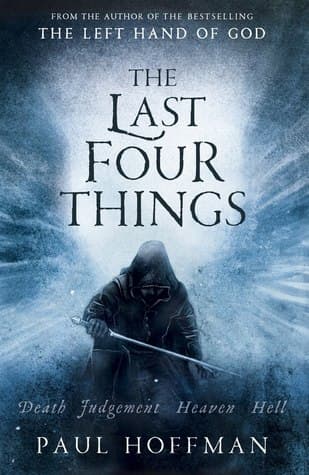
Paul Hoffman (2011)
Genre
Fantasy / Science Fiction / Young Adult
Reading Time
10-12 hours
Key Themes
See below
Sign in to track this book
Haunted by betrayal, Thomas Cale, a child soldier of the apocalyptic Redeemers, must decide whether to unleash humanity's extinction or defy his masters and forgive the world he's destined to destroy.
Thomas Cale, devastated by Arbell's apparent betrayal and Vayl's death, is again under Redeemer control. Lord Militant Bosco, leading the Redeemer forces, makes Cale accompany him on a long march towards Memphis, the Antagonist capital. Cale, numb with loss, is a shadow of his former self, his fighting skills dulled by despair. Bosco, always manipulative, tries to use Cale's abilities while understanding the boy. The journey is dangerous and shows the brutal realities of war, further hardening Cale's spirit as he deals with love, betrayal, and a growing desire for revenge against those who wronged him, including Arbell.
As the Redeemer army nears Memphis, they have several skirmishes with Antagonist forces, showing the efficiency of the Redeemers' child soldiers. Cale, despite his despair, is forced to fight, often with a terrifying ferocity that impresses and unnerves Bosco. During these fights, Cale learns more about the Antagonists and their leader, the Marquis. The Marquis is a formidable and cruel enemy, a contrast to the Redeemers' religious zealotry, yet equally dangerous. Cale starts to see the war not as a simple fight between good and evil, but as a complex conflict driven by power and ideology, with both sides showing extreme violence and moral ambiguity. This realization further complicates his conflicted worldview.
To Cale's surprise and renewed heartbreak, Arbell reappears, not as a captive but as a key figure within the Antagonist hierarchy, working directly for the Marquis. She reveals that her past actions, including her apparent betrayal, were part of a plan to infiltrate the Redeemers and gather intelligence for the Antagonists. Cale is shattered, as this confirms his worst fears and deepens his sense of personal betrayal. Arbell tries to justify her actions, explaining her deception was necessary for the Antagonist cause, which she believes is the lesser of two evils compared to the Redeemers. This encounter reignites Cale's emotional turmoil, making him confront the complexities of loyalty and the blurred lines between friend and foe.
The Redeemer army, led by Bosco, finally reaches Memphis and begins a devastating siege. The city is heavily fortified, and the Antagonists, commanded by the Marquis and aided by Arbell's strategies, resist fiercely. The battle is a brutal display of warfare, with massive casualties on both sides. Cale, despite his internal conflict, is again in the middle of the fighting. His unique combat skills and resilience are crucial to the Redeemers' advance, even as he grapples with the moral implications of his actions. The siege shows the scale of the conflict and the immense human cost of the Redeemers' goals, forcing Cale to witness horrors.
Throughout the siege, Cale is tormented by his past, his lost innocence, and the Redeemers' teachings. 'The Last Four Things' — Death, Judgment, Heaven, Hell — are constantly preached by the Redeemers as the ultimate goal, justifying their campaign. Cale, however, questions the true meaning of these concepts, seeing only death and hell in the war around him. He struggles with his own purpose, whether he is meant to be an instrument of destruction or something else. This internal conflict is made worse by his lingering feelings for Arbell and his desperate search for belonging and meaning amidst the chaos.
As the siege continues, Cale, through observation and information, begins to understand the Marquis's true nature. The Marquis is not just an opposing military leader but a cunning manipulator, driven by a desire for power and control rather than moral conviction. Arbell, despite trying to justify her loyalties, is deeply involved in the Marquis's plans, acting as his confidante and strategist. Cale sees the Marquis's calculated cruelty and how he exploits his followers, mirroring some Redeemer tactics. This realization further complicates Cale's understanding of Arbell, blurring the lines between her love for him and her loyalty to a compromised cause, leading to deeper emotional wounds.
After a long and bloody struggle, the Redeemer forces finally breach Memphis's defenses. The city falls into chaos as the two armies clash in the streets. Cale, fighting with detached fury, finds himself face-to-face with Arbell amidst the carnage. Their reunion is not reconciliation but confrontation, as their opposing loyalties and past betrayals clash. Arbell, still committed to the Antagonist cause, tries to reason with Cale, urging him to abandon the Redeemers and join her. Cale, however, is too wounded and conflicted to accept, and their encounter is full of tension, unresolved emotions, and the specter of their broken relationship, ending in intense personal anguish for both.
Despite Memphis's fall, the Marquis escapes capture, slipping away with his most loyal followers. Cale, now more determined to understand the war and his place in it, uncovers more information about his mysterious origins and the larger, cosmic conflict at play. He learns that both the Redeemers and Antagonists are pawns in a grander scheme, manipulated by ancient, powerful forces. This revelation shatters Cale's perception of the world, making him question everything he has been taught and deepening his resolve to forge his own path, independent of either faction's agenda, and to seek his own truth.
Having witnessed atrocities by both sides and been manipulated by nearly everyone, Cale makes a decision: he will no longer be a pawn. He openly defies Bosco and the Redeemers, refusing to continue their mission. He also rejects Arbell's pleas to join the Antagonists, understanding that both factions represent different forms of oppression and destruction. This act of defiance marks a turning point in Cale's character, as he begins to assert his own agency. Though still deeply scarred, he resolves to find his own purpose, even if it means a solitary and dangerous path, setting the stage for a new quest for truth and redemption.
With Memphis conquered and his ties to both the Redeemers and Antagonists severed, Cale is adrift but with a new purpose. He is no longer driven by revenge or blind obedience but by a desperate desire to prevent humanity's complete annihilation, which both factions seem intent on achieving. He begins to seek out individuals and information that might shed light on the deeper forces at play and a way to end the endless cycle of violence. Though emotionally broken and carrying immense burdens, a flicker of hope remains that he might yet make a difference, even if it means confronting powers beyond human comprehension. His journey for self-discovery and a path to peace has begun.
The Protagonist
Cale transitions from a manipulated pawn to an individual asserting his own agency, rejecting the paths laid out for him by others to forge his own. He grapples with his past betrayals and seeks a path to redemption.
The Supporting
Arbell's true allegiances are revealed, forcing her to confront the consequences of her deceptions and the pain she has caused Cale, while remaining committed to her chosen cause.
The Antagonist/Supporting
Bosco continues his pursuit of the Redeemers' goals, attempting to control Cale, but ultimately faces Cale's defiance as the boy asserts his independence.
The Antagonist
The Marquis continues to be a formidable and elusive antagonist, revealing more of his cunning and the true scope of his power, ultimately escaping to fight another day.
The Mentioned
Vayl's arc concluded in the previous novel, but his memory serves as a catalyst for Cale's emotional turmoil and internal struggle in this book.
The Antagonist (as a collective)
The Redeemers continue their relentless march towards their apocalyptic goal, facing significant resistance but remaining a powerful and destructive force.
The Antagonist (as a collective)
The Antagonists defend their territory against the Redeemer invasion, revealing their own ruthless tactics and complex motivations, ultimately suffering a defeat but remaining a threat.
Betrayal is a central theme, deeply affecting Thomas Cale. Arbell's deception shatters Cale's emotional core, driving much of his despair and conflict. The revelation of her true allegiance forces Cale to question loyalty and trust, leading him to understand the morally gray world he lives in. His struggle to reconcile his love for Arbell with her actions shows the lasting pain and psychological scars that betrayal leaves, as seen in his numb detachment during the march to Memphis and his anguished confrontation with her.
“"He had loved her, and she had given him to the wolves. That was the simple, terrible truth."”
The novel explores how absolute power and rigid ideologies corrupt individuals and entire factions. The Redeemers, driven by their religious fervor, commit atrocities, believing they act on divine will. Lord Militant Bosco embodies this corruption, manipulating Cale and others for their destructive mission. Similarly, the Marquis, leader of the Antagonists, uses power through cunning and cruelty, showing that even opposition to fanaticism can be ruthless. Both sides illustrate how good intentions can be twisted into justifications for violence and control, leaving Cale disillusioned with all authority.
“"Both sides claimed God, but only one side seemed to possess the Devil's own cruelty."”
Cale's journey shows the profound loss of innocence and the lasting effects of psychological trauma. Raised in a brutal monastery and forced into warfare, Cale is a broken individual. The perceived death of Vayl and Arbell's betrayal strip away any remaining youth, leaving him numb and prone to detached violence. His internal thoughts reveal a constant struggle with his past, his identity as a weapon, and his desperate search for meaning in a world that has only offered him pain. This theme is clear in his moments of catatonia and his inability to form healthy attachments.
“"The child inside him was long dead, replaced by a ghost that remembered only pain and betrayal."”
A recurring tension in the narrative is the struggle between predetermined destiny and free will. Cale is constantly told he is a tool, a divine instrument for the Redeemers' apocalyptic vision, or a pawn in the Marquis's schemes. Yet, despite manipulations and prophecies, Cale increasingly asserts his own agency, culminating in his defiance of both factions. This theme questions whether individuals can truly escape the roles assigned by powerful forces, or if they are merely players in a larger, predetermined game. Cale's ultimate choice to forge his own path highlights the human desire for self-determination.
“"They all wanted him to be a weapon, but he was tired of being wielded."”
The Redeemers' apocalyptic doctrine that drives their war.
This doctrine—Death, Judgment, Heaven, Hell—serves as the central ideological motivator for the Redeemers' genocidal campaign. It functions as a powerful propaganda tool, justifying their atrocities by framing them as necessary steps towards a divine end. For Cale, 'The Last Four Things' becomes a symbol of the twisted morality he is forced to confront, as he witnesses only death and hell manifesting in the world around him, questioning the promised heaven and judgment. It provides the overarching goal that propels the main conflict and highlights the fanaticism of the Redeemers.
A major twist that drives Cale's emotional arc and plot progression.
Arbell's apparent betrayal and subsequent revelation as an Antagonist operative is a crucial plot device. It serves as the primary catalyst for Cale's emotional devastation and his subsequent internal struggle, pushing him into a state of despair and detachment. This deception also complicates the narrative's moral landscape, blurring the lines between good and evil, and forcing Cale (and the reader) to question appearances and allegiances. It directly impacts Cale's motivations and his relationships with both factions, leading to his ultimate rejection of both.
His almost supernatural fighting ability, a key element of his identity and utility.
Cale's exceptional and almost supernatural combat abilities are a constant plot device. They make him an invaluable asset to the Redeemers, ensuring his survival and central role in their military campaigns, despite his personal reluctance. These skills also set him apart, highlighting his unique and often terrifying nature. His fighting prowess is not just a practical tool for advancing the plot's action sequences, but also a constant reminder of his past trauma and his identity as a weapon, influencing his internal conflict and his attempts to find a purpose beyond violence.
The enigma surrounding Cale's birth and true nature.
The ongoing mystery surrounding Cale's origins and his seemingly divine (or demonic) purpose acts as a continuous thread of intrigue. Hints and fragments of information about his past, his connection to ancient powers, and why he possesses such unique abilities are slowly revealed. This device keeps Cale (and the reader) searching for answers, providing a deeper, more cosmic layer to the immediate conflict between the Redeemers and Antagonists. It fuels Cale's personal quest for identity and meaning beyond the roles others try to impose upon him.
“The past is a country we can't go back to, but it's also a country we never truly leave.”
— Thomas Cale reflecting on his past and the influence it still has on him.
“There are some things that, once seen, can never be unseen. And once known, can never be unknown.”
— After Cale witnesses a particularly gruesome event or discovers a dark truth.
“Hope is a dangerous thing. It can keep you alive, but it can also make you do terrible things.”
— A character, possibly Arbell, discussing the double-edged nature of hope.
“Sometimes the greatest betrayals come from those we trust the most.”
— Cale dealing with a significant betrayal by someone he considered an ally or friend.
“Power is not about what you can do to others, but what you can make them do to themselves.”
— A powerful figure, perhaps the Antagonist, explaining their philosophy of control.
“The world is a stage, and we are merely players. But some of us have much bloodier roles than others.”
— A cynical observation about the roles individuals play in the grand scheme of conflict.
“To truly forgive, you must first understand the unforgivable.”
— Cale grappling with the concept of forgiveness in the face of immense cruelty.
“There is no justice, only consequences.”
— A character expressing a bleak view of the world's moral order, or lack thereof.
“Even in the darkest of places, a flicker of light can be found. But sometimes, that light is merely a burning ember of destruction.”
— Cale searching for hope or meaning amidst widespread devastation.
“The hardest part of any journey is not the first step, but the last. For the last step often leads to the unknown.”
— As Cale approaches the climax or resolution of a major quest.
“Fear is a weapon. And like all weapons, it can be turned against its wielder.”
— Cale or another character overcoming their fear or using it to their advantage.
“Some scars never heal. They just become a part of who you are.”
— Cale reflecting on the lasting impact of his past traumas and experiences.
“The greatest prison is not one made of stone and iron, but one built by your own mind.”
— A character struggling with internal conflict or self-imposed limitations.
“Love, like war, makes monsters of us all.”
— A character observing the destructive potential of intense emotions, both positive and negative.
Ready to see how well you understood this book? Take our interactive quiz with 10 questions.







