“It’s better to be a dragon and to have a dragon’s heart. And if you have a dragon’s heart, you can fly.”
— The Dragon's final lesson to Yorsh.

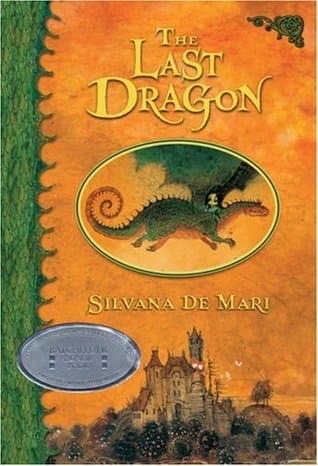
Silvana De Mari (2006)
Genre
Fantasy / Children's / Young Adult
Reading Time
360 min
Key Themes
See below
Sign in to track this book
In a world of endless rain and intolerance, the last elf and dragon must unite to fulfill an ancient prophecy and bring back summer's sun.
The story begins in a world always raining and entering a Dark Age. Yorsh, a young elf, lives with his family in a secluded elven village. A huge, unexpected flood destroys their home, taking his parents and everyone he knows. Yorsh, who was away from the village for a short time, returns to find only ruins and his mother's body. Overcome by sadness, he believes he is the last elf alive. He buries his mother and, driven by a will to survive, starts a lonely journey through the desolate, rain-soaked land, carrying only a few found items and the heavy weight of his loss.
While traveling, Yorsh meets a large, old dragon. At first, he is afraid. But he soon realizes the dragon is kind and wise, and also thinks he is the last of his kind. The dragon, who has no name but is called the last dragon, talks to Yorsh through feelings and pictures, not words. He tells Yorsh an old prophecy: 'When the last dragon and the last elf break the circle, the past and the future will meet, and the sun of a new summer will shine in the sky.' This prophecy suggests their combined presence is important to ending the Dark Age and bringing light back to the world. They become friends, recognizing their shared loneliness and future.
Yorsh and the dragon find safety in a large cave system. Here, the dragon, through shared thoughts, teaches Yorsh about the world, its history, and the subtle magic still present. Yorsh learns about ancient times when elves and dragons lived peacefully with humans, before human intolerance and greed plunged the world into darkness. The dragon also shares knowledge about plants, survival, and the importance of kindness. Their friendship grows, and Yorsh, despite his first fear, comes to see the dragon as his only family and protector. The cave becomes their safe place from the harsh, rain-filled world outside.
Their peaceful life is broken by a human hunter who finds their cave. The hunter is terrified of the dragon but also sees a chance for fame or reward. He tries to capture or harm them. This shows the fear and hate humans have for magical creatures. Yorsh, despite his small size, bravely defends the dragon, using his elven quickness and the knowledge he has gained. The dragon, in turn, protects Yorsh, showing his great power but also his restraint by scaring the hunter away instead of hurting him. This meeting strengthens Yorsh's commitment to the dragon and their shared goal.
Knowing they cannot stay hidden forever and driven by the prophecy, Yorsh and the dragon decide to go towards human towns. They reach a city, a place of dirt, fear, and suspicion. Yorsh, as disguised as possible, watches the humans. He sees their prejudice against anyone different, their poverty, and their constant fear of the unknown. The dragon stays hidden, but his presence is felt, adding to the humans' unease. Yorsh sees children mistreated and adults living in misery, confirming the dragon's lessons about humanity's decline. This experience strengthens Yorsh's resolve but also fills him with deep sadness for the world.
While near the city, the dragon is found and captured by a large group of humans, led by a cruel leader. They use nets, chains, and fear to control the old creature, seeing him as a monster or a valuable prize. Yorsh, heartbroken and scared, is forced to watch from afar as his only friend is taken away to prison. He feels helpless but quickly turns this into determination. Knowing the dragon is vital to the prophecy and his own life, Yorsh promises to rescue him, even if it means facing all the humans alone.
Yorsh, despite his small size, gets into the human fort where the dragon is held. He confronts the human leaders, trying to explain the dragon's true nature and the prophecy, asking them to free him. He talks about kindness, understanding, and the shared hope for a better world, repeating the dragon's wisdom. The humans, however, are full of generations of fear and ignorance. They make fun of him, threaten him, and refuse to believe him, convinced the dragon is an evil beast. Yorsh's courage is great, but his words at first fail, showing the deep-seated prejudice he must overcome.
Facing the humans' strong hostility and the dragon's coming death, the dragon makes a great choice. Instead of using his power to escape or hurt his captors, he performs an act of pure, selfless love and forgiveness. This act, seen by Yorsh and some of the humans, shows his true nature and breaks the cycle of fear and violence. This moment is the 'breaking of the circle' from the prophecy. It is an act of deep spiritual power, not physical strength, that begins to change the hearts of some onlookers and fulfills the old prediction that the last dragon and last elf would start change.
After the dragon's selfless act and the prophecy's fulfillment, a miracle happens: the endless rain stops, and for the first time in generations, the sun shines through the clouds. Its warmth and light fill the world, marking the end of the Dark Age and the start of a new time. The humans, at first shocked, slowly fill with wonder and hope. The harsh, gray land starts to change, showing signs of life and color. Yorsh, though very sad about the dragon's sacrifice, understands its deep meaning and the new responsibility he has as the last elf and a holder of hope. The world is reborn, thanks to the impossible friendship between an elf and a dragon.
With the sun returned, Yorsh becomes a symbol of hope and a living reminder of the dragon's wisdom. He helps humans learn about tolerance, kindness, and respect for all life. He teaches them how to live in harmony with nature and each other, using his elven knowledge and the dragon's lessons. The story ends with the promise of a new summer, where humans, guided by the dragon's memory and Yorsh's wisdom, begin to rebuild their world, free from the darkness of prejudice and fear, starting a time of peace and understanding. The world is not perfect, but it is full of hope for the future.
The Protagonist
From a solitary, grieving orphan, Yorsh transforms into a courageous leader and a symbol of hope, guiding humanity towards a brighter future.
The Supporting/Co-protagonist
The dragon, a living embodiment of ancient wisdom, fulfills his destiny through an act of profound self-sacrifice, breaking the circle of darkness.
The Antagonist/Supporting
Starts as a fearful and aggressive antagonist, his ultimate fate after the sun's return is left open, but he represents humanity's initial resistance to change.
The Antagonist/Supporting
They remain largely resistant to change until the dragon's sacrifice, after which their rigid beliefs begin to crumble, symbolizing the potential for humanity's redemption.
The Mentioned/Symbolic
Her physical presence is brief, but her memory serves as a foundational element for Yorsh's journey and emotional depth.
The Supporting/Symbolic
Witnessing the suffering of the children motivates Yorsh; their eventual openness to the new world symbolizes humanity's redemption.
Even with the great darkness and despair of the Dark Age, the book always shows the strength of hope. Yorsh and the dragon, as the last of their kind, represent this hope, believing a better world is possible. The dragon's selfless act and the sun's return are acts of redemption for a world that has lost its way. The story suggests that even in the worst times, single acts of kindness and bravery can start a collective awakening, leading humanity towards renewal and light, as seen when the sun finally shines.
“When the last dragon and the last elf break the circle, the past and the future will meet, and the sun of a new summer will shine in the sky.”
A main theme is how destructive prejudice is. Humanity's fear and hate of 'different' creatures like elves and dragons caused their world to fall into the Dark Age. The humans' first reaction to the dragon is fear and aggression, wanting to capture or kill him, even though he is gentle. This shows how ignorance feeds prejudice, stopping understanding and cooperation. The story argues that judging others based on how they look or their species leads to suffering and isolation for both the oppressed and the oppressors, as shown by the miserable state of the human cities.
“The humans had forgotten how to look at things with open hearts, seeing only what their fear told them to see.”
The special friendship between Yorsh, the last elf, and the last dragon is the emotional center of the story. This bond goes beyond species, age, and initial fear, showing that love, trust, and respect can close the deepest gaps. Their shared loneliness and combined future create a strong connection that ultimately saves the world. Their relationship teaches both characters and the reader about the strength found in companionship and how accepting differences can change things, proving that together, even the most different beings can do the impossible.
“He was no longer alone. He had found a friend, a family, in the most unlikely of creatures.”
The theme of sacrifice is deeply explored through the Last Dragon's actions. His ultimate selfless act, choosing to give himself for the greater good instead of fighting back with destructive force, is the main moment that fulfills the prophecy and breaks the 'circle' of darkness. This sacrifice shows that true power is in compassion and forgiveness, not violence. It inspires change in the hearts of some humans and makes way for the sun's return, showing that big positive change often needs big personal sacrifice.
“He chose not to strike, but to give. And in that giving, the world began to breathe again.”
The constant rain, the ruined lands, and the general gloom of the Dark Age are a strong symbol for environmental damage caused by humanity's spiritual and moral decline. The world itself reflects the inner state of its people. The sun's return and the blooming of nature symbolize renewal and the earth's healing, directly connected to the healing of human hearts and the end of prejudice. This theme suggests a deep link between nature and the moral state of living beings, meaning that harmony requires both inner and outer change.
“The rain had fallen for so long, it was as if the sky itself wept for the lost world.”
A pre-ordained prediction guiding the protagonists' journey.
The prophecy 'When the last dragon and the last elf break the circle, the past and the future will meet, and the sun of a new summer will shine in the sky' is a central plot device. It provides Yorsh and the dragon with a clear purpose and destiny, driving their actions and giving meaning to their existence. It builds anticipation and shapes the narrative arc, with each event leading them closer to its fulfillment. It also serves to connect the individual struggles of the protagonists to a grander, world-saving mission, elevating their personal journey into an epic quest for redemption.
A symbolic environmental condition reflecting societal and spiritual decline.
The 'Dark Age' characterized by endless rain and gloom is more than just a setting; it's a powerful symbolic plot device. It visually and atmospherically represents the spiritual and moral decay of humanity, their intolerance, and their separation from magic and nature. The constant rain mirrors the tears of a suffering world and the darkness in human hearts. Its eventual cessation and the return of the sun act as a clear, dramatic indicator of the prophecy's fulfillment and the beginning of the world's healing, making the environmental state intrinsically linked to the plot's progression and thematic message.
The shared status of the protagonists, emphasizing their unique importance and loneliness.
The fact that Yorsh is the 'last elf' and the dragon is the 'last dragon' is a crucial plot device. It immediately establishes their unique and unparalleled importance to the world's fate as foretold by the prophecy. This shared status creates an instant, profound bond between them, driven by mutual loneliness and a sense of shared responsibility. It heightens the stakes of their journey, as their failure would mean the complete extinction of their respective species and the permanent doom of the world, amplifying the emotional weight of their quest.
The dragon's non-verbal communication method, symbolizing deeper understanding.
The dragon's ability to communicate with Yorsh through shared thoughts, feelings, and images, rather than spoken words, is a significant plot device. It highlights the dragon's ancient wisdom and the depth of his connection to Yorsh, transcending language barriers. This form of communication emphasizes empathy and intuition over verbal articulation, reinforcing the idea that true understanding comes from the heart and mind, not just words. It also starkly contrasts with the humans' inability to understand the dragon, symbolizing their spiritual blindness and prejudice.
“It’s better to be a dragon and to have a dragon’s heart. And if you have a dragon’s heart, you can fly.”
— The Dragon's final lesson to Yorsh.
“The greatest magic is not in spells or enchantments, but in the heart of a creature that chooses to be kind.”
— A reflection on the Dragon's true nature.
“Even the smallest of us can change the world, if only we have the will.”
— Yorsh's internal realization about his own potential.
“Fear is a cage, and courage is the key.”
— The Dragon's wisdom imparted to Yorsh.
“To forget is to die a little, to remember is to live.”
— The importance of history and memory for the Dragon.
“There are always two paths, even when it seems there is only one. The path of despair, and the path of hope.”
— Yorsh contemplating difficult choices.
“A true king does not rule with a sword, but with wisdom and compassion.”
— The Dragon's commentary on leadership and power.
“Sometimes, the most dangerous monsters are not those with scales and fire, but those with human faces and cold hearts.”
— Yorsh's observation about human cruelty.
“The world is full of wonders, if only you open your eyes to see them.”
— The Dragon encouraging Yorsh to appreciate beauty.
“It is not the size of the beast that matters, but the size of its spirit.”
— A reflection on the true strength of the Dragon and Yorsh.
“Love is the only treasure that truly lasts.”
— The Dragon's final thoughts on what is most valuable.
“Every ending is a new beginning, if you are brave enough to seek it.”
— Yorsh facing the future after the Dragon's departure.
“To protect something precious, sometimes you must become something formidable.”
— Yorsh's transformation and willingness to fight for what he loves.
“Silence can be a powerful language, if you know how to listen.”
— Yorsh learning to understand the Dragon beyond words.
Ready to see how well you understood this book? Take our interactive quiz with 10 questions.
Biography coming soon.







