“I am condemned to die. What have I done? I have killed. And why did I kill? Because I was hungry.”
— The narrator reflects on his crime and its desperate motivation.

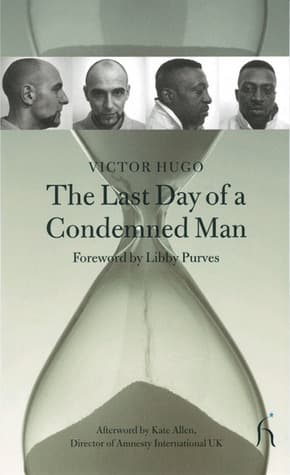
Victor Hugo (1992)
Genre
Historical Fiction
Reading Time
120 min
Key Themes
See below
Sign in to track this book
On the edge of the guillotine, a condemned man struggles with his final hours, his frantic memories a desperate plea against his coming execution.
The story begins with the unnamed condemned man in his cell at Bicêtre prison, just sentenced to death. He thinks about the past five weeks, from his arrest, trial, and sentencing. He remembers the crowd's indifference and the legal steps that sealed his fate. He feels great terror and injustice, not for his crime (which is never stated), but for the certainty of his coming execution. He decides to write down every thought, feeling, and observation, believing that such an account, if published, could be a strong argument against capital punishment.
While waiting to be moved to La Force or the Conciergerie, the condemned man describes the bad conditions of Bicêtre prison. He sees a chain gang of galley slaves getting ready for Toulon, noting their rough friendship, songs, and brutal treatment. He sees a sharp difference between their fate and his: they are condemned to life, while he is condemned to death. He notices the hard faces, vulgarity, and despair of these men, and thinks about how the prison system makes all its prisoners, including him, less human. The sounds and sights of Bicêtre cause constant suffering.
The condemned man learns he will be moved to the Conciergerie prison, which means his execution is close. During the trip, he is seen by the public, feeling both pity and morbid interest. He describes the crowd's reactions, their whispers, and children pointing at him. This public display makes him feel more isolated and ashamed. When he arrives at the Conciergerie, he is put in a cell where another famous condemned man, Damiens, had been, adding to the grim history of his situation. He realizes his final journey is quickly approaching.
A priest visits the condemned man, offering comfort and telling him to confess and repent. The man finds little comfort in the priest's words, as his thoughts are on his coming death, not religious forgiveness. He thinks about his past life, which he calls ordinary before his crime. He hints at a moment of madness or strong feeling that led to his fatal act, but he remains vague about the details, focusing instead on the common experience of human error. He struggles with the unfairness of a system that judges a whole life based on one terrible mistake.
A sad moment happens when his three-year-old daughter, Marie, visits him. He holds onto this last part of his old life, but the meeting is terrible. Marie, told her father is 'dead,' does not recognize him. She is afraid of his messy look and calls him 'Monsieur.' This interaction breaks his last hope and makes his despair deeper. He realizes he has lost not only his life but also who he is and his connection to his child. The visit shows the wide effect of his condemnation on his innocent family.
As the last night comes, the condemned man struggles to sleep, troubled by nightmares and the constant ticking of the clock. He describes the prison officials and guards who watch him, their presence a suffocating reminder of his fate. A barber comes to cut his hair, a grim ritual for all condemned men before execution. This simple act has great meaning, showing his preparation for the guillotine and the loss of his last bits of humanity. He cannot eat or find comfort, his mind focused only on the coming morning.
On the morning of his execution, the condemned man learns the hour is near. He hears the crowd gathering outside, waiting for the show. He is taken to the clerk's office to sign a document and notices the clock, counting his last moments. In a desperate, final plea, he begs for a reprieve, even a few minutes, hoping that the King's mercy might intervene. He gets polite but firm refusals; officials explain these decisions are not theirs to make. His final, frantic hope is gone.
The condemned man is led out of the Conciergerie and put in a carriage, which moves slowly through the streets of Paris towards the Place de Grève, where public executions happen. He describes the huge crowd, their faces showing excitement, indifference, and morbid curiosity. He feels completely exposed and shamed, a spectacle for the masses. The journey is a terrifying procession, each turn of the wheel bringing him closer to his end. He looks at the city, the buildings, and the sky, remembering these last images, contrasting the lively life around him with his coming death.
When he reaches the Place de Grève, the condemned man sees the guillotine in front of him, a terrifying symbol of death. The crowd roars, and he is led up the steps. Even in these last moments, he holds onto a bit of hope, looking for a messenger, a sign of a reprieve. He notices the executioner and his helpers, the mechanical process. His diary suddenly ends, leaving the reader to imagine his final, silent moments under the blade. The story ends with the chilling immediacy of his execution, leaving a lasting impression of horror and injustice.
The Protagonist
From a state of initial shock and disbelief, he gradually descends into an escalating spiral of despair and terror, culminating in a desperate, futile hope for reprieve.
The Supporting
She remains a static symbol of innocence and loss, her character not developing but serving as a catalyst for her father's despair.
The Supporting
The priest's character remains static, representing a consistent societal role.
The Supporting
They are static figures, representing the unchanging machinery of the state.
The Supporting
The crowd's collective behavior remains static, embodying societal attitudes towards punishment.
The Mentioned
They are a static representation of a different form of condemnation.
The Mentioned
A static, symbolic representation of legal bureaucracy.
The Mentioned
A static, symbolic representation of the state's power to execute.
The novel's main theme is a strong criticism of the death penalty. Hugo details the mental pain the condemned man suffers, arguing that waiting for death is a torture more cruel than the act itself. The story shows the dehumanizing rituals, the public display, and the justice system's bureaucratic indifference. The man's unclear crime makes his suffering universal, focusing on how wrong it is for the state to take a human life, no matter the offense. The novel aims to create empathy for the condemned, asking readers to question if capital punishment is moral or effective.
“What have I done? I am a man, a poor wretch, a criminal perhaps, but I am a man! And they are going to kill me!”
Hugo explores the mental effect of knowing your exact hour of death. The condemned man's diary shows the agonizing mental torture he experiences, far more than the physical pain of execution. Every sound, sight, and thought becomes a source of fear. The ticking clock, the changing light, the bureaucratic steps, and visits from officials all increase his anxiety. The novel shows how the long wait for death slowly takes away a person's sanity, dignity, and hope, making the 'last day' an unbearable mental ordeal.
“It is the hour of execution; the time is approaching. It seems to me that the clock ticks like a hammer striking on my skull.”
The condemned man slowly loses his identity as he goes through the prison system. He loses his name, his things, and his old life. He becomes 'the condemned man,' an object to be processed and executed. The public's morbid curiosity makes him less human, turning him into a spectacle. The most sad example is his daughter Marie not recognizing him, calling him 'Monsieur.' This shows how the system not only takes his life but also erases his personhood and his connections to society and family, leaving him completely alone and separated.
“I was a man like any other, a man who lived, who had his family, his friends, his good and bad days. Now I am a thing, a being of another species, a condemned man.”
Hugo criticizes the public display of executions, showing the crowds as morbidly curious and desensitized. The trip to the scaffold is a public show, with the condemned man as the unwilling star. The novel suggests that society, by allowing and even enjoying such displays, shares in the brutality. This theme questions the morality of a society that turns human suffering into entertainment, showing how violence corrupts the public mind. The crowd's cheers and jeers show the lack of empathy and the barbarity of public executions.
“A crowd! A crowd! They are coming to see me pass! They are coming to see my death!”
Despite the specific setting of capital punishment, the novel touches on the general human fear of death. The condemned man's deep terror, his desperate hold on life, and his thoughts on the unknown connect with basic human anxieties. By focusing on the internal experience of a man facing his end, Hugo goes beyond the specific crime or punishment to explore the existential dread in mortality. The detailed account of his final hours becomes a thought on what it means to be human when facing complete destruction, a fear all people share.
“Oh, for pity's sake, a reprieve! A moment! A few seconds! Perhaps I would see her again!”
The entire story is told through the condemned man's personal writings.
The novel is presented as the condemned man's personal diary or journal, written from his prison cell during his final weeks and days. This first-person perspective allows for an intimate and unfiltered exploration of his psychological state, fears, and reflections. It places the reader directly inside his mind, fostering deep empathy. The fragmented, immediate nature of the entries reflects his deteriorating mental state and the rapid approach of his execution. This device makes the narrative highly subjective and emotionally impactful, serving as his final plea against capital punishment.
The central character is never named, and his crime is left vague.
The condemned man is never given a name, and the specifics of his crime are deliberately omitted. This ambiguity serves to universalize his experience. By not naming him, Hugo allows the reader to project themselves onto the character, making his suffering more relatable to anyone facing death or injustice. The vague crime prevents the reader from judging the man based on his offense, forcing them instead to confront the inherent morality of capital punishment itself, regardless of the individual's guilt or innocence. It shifts the focus from 'who he is' to 'what is happening to him.'
The relentless passage of time symbolizes the inevitability of death.
The clock and the relentless passage of time are potent symbols throughout the novel. The condemned man is acutely aware of every ticking second, every passing hour, as his life drains away. Time is personified as a relentless, indifferent force pushing him towards the guillotine. The descriptions of dawn, dusk, and the final morning emphasize the irreversible march towards his fate. This device heightens the suspense and underscores the psychological torment of anticipation, as time itself becomes an antagonist, mocking his powerlessness and accelerating his demise.
Hugo frequently contrasts the condemned man's internal world with external realities.
Hugo employs contrast to highlight the profound injustice and suffering. Examples include juxtaposing the condemned man's educated sensitivity with the vulgarity of the galley slaves, his internal terror with the indifference of the guards, his love for his daughter with her inability to recognize him, and the vibrant life of Paris with his imminent death. This device intensifies the emotional impact by drawing sharp distinctions between hope and despair, life and death, and humanity and inhumanity, underscoring the tragic absurdity of his situation and the cruelty of his fate.
“I am condemned to die. What have I done? I have killed. And why did I kill? Because I was hungry.”
— The narrator reflects on his crime and its desperate motivation.
“The scaffold is the only edifice which revolutions do not demolish.”
— Commentary on the persistence of capital punishment through political changes.
“To be a condemned man is to be a man already dead.”
— The narrator describes his psychological state awaiting execution.
“What is the good of society? To make men happy. What is the good of the scaffold? To make men unhappy.”
— A rhetorical critique of the death penalty's purpose.
“I have but one thought, one conviction, one certainty: tomorrow I shall not be.”
— The narrator's fixation on his impending death.
“The law takes from a man what it cannot restore.”
— Argument against the irreversibility of execution.
“Every man carries within him a world made up of all that he has seen and loved.”
— The narrator reflects on the inner life destroyed by execution.
“They will kill me, but they will not convince me.”
— Defiance in the face of state-sanctioned killing.
“What is the use of killing me? Will it make the dead live again?”
— Questioning the retributive logic of capital punishment.
“I am a number in a register, a case in a court, a thing on a scaffold.”
— The narrator's feeling of dehumanization by the justice system.
“The hours drag on, leaden, sluggish, stupid.”
— Description of the agonizing wait for execution.
“To kill a man in cold blood, by law, is the most premeditated of murders.”
— Condemnation of state execution as calculated killing.
“My crime is that of a moment; my punishment is that of a lifetime—of eternity.”
— Contrast between the fleeting act and perpetual consequence.
“They talk of my soul. What do they know of my soul?”
— The narrator's resentment at others judging his inner self.
Ready to see how well you understood this book? Take our interactive quiz with 10 questions.
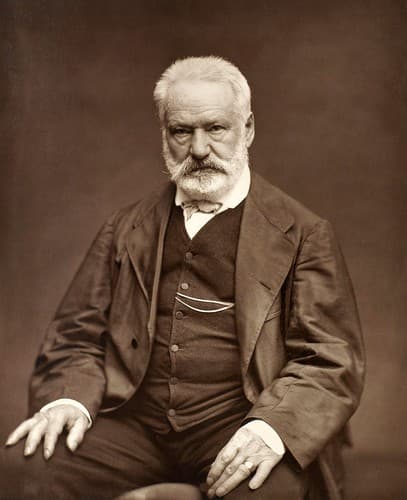
Victor-Marie Hugo was a French Romantic writer and politician. During a literary career that spanned more than sixty years, he wrote in a variety of genres and forms. He is considered to be one of the greatest French writers of all time.







