“The Worm of the World’s End is hungry. It will eat all the light. It will eat all the life. It will eat all the hope. It will eat the very possibility of being.”
— Lord Mhoram contemplating the ultimate threat of the Last Dark.

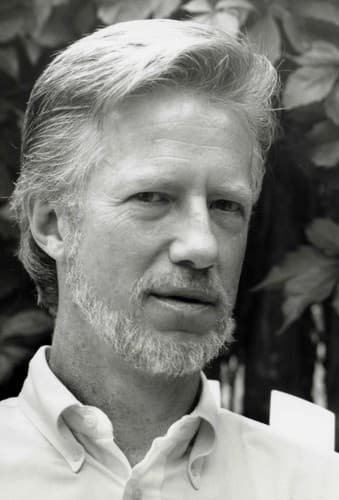
Stephen R. Donaldson (2013)
Genre
Fantasy / Science Fiction
Reading Time
15-20 hours
Key Themes
See below
Sign in to track this book
Time unravels as Thomas Covenant and Linden Avery combine their power to confront the apocalyptic Worm of the World's End, aiming to save the magical Land from ruin.
The story begins with the Land in crisis, crumbling under the Worm of the World's End. Thomas Covenant, now using his white gold ring with more understanding, and Linden Avery, having accepted her Staff of Law's power, reunite with their allies. These include the Haruchai, the Bloodguard, the Giants, and the Ramen. The Ur-viles, once evil servants, now despair, their existence threatened by the Worm's unmaking of Time. They reveal what they know about the Worm's weakness, a 'heart' that must be destroyed, but its location is unknown. The companions realize their individual strengths must combine if they hope to stop the ultimate destruction.
Understanding that the Worm of the World's End is not just a physical being but a force unmaking reality, the heroes make a plan. Thomas Covenant, Linden Avery, and their closest companions—the Giant Brandel and the Haruchai Esmer—decide to search for the Worm's 'heart.' This quest requires them to travel through the unraveling Land, crossing areas twisted and consumed by the Worm. They know their success depends on a unified purpose and power, a synergy between Covenant's white gold and Linden's Staff of Law, boosted by their allies' courage.
As the quest continues, the heroes face increasingly strange and dangerous challenges. The Worm's influence creates distortions in time and space, causing landscapes to shift, memories to blur, and the ground to become unstable. They encounter manifestations of the Worm's power, twisted versions of familiar creatures and places. Linden struggles to stay sane and focused amid the unraveling, while Covenant, though more confident in his power, grapples with the huge responsibility. The Bloodguard, with their natural resistance to corruption, become vital guides through the chaotic terrain.
Through their dangerous journey, the heroes uncover deeper truths about the Worm and its link to the Land's origins. They learn that the Worm is not purely evil, but a result of the Land's imbalance, a force correcting a basic flaw. This discovery makes them rethink their ideas of good and evil. Along the way, several allies make sacrifices, willingly giving their lives to protect others or to open paths to their goal. These losses weigh heavily on Covenant and Linden, strengthening their resolve even as they test their emotional limits.
After many trials, the heroes finally reach the heart of the Worm's domain: a vast, pulsing cavern that defies all natural laws. This is where the Worm's essence is most concentrated, a place of dread and power. The 'heart' is not a literal organ but an energy nexus, a focal point of the Worm's unmaking force. Its presence is overwhelming, threatening to consume them. Covenant and Linden realize this is their final battleground, and they must combine their unique powers in a way they have never tried before to succeed.
In the heart of the Worm's lair, Covenant and Linden begin their desperate attack. Covenant uses his white gold ring to channel raw power, while Linden, with her Staff of Law, tries to give that power form and direction, to weave it into a coherent strike against the Worm's core. The magnitude of their combined forces is almost unbearable, threatening to tear them apart even as it hits the Worm. Their allies, unable to directly attack the 'heart,' provide crucial support, distracting lesser manifestations of the Worm and protecting Covenant and Linden as they focus their immense energies.
The Worm of the World's End does not give up easily. It resists their combined attack with a primal, destructive force that threatens to obliterate them. The cavern itself convulses, and the heroes are hit by waves of unmaking energy. Covenant and Linden are pushed to their limits, their powers weakening under the strain. They face a choice: continue their attack, risking their own destruction and the Land's complete unmaking, or retreat, dooming everything to oblivion. The weight of this decision presses on them, testing their resolve and their love for each other and for the Land.
In a climactic, painful moment, Thomas Covenant and Linden Avery make the ultimate sacrifice. The details involve a complete merging of their beings and powers, a transcendence of their individual forms. This act of self-annihilation, driven by their love and commitment, finally disrupts the Worm's 'heart.' The Worm is defeated, its unmaking stopped, but the cost is immense. The Land, though saved from complete destruction, is changed. The nature of magic and reality is altered, and the fate of Covenant and Linden remains unclear, their victory linked to their disappearance.
With the Worm of the World's End defeated, the surviving inhabitants of the Land emerge into a world irrevocably altered. The immediate danger is gone, but the scars of the unmaking are deep. The Land is reborn, but not as it was. Magic still exists, but its nature is different, more subtle. The remaining Bloodguard, Giants, Ramen, and Ur-viles must now find a way to live in this new reality. They mourn the loss of Thomas Covenant and Linden Avery, their saviors, whose sacrifice ensures the Land's continued existence, though without their physical presence. A new era begins, one of healing and adaptation.
The novel's final moments reflect on the lasting spirit of the Land and its people. Though Thomas Covenant and Linden Avery are gone, their legacy remains. The Land, though changed, endures. The remaining characters, especially Brandel and Esmer, show the resilience and hope that will guide the Land into its future. The sacrifice made ensures that life, in some form, will continue. The story ends not with a final conclusion, but with the promise of a new beginning, showing the power of love, sacrifice, and the will to survive against impossible odds.
The Protagonist
From reluctant, self-loathing hero, he evolves into a willing, self-sacrificing savior, fully embracing his power and responsibility.
The Protagonist
From an outsider seeking answers, she becomes a powerful, self-sacrificing co-savior, fully integrated with the Land's destiny.
The Antagonist
A force of nature that is eventually overcome, leading to a new, albeit changed, state of existence for the Land.
The Supporting
Maintains his steadfast loyalty and wisdom, guiding his people and the heroes through the final crisis.
The Supporting
Continues her unwavering protection of Linden, demonstrating the ultimate Haruchai loyalty until the end.
The Supporting
Their role as guardians of the Land's essence continues, adapting to the new reality post-Worm.
The Supporting
Their ancient Vow is fulfilled through their ultimate sacrifice and endurance, safeguarding the Land's future.
The Supporting
From despairing, guilt-ridden beings, they find a measure of absolution through their final, desperate aid.
The novel explores sacrifice, especially through Thomas Covenant and Linden Avery's actions. Their self-annihilation to defeat the Worm of the World's End is the ultimate act of redemption for themselves and the Land. The Ur-viles' desperate help, despite their past evils, also highlights this theme, as they seek to make up for their role in the Land's suffering. Each character faces choices that demand personal cost for the greater good, showing that true heroism often comes with immense, irreversible loss.
““The Land demanded not merely their strength, but their very being, their cessation, for its continuance.””
Covenant and Linden both struggle with the great power they hold—white gold and the Staff of Law. The story looks at the ethical side of such power, its potential for both creation and destruction. Covenant, in particular, has a long history of dealing with the white gold's appeal and danger. In 'The Last Dark,' they finally learn to use their powers together, but this mastery comes with the ultimate responsibility: to use it not for personal gain or survival, but for the fundamental preservation of existence, even if it means their own end.
““Power without direction is chaos. Direction without power is futility. Only in their union lay hope.””
The deep love between Thomas Covenant and Linden Avery is the emotional center of the story. Their love is not just romantic but a deep spiritual connection that allows them to merge their powers and achieve what no one person could. This theme extends to the unity of the Land's different races—Giants, Ramen, Bloodguard, and even the Ur-viles—who put aside old differences and despair to fight a common enemy. The quest's success depends on this collaborative spirit, emphasizing that collective strength and empathy are essential when facing existential threats.
““Their hearts beat as one, their wills intertwined, a single, indomitable force against the unmaking.””
Despite the Worm's attempt to unmake it, the Land is shown as a living entity with an enduring spirit. Its history, magic, and essence are threatened, yet it continually fights back, showing subtle forms of resistance. The loyalty of its inhabitants, their willingness to fight for its survival, shows this theme. Even after the Worm's defeat, the Land is reborn, though changed. This means that while forms may alter and individuals may die, the underlying spirit and potential for life in the Land continue, offering hope for a new beginning.
““The Land had bled, had suffered, had been undone – yet it breathed still, a scarred but living promise.””
The approaching Worm of the World's End brings an overwhelming sense of despair, threatening to consume all hope and meaning. The Ur-viles especially embody this despair, having lost all purpose and facing destruction. However, against this background, the main characters and their allies constantly choose hope. Their relentless pursuit of the Worm's heart, their willingness to sacrifice, and their belief in the Land's worthiness of salvation are acts of deep hope. The story explores the constant struggle between giving in to the inevitable and fighting against impossible odds, ultimately affirming the power of hope.
““Despair was the Worm’s most potent weapon, but hope, however fragile, was the shield of the living.””
Thomas Covenant's magical ring, a source of immense, wild power.
The white gold ring is a central magical artifact, imbued with immense, raw, and often dangerous power. It is intrinsically linked to Thomas Covenant's identity as a leper and his role as the Land's savior. Its power is untamed and requires immense control and understanding to wield effectively without causing further destruction. In 'The Last Dark,' Covenant has finally achieved a level of mastery, allowing him to channel its full force in conjunction with Linden's Staff of Law, making it the primary offensive weapon against the Worm.
Linden Avery's magical staff, a source of healing and ordered power.
The Staff of Law is Linden Avery's primary magical artifact, representing order, healing, and control. It acts as a counterpoint to the wild power of Covenant's white gold, allowing for direction and precision. Throughout the series, Linden learns to wield its growing power. In 'The Last Dark,' it is crucial for channeling and focusing the combined energies of both Covenant and Linden, providing the necessary structure to combat the chaotic unmaking force of the Worm. It embodies Linden's desire to heal and preserve.
An unbreakable oath of loyalty and protection.
The Vow is a sacred, unbreakable oath taken by the Bloodguard, binding them to protect the Lords of the Land. It grants them immortality and immense resilience. As a plot device, it ensures the unwavering loyalty and presence of the Bloodguard throughout the most perilous journeys. It underscores themes of duty, sacrifice, and the enduring nature of commitment. In 'The Last Dark,' the Vow compels them to face the Worm's unmaking, providing crucial protection and guidance to Covenant and Linden, even as their own existence is threatened.
The Worm's power to dissolve existence itself.
This is the primary threat posed by the Worm of the World's End. It's not just physical destruction, but the literal unraveling of the fabric of reality and the flow of time. As a plot device, it creates a sense of profound urgency and existential dread, as the heroes are not just fighting for their lives, but for the very existence of everything. It manifests as shifting landscapes, fading memories, and distorted perceptions, constantly challenging the characters' sanity and their ability to navigate the world. This device heightens the stakes to an absolute maximum.
“The Worm of the World’s End is hungry. It will eat all the light. It will eat all the life. It will eat all the hope. It will eat the very possibility of being.”
— Lord Mhoram contemplating the ultimate threat of the Last Dark.
“Despair is a choice. It is a surrender, a giving up of the power to resist, to hope, to fight.”
— Mhoram reflecting on the nature of despair in the face of overwhelming odds.
“The Land is not merely a place; it is a promise. And a promise, once broken, can never be truly mended.”
— A character lamenting the corruption and destruction inflicted upon the Land.
“Sometimes, the only way to save a thing is to be willing to lose it entirely.”
— A difficult strategic decision being made, requiring immense sacrifice.
“The greatest evil is not hatred, but indifference. For indifference allows hatred to flourish unchecked.”
— A character's observation on the apathy that allows destruction to continue.
“We are not defined by our failures, but by how we choose to rise from them.”
— A leader inspiring their followers after a significant setback.
“True courage is not the absence of fear, but the refusal to let fear dictate one's actions.”
— A warrior facing a terrifying foe, yet choosing to stand their ground.
“The past is a weight, but also a foundation. We stand upon it, even as it threatens to bury us.”
— A reflection on the burdens and lessons of history.
“To truly understand an enemy, one must first understand what they fear.”
— A strategic insight into the motivations of the adversaries.
“Light itself can be a weapon, but only if wielded with purpose and understanding.”
— Discussing the power of the Staff of Law and its proper use.
“There are some wounds that time cannot heal, only make bearable.”
— A character reflecting on deep personal grief and loss.
“Every choice carves a path, and even the smallest decision can alter the course of destiny.”
— A character contemplating the ripple effects of their actions.
“The ultimate victory is not merely to survive, but to remember what we fought for.”
— A reflection on the meaning of triumph amidst devastation.
“Hope is not a guarantee, but a necessity. Without it, we are already lost.”
— A character reinforcing the importance of maintaining hope against overwhelming odds.
Ready to see how well you understood this book? Take our interactive quiz with 10 questions.
Biography coming soon.







