BookBrief
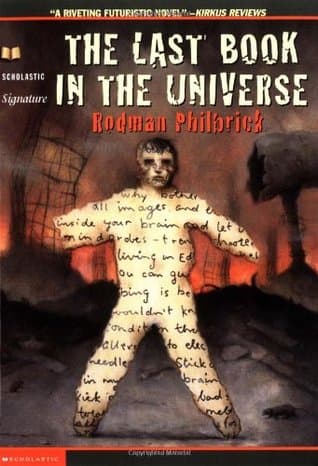
The Last Book in the Universe cover
Archivist's Choice

The Last Book in the Universe

Rodman Philbrick (2000)

Genre

Fantasy / Children's / Science Fiction / Young Adult

Reading Time

270 min

Key Themes

See below

Track Your Reading

Sign in to track this book

In a future where humanity is lost to virtual reality, an epileptic teenager named Spaz goes on a journey with an old storyteller to save his sister and bring back human intelligence.

Synopsis

In a future where most of humanity is dulled by brain-drain 'mindprobes,' Spaz, an epileptic teenager in a gang called the Latches, has a seizure. This leads him to find his younger sister, Bean, who is very sick. Spaz has a rare spark of humanity and goes outside his familiar zone to get help. He meets Ryter, an old man who knows a lot about the 'Before Time' and reading. Spaz thinks the 'Last Book' has a cure, so he goes with Ryter. They travel through dangerous zones controlled by other gangs and avoid mindprobes. They reach the high-tech Proov sector, where they meet Lanaya, a genetically engineered 'Proov' who offers hope through advanced medicine and knowledge. The 'Last Book' is more than a physical object; it represents humanity's stories and wisdom. Spaz and Ryter face challenges like gang wars and Proov skepticism. They find a sanctuary where the book is kept. Ryter reads to Bean, which stirs her consciousness. Their return trip is dangerous. Ryter sacrifices himself to save Spaz, giving him the legacy of knowledge and the importance of remembering the past. Spaz changes because of his journey and Ryter's influence. He decides to share stories and wisdom from the 'Before Time,' becoming a hope for human intelligence to return.
Reading time
270 min
Difficulty
Easy
Pacing
Fast
Mood
Gritty, Hopeful, Adventurous, Reflective
✓ Read this if...
You enjoy dystopian futures, stories of unlikely friendships, and quests for knowledge in a world that has forgotten it.
✗ Skip this if...
You prefer highly complex world-building or are sensitive to themes of illness and sacrifice.

Plot Summary

Spaz's Seizure and the Call to the Proov Sector

The story begins with Spaz, an epileptic teenager in the F-Zone, having a seizure. He wakes up confused, surrounded by members of his gang, the Bully Busters, including their leader, Banga. His foster brother, Little Face, is also there. Later, a message arrives from the Proov sector, a high-tech, clean part of the city. The message is from Lanaya, a young Proov girl, who tells Spaz that his biological sister, Bean, is very sick with a mysterious illness called the 'mindprobe.' Bean lives in a different F-Zone, far from Spaz. Lanaya, who knows Bean, urges Spaz to come to her.

Encountering Ryter and the Journey Begins

Spaz decides he has to go to Bean, even though Banga does not want him to at first. As he gets ready to leave, he meets Ryter, an old man living alone. Most 'normals' avoid Ryter because he likes books and history. Ryter offers to go with Spaz, thinking he can help navigate the dangerous F-Zones and offer advice. Spaz is careful about Ryter's 'old' ways but agrees, seeing that the old man's knowledge could be helpful. They start their dangerous journey, leaving the safety of Spaz's F-Zone. They head towards the distant F-Zone where Bean lives, facing unknown dangers in the ruined land and from other gangs.

Navigating the Zones and Gathering Supplies

Their journey through the empty F-Zones is full of danger. They meet different gangs and travel through ruined places. Ryter's knowledge of the old world and his ability to read help them find safe paths and understand the remains of civilization. They look for food and supplies, often having to trade or outsmart others. Spaz, at first annoyed with Ryter, starts to value the old man's wisdom and calm way. They learn to depend on each other, forming an unusual bond as they go further into unknown territory, urged on by Bean's worsening condition.

Arrival at the Proov Sector and Meeting Lanaya

After a long and hard journey, Spaz and Ryter reach the edge of the Proov sector. Despite strict security and a big social gap, Lanaya helps them get in, as she promised. Spaz is surprised by how different the dirty F-Zones are from the clean, high-tech world of the Proovs. Lanaya explains that she has been watching Bean with Proov technology and that Bean is getting sicker fast. She says that Bean's illness, the 'mindprobe,' is unusual and might be connected to the global 'mindwipes' that have made human intelligence dull.

Bean's Condition and Lanaya's Research

Spaz finally sees Bean again. She is weak and does not respond; her mind seems trapped. Seeing his sister suffer makes him more determined. Lanaya explains that she has been studying Bean's condition, which she calls 'mindprobe.' She believes it is a return to a more basic state, caused by the 'mindwipes' that have affected most people. She thinks a cure might involve stimulating the brain with 'old-world' knowledge and stories, an idea that Ryter immediately likes. Lanaya's research suggests that the 'mindprobe' might be a severe, faster form of the general decline in human intelligence.

The Quest for the 'Last Book'

Lanaya has used all Proov medical knowledge. She suggests a desperate plan: find a legendary 'last book' rumored to have stories and knowledge from the 'before time.' She believes that reading this pure information could reawaken Bean's mind. Ryter, who has spent his life keeping such knowledge, is the right guide. Spaz, at first doubtful about how powerful 'books' are, agrees to go on the quest. His love for Bean is stronger than his doubts. They get ready to leave the Proov sector, going into even more dangerous and unknown F-Zones, hoping to find this mythical book.

Perils of the Journey and the Gang Wars

Their journey to find the 'last book' is even more dangerous than Spaz's first trip. They meet hostile gangs, including a violent fight with the Vandals, led by Billy Bizmo. Ryter's knowledge of old maps and landmarks is very helpful, guiding them through forgotten paths and ruins. Spaz uses his street smarts and quickness to protect Ryter and Lanaya from immediate threats. Lanaya, a Proov, adapts surprisingly well to the harsh F-Zones, showing strong determination. The constant threat of violence and hunger tests them, but hope for Bean keeps them moving.

Finding the Sanctuary and the Book

After weeks of travel, they find a hidden, overgrown sanctuary, a place untouched by the general decay. Inside, they find a small, makeshift library, carefully kept. To their surprise, they find what Ryter believes is the 'last book' – a collection of classic stories and poems from the 'before time.' The book is old and delicate, but its contents are lively. Ryter is very emotional, realizing his lifelong search for knowledge has led to this moment. Lanaya is excited by the possible cure, and Spaz, seeing the respect in Ryter's eyes, starts to understand the book's value.

Returning to Bean and the 'Reading'

With the 'last book,' the trio quickly goes back to Bean. When they return, they start their experiment right away. Ryter reads aloud from the book, his voice full of feeling and knowledge, sharing the stories and poems with Bean, who does not respond. Lanaya watches Bean's vital signs and brain activity with Proov tools, looking for any sign of improvement. Spaz sits beside his sister, listening closely, hoping the words will reach her. The process is slow and hard, with no quick signs of recovery, but they keep going, driven by their shared wish to save Bean.

Bean's Awakening and the Hope for Humanity

Days pass as Ryter continues to read. Slowly, amazingly, Bean starts to respond. Her eyes open, and she shows faint signs of recognition. Over time, she starts to speak, her words at first shaky, then clearer. The 'mindprobe' goes away, replaced by an curious mind. Lanaya is very happy, confirming that the stories and knowledge have indeed stimulated Bean's brain. Spaz is full of joy and relief. Bean's recovery is a big moment, not just for her, but for the possibility it shows: that human intelligence, dulled by the 'mindwipes,' can return, offering a bit of hope for humanity's future.

The Confrontation and Ryter's Sacrifice

After Bean recovers, Banga and the Bully Busters, who tracked Spaz, arrive at the Proov sector. They demand payment and show their power over the F-Zone. A tense argument starts. Banga, driven by jealousy and a need for control, sees Ryter as a threat to his order, someone who represents a different kind of power – knowledge. In the confusion, Banga attacks Ryter, killing him. Spaz is heartbroken by the loss of his mentor and friend. He realizes the violence and lack of understanding that still hurt their world, even with new hope. Ryter dies, a martyr for old ways and the search for knowledge.

Spaz's New Purpose and the Legacy of Ryter

After Ryter's death, Spaz feels a deep loss but also has a new purpose. He realizes that Ryter's legacy, the stories and knowledge from the 'before time,' must be kept and shared. Lanaya sees Spaz change and offers him a choice: go back to the F-Zone or stay in the Proov sector and help her spread knowledge. Spaz chooses to become the new 'Ryter,' taking on the job of being a storyteller and a keeper of the past. He understands that the real fight for humanity's future is in reawakening minds, one story at a time, making sure the 'last book' is only the start.

Principal Figures

Spaz

The Protagonist

From a cynical gang member driven by instinct, Spaz evolves into a thoughtful guardian of knowledge, inspired by Ryter's legacy.

Ryter

The Supporting

Ryter fulfills his life's purpose by guiding Spaz and helping to reawaken humanity's intelligence through stories, ultimately sacrificing himself for the cause.

Lanaya

The Supporting

Lanaya grows from a detached scientific observer to an active participant in the fight to restore human intelligence, bridging the gap between Proov and F-Zone worlds.

Bean

The Supporting

Bean's arc is one of decline due to illness and subsequent miraculous recovery, symbolizing the potential for humanity's intellectual rebirth.

Banga

The Antagonist

Banga remains largely static, representing the forces of ignorance and violence that Spaz must overcome or escape.

Little Face

The Supporting

Little Face remains loyal to Spaz, embodying the potential for change within the F-Zone youth.

Billy Bizmo

The Mentioned

Billy Bizmo serves as an episodic antagonist, representing the dangers of the F-Zones.

The Proovs

The Supporting

The Proovs, as a collective, remain largely static, representing a societal structure that contrasts sharply with the F-Zones.

Themes & Insights

The Power of Knowledge and Storytelling

This theme is key to the novel: knowledge, history, and stories are important for human intelligence and civilization. Ryter shows this theme, spending his life saving old books. The 'mindprobe' affecting Bean is cured by reading from the 'last book,' directly connecting knowledge to getting back brain function. This shows how 'mindwipes' have dulled humanity and how finding stories again can reawaken minds. Spaz changes from a doubtful gang member to a keeper of stories, showing how much this theme matters. It suggests that the future means remembering the past.

''Books are the memory of the world,' Ryter said. 'And in a world that has forgotten how to remember, a book is a dangerous thing.'

Ryter

Identity and Self-Discovery

Spaz's journey is about finding himself. He starts as a product of his violent F-Zone, defined by his gang and his seizures. But his attempt to save Bean makes him look past his immediate survival. Through his time with Ryter and Lanaya, he questions who he is, his biases, and what he knows about the world. He finds a bigger purpose than gang life, becoming a guardian of knowledge and a storyteller, continuing Ryter's work. His seizures, at first a sign of weakness, become part of his unique self, giving him a different view.

'Maybe I'm not a Bully Buster anymore,' I thought, looking at the dead trees. 'Maybe I'm something else.'

Spaz (internal monologue)

The Dangers of Ignorance and Social Decay

The novel clearly shows a world harmed by ignorance and social decay, mostly in the F-Zones. The 'mindwipes' have caused a wide decline in intelligence, leading to violence, superstition, and a lack of historical awareness. Gangs like the Bully Busters and the Vandals grow in this environment. They show the harsh results of a society that has lost its shared memory and desire to learn. Banga killing Ryter clearly shows how ignorance can destroy knowledge and those who try to keep it. The big difference between the F-Zones and the Proov sector also shows the extreme social layers caused by this decay.

'They don't care about the before time,' Banga sneered. 'They only care about now.'

Banga

Hope and Redemption

Despite the bleak future setting, the novel is a story of hope and getting better. Spaz's strong love for Bean and his resolve to save her drives the story, even when things are very hard. Bean's amazing recovery through stories offers real hope for bringing back human intelligence. Ryter's lifelong dedication to knowledge, even in a world that has forgotten it, shows lasting hope. The novel suggests that even after society falls apart, there is always a chance for a new start, especially when people choose to fight for knowledge and connection.

'Maybe,' Lanaya whispered, 'maybe this is how it starts. With one story. With one mind that remembers.'

Lanaya

The Nature of Humanity and Progress

The book looks at what it means to be human in a world where intelligence has been purposely dulled. The Proovs are technologically advanced but emotionally distant humans. The F-Zone people live a more basic, survival-focused life. The 'mindwipes' bring up questions about what progress means and if technology without deep thought and feeling truly helps humanity. Ryter's belief in the 'before time' and the value of human history suggests that real progress is not just in technology, but in keeping and understanding our past, being kind, and growing intelligence.

'What's the point of living forever if you don't even know what it means to be alive?'

Ryter

Plot Devices & Literary Techniques

The 'Mindwipes' and the 'Mindprobe'

A global event and a specific illness that drive the central conflict.

The 'mindwipes' are a past, catastrophic event that dulled human intelligence on a global scale, leading to the current post-apocalyptic society. This serves as the backstory for the pervasive ignorance and violence. The 'mindprobe' is a specific, accelerated form of this intellectual decline, afflicting Bean. This device creates the urgent plot driver for Spaz's quest. Both concepts highlight the central theme of the importance of intelligence and knowledge, and the devastating consequences of their loss, functioning as the primary antagonists of the story on a conceptual level.

The 'Last Book'

A symbolic object representing hope, knowledge, and the past.

The 'last book' is a literal object – a collection of stories and poems from the 'before time' – but it functions as a powerful symbol. It represents the accumulated knowledge and wisdom of the past, the very essence of what has been lost. Its discovery and use to cure Bean underscore the novel's central theme about the power of storytelling and literature to reawaken the human mind. The quest for the book provides a clear objective for the protagonists, making an abstract concept (knowledge) tangible and actionable, and its contents are the direct means of salvation.

The F-Zones vs. The Proov Sector

A stark environmental contrast highlighting societal divisions and values.

This device creates a vivid and immediate contrast between two vastly different ways of life in the post-apocalyptic world. The F-Zones (Forbidden Zones) are chaotic, dangerous, and ignorant, representing the collapse of society and human intellect. The Proov sector is sterile, technologically advanced, and orderly, representing an isolated, engineered form of progress. This dichotomy highlights themes of social stratification, the nature of humanity, and the consequences of different societal choices. It also provides a physical manifestation of the intellectual and emotional divide among surviving humans, which Spaz and Lanaya try to bridge.

Spaz's Seizures

A character trait that provides unique perspective and vulnerability.

Spaz's epilepsy is more than just a medical condition; it's a plot device that shapes his character and perspective. The seizures make him vulnerable, but also give him moments of altered consciousness that separate him from the 'normals' plugged into brain-drain entertainment. This unique neurological state symbolically positions him as someone who can 'see' differently, making him an ideal candidate to bridge the gap between the ignorant F-Zones and the intellectual Proovs. His seizures also provide moments of tension and demonstrate his resilience in a harsh world, making him a more complex protagonist.

Ryter as the 'Scribe'

A symbolic character representing the preservation of history and knowledge.

Ryter's role as the 'scribe' is a deliberate literary device. In a world where reading is forgotten, he is a living library, a direct link to the past. He embodies the intellectual heritage that humanity has lost. His meticulous collection of 'before time' artifacts and his ability to read are crucial for the plot's resolution. His character serves as a moral compass and a catalyst for Spaz's intellectual awakening. His ultimate sacrifice reinforces the preciousness of knowledge and the cost of its preservation in a hostile world, solidifying his symbolic role as a martyr for learning.

Critical analysis

Notable Quotes

Memory is all we are. Moments and feelings, captured in amber, strung on filaments of reason. What a piece of work is a man, how noble in reason, how infinite in faculties, in form and moving how express and admirable, in action how like an angel, in apprehension how like a god!

Spaz reflects on the nature of memory and humanity.

The only thing that makes us human is that we remember.

Spaz contemplates the importance of memory in defining humanity.

In the Urb, you don't get to choose your family. You get what you get, and you try to make it work.

Spaz describes life in the dystopian Urb.

Sometimes the only way to stay alive is to pretend you're already dead.

Spaz explains survival tactics in the harsh Urb environment.

The past is a story we tell ourselves to make sense of the present.

Spaz muses on how memory shapes understanding.

Hope is a dangerous thing. It can get you killed.

Spaz warns about the risks of hope in a bleak world.

We're all just stories in the end. Make yours a good one.

Spaz encourages others to live meaningfully.

The mind is a fragile thing. It can be broken, but it can also be mended.

Spaz reflects on mental resilience and recovery.

In a world without books, we become the stories we tell.

Spaz highlights the role of oral tradition in a bookless society.

Fear is a weapon. Don't let them use it against you.

Spaz advises on resisting manipulation through fear.

The truth is a slippery thing. It changes depending on who's telling it.

Spaz discusses the subjective nature of truth.

You can't change the past, but you can change how you remember it.

Spaz offers insight on coping with memories.

Sometimes the bravest thing you can do is to keep going.

Spaz encourages perseverance in difficult times.

We are all connected, like threads in a tapestry. Pull one, and the whole thing unravels.

Spaz reflects on interdependence in society.

Quiz

Test Your Knowledge

Ready to see how well you understood this book? Take our interactive quiz with 10 questions.

10
Questions
~5
Minutes
?
Best Score

Key Questions (FAQ)

The novel follows Spaz, an epileptic teenager in a post-apocalyptic world where most people are addicted to 'mind-probes' that provide immersive entertainment. After meeting an old man named Ryter who preserves stories in handwritten books, Spaz embarks on a quest to save his dying sister Bean, journeying through dangerous zones to find a rumored healer while uncovering truths about humanity's lost past.

About the author






