“All worlds draw to an end and that noble death is a treasure which no one is too poor to buy.”
— Aslan explains the nature of death and the end of Narnia to the children.

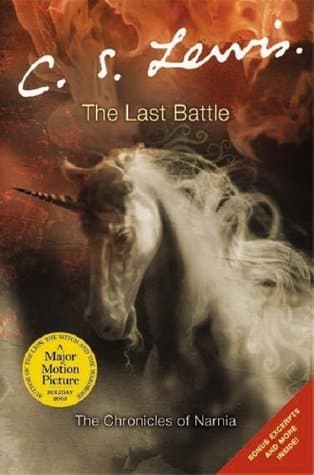
C.S. Lewis (1956)
Genre
Fantasy / Children's / Young Adult
Reading Time
240 min
Key Themes
See below
Sign in to track this book
Narnia faces its end as a final battle tests its last king and loyal creatures against a deceptive new god and encroaching darkness.
In western Narnia, the ape Shift finds a lion's skin. With the help of the donkey Puzzle, he dresses Puzzle in it to pretend to be Aslan. Shift, acting as 'Aslan's' interpreter, starts giving harsh orders to the Narnians, making them work for the Calormenes and cut down the Talking Trees. King Tirian, hiding in the woods, sees the destruction and despair. He confronts Shift and the Calormenes but is captured and tied to a tree, set for execution at dawn. He prays for help, sad about Narnia's fall and the misuse of Aslan's name.
As King Tirian waits for death, his prayer for help is answered. In England, Eustace Scrubb and Jill Pole, now older, are at a train station with their old headmaster, Frank, talking about Narnia's danger. They are suddenly pulled from their world and appear in the Narnian woods, brought by Aslan. They quickly find King Tirian tied up and, after a quick explanation, free him. Tirian is at first unsure about their story but soon accepts their help as they plan to expose Shift's trick and gather loyal Narnians.
Tirian, Eustace, and Jill learn more about Shift's rule and his alliance with the Calormenes, led by Rishda Tarkaan. Shift has said Aslan and Tash are the same god, 'Tashlan,' and makes Narnians work as slaves. He plans a public event where Narnians will 'see' Aslan in a stable on Stable Hill. Tirian and his friends join the crowd, hoping to expose Puzzle. During the event, Shift's plan goes wrong when Rishda Tarkaan and the Calormenes start throwing unwilling Narnians into the stable, saying they will meet 'Tashlan' and never return, causing fear.
As things get worse on Stable Hill, Tirian, Eustace, and Jill lead a small group of loyal Narnians, including Jewel the Unicorn and Farsight the Eagle, in a fight against the Calormenes. Many Narnians, including Talking Beasts, are killed or forced into the stable. Rishda Tarkaan, trying to keep control, accidentally throws Shift into the stable, where something unseen immediately eats him. Tirian, fighting, ends up pushed into the stable's dark inside, followed by Jill, Eustace, and Jewel. The stable, which looks small outside, is surprisingly large inside.
Inside the stable, Tirian, Jill, Eustace, and Jewel find themselves in a beautiful, sunny land, much larger and brighter than the stable's outside suggested. They meet many past Narnian heroes, including High King Peter, King Edmund, Queen Lucy, Digory Kirke, and Polly Plummer. Susan Pevensie is not there, having stopped believing in Narnia. Peter tells them the truth: they are all dead. The train crash that brought Eustace and Jill to Narnia at the start of this adventure was the accident that killed all of them in their world, bringing them to the true Narnia, beyond the shadow lands.
The fight continues inside the stable. Rishda Tarkaan, scared of 'Tashlan,' tries to run but is pushed back by Emeth, a noble Calormene soldier who has questioned the Tash cult. Rishda, in his fear, accidentally calls the real, terrifying god Tash, who appears in the stable. Tash claims Rishda, while Emeth, who had worshipped Aslan through his good deeds, is welcomed by Aslan. The remaining loyal Narnians and the Pevensies fight, but this is a fight for spiritual loyalty, not physical victory. Many face Tash, and their true hearts are shown.
Aslan finally appears in his full power inside the stable, sending Tash back to his own place. He then begins the judgment of all creatures, Narnian and Calormene, who entered the stable. Those who loved Aslan and Narnia, no matter their species or past loyalties, go through a door to a new, more real land. Those who rejected Aslan, or whose hearts were bad, turn into dumb animals or disappear into darkness. Aslan then tells Peter to shut the door on the old Narnia, and they watch the whole world of Narnia unmade, collapsing, like a book closing forever.
The Pevensies, Digory, Polly, Eustace, Jill, Tirian, Jewel, and all the faithful Talking Beasts and Narnians are in a beautiful, grander version of Narnia. It is a land 'deeper' and more real than the Narnia they knew, where everything is more vivid. They realize this is the true Narnia, the 'shadow' of which they had lived in before. Aslan explains that this new land is just the start of an eternal journey, always going 'further up and further in,' into greater joy and understanding. They see the old Narnia below them, a mere reflection, and understand that their adventures have truly just begun in this boundless, eternal place.
The Protagonist
From despair and isolation, he finds renewed hope and courage through his alliance with the Pevensies, ultimately embracing the end of Narnia and the beginning of the true Narnia.
The Antagonist
He rises to power through deception and tyranny, only to be accidentally thrown into the stable and devoured by the very god he invoked, Tash.
The Supporting
From unwitting participant in deception, he gains clarity and forgiveness, finding peace in the true Narnia.
The Protagonist
Having grown from his previous Narnian experiences, he serves as a heroic and loyal champion, ultimately entering the eternal Narnia.
The Protagonist
Having previously learned about Aslan's signs, she bravely faces the final destruction of Narnia and enters the eternal Narnia with faith.
The Divine Figure
Though seemingly absent during Narnia's downfall, he ultimately appears to fulfill his role as judge and guide, leading his faithful into an eternal existence.
The Antagonist
From a pragmatic conqueror, he descends into terror and is ultimately claimed by the very god he secretly disbelieved in, Tash.
The Supporting
He remains steadfastly loyal to Tirian and Aslan, passing into the true Narnia with the faithful.
The Supporting
He experiences the 'death' that brings him to the eternal Narnia, where he fulfills his final duty as High King by closing the door on the old world.
The Supporting
From a devout but confused follower of Tash, he discovers his true allegiance to Aslan through his actions and is welcomed into the new Narnia.
The main theme is the destruction of Narnia's physical world and its re-creation into a more real, eternal place. This mirrors Christian ideas about the 'old heaven and earth' passing and a 'new heaven and new earth' appearing. The faithful see Narnia unmade as a temporary 'shadow' of its true self, then enter a deeper, more alive version. This theme explores the idea that physical reality is not the final reality, and that true existence is beyond the temporary.
“And as He spoke, He no longer looked to them like a Lion, but the things that began to happen at that moment were so great and beautiful that I cannot write them. And for us this is the end of all the stories, and we can truly say that they all lived happily ever after. But for them it was only the beginning of the real story. All their life in this world and all their adventures in Narnia had only been the cover and the title page: now at last they were beginning Chapter One of the Great Story which no one on earth has read: which goes on for ever: in which every chapter is better than the one before.”
Shift's tricking Puzzle into pretending to be Aslan, and the joining of Aslan and Tash into 'Tashlan,' discusses false religion and blasphemy. Shift uses religious power for selfish reasons, misleading Narnians and justifying their slavery and the destruction of their land. This corruption of sacred figures shows the dangers of spiritual deception and the need to tell true faith from manipulative lies. The real Tash appearing shows a clear result of calling on such dark forces.
“For what you have done, you have done to me. And what you have not done, you have not done to me. There is no service you can do to me that cannot be done to Tash, and no service you can do to Tash that cannot be done to me.”
The characters' reactions to Narnia's crisis show their true faith or lack of it. Many Narnians are fooled by Shift's lies and fear, losing faith in Aslan. Others, like Tirian, Eustace, Jill, and Jewel, keep their strong belief despite difficulties. Emeth, a Calormene who worshipped Tash but whose good deeds and honest heart Aslan recognizes, shows that true loyalty is judged by actions and heart, not just the name of the god one claims. Susan Pevensie's absence, because of her disbelief, also highlights the theme of choosing faith.
“I have come home at last! This is my real country! I belong here. This is the land I have been looking for all my life, though I never knew it till now.”
The story shows the ultimate fight between good and evil. Shift and Rishda Tarkaan represent lies, greed, and tyranny, while Tirian and the Pevensies show courage, loyalty, and justice. The end inside the stable, where Aslan judges everyone, explores moral responsibility. Each character's final fate depends on their true heart and their alignment with good or evil, ending with the separation of the good from the bad as Narnia is unmade and remade.
“All that was evil, all that was untrue, all that was unjust, was being withdrawn from it into the darkness. And all that was good, all that was true, all that was beautiful, was being drawn out of it into the new Narnia.”
The book explores the idea of reality, suggesting that the Narnia the children knew was only a 'shadow' or 'reflection' of a truer, deeper Narnia. The characters' death in the train crash is not an end but a passage to this more real, eternal life. This theme questions usual ideas of life and death, showing death as a door to a more lasting reality. The journey 'further up and further in' means an endless move into greater truth and joy in the eternal realm, making the old world's end seem less final.
“The new one was a country you could walk in and eat in and learn in. The old Narnia was a picture, a dream; but this was the real thing.”
A seemingly ordinary stable door that acts as a portal between worlds and a gateway to judgment.
The Stable Door on Stable Hill is a crucial plot device. Initially, it is used by Shift and Rishda Tarkaan as a point of forced entry for Narnians, creating the illusion of 'Tashlan' within. However, it quickly becomes a literal and metaphorical gateway to a new reality. Characters are pushed or fall through it, leading them not to an ordinary stable interior, but to a vast, sunlit land – the true Narnia. It functions as a symbol of death and rebirth, a point of no return, and the threshold of divine judgment, separating the old world from the new and the faithful from the unfaithful.
A physical prop used to create a false idol and deceive the Narnians.
The lion's skin found by Shift is the primary tool for his deception. By dressing Puzzle, a donkey, in it, Shift creates a false Aslan, manipulating the Narnians through fear and veneration. This device highlights the theme of blasphemy and the corruption of sacred symbols. The physical disguise allows for the initial spread of Shift's lies and the Calormene takeover. Its eventual removal and the exposure of Puzzle underscore the triumph of truth over falsehood, though the damage done by its use is irreversible for the old Narnia.
The event in the 'real world' that serves as the transition point to the true Narnia.
The train crash is the unexpected and sudden event in England that kills Eustace, Jill, the Pevensies (except Susan), Digory, and Polly. This device serves as the ultimate 'death' that transports the characters from their earthly lives into the eternal Narnia. It is a moment of profound revelation, as the characters realize their prior existence was merely a 'shadow.' The crash acts as a literal and symbolic bridge, signifying the end of their mortal journey and the beginning of their eternal one, providing a definitive closure to their adventures in the 'old' Narnia and their earthly lives.
The literal collapse and dissolution of the old Narnian world.
The unmaking of Narnia is a powerful and visually striking plot device. Under Aslan's command, the entire world of Narnia, from its stars to its landscapes and creatures, collapses and shrinks, like a book being closed or a dream fading. This serves to emphasize the temporary and ultimately illusory nature of the 'old' Narnia. It provides a definitive, dramatic conclusion to the Narnian chronicles, illustrating the finality of the world's end and making way for the new, eternal Narnia. It's a direct parallel to biblical apocalyptic imagery.
“All worlds draw to an end and that noble death is a treasure which no one is too poor to buy.”
— Aslan explains the nature of death and the end of Narnia to the children.
“The term is over: the holidays have begun. The dream is ended: this is the morning.”
— Aslan speaks to the children after the end of Narnia, describing the transition to the real Narnia.
“I have come home at last! This is my real country! I belong here. This is the land I have been looking for all my life, though I never knew it till now.”
— Jewel the Unicorn expresses joy upon entering the real Narnia.
“The further up and the further in you go, the bigger everything gets. The inside is larger than the outside.”
— Lucy observes the paradoxical nature of the real Narnia as they explore it.
“It's all in Plato, all in Plato: bless me, what do they teach them at these schools!”
— Professor Digory Kirke comments on the philosophical underpinnings of the events.
“I have swallowed up girls and boys, women and men, kings and emperors, cities and realms.”
— The false Aslan (actually a donkey in a lion-skin) speaks, representing deception and evil.
“The light ahead was growing stronger. Lucy saw that a great series of many-coloured cliffs led up in front of them, and then she forgot everything else, because Aslan himself was coming, leaping down from cliff to cliff like a living cataract of power and beauty.”
— Description of Aslan's arrival in the real Narnia.
“We're so afraid of being taken in that we cannot be taken out.”
— Puzzle the Donkey reflects on his role in the deception and the fear of being fooled.
“It is as hard to explain how this sunlit land was different from the old Narnia as it would be to tell you how the fruits of that country taste.”
— Narrator describes the indescribable beauty of the real Narnia.
“The reason why we loved the old Narnia is that it sometimes looked a little like this.”
— Aslan explains the connection between the old Narnia and the real one.
“There was a real railway accident. Your father and mother and all of you are—as you used to call it in the Shadow-Lands—dead. The term is over: the holidays have begun.”
— Aslan reveals to the children that they have died in a train crash and entered the real Narnia.
“I have been wandering to find him and my happiness is so great that it even weakens me like a wound.”
— An old friend from earlier books is reunited with Aslan in the real Narnia.
“The new one was a deeper country: every rock and flower and blade of grass looked as if it meant more.”
— Description of the real Narnia compared to the old one.
Ready to see how well you understood this book? Take our interactive quiz with 10 questions.
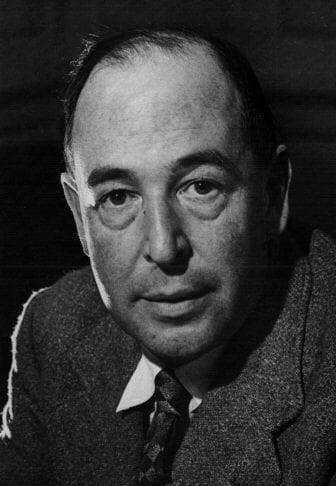
Clive Staples Lewis was a British writer, literary scholar, and Anglican lay theologian. He held academic positions in English literature at both Oxford University and Cambridge University. He is best known as the author of The Chronicles of Narnia, but he is also noted for his other works of fiction, such as The Screwtape Letters and The Space Trilogy, and for his non-fiction Christian apologetics, including Mere Christianity, Miracles, and The Problem of Pain.







