“Britain was no longer a province of the Empire. She was an island set adrift, a ship without a rudder, a house without a master.”
— The Roman legions have withdrawn, leaving Britain vulnerable.

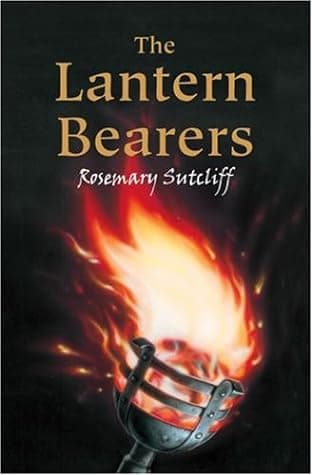
Rosemary Sutcliff (1959)
Genre
Fantasy / Children's / Historical Fiction / Young Adult
Reading Time
450 min
Key Themes
See below
Sign in to track this book
After his home is destroyed and his family lost during Roman Britain's collapse, a young man finds a new purpose as a guardian against the Saxon invasion.
Aquila, a young Romano-British noble, is a cavalry officer in the last Roman legion in Britain. He is with his father, Flavian, and his sister, Flavia, as the legion prepares to leave for Rome, abandoning Britain. Despite his strong loyalty to Rome, Aquila feels a deep sense of dread and wants to stay and defend his homeland. He decides to desert, hiding his uniform and returning to his family's villa at Calleva. This act marks the start of his separation from the Roman world and his commitment to Britain's fate.
Aquila returns to his family's villa, hoping to protect them, but his efforts fail. Soon after his return, a Saxon raiding party attacks Calleva. The villa is burned, his father, Flavian, is killed, and his sister, Flavia, is taken by the raiders. Aquila himself is captured, seeing his world destroyed and everyone he cares about lost. This traumatic event shatters his sense of self and purpose, leaving him with immense grief, guilt, and a burning desire for revenge against the Saxons.
For seven years, Aquila lives as a Saxon slave, enduring harsh treatment and hardship. He is stripped of his name and status, forced to do menial labor, and constantly reminded of his captivity. His spirit is nearly broken by the constant work and threat of violence. During this time, he observes the Saxon way of life, their culture, their ruthlessness, and their resilience. He also meets a young Saxon girl named Ness, who shows him occasional kindness, a glimmer of humanity in his desolate life.
Driven by a spark of hope and a deep desire for freedom, Aquila escapes his Saxon captors. He flees into Britain's wild, untamed forests, a land now largely without Roman order. He lives off the land, improving his survival skills and learning to navigate the dangerous wilderness. During this time, he is haunted by his past and struggles against despair. He also finds a community of Britons living in the wild, who, despite their suspicion, offer him temporary shelter and a glimpse of a different kind of resistance against the growing darkness.
After wandering alone for a time, Aquila finds his way to a British stronghold led by Ambrosius Aurelianus, a charismatic Romano-British war leader. Initially, Aquila is distrusted because of his long absence and his past as a 'Roman' deserter. However, his fighting skills and deep hatred for the Saxons soon earn him a place among Ambrosius's men. He dedicates himself to defending Britain, fighting in skirmishes and battles against the Saxon invaders, finding new purpose in the struggle for survival and resistance.
Through a chance encounter or information gathered during a raid, Aquila learns that his sister, Flavia, is still alive and living among the Saxons, having become the wife of a Saxon chieftain. This news reignites his personal quest and strengthens his resolve. He becomes obsessed with rescuing her, seeing it as a way to reclaim part of his lost past and make up for his perceived failure to protect her. This personal mission often conflicts with his duties to Ambrosius and the larger war effort, creating inner turmoil.
Aquila's persistent search leads him to the Saxon settlement where Flavia lives. He infiltrates the camp, driven by hope and dread. When he finally confronts Flavia, he finds a changed woman. She is no longer the innocent girl he remembered but a Saxon wife, mother, and a fully integrated member of their society, with a son named Cynric. She has adopted their ways and, to Aquila's shock and heartbreak, does not want to return with him. This encounter shatters his idealized vision of rescue and forces him to face the harsh realities of time and change.
Flavia clearly rejects Aquila's offer of rescue, stating her loyalty to her Saxon husband and her son, Cynric. She explains that her life among the Saxons, though it began with tragedy, is now her home, and she cannot abandon her child. This rejection deeply wounds Aquila, forcing him to admit that the past cannot be undone and that his sister has created a new identity. He is left with the painful realization that his quest for personal redemption through her rescue is pointless, and he must let go of his idealized past.
Despite his personal heartbreak, Aquila rededicates himself to Ambrosius's cause. He is a loyal and skilled warrior, taking part in key battles and strategies against the Saxon invaders. During this time, he meets and forms a bond with Ambrosius's adopted son, Artos (Arthur), a younger but equally determined leader. Aquila recognizes Arthur's potential and his vision for a unified Britain, finding a new sense of purpose in supporting the future leader who could bring peace and order back to the war-torn land.
Aquila's experiences change him from a man driven by personal revenge to one dedicated to Britain's greater good. He understands that his role is not to reclaim a lost past but to help build a new future. He becomes a 'lantern bearer,' symbolizing his commitment to holding the light of civilization and hope against the growing darkness. He accepts his place in the long, difficult struggle, knowing that the fight for Britain's soul will last generations. His personal grief becomes a quiet, lasting strength, focused on protecting what remains and building for what is to come.
Aquila takes part in a major, often brutal, battle against the Saxon forces, likely one of the key engagements that shape Britain's future. He fights with courage and skill, showing his unwavering commitment to Ambrosius and the defense of his homeland. The battle shows the resilience of the Britons and the fierce determination needed to resist the invaders. While not necessarily a final victory, it is an important moment in the ongoing conflict, where Aquila's personal journey merges with the larger struggle for Britain's survival.
As the story ends, Aquila, though marked by his past, stands firm, having found a new, deep purpose. He has let go of his personal quest for revenge and the idealized rescue of Flavia, accepting the painful realities of his world. He looks to the future, placing his hope and loyalty in Arthur, the rising leader who represents the potential for a unified and thriving Britain. Aquila has become a true 'lantern bearer,' not just for himself, but for the fading light of civilization, ready to face the uncertain future with quiet resolve and dedication to his adopted land.
The Protagonist
Aquila transforms from a vengeful, broken man into a stoic protector of Britain, finding purpose beyond personal loss and embracing his role as a 'lantern bearer' of hope.
The Supporting
Flavia transforms from a Roman-British maiden into a Saxon wife and mother, demonstrating resilience and adaptation, ultimately choosing her new life over her past.
The Supporting
Ambrosius serves as a steadfast leader, maintaining the fight against the Saxons and preparing the way for Arthur's future leadership.
The Supporting
Arthur emerges as the future leader of Britain, inspiring hope and embodying the potential for unity and strength against the Saxon threat.
The Supporting
Ness provides a brief but important moment of human connection for Aquila during his darkest period, subtly influencing his perspective.
The Mentioned
Flavian's death serves as a catalyst for Aquila's journey of loss and transformation.
The Mentioned
Cynric's existence solidifies Flavia's decision to remain with the Saxons, forcing Aquila to accept her new life.
Loss is central to Aquila's journey. He experiences the deep loss of his family, his home, his Roman identity, and his freedom. The destruction of Calleva and Flavia's abduction plunge him into deep grief and a consuming desire for revenge. Even after years, memories of his lost world haunt him. His realization that he cannot 'rescue' Flavia back into his past highlights the irreversible nature of loss and the need to accept changed realities, as seen when he confronts Flavia in the Saxon camp and she chooses to stay.
“For seven years, his freedom had been a thing of the past, as dead as his father, as lost as Flavia.”
Aquila struggles with a broken identity throughout the novel. He begins as a Romano-British noble, proud of his Roman heritage, but his desertion and enslavement strip him of this identity. He is neither fully Roman nor fully British, nor Saxon. His years as a slave force him to shed his former self. He seeks belonging first through revenge, then through his quest for Flavia, and finally by dedicating himself to Ambrosius and the defense of Britain. His journey is about creating a new identity rooted in loyalty to the land rather than to a fading empire or a lost past. Flavia's transformation also explores this, as she fully embraces a Saxon identity.
“He was Aquila, the Lantern Bearer, and the cause was Britain.”
The novel vividly shows the chaotic period after the Roman withdrawal from Britain. It depicts the collapse of order, the rise of chaos, and the clash between Romano-British and Saxon cultures. The departure of the legions, the burning of villas, and constant warfare symbolize the end of the Roman world and the painful, violent beginning of medieval Britain. Aquila's personal journey mirrors this larger historical shift, as he must adapt to a world where old certainties are gone, and new, often brutal, realities take hold. Arthur's emergence hints at a future, though different, order.
“The eagles had flown, and the wolves were at the door.”
Initially, Aquila is driven by a fierce desire for revenge against the Saxons for destroying his family and home. His escape from slavery and his early years fighting with Ambrosius are fueled by this intense hatred. However, his journey gradually shifts towards redemption and a broader purpose. The inability to 'save' Flavia forces him to confront the uselessness of trying to reclaim the past through vengeance. He finds true redemption not in personal payback, but in dedicating his life to defending Britain and hoping for its future, serving as a 'lantern bearer' rather than a vengeful ghost.
“Revenge was a cold comfort, and a lonely one.”
The book shows human resilience in the face of great difficulty. Aquila endures slavery, deep loss, and constant danger, yet he continually finds the will to survive and fight. The Britons themselves show immense resilience in their ongoing struggle against the Saxon invaders, holding onto their land and heritage despite being outnumbered. This theme is embodied in Aquila's physical and emotional endurance, his ability to adapt to harsh conditions, and his eventual choice to dedicate himself to a cause greater than his personal suffering.
“He had learned to live like a fox in the covert, to be wary, to be silent, to be swift.”
Aquila's decision to leave the Roman legion.
Aquila's desertion from the departing Roman legion is the inciting incident that sets his personal tragedy in motion. It immediately separates him from the Roman world he knew and binds him to the fate of Britain. This act of defiance, though driven by love for his homeland, ironically makes him an outsider and foreshadows his later struggles with identity and belonging. It also places him in a position to witness the Saxon raid firsthand, directly leading to his enslavement and the destruction of his family, thus kickstarting the core conflict of the novel.
The catalyst for Aquila's personal quest.
Flavia's abduction by the Saxons is the primary emotional catalyst for Aquila's initial drive for vengeance and his subsequent long-term quest. It provides him with a concrete, personal goal beyond the general fight against the Saxons. Her fate represents the ultimate loss for Aquila and serves as a constant motivation, even when he is enslaved or fighting with Ambrosius. The eventual reveal of her new life and her rejection of his rescue provides the crucial turning point in Aquila's emotional arc, forcing him to let go of the past.
Symbol of hope and continuity in a dark age.
The 'lantern bearer' metaphor is a recurring symbol throughout the novel, ultimately becoming Aquila's self-assigned role. It represents the idea of holding onto the light of civilization, hope, and knowledge in a period of encroaching darkness and barbarism. It signifies the responsibility of those who refuse to let the past be entirely extinguished and who strive to build a future. For Aquila, it transforms his personal grief into a broader commitment to Britain, embodying his transition from a vengeful individual to a protector of a future generation and a new society.
A period of profound transformation and character development.
The seven years Aquila spends as a Saxon slave serve as a crucible for his character. This extended period of suffering and degradation strips him of his Roman identity, breaks his spirit, and forces him to learn fundamental survival skills. It also provides him with an intimate, if brutal, understanding of Saxon culture and language, which proves useful later. This experience deepens his hatred but also instills a profound resilience and stoicism, fundamentally changing him from the sheltered noble to the hardened warrior capable of enduring the prolonged struggle for Britain.
“Britain was no longer a province of the Empire. She was an island set adrift, a ship without a rudder, a house without a master.”
— The Roman legions have withdrawn, leaving Britain vulnerable.
“There are ways of being a Roman that don't need a uniform.”
— Flavian contrasts his brother Aquila's desire to remain Roman with his own pragmatic view.
“For a little while, a man could hold the darkness back with a lamp, and then he must sleep, and the darkness would reclaim its own.”
— Aquila reflects on the fleeting nature of light and hope amidst encroaching barbarism.
“No man is an island, entire of itself; every man is a piece of the continent, a part of the main.”
— A Roman priest quotes John Donne, emphasizing interconnectedness during a time of fragmentation.
“Sometimes the only way to hold onto what you are is to let go of what you were.”
— Aquila struggles with his past identity as a Roman cavalryman.
“The wind was a lonely thing, always searching, never finding.”
— A description of the desolate landscape mirroring the characters' feelings.
“What is a shield-wall, after all, but men standing close together, each one protecting the next?”
— Aquila understands the strength in unity against a common foe.
“There are some things that cannot be un-done, only endured.”
— Aquila confronts the harsh realities of his new life and losses.
“He had lost his past, and his future was a blank wall.”
— Aquila's feelings of displacement and despair after being captured.
“The memory of Rome was a lantern that still burned, however faintly, in the encroaching night.”
— The lingering influence of Roman civilization despite its physical departure.
“Even the mightiest oak must sometimes bend to the storm, or break.”
— A metaphor for the necessity of adaptability in times of great change.
“He was a lantern bearer, holding a small light against the vast darkness, and it was enough.”
— Aquila's realization of his purpose, however humble, in the new Britain.
“The old gods were dying, and the new ones had not yet fully woken.”
— Reflecting the transition from Roman paganism to emerging Christianity in Britain.
“Revenge is a bitter feast, and leaves a man hollow.”
— Aquila's internal struggle with his desire for vengeance against the Saxons.
Ready to see how well you understood this book? Take our interactive quiz with 10 questions.

Biography coming soon.







