“There was nothing else on the wall except a large, white-faced grandfather clock, which was ticking away grandly in the hall.”
— Billy Weaver's first impression of the boarding house's interior.

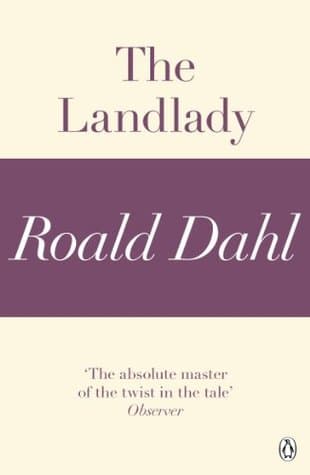
Roald Dahl (2012)
Genre
Thriller / Mystery
Reading Time
15 min
Key Themes
See below
Sign in to track this book
A charming landlady's peculiar hospitality promises a permanent stay for her unsuspecting young guest, who soon discovers her previous lodgers never truly checked out.
Seventeen-year-old Billy Weaver, a fresh and ambitious young man, travels by train from London to Bath for a new job. His manager tells him to find lodging close to the office. In Bath, Billy feels an unexpected urge to skip the grand Royal Hotel and instead look for a cheaper, more independent place to stay. As he walks, a 'BED AND BREAKFAST' sign in a window catches his eye. The sign seems to pull him in, almost hypnotically, even though he meant to keep walking.
Billy Weaver, feeling a strange pull, stares at a Bed and Breakfast sign. He decides it would be cheaper than a hotel and goes to ring the doorbell. Before he touches the bell, the door opens, as if the landlady expected him. This quick opening, along with the house's inviting look – neat, clean, and with a cheerful fire – draws him in further. He feels relieved and comfortable, believing he has found the perfect place, and overlooks the unusually fast door opening.
The landlady, with a gentle smile and welcoming manner, greets Billy Weaver right away. She seems to have been waiting for him and invites him in. She quickly says she has a lovely room available, very cheap for its quality. Billy, charmed by her kindness and the cozy house, does not question the low price or her eager desire to get him as a guest. He feels more comfortable, despite a faint, unsettling feeling he cannot place.
After agreeing to the room, Billy Weaver is led to the sitting room. The landlady asks him to sign her guestbook, a large, old ledger. Billy notices only two previous entries, both male names, from the past two or three years. He finds this odd but dismisses it. However, the names – Christopher Mulholland and Gregory W. Temple – sound vaguely familiar. He is sure he has heard them before, perhaps in newspapers or on the radio, but he cannot recall the context, which slightly bothers him.
Billy Weaver tells the landlady that the names Christopher Mulholland and Gregory Temple sound familiar. The landlady, with a knowing smile, confirms they were both 'charming boys' and 'absolutely perfect gentlemen.' She lists specific details about them – their age, habits, and preferences – as if they had just left. Billy finds her memory surprisingly precise, almost unnerving, considering how much time has supposedly passed since their stays. He feels a chill, but blames it on the cold evening rather than her unsettling recollections.
Billy Weaver, still thinking about the familiar names, asks the landlady if Christopher Mulholland and Gregory Temple recently left. The landlady corrects him with a calm smile, saying 'they never left.' This shocks Billy. She explains they are still 'upstairs' in the house. Billy tries to understand this, at first thinking they moved in permanently, but the landlady's tone and gaze suggest something far more sinister than long-term renting. His unease grows.
As Billy Weaver talks with the landlady, his eyes go to the room's decor. He sees a beautiful parrot and a small, sleeping dachshund near the fireplace. He compliments the landlady on her pets. With a proud smile, she tells him they are not alive; they are both perfectly preserved taxidermy. Billy is impressed by how lifelike the stuffed animals are. This hobby, though unusual, does not immediately seem like a warning sign, but rather an eccentric pastime.
Billy Weaver, still admiring the stuffed parrot and dachshund, asks the landlady if she had them professionally preserved. She laughs softly and says she did it herself. Even more unsettling, she admits these were her own beloved pets when they were alive. She talks about them with a chilling detachment, almost like remembering old friends. This detail makes Billy much more uncomfortable. The thought of someone preserving their own dead pets, and doing it so skillfully, gives a new, macabre view of her character and her house.
As the evening continues, and the landlady keeps offering Billy Weaver tea, he notices a faint, strange smell. It is subtle but distinct, and he struggles to name it. He thinks it might be like pickled walnuts or new leather, but then a more exact description comes to mind: bitter almonds. This scent, often linked to cyanide, is a classic sign of poison in literature. Billy, however, dismisses it as just an odd smell, unaware of its dark meaning, but the reader sees the strong foreshadowing.
The landlady, with her calm smile, watches Billy Weaver as he sips his tea. She makes a final, seemingly innocent offer: 'You did sign the book, didn’t you?' she asks, confirming his commitment. Billy assures her he did. She then adds, 'And I’m just waiting for you.' Her words, along with her steady gaze and the lingering bitter almond scent, confirm the chilling realization for the reader that Billy is her next 'guest' to be preserved. The story ends with Billy about to meet his fate, completely unaware of the horror waiting for him.
The Protagonist
Billy begins as a confident, if inexperienced, young man, but his journey quickly leads him to a fate he never anticipates, showcasing his tragic naivety.
The Antagonist
Her character is largely static, serving as the unchanging, sinister force that ensnares her victims, revealing her true nature as the story progresses.
The Mentioned
His 'arc' is complete before the story begins, serving as a warning for Billy and the reader.
The Mentioned
His 'arc' is complete before the story begins, serving as a warning for Billy and the reader.
This theme is key to the story. The landlady acts like a kind, gentle, and welcoming hostess, but she hides a sinister, murderous plan. Her house looks cozy and inviting, but it is a trap. Billy Weaver is repeatedly fooled by these appearances, from the 'charming' sign to the landlady's 'sweet' smile, missing the horror underneath. The difference between the quaint B&B and the macabre taxidermy shows how easily outward beauty can hide inner evil, leading Billy to his death. This theme is clear when Billy admires the 'lifelike' pets, unaware of the full extent of the landlady's 'art.'
“The old girl is slightly dotty, Billy told himself. She was half-crazy. But in a pleasant sort of way.”
Billy Weaver's youth and lack of experience make him easy for the landlady to manipulate. He trusts her at face value, ignores his own brief feelings of unease, and fails to see the many warning signs, such as the low price, the door opening by itself, the empty guestbook, or her eerily specific memories of past guests. His politeness and wish to avoid being rude stop him from questioning her directly or leaving when he has the chance. This theme warns about the dangers of blind trust and the importance of listening to one's instincts.
“He was a tremendous believer in all the homely little pleasures of life.”
From the moment Billy Weaver decides against the Royal Hotel, an unseen force seems to guide him to the landlady's house. The 'BED AND BREAKFAST' sign 'compels' him, and the door opens 'by magic' before he can ring the bell. He feels an 'astonishing sense of satisfaction' and 'tremendous luck' upon entering, despite subtle hints that something is wrong. This theme suggests Billy's fate was sealed from the start, showing an inescapable doom beyond his control. His journey to the house feels less like a choice and more like an unavoidable path to his end.
“It was the third thing that caught his eye. It was a small notice propped up against the window pane, and it said BED AND BREAKFAST.”
Billy Weaver is new to Bath, alone, and without any immediate contacts, making him an ideal target for the landlady. His isolation means no one is there to warn him, check on him, or question his sudden disappearance. The landlady herself lives a solitary life, which lets her pursue her macabre hobby without being caught. The story highlights how being separated from a support system can expose people to unexpected dangers, especially in unfamiliar places. Billy's politeness, which keeps him from challenging the landlady, makes him even more vulnerable.
“He was an energetic young fellow, and he was taking a big step in his life.”
Hints of future events or outcomes.
Dahl masterfully uses foreshadowing throughout the story to build suspense and hint at Billy's grim fate. Examples include the landlady's unnaturally quick appearance at the door, the unusually low price of the room, her precise memory of past guests, the revelation that the previous guests 'never left,' and most potently, the 'bitter almonds' scent of the tea. These subtle clues, though missed by the naive Billy, alert the reader to the impending danger, creating a sense of dread and inevitability.
The audience knows more than the characters.
Dramatic irony is a key element in 'The Landlady.' The reader quickly understands the landlady's sinister intentions and Billy's impending doom, while Billy himself remains oblivious. For instance, when Billy admires the 'lifelike' stuffed animals, the reader understands the chilling implication that these were once her living pets, and that he will soon join them. Similarly, his recognition of the names Christopher Mulholland and Gregory Temple, coupled with the landlady's comments that they 'never left,' creates a terrifying realization for the reader that Billy misses entirely.
The act of preserving dead animals as a symbol of the landlady's intentions.
The landlady's hobby of taxidermy is a powerful symbol. Initially, it seems merely eccentric, but it quickly becomes a chilling metaphor for her ultimate goal: to preserve her human victims. The 'lifelike' quality of the stuffed parrot and dachshund hints at her skill and her desire to keep her 'pets' with her forever. This symbolizes her control over life and death, and her desire to freeze moments in time, specifically the youth and charm of her male guests, preventing them from ever truly leaving her.
An apparently irrelevant detail that later proves important.
While not a literal gun, the names Christopher Mulholland and Gregory W. Temple serve as Chekhov's Guns. Billy's vague recognition of these names from newspaper reports, initially dismissed, later becomes crucial. It confirms that these young men were not just previous guests but were likely reported missing persons, solidifying the landlady's murderous pattern and the very real danger Billy is in. The 'bitter almonds' scent also functions similarly, an initially ambiguous detail that strongly implies poison.
“There was nothing else on the wall except a large, white-faced grandfather clock, which was ticking away grandly in the hall.”
— Billy Weaver's first impression of the boarding house's interior.
“He pressed the bell. Far away in a back room he heard it ringing, and then at once—it must have been at once because he hadn’t even had time to take his finger from the bell-button—the door opened and the Landlady was standing there.”
— The unusually swift response of the landlady to the doorbell.
“She had a round pink face and very gentle blue eyes.”
— Billy's initial, reassuring description of the landlady.
“‘It’s all ready for you, my dear,’ she said. She had a queer, faint smell of pickling walnuts or new leather or something like that.”
— The landlady's welcoming words and her peculiar scent.
“‘We have it all to ourselves,’ she said. ‘No other lodgers. Only you.’”
— The landlady explains the exclusive nature of her boarding house.
“‘I stuff all my little pets myself when they pass away. Will you have another cup of tea?’”
— The landlady casually reveals her taxidermy hobby.
“‘No, thank you,’ Billy said. The tea tasted faintly of bitter almonds, and he didn’t much care for it.”
— Billy's reaction to the tea, noticing a strange taste.
“‘Mr. Temple,’ she said, ‘was a great one for his tea. Never in my life have I seen anyone drink as much tea as Mr. Temple.’”
— The landlady reminisces about a previous lodger, highlighting his tea consumption.
“‘But I’m sure you’ll like it here,’ she said. She gave him a slow, wide, beaming smile.”
— The landlady's final, chilling assurance to Billy.
“He noticed that she had an extraordinary way of speaking. She would never ask a question – or at any rate she never asked him one.”
— Billy observes the landlady's peculiar conversational style.
“‘Such a charming face,’ she said, looking at him. ‘Such a lovely skin. And you have all your teeth. They’re not easy to get, you know.’”
— The landlady compliments Billy in a very unsettling way.
“‘No, my dear,’ she said. ‘Only you.’”
— The landlady's definitive statement about the number of lodgers, echoing an earlier line.
“The parrot on the cage, for example, and the little dachshund curled up on the carpet. They looked absolutely alive.”
— Billy's initial observation of the perfectly preserved pets.
“‘But my dear boy, he never left. He’s still here. All of them are still here.’”
— The landlady reveals the fate of her previous lodgers.
“‘I pop him up here,’ she said, ‘and then I pop you up here too.’”
— The landlady's chilling plan for Billy, explicit and direct.
Ready to see how well you understood this book? Take our interactive quiz with 10 questions.
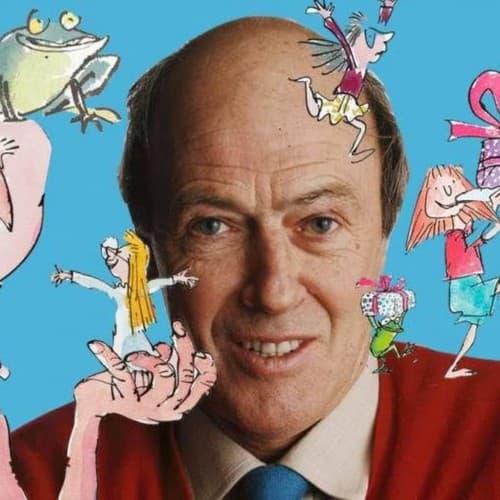
Roald Dahl was a British popular author of children's literature and short stories, a poet, and wartime fighter ace. His books have sold more than 300 million copies worldwide. Dahl has been called "one of the greatest storytellers for children of the 20th century".







