“It is not the deed that makes the hero, but the heart that carries it out.”
— Gawain reflecting on courage and true heroism.

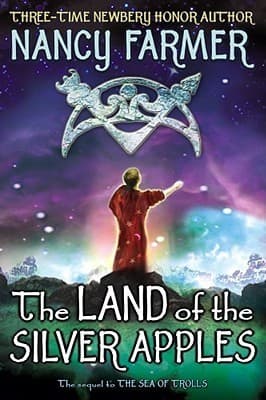
Nancy Farmer (2007)
Genre
Fantasy / Children's / Historical Fiction / Young Adult
Reading Time
10-12 hours
Key Themes
See below
Sign in to track this book
Thirteen-year-old bard-in-training Jack plunges into a treacherous 790 AD Britain, battling unruly monks, ancient gods, and a menagerie of mythical creatures to rescue his sister from the Lady of the Lake, all while grappling with his own burgeoning, earthquake-inducing magic.
Thirteen-year-old Jack, a bard-in-training, practices music in the forest when he feels a strong tremor. He unknowingly caused this earthquake with his magical ash wood staff. Soon after, he returns home to find his village in disarray. He learns his younger sister, Lucy, has been taken by the Lady of the Lake, a powerful pagan deity. This is the second time Lucy has been taken; she was previously rescued from the berserker Thorgil. Jack, heartbroken and determined, feels responsible for her rescue, believing his growing magic might be tied to her disappearance and his fate.
As Jack begins his quest for Lucy, he meets unruly Christian monks who persecute villagers for their pagan beliefs. Using his magical ash wood staff, Jack defends the villagers and subdues the monks. This shows his growing power but also draws unwanted attention. In return for his defiance, the monks trap Jack in a knucker hole, a dangerous water pit believed to hold a fearsome water dragon. Trapped and facing a terrifying creature, Jack must use his wits and his staff's new magic to survive this ordeal and continue his journey.
After escaping the knucker hole, Jack sees the magical resurrection of the berserker Thorgil. Thorgil, previously buried by moss after her encounter with Jack and Lucy, is brought back to life by ancient, mystical means. Though they are initially wary of each other due to past conflicts, their shared goal of finding Lucy and confronting magical forces makes them form an uneasy alliance. Thorgil, with her warrior skills and knowledge of old ways, becomes a strong, though sometimes unpredictable, companion for Jack.
Jack and Thorgil's journey leads them to Pega, a slave girl from Jack's village who has escaped her captors. Pega, clever and strong, quickly proves useful to their group. Soon after, they find the realm of the hobgoblin king, Bugaboo, a funny but powerful creature who wants to marry Pega. Bugaboo, with his unique personality and magic, is both a challenge and a possible ally. Jack must handle Bugaboo's constant advances toward Pega while trying to get his help, or at least avoid his interference, in their quest for Lucy.
As Jack, Thorgil, and Pega go deeper into Britain's magical lands, they meet various mythical creatures that test their courage and skill. They face dangerous kelpies, water horses that trick travelers, and mysterious yarthkins, earth spirits with their own plans. These encounters show the blurred lines between human and magical worlds and the constant danger they face. Jack must learn to tell friend from foe among these ancient beings, often relying on Thorgil's experience and Pega's sharp observations to survive.
A key discovery happens when Jack and his companions learn the true nature of the elves. Unlike popular stories that show them as kind sprites, these elves are revealed to be ancient, powerful, and often evil fallen angels. This discovery adds danger and complexity to their quest. They realize that not all magical beings are what they seem, and the forces they face are older and stronger than expected. Understanding this darker side of the magical world challenges Jack's ideas and makes him change his plans.
The quest to rescue Lucy takes Jack, Thorgil, and Pega through increasingly dangerous lands, each filled with ancient magic and guarded by creatures. They travel through enchanted forests, across mystical lakes, and over mountains, all while avoiding human and supernatural threats. Their journey is not just physical but also a test of their determination, their understanding of old ways, and their ability to work together despite their different backgrounds. Each step brings them closer to the Lady of the Lake's powerful domain, Lucy's abductor.
Upon reaching the Lady of the Lake's hidden domain, Jack and his companions find Lucy, but not as they expected. She is not simply imprisoned but seems to be under a strong enchantment or perhaps willingly taking on a new role in the Lady's world. The Lady of the Lake's intentions are revealed to be complex, possibly linked to ancient prophecies or a desire to bring back the old gods' influence in a world increasingly led by Christianity. Jack realizes that saving Lucy might mean more than just taking her away; it might involve understanding and confronting the balance of power between old and new faiths.
Throughout their journey, Jack is caught between the fading world of old gods and the growing power of Christianity. The Lady of the Lake represents ancient pagan forces, while the monks and their teachings embody the new faith. Jack, with his magical staff and bardic background, is a bridge between these two worlds. His developing powers, tied to the land's ancient magic, make him question his beliefs and his role in this changing world. The conflict is not just external but also internal, as he tries to reconcile these opposing forces within himself.
The story ends with a tense confrontation between Jack and the Lady of the Lake. This encounter is a clash of wills, magic, and deep beliefs. Jack must use all his bardic skills, his ash wood staff's power, and his companions' help to stand against the Lady's ancient magic. While the immediate outcome of this confrontation is not a final resolution, it is a key turning point for Lucy's fate and Jack's understanding of his own destiny. The story leaves readers eager for the next part, as Lucy's rescue and the world's balance remain uncertain.
The Protagonist
Jack transforms from an uncertain boy into a more confident and powerful young bard, accepting his magical heritage and leadership role.
The Supporting/Plot Catalyst
Lucy is a victim of magical forces, her arc is defined by her repeated abductions and the mystery surrounding her connection to the magical world.
The Supporting
Thorgil evolves from a solitary warrior to a reluctant member of a questing party, finding purpose in protecting Jack and Pega.
The Supporting
Pega gains agency and finds a sense of belonging and protection within the unlikely fellowship.
The Antagonist/Mysterious Figure
Her arc revolves around her mysterious intentions and her role in the ongoing conflict between ancient magic and new religion.
The Supporting/Comic Relief
Bugaboo's arc is largely static, serving as a humorous obstacle and occasional helper, primarily driven by his affection for Pega.
The Antagonists
They serve as a representation of the dominant Christian force, their arc is to oppose the magical world and its practitioners.
The novel clearly explores the tension between ancient pagan beliefs and the growing power of Christianity in 790 AD Britain. Jack, with his magical ash wood staff and bardic heritage, is directly between these two worlds. The Lady of the Lake embodies the strong, wild magic of the old gods, while the persecuting monks represent the zealous, often violent, spread of the Christian faith. This conflict is not just outside but also inside Jack, as he navigates his beliefs and the meaning of his powers in a changing spiritual world. For example, Jack's use of his staff against the monks, but also his respect for the land's hidden powers, shows this struggle.
“The old gods still sleep, but they are not dead. And sometimes, they wake.”
At its core, the story is driven by Jack's strong love and loyalty to his sister, Lucy. Her abduction by the Lady of the Lake is the main reason for his dangerous journey. This theme goes beyond immediate family, as Jack forms new loyalties with his companions, Thorgil and Pega. Despite their different backgrounds and initial mistrust, their shared mission to rescue Lucy and survive the magical world creates a strong, interdependent relationship. Their willingness to risk their lives for each other, like Thorgil's protection of Pega, highlights the importance of loyalty in hardship.
“There was no choice, really. She was his sister. And he would go to the ends of the earth, or beyond, to find her.”
Jack's quest to rescue Lucy is also a journey of self-discovery and a coming-of-age story. As a thirteen-year-old bard-in-training, he is at first overwhelmed by the magical earthquake he causes and the challenges that follow. However, by facing dangers like the knucker hole, confronting magical creatures, and leading his companions, Jack gains confidence and understanding of his growing magical abilities. He learns to trust his instincts, use his ash wood staff well, and accept the responsibilities that come with his unique heritage. His journey changes him from a boy into a more capable and self-aware young man.
“He was no longer just Jack, the bard's apprentice. He was Jack, the boy who had caused an earthquake, and who would rescue his sister.”
The novel questions common ideas of good and evil, especially through its portrayal of traditional folklore creatures. Elves, usually seen as kind sprites, are revealed to be ancient, fallen angels, showing a darker, more complex side to magical beings. Similarly, characters like the hobgoblin king Bugaboo are neither purely good nor evil, but driven by their own unique reasons. This theme encourages readers to look past simple labels and understand the complex, often unpredictable, nature of the magical world and its inhabitants. It shows that power, whether old or new, can be used for both good and bad.
“The stories lied. Not all magic was light, and not all darkness was evil.”
A magical artifact that amplifies Jack's powers and guides him.
Jack's ash wood staff serves as a powerful magical artifact, acting as both a conduit and an amplifier for his innate bardic magic. It is not just a weapon but a sentient or semi-sentient object that responds to Jack's emotions and intentions, often guiding him or manifesting power when he needs it most. The staff's connection to ancient trees and the earth links Jack directly to the pagan forces of the land, making it a crucial tool in his confrontations with both mundane and magical adversaries. Its powers are still developing, mirroring Jack's own growth.
A perilous magical trap that tests Jack's resilience.
The knucker hole functions as a significant plot device, serving as an early, life-threatening challenge for Jack. It is a dangerous, water-filled pit believed to house a fearsome water dragon. Jack's entrapment in the knucker hole, orchestrated by the monks, forces him to confront his fears and rely on his nascent magical abilities to survive. This ordeal marks a turning point in his journey, solidifying his resolve and demonstrating his growing capacity for magic and self-preservation, proving he is capable of facing greater dangers.
The inciting incident and primary motivation for the entire quest.
The abduction of Lucy by the Lady of the Lake is the central inciting incident of the novel. It immediately establishes the stakes and provides Jack with his primary motivation: rescuing his beloved sister. This event not only propels the plot forward but also underscores the pervasive and often dangerous presence of ancient magic in their world. The ambiguity surrounding the Lady's true intentions and Lucy's condition creates suspense and drives the narrative towards a confrontation that will determine the fate of both sister and brother, and potentially the balance of power in the land.
A magical event that provides a crucial, if reluctant, ally.
Thorgil's resurrection by ancient moss magic serves as a pivotal plot device, reintroducing a key character from the previous book into a new role. Her return provides Jack with a powerful warrior and a guide through the more brutal aspects of the magical world. Her knowledge of old ways and combat skills are essential for the group's survival. This event highlights the deep, persistent magic of the land, capable of defying death, and establishes the theme of old powers reawakening in the face of changing times.
“It is not the deed that makes the hero, but the heart that carries it out.”
— Gawain reflecting on courage and true heroism.
“The world is full of wonders, if only you have the eyes to see them.”
— Finbar encouraging someone to observe their surroundings.
“Fear is a powerful master, but it can be overcome by a stronger will.”
— A character facing a difficult challenge.
“Even the smallest light can banish the deepest shadow.”
— During a moment of despair, offering hope.
“Truth has a way of revealing itself, no matter how deeply it is buried.”
— A mystery is slowly unraveling.
“Sometimes the greatest journeys are not across lands, but within the heart.”
— A character undergoing significant personal growth.
“Magic is not about power, but about understanding the hidden connections of the world.”
— A magical practitioner explaining their craft.
“The past holds lessons, but the future holds possibilities.”
— Looking back on history while planning for what's next.
“A promise made is a debt unpaid.”
— Emphasizing the importance of keeping one's word.
“It is better to light a single candle than to curse the darkness.”
— Taking action rather than complaining.
“Every creature has its place in the great tapestry of life.”
— Observing the interconnectedness of nature.
“Laughter is the best medicine, even for a wounded spirit.”
— Finding joy amidst sorrow.
“The truest strength lies not in never falling, but in rising every time you fall.”
— Encouragement after a setback.
“Sometimes the most unlikely allies prove to be the most valuable.”
— Characters forming unexpected bonds.
Ready to see how well you understood this book? Take our interactive quiz with 10 questions.

Biography coming soon.







