“My pa always said there were two kinds of folks: them that worked and them that didn't. And them that worked, he said, they were the ones who made the world go 'round.”
— Paul-Edward's father instilling a strong work ethic in him.

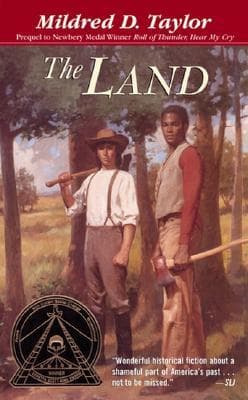
Mildred D. Taylor (1999)
Genre
Children's / Historical Fiction / Young Adult
Reading Time
10-12 hours
Key Themes
See below
Sign in to track this book
In post-Civil War Georgia, Paul-Edward Logan, a biracial boy caught between two worlds, seeks to claim his own land and identity amidst prejudice and betrayal.
Paul-Edward Logan, a biracial boy, lives on his white father's prosperous plantation in rural Georgia. His father, Robert Logan, openly acknowledges Paul as his son, which was rare for the time. Paul's mother, Caroline, a former slave, tries to give him a sense of pride and self-worth. However, Paul faces constant prejudice from both white and Black communities. White children mock him for his Black heritage. Black children, like the Sharecroppers' children, distrust him because of his lighter skin and privileged upbringing. Even within his own family, his white half-brothers, Robert Jr. and George, resent him, often taunting and abusing him. Paul finds comfort in the land and dreams of owning his own one day.
After a particularly brutal beating from Robert Jr. and George, which his father dismisses as 'boys being boys,' a heartbroken and angry Paul runs away. He wanders until he collapses from exhaustion and hunger. Two elderly Black sharecroppers, Reverend Jefferson and his wife, Miz Effie, find him. They take him in and nurse him back to health. They offer him shelter and work, treating him with a kindness he rarely experienced from his white family. During his time with them, Paul learns about the struggles of Black sharecroppers and understands racial injustice better. This strengthens his desire for independence and his own land.
Paul eventually returns to his father's plantation after his father's overseer, Mr. Nelson, finds him. Robert Logan is relieved, but he doesn't fully understand Paul's pain. Paul is no longer the same boy. His time with Reverend Jefferson and Miz Effie has made him more determined. He works on the farm, saving every penny and learning about farming and land management. He understands that the only way to escape prejudice and establish his identity is to get his own land, away from his father's name or his brothers' cruelty.
Paul's drive to earn money for land leads him to seek work beyond his father's farm. He meets Mitchell, a poor white boy from a nearby farm. Despite initial racial tensions, Paul sees Mitchell as a possible partner because Mitchell is also hardworking and ambitious. They form an unusual alliance, working various odd jobs and saving their combined earnings. This partnership has challenges as they navigate societal expectations and prejudices, but it slowly builds mutual respect and shared dreams. It shows that common goals can overcome racial divides.
To save money faster, Paul and Mitchell take dangerous work at a lumber camp. The conditions are brutal, the pay low, and the foreman, Mr. Simms, is a cruel and racist man who exploits his Black workers. Paul sees the oppression faced by Black laborers; Mr. Simms shortchanges them and uses violence to control them. Mitchell, initially focused on his own survival, starts to see the injustice, and his loyalty to Paul is tested. Paul's strength and resilience are pushed to their limits, but he holds onto his dream of land as a hope through the harshness.
The exploitation at the lumber camp reaches a breaking point when Mr. Simms unjustly beats a Black worker and refuses to pay Paul and Mitchell. Paul, unable to tolerate the injustice, confronts Mr. Simms, demanding fair treatment and payment. The confrontation becomes a violent fight where Paul, using his strength and agility, overpowers Mr. Simms. This act of defiance, while dangerous, earns him the respect of the other Black workers and shows he will not be intimidated. However, it also forces Paul and Mitchell to flee the camp, fearing revenge.
With their money and a renewed purpose, Paul and Mitchell search for their own land. They travel through towns and rural areas, encountering different communities and challenges. They face skepticism and prejudice from landowners unwilling to sell to a biracial man. They must constantly be on guard against those who would exploit them. Their bond strengthens as they rely on each other for support and protection. Paul carefully evaluates potential plots, showing his understanding of the land's value and potential, driven by his lifelong dream.
Paul finds a promising piece of land, but the owner, a prejudiced white man, demands a very high price. Despite the unfairness, Paul agrees to the terms, understanding the importance of this first step. He makes the purchase, a significant moment in his life. However, buying land as a Black man, even one who appears white, angers local white supremacists. He and Mitchell face threats and intimidation, making it clear that owning land is only the beginning of their struggle for independence and security in a racially charged society.
With the land theirs, Paul and Mitchell begin the hard work of clearing the dense forest, tilling the soil, and building a cabin. Paul's farming knowledge and strong work ethic become clear. They face harsh weather, physical exhaustion, and the constant threat of interference from hostile neighbors. Their partnership is tested by the immense labor and isolation, but their shared vision of a prosperous farm keeps them going. This time is important for Paul, as he physically changes the land, making it his own through hard work.
As Paul's farm takes shape, local white supremacists, the Night Riders, increase their efforts to drive him off his land. They vandalize his property, steal his tools, and leave menacing warnings. Paul and Mitchell must arm themselves and stand guard, knowing their lives are in danger. Paul refuses to give in, understanding that doing so would mean surrendering his dream and dignity. The constant threat creates fear, but it also strengthens Paul's resolve to protect what he has worked so hard to achieve, even if it means risking his life.
Amidst the struggle, Paul meets and falls in love with Cassie, a strong Black woman who shares his values and love for the land. They marry and start a family, bringing hope and stability to Paul's life. Cassie becomes his partner, helping him work the land and providing emotional support. The birth of their children means a new beginning and a legacy for Paul, showing that he can create his own life, free from his past, even as racial prejudice continues.
Years pass, and Paul-Edward Logan, with Cassie, successfully turns his initial parcel into a thriving farm. He faces down further intimidation and violence from the Night Riders, always standing firm. He eventually expands his landholdings, fulfilling his dream of having a substantial estate. He raises his children, teaching them hard work, self-reliance, and pride in their heritage. Paul-Edward's journey ends with the establishment of 'Logan Land,' a sign of his resilience, determination, and refusal to be defined by the prejudices of his time. This begins the foundation for future generations of Logans.
The Protagonist
Paul-Edward transforms from a confused and hurt boy into a resilient, self-made man who establishes his own legacy and family on his own terms.
The Supporting
Mitchell evolves from a cautious, somewhat prejudiced boy into a loyal and supportive friend who transcends racial barriers for a shared dream.
The Supporting
Though her physical presence diminishes as Paul leaves home, her teachings and influence remain a constant force in his life.
The Supporting
Robert Logan remains a somewhat static figure, representing the societal constraints Paul-Edward must overcome, yet his initial acknowledgement provides Paul with a foundational, albeit complicated, identity.
The Antagonists
They remain static in their animosity, representing the systemic prejudice Paul-Edward must escape and overcome.
The Supporting
Cassie provides Paul-Edward with the loving family and steadfast partnership he needs to fully realize his dream and establish his legacy.
The Supporting
He provides Paul-Edward with a temporary haven and crucial life lessons that shape his resolve and understanding of the world.
The Antagonist
He remains a static antagonist, representing the oppressive forces Paul-Edward must fight against.
Paul-Edward's main goal throughout the novel is to get his own land. He sees this as tied to his identity and freedom. As a biracial man, others constantly define him — Black people see him as too white, white people as too Black. Owning land, separate from his father's plantation, becomes his way of showing his self-worth and creating a space where he can be truly free and define himself. This is clear from his childhood dream, solidified after his escape to Reverend Jefferson, and ends with the establishment of 'Logan Land' where he builds his family and legacy. The land means autonomy, belonging, and a clear claim to his identity.
“''Cause what I wanted, what I had to have, was land. Land of my own. Land that nobody could ever take away from me. Land that would be mine, truly mine, for always and always.'”
The novel shows the widespread and brutal reality of racial prejudice in post-Civil War Georgia. Paul-Edward experiences discrimination from both white and Black communities due to his mixed heritage, showing the complexities of racial identity. White characters like his half-brothers and Mr. Simms show overt racism and violence. The distrust from some Black characters shows the deep divisions within society. The constant threat from the Night Riders highlights the dangers faced by Black individuals who dared to be independent. This theme is central to Paul-Edward's struggles, from his childhood beatings to the intimidation he faces as a landowner.
“'Looking white, I was still colored, and no white man forgot it for a minute. Looking colored, I was still white, and no black man forgot it either.'”
Family relationships in 'The Land' are complex and often involve betrayal. While Paul-Edward's mother, Caroline, offers unconditional love and support, his white father, Robert Logan, despite acknowledging him, fails to fully protect him from the cruelty of his legitimate white sons, Robert Jr. and George. These half-brothers show a deep betrayal, driven by jealousy and racial animosity. This family conflict forces Paul-Edward to seek a different kind of family and belonging, finding it with Mitchell and later with Cassie, where loyalty and mutual respect define their bonds. The theme explores how family can be both a source of deep pain and great strength.
“'And I knew that no matter how much Pa loved me, no matter how much Ma loved me, I was still alone in this world. And I had to make my own way.'”
Paul-Edward's journey shows the power of resilience and self-reliance. Faced with constant hardship — from childhood abuse and racial prejudice to dangerous labor and violent threats — he never gives up on his dream. His ability to endure hardship, work tirelessly, and make difficult decisions without relying on others is a defining trait. His decision to run away, his partnership with Mitchell, and his solitary fight to protect his land all highlight his determination to make his own path. This theme is clear in his physical and emotional strength, allowing him to overcome seemingly impossible obstacles.
“'I was gonna make it. I was gonna make it my way. And I was gonna make it on my land.'”
Paul-Edward's transformation from boy to man through trials and self-discovery.
The novel functions as a coming-of-age story, chronicling Paul-Edward's journey from a confused and hurt boy to a strong, self-reliant man. His experiences, from enduring abuse from his half-brothers to working in the harsh lumber camp and ultimately acquiring his own land, are pivotal to his development. Each challenge forces him to confront his identity, learn about the world's injustices, and strengthen his resolve. This device allows readers to witness his emotional and psychological growth as he navigates the complexities of his heritage and the post-Civil War South.
Land as a representation of freedom, identity, and belonging.
Throughout the novel, land is a powerful symbol. For Paul-Edward, owning land represents ultimate freedom from the constraints of his mixed heritage and the prejudices of society. It signifies his ability to define his own identity, create his own legacy, and establish a place where he truly belongs, free from the shadow of his father's plantation or the control of others. The act of clearing and cultivating his own land is a physical manifestation of his self-creation and independence, making it a tangible embodiment of his dreams and aspirations.
Characters that highlight Paul-Edward's qualities through contrast.
Characters like Robert Jr. and George serve as foils to Paul-Edward. Their cruelty, entitlement, and reliance on their father's status highlight Paul-Edward's resilience, work ethic, and desire for self-made success. Similarly, the initial prejudices of Mitchell, contrasted with his eventual loyalty and respect, underscore Paul-Edward's ability to forge genuine connections across racial divides. These contrasting characters emphasize Paul-Edward's virtues and the immense obstacles he faces, making his achievements all the more significant.
The novel serves as a prequel, providing backstory to the Logan family saga.
As a prequel to the 'Roll of Thunder, Hear My Cry' series, 'The Land' functions as an extended flashback, providing the foundational history of the Logan family's land ownership. It explains how the family came to acquire and fiercely protect their land, giving context to the later novels. This structural device enriches the overarching narrative, allowing readers to understand the deep significance of the Logan land and the struggles endured by Paul-Edward to establish his family's legacy, thereby adding depth to the entire series.
“My pa always said there were two kinds of folks: them that worked and them that didn't. And them that worked, he said, they were the ones who made the world go 'round.”
— Paul-Edward's father instilling a strong work ethic in him.
“The land was a living thing, Pa always said. It breathed, it grew, it took, it gave. And if you treated it right, it would treat you right back.”
— Paul-Edward reflecting on his father's connection to the land.
“I was a half-white boy, but I was still black. And in Mississippi, that meant I was nothing.”
— Paul-Edward grappling with his biracial identity and the racial prejudice of the time.
“There were dreams and there were realities, and sometimes the two never met.”
— Paul-Edward's internal struggle with his aspirations versus the harsh realities he faces.
“Freedom ain't free, boy. You gotta fight for it. Every single day.”
— Paul-Edward receiving advice about the ongoing struggle for freedom.
“A man without land ain't a whole man. He's just a shadow.”
— Paul-Edward's deep desire to own land and achieve self-sufficiency.
“Love don't care about color. Love just is.”
— Paul-Edward's thoughts on the nature of love, transcending racial boundaries.
“Sometimes you gotta do what you gotta do, even if it ain't what you wanna do.”
— Paul-Edward making difficult choices for survival and his future.
“Fear can make a man do strange things, can make him forget what's right and what's wrong.”
— Paul-Edward observing the effects of fear on people's actions.
“I wasn't just working for myself anymore. I was working for a future, a future I could build with my own hands.”
— Paul-Edward's growing sense of purpose and determination to build a life.
“There was a strength in knowing who you were, no matter what anybody else said.”
— Paul-Edward finding inner strength and self-acceptance despite societal judgment.
“The past was always there, a shadow at your heels, but you didn't have to let it trip you up.”
— Paul-Edward's reflection on overcoming past challenges and moving forward.
“It ain't about what you got, it's about what you do with what you got.”
— A lesson learned about making the most of one's circumstances.
“Sometimes the hardest battles were the ones you fought inside yourself.”
— Paul-Edward's internal struggles with doubt, anger, and hope.
Ready to see how well you understood this book? Take our interactive quiz with 10 questions.

Mildred DeLois Taylor is a Newbery Award-winning American young adult novelist. She is best known for her novel Roll of Thunder, Hear My Cry, part of her Logan family series.
Dan Gemeinhart
4.5
Kate O'Hearn
4.4

Jeanne Birdsall
4.4

Jen Wang
4.4
Wendelin Van Draanen
4.3

John Marsden
4.3

Chris Van Allsburg
4.3
Jennifer A. Nielsen
4.2