“Whoever has the knowledge to write a good story should not keep silent.”
— From the General Prologue, introducing the author's purpose in writing.

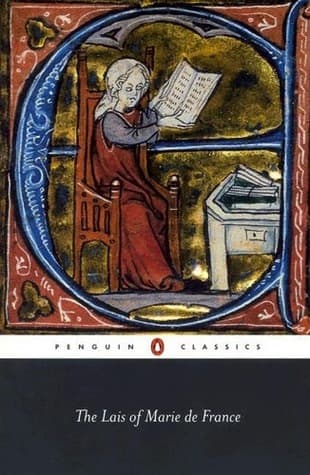
Marie de France (1999)
Genre
Fantasy
Reading Time
176 min
Key Themes
See below
Sign in to track this book
Knights fall for fairy queens, lovers become werewolves: Marie de France's collection of Breton tales explores desire and fate in the medieval imagination.
Marie de France dedicates her collection of Breton lais to a noble king, stressing the importance of old tales. The first lai, 'Guigemar,' features a brave knight who avoids love. While hunting, he wounds a white hind, and the dying animal curses him: he will not find peace until he experiences true love with a woman who suffers for him, and for whom he suffers. Guigemar follows the hind's directions, boarding a mysterious, unmanned ship that takes him to a foreign land. There, he finds a beautiful queen, unhappily married to an old, jealous lord, held in a garden tower. They fall deeply in love, finding comfort and passion together as the curse begins to work.
Lanval, a knight at King Arthur's court, is ignored and poor despite his bravery. Upset, he rides into a meadow where he meets two beautiful maidens who lead him to their lady, a stunning fairy queen. She offers him her love and great wealth, with one rule: he must never tell anyone about their relationship. Lanval agrees and enjoys a secret, happy life. But when Queen Guinevere tries to seduce him and he refuses, she accuses him of being gay. To defend himself, Lanval boasts of his lover's greater beauty, breaking his vow. The fairy queen leaves him, and Lanval is put on trial. Just as he is about to be sentenced, his fairy lover appears with her maidens, proving her existence and beauty. Lanval rides off with her, vanishing into the enchanted land of Avalon.
Bisclavret is a respected baron who secretly turns into a werewolf for three days each week. He tells this secret only to his wife, explaining he must hide his clothes to change back. Terrified, his wife works with her new lover, a knight, to steal Bisclavret's clothes during one of his changes. Bisclavret is trapped as a wolf and disappears into the forest, presumed dead. After a year, the King hunts in the forest and finds Bisclavret, who acts with human intelligence. The King likes the wolf and takes him to court. Later, Bisclavret recognizes his traitorous wife and attacks her, biting off her nose. The truth is revealed under torture, and Bisclavret returns to human form, while his wife and her lover are banished.
In a Breton town, two noble knights live in nearby castles, separated by a wall. One knight is married, but the other, a young man, falls deeply in love with his neighbor's wife. They communicate secretly through their windows, exchanging gifts and love. The lady often gets up at night to speak with her lover, pretending she wants to hear the nightingale. Her jealous husband, suspicious, asks why she is awake. When she says it is for the nightingale, he traps the bird, kills it, and throws its bloody body onto her lap. Heartbroken, the lady wraps the dead nightingale in silk embroidered with gold and sends it to her lover, who keeps it in a jeweled box, forever mourning their lost connection.
An old, rich, and jealous lord keeps his beautiful young wife locked in a tower, fearing her unfaithfulness. One day, a hawk flies through her window and becomes a handsome knight named Yonec. He says he has loved her from afar and can only appear when she desires him. They become lovers, but Yonec warns her that if their love is found out, he will die. The lady's husband, suspicious of her new happiness, sets a trap. He places sharp iron spikes in the window. When Yonec tries to leave, he is impaled, flying away wounded. Before dying, he tells the lady she is pregnant with his child, who will avenge his death. He gives her a ring and a sword for their son. The lady, distressed, follows his blood trail and eventually finds him dead.
Milun, a famous knight, falls in love with a noble lady. She becomes pregnant, and to avoid scandal, they send their infant son to be raised elsewhere, with a ring to identify him. The lovers keep their secret relationship for twenty years, communicating through a swan that carries letters. The lady is eventually forced to marry an older lord. Meanwhile, their son grows into a strong knight, excelling in tournaments. He travels, seeking his fortune. Without knowing it, the son challenges his father, Milun, in a joust. During the fight, the son's ring, which had been passed down, is recognized by Milun, revealing their kinship. The lady's husband dies, allowing Milun and his beloved to finally marry, uniting their family.
This lai tells a sad part of the Tristan and Iseult legend. Tristan, banished from King Mark's court because of his forbidden love for Queen Iseult, secretly returns to Cornwall. He learns the Queen will pass a certain forest path. Tristan carves a message into a hazel branch for Iseult. The message explains his despair and compares their love to the honeysuckle vine and the hazel tree: they cannot live apart. Iseult, seeing Tristan's mark, knows he is near. She arranges to meet him secretly. They have a brief, passionate reunion, confirming their strong bond before Tristan must leave again. Marie de France uses the entwined plants to show their fated and lasting love, which, though forbidden, is deep and essential to them.
Eliduc, a loyal knight, is exiled from Brittany due to false accusations. He goes to England and serves a new king, where he falls deeply in love with the king's daughter, Guilliadun. She returns his affection, but Eliduc is already married to a good lady named Guildelüec. When his original lord calls him back, Eliduc promises Guilliadun he will return. He sails back to Brittany, heartbroken. Guilliadun, distressed by his departure, falls into a death-like sleep and is placed in a tomb. Eliduc, unable to forget her, visits her tomb. Believing her dead, he takes her body to a hermitage. A weasel brings its mate back to life with a magical flower, inspiring Eliduc to revive Guilliadun. Guildelüec, understanding their deep love, becomes a nun, allowing Eliduc and Guilliadun to marry and live happily.
A lord and lady have twin daughters. Fearing the shame of having twins (sometimes seen as a sign of infidelity), the lady's maid secretly leaves one infant, wrapping her in a rich brocade cloth and placing a ring on her finger, beside an ash tree (fresne). A porter finds the baby and raises her, naming her Le Fresne. The other twin, Le Codre (hazel), grows up with her parents. Le Fresne becomes a beautiful and good woman, attracting the love of a wealthy lord. However, his barons insist he marry a noblewoman. They choose Le Codre. On the wedding night, Le Fresne, serving as a handmaiden, lays the rich brocade cloth on the bridal bed. Her mother recognizes the cloth and the ring, leading to the joyful discovery that Le Fresne is her lost daughter. The lord then marries Le Fresne.
King Equitan, a powerful ruler, falls deeply in love with his seneschal's wife. Their affair is passionate and secret. The queen, however, is a good and loyal woman. The king and his mistress plan to murder the queen so they can be together. They decide to prepare a boiling bath for the queen, claiming it is for her health, and then push her in. On the day of the planned murder, the seneschal's wife, nervous, prepares the bath. The king arrives, eager for the deed. However, the seneschal returns unexpectedly and finds the king and his wife together. Enraged, the seneschal pushes the king into the boiling bath, and the king's mistress, caught in her own trap, falls in after him, both dying in the very device they planned for the queen.
Doon is a brave knight who loves a lady of high standing, but their relationship is secret. When their love is discovered, Doon is exiled. The lady gives him a ring as a token of her lasting affection and a promise to remain faithful. Doon travels to a distant land, performing many brave deeds, earning fame. Despite his success, he misses his lady constantly. After a long time, a message reaches him that his lady is being forced to marry another. Doon returns, presenting the ring as proof of their lasting bond and his claim to her. His loyalty and the lady's faithfulness are recognized, and they are allowed to be together, showing the power of true love against social pressures and separation.
A beautiful and noble lady is courted by four equally brave knights, all deeply in love with her. She cannot choose, loving them all differently, and promises to decide after a tournament. During the tournament, two knights are killed, and the other two are badly wounded. The lady is heartbroken, mourning the loss of such noble men and the pain of the survivors. She cares for the two wounded knights, who both recover but have lasting injuries. One knight loses an eye, the other is permanently injured. She names the lai 'Chaitivel' (The Unhappy One) to remember the sadness of the event, especially the loss of her potential lovers and the suffering of the two who survived but could not fully claim her love.
Elis is a noble and loyal knight serving a powerful lord. The lord's wife, a good woman, is falsely accused of infidelity by a jealous seneschal. The lord, believing the false claims, banishes Elis, thinking he was involved in the supposed affair. Elis, though innocent, accepts his fate and leaves. The lady, upset by the injustice, continues to say she is innocent. Eventually, the truth of the seneschal's lies comes out, exposing his deception. The lord realizes his mistake and sends for Elis, restoring him to his rightful place and clearing his name. The lai focuses on loyalty, false accusation, and the eventual triumph of truth.
A king, devoted to his beautiful daughter, declares that only a man who can carry her to the top of a steep mountain without resting will win her hand. Many noble suitors try and fail. A young, handsome knight falls in love with the princess, and she loves him back. Knowing his strength might not be enough, he seeks help from an aunt skilled in potions. She prepares a strong cordial to sustain him. However, the princess, fearing the potion might harm him or that he might rely too much on it, refuses to let him drink it during the climb. He struggles, carrying her almost to the top, but collapses and dies just before reaching the summit. Heartbroken, the princess dies of grief beside him, and the mountain is forever known as the Mountain of the Two Lovers.
Mielun is a knight known for his skill and loyalty. He serves a lord who, despite Mielun's dedication, has some doubts or tests his faithfulness. Mielun is sent on a dangerous mission or faces a difficult situation that needs great courage and commitment. Through these trials, Mielun consistently shows his excellent combat skills, strategic thinking, and deep loyalty to his lord. He overcomes challenges that would scare other men, proving his integrity. Ultimately, his steadfastness removes any doubts, and he is fully recognized and rewarded for his service and noble character, confirming his reputation as an ideal knight and a truly devoted vassal.
The Narrator/Author
Not a character in the traditional sense, but her literary 'arc' is the creation and compilation of these enduring tales, establishing her as a significant medieval author.
The Protagonist
Transforms from a knight who scorns love to one who deeply experiences and suffers for it, finding his true destiny through an enchanted curse.
The Protagonist
Goes from an ostracized knight to finding transcendent love, then suffers a fall due to a broken promise, ultimately rescued and taken to Avalon.
The Protagonist
Betrayed and trapped in his werewolf form, he seeks and ultimately receives justice, being restored to his human self and reclaiming his honor.
The Protagonist
Experiences a brief period of secret, passionate love, which is tragically exposed and ended, leaving her to mourn a lost connection.
The Protagonist/Supporting
Appears as a magical lover, tragically dies due to discovery, but leaves behind a son destined to avenge him.
The Protagonist
Experiences exile, finds new love, grapples with a moral dilemma, and ultimately achieves happiness through his wife's self-sacrifice, proving his honor and capacity for deep affection.
The Protagonist
Abandoned and raised humbly, she rises through virtue and fate to be recognized by her birth family and marry a noble lord.
The Antagonist
Descends into moral depravity due to an illicit affair, and his attempt to commit murder leads to his own deserved death.
The Protagonist
A knight whose life is defined by his enduring, forbidden love, leading to banishment and brief, poignant reunions.
Marie de France explores love in many forms, often questioning common morality. Many loves are forbidden by society (Guigemar and the Queen, Lanval and the Fairy, Tristan and Iseult, the lovers in Laüstic), but they are often shown as true, pure, and fated, contrasting with forced marriages. These 'forbidden' loves are often depicted with deep emotion, mutual suffering, and strong loyalty, suggesting that true love goes beyond social rules. In contrast, marriages based on convenience or power, like the old lord's marriage in 'Yonec' or Equitan's, are shown to be oppressive and lead to misery or treachery. The Lais value emotional truth over legal or social bonds, portraying love as a powerful, often magical, force.
“He who is without love is without worth.”
Many lais show the unavoidable power of fate, especially in love. Characters are often brought together by forces they cannot control, such as Guigemar's curse or the fated connection between Tristan and Iseult ('Chevrefoil'). Magical elements, like the fairy queen in 'Lanval' or the hawk-knight in 'Yonec,' reinforce the idea of a predetermined path. Even separation and suffering are often part of a larger, fated journey that leads to true love or a meaningful end. This theme suggests that some bonds are divinely or magically ordered, and human attempts to defy them often lead to tragedy or, eventually, fulfillment.
“For two people to love each other perfectly, they must suffer much tribulation.”
Betrayal is a common theme, often leading to serious results, but also to a kind of justice. Bisclavret's wife betrays his trust, leading to her disfigurement and banishment. King Equitan's plan to murder his queen backfires, resulting in his own death. Lanval is betrayed by Queen Guinevere's false accusation. These examples highlight the moral structure of the Lais, where treachery is punished, and loyalty, though tested, is rewarded. Justice may be quick and violent, or it may come through magic, but it is almost always served, confirming a moral order even in a world of complex feelings. The suffering caused by betrayal often prepares the way for truth and rightful order to win.
“Those who do evil deeds should expect evil consequences.”
The theme of hidden or mistaken identity, and the later recognition, is central to several lais. Bisclavret's true identity as a noble man hidden as a wolf, Le Fresne's concealed noble birth, and Milun's accidental joust with his own son are key examples. These stories explore how true worth and family can be hidden by circumstances but are eventually revealed through tokens, actions, or fate. The moment of recognition is often an important turning point, restoring justice, reuniting families, and confirming rightful claims. It suggests that true identity cannot be hidden forever and will eventually show itself, bringing resolution and often joy.
“By the ring she recognized her son, and by the brocade, her daughter.”
Magic and the supernatural are important to the world of the Lais, driving the plot, expressing destiny, and showing deep emotion. Fairy lovers (Lanval, Yonec), curses (Guigemar), shapeshifting (Bisclavret), magical objects (the ring in Milun, the healing flower in Eliduc), and enchanted lands (Avalon) are not just decorations but essential parts of the story. They represent forces beyond human control, often intervening to guide lovers, punish the wicked, or reveal hidden truths. The magical elements emphasize that love and fate work on a deeper, more mysterious level than everyday reality, giving human experience a sense of wonder and deep meaning.
“For this reason, this adventure has often been told, and a lai made of it.”
An object exchanged between lovers symbolizing their bond and facilitating recognition.
Love tokens, such as rings, pieces of silk, or even carved branches, are crucial in several lais. In 'Milun,' a ring identifies the long-lost son; in 'Le Fresne,' a brocade cloth and a ring reveal the abandoned twin's noble lineage. In 'Doon,' a ring serves as a promise of fidelity and proof of a lasting bond. These objects are not merely sentimental but carry significant narrative weight, often enabling recognition, proving identity, or serving as a physical manifestation of an unbreakable spiritual connection between characters, especially in the face of separation or doubt. They are vital for plot resolution and thematic reinforcement of enduring love.
Magical beings or events that directly influence the plot and characters' fates.
The Lais frequently employ supernatural elements to drive the narrative forward and resolve conflicts. Examples include the white hind whose curse initiates Guigemar's journey, the powerful fairy queen who rescues Lanval, the hawk-knight Yonec, and the weasel with the magical flower that revives Guilliadun in 'Eliduc.' These interventions often serve to test characters, reveal hidden truths, or ensure that fated loves can overcome earthly obstacles. They highlight the magical realism of the tales and underscore the idea that love and destiny are often guided by forces beyond ordinary human comprehension or control.
A recurring antagonist whose possessiveness and suspicion create conflict for lovers.
This character type, often an older, powerful man married to a younger, beautiful woman, is a catalyst for much of the conflict in the Lais. Examples include the old lord in 'Guigemar' who imprisons his wife, the husband in 'Laüstic' who kills the nightingale, and the possessive lord in 'Yonec' who traps his wife. Their jealousy and attempts to control their wives' affections invariably lead to the women seeking love elsewhere, often with tragic or dramatic consequences. This device critiques the societal norms of arranged marriages and highlights the destructive power of possessiveness versus the liberating force of true love.
A promise made by a character that, when broken, leads to severe consequences.
Oaths and vows play a critical role in shaping the destinies of characters. Lanval's promise to his fairy lover never to reveal their relationship, and his subsequent breaking of this vow, leads to his abandonment and trial. Similarly, Yonec's warning to his lover about the consequences of their love being discovered directly precedes his death. These devices underscore the importance of fidelity, not just in love but in one's word. The breaking of such an oath often serves as a turning point, plunging the protagonist into crisis and forcing them to confront the repercussions of their actions, highlighting themes of trust, secrecy, and fate.
A hidden aspect of a character's nature or relationship that drives the plot.
Many narratives hinge on a secret that must be kept at all costs. Bisclavret's werewolf identity, Lanval's fairy lover, and the illicit affairs in 'Guigemar,' 'Laüstic,' and 'Yonec' are central to their respective plots. The maintenance of these secrets creates tension and suspense, while their eventual revelation often leads to dramatic consequences, whether tragic (Yonec's death) or liberating (Bisclavret's justice). This device explores themes of societal judgment, the conflict between personal desires and public reputation, and the inherent dangers and allure of hidden lives, often culminating in the truth being exposed by fate or circumstance.
“Whoever has the knowledge to write a good story should not keep silent.”
— From the General Prologue, introducing the author's purpose in writing.
“For a long time I have been thinking about the various tales I know, and I have decided to put some of them into writing.”
— Also from the General Prologue, explaining the motivation for collecting and translating the lays.
“He who makes a new thing known, and it is well told, will be praised for it.”
— From the General Prologue, discussing the reward for good storytelling.
“Love is a wound, and it is a good one.”
— From 'Lanval,' describing the nature of the fairy queen's love for Lanval.
“She had eyes that were bright and clear, a mouth small and red, a nose well-formed, and a brow smooth and high.”
— From 'Lanval,' describing the beauty of the fairy queen upon her first appearance.
“A woman who loves truly, with all her heart, will never allow her body to be defiled by another man.”
— From 'Yonec,' reflecting on the loyalty of a loving wife.
“No man can love truly unless he has experienced the pain of love.”
— From 'Chevrefoil,' musing on the nature of true love and suffering.
“He who trusts a woman's counsel will often find himself in trouble.”
— From 'Bisclavret,' spoken by the knight who is betrayed by his wife.
“For a man who is noble and courteous, if he loves truly, he will always be loyal.”
— From 'Guigemar,' highlighting the virtues of a true knight in love.
“Often a woman, for the sake of her love, will do great deeds.”
— From 'Eliduc,' referring to Guilliadun's extreme actions for Eliduc.
“No one can keep a secret for long when it concerns love.”
— From 'Laüstic,' as the lady and knight attempt to conceal their affair.
“It is a great pity when a good man is tormented by a wicked woman.”
— From 'Bisclavret,' reflecting on the injustice suffered by Bisclavret.
“Many a man is lost because of his pride and his arrogance.”
— From 'Milun,' commenting on Milun's initial reluctance to reveal his love.
“He who loves truly knows no bounds.”
— From 'Yonec,' describing the intensity and commitment of the lovers.
“Great sorrow and great joy often dwell close together.”
— From 'Eliduc,' reflecting on the intertwined nature of happiness and sadness.
Ready to see how well you understood this book? Take our interactive quiz with 10 questions.

Biography coming soon.







