“I am a witch. I am the daughter of a witch. I am the granddaughter of a witch. I am a river witch. I have the power of the rivers in my blood.”
— Jacquetta of Luxembourg reflecting on her lineage and mystical connection.

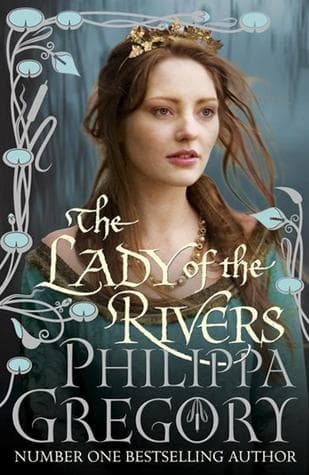
Philippa Gregory (2011)
Genre
Historical Fiction / Romance
Reading Time
10-12 hours
Key Themes
See below
Sign in to track this book
Born into a royal line and rumored to possess magic, Jacquetta navigates the dangerous world of 15th-century England, defying norms for love and using her gifts to shape her own destiny amid war and court intrigue.
Jacquetta of Luxembourg, born into a powerful noble family linked to the mythical water goddess Melusina, grows up believing in magic, especially water magic and scrying. Her mother, also named Melusina, teaches her about their magical lineage and their connection to rivers and the future. From a young age, Jacquetta has visions and a strong intuition, which makes her different from others. Her family's influence stretches across Europe, and she is a valuable piece in political marriages. Despite her mystical interests, she is trained in the manners expected of a high-born lady, preparing her for a future role in the English court.
At seventeen, Jacquetta is betrothed and marries John, Duke of Bedford, uncle to King Henry VI of England and Regent of France during the Hundred Years' War. This marriage is a political alliance to secure Luxembourg's loyalty to England. Despite their large age gap—John is in his fifties—Jacquetta finds respect and even affection for her husband. John, a learned and powerful man, treats her kindly and introduces her to court life and politics. He values her intelligence and tolerates her interest in scrying, seeing it as a harmless quirk. Their marriage is one of companionship and mutual regard, not passionate love.
As Duchess of Bedford, Jacquetta lives mostly in France, at the center of the English occupation. She sees the harsh realities of the Hundred Years' War and the political schemes of the English and French courts. She develops a close, though sometimes tense, relationship with her step-niece, Catherine of Valois, the former Queen of England and mother of Henry VI. Jacquetta's position gives her access to powerful people and important information, and she learns to exert subtle influence. She continues her scrying in secret, often seeking guidance about the war and the fates of those around her, including Joan of Arc, whose rise and fall she observes with mixed feelings.
John, Duke of Bedford, falls ill and dies in Rouen, leaving Jacquetta a nineteen-year-old widow. His death is a major loss for the English in France. During her time with John, Jacquetta had become close to his squire, Richard Woodville, a handsome and ambitious gentleman. Their shared grief and respect for the late Duke, along with a growing physical attraction, deepen their bond. Despite the vast social difference—a duchess could not marry a mere knight without serious consequences—Jacquetta and Richard fall deeply in love. They begin a secret affair, knowing that discovery would lead to scandal and ruin for both, especially Jacquetta, who holds a powerful dower.
Driven by their love and a desire for a legitimate future, Jacquetta and Richard make the bold decision to marry in secret. This act directly defies the King's authority, as high-ranking widows like Jacquetta were forbidden to remarry without royal consent, especially to men of lower status. They exchange vows in a quiet ceremony, fully aware of the huge risks. The immediate aftermath is filled with anxiety as they try to keep their marriage hidden. If discovered, the scandal would strip Jacquetta of her vast wealth and influence as the Dowager Duchess of Bedford, and possibly lead to imprisonment or worse for both. Their love, however, gives them the courage to face these dangers.
News of Jacquetta and Richard's secret marriage eventually reaches the English court and King Henry VI. The King, advised by his council, is furious at the blatant disregard for royal authority. Jacquetta loses her dower lands and titles, and both she and Richard are summoned to answer for their transgression. Facing severe punishment, Jacquetta uses her intelligence and appeals to the young, impressionable King, emphasizing her love and the legitimacy of their union. Surprisingly, Henry VI, known for his piety and gentle nature, is moved by their story and genuine affection. He pardons them, though they must pay a substantial fine, and Jacquetta's dower is eventually restored, allowing them to begin their new life.
With the King's pardon, Jacquetta and Richard begin to build their life together, though with significantly less initial wealth and status than Jacquetta once had. Richard proves to be a devoted husband and a capable, ambitious man. They settle in Grafton Regis, the Woodville family estate. Jacquetta, freed from the constraints of a political marriage, finds deep happiness in her love for Richard and the joys of motherhood. She bears him many children, thirteen in total, including Elizabeth, who will later become Queen of England. Jacquetta uses her intelligence and connections to subtly advance Richard's career, helping him gain favor and appointments at court, slowly restoring their family's standing.
As their children grow, Jacquetta continues to use her innate gifts and political skill to navigate the turbulent English court. She maintains a close relationship with Queen Margaret of Anjou and, importantly, with her former step-niece, Catherine of Valois, and Catherine's new husband, Owen Tudor. These connections are invaluable. Jacquetta's scrying often provides her with insights, which she uses carefully to guide her family's decisions. She instills in her children ambition and pride, preparing them for influential roles. The Woodville family slowly gains power and prestige, setting the stage for their future prominence in the Wars of the Roses, especially through her eldest daughter, Elizabeth.
As King Henry VI's mental health declines and the rivalry between the Houses of Lancaster and York grows, England falls into civil war. Jacquetta, with her family allied with the Lancastrian cause through their connections to Henry VI and Queen Margaret, finds herself at the center of the conflict. She uses her scrying more often, seeking to understand the shifting power and protect her family. She witnesses battles, betrayals, and constant danger to her loved ones. Her magic, once a private comfort, becomes a tool for survival and guidance in these perilous times, as she tries to find the safest path for her children amid the chaos.
Jacquetta's deepest visions begin to focus on her eldest daughter, Elizabeth. She foresees Elizabeth becoming Queen of England, a prophecy that seems impossible given their current status and the ongoing war. Despite the challenges, Jacquetta prepares Elizabeth for this future, instilling in her strength, ambition, and a keen understanding of court politics. Jacquetta's story ends with her success in establishing the Woodville family as a powerful force in England. Her unwavering love for Richard, her courage in defying convention, and her strategic use of her unique gifts ensure that her descendants, especially through Elizabeth, will change English history, fulfilling her magical lineage's destiny.
The Protagonist
Jacquetta transforms from a politically useful noble daughter into a powerful matriarch who secures her family's legacy through love, defiance, and strategic use of her magical gifts.
The Supporting
From a relatively humble squire, Richard rises to prominence through his marriage to Jacquetta and his own capabilities, becoming a respected figure in the English court.
The Supporting
John serves as a mentor and protector for Jacquetta, initiating her into the world of English and French politics before his death allows her to pursue her own destiny.
The Supporting
Henry's reign is marked by a decline in royal authority, paving the way for the chaos of the Wars of the Roses, which profoundly impacts Jacquetta's family.
The Supporting
Catherine's secret marriage and subsequent royal pardon for her children set a precedent that influences Jacquetta's own choices and the future of the Tudor dynasty.
The Supporting
Elizabeth is groomed by Jacquetta to fulfill her prophetic destiny, rising from gentry to become Queen of England and a matriarch of a powerful new dynasty.
The Supporting
Melusina initiates Jacquetta into her magical heritage, providing the foundation for Jacquetta's unique abilities and perspective.
The novel explores the tension between Jacquetta's belief in her inherited magic and the political and social realities of 15th-century Europe. Jacquetta uses her scrying and visions for guidance, but she must also navigate court intrigues, societal expectations, and the dangers of war. Her magic is often a private comfort or a subtle influence, never an overt display. For example, her visions about Joan of Arc or her daughter Elizabeth's future are not immediate solutions but insights that inform her strategic decisions. This shows how she blends her mystical nature with practical action to survive and succeed.
“The rivers speak to me, always. They tell me of what is to come, and what has been. It is a gift, and sometimes a burden.”
A central theme is the conflict between personal desire and societal obligation. Jacquetta's first marriage to John, Duke of Bedford, is a matter of duty and political alliance, which she fulfills honorably. However, her secret marriage to Richard Woodville is a radical act of love that defies all expectations and risks everything. This choice forms the core of her character, showing her willingness to prioritize personal happiness over the rigid rules of her aristocratic world. Her decision to follow her heart, despite the huge risks, ultimately leads to a more fulfilling life and, ironically, a more powerful legacy for her family.
“I chose love, knowing it could cost me everything. But what is life, without such a choice?”
The novel shows how women exerted power in a patriarchal society. Jacquetta, though operating within strict limits, uses her intelligence, charm, connections, and subtle magical abilities to influence events and advance her family. Her early life as Duchess of Bedford teaches her political maneuvering, which she later uses to elevate the Woodvilles. Even her 'unconventional' marriage is an assertion of agency. The story also shows the power of motherhood and lineage, as Jacquetta's focus on her children's future, particularly Elizabeth, leads to the rise of a new royal dynasty. This demonstrates how women could shape history through their descendants.
“A woman's power is not always seen, but it is felt in the turning of the tides, in the whisper of a prophecy, in the strength of her children.”
Jacquetta's visions and prophetic insights often hint at predetermined destinies, especially for her daughter Elizabeth. However, the narrative also stresses her active role in shaping these outcomes. While she sees what 'will be,' she also makes choices—like marrying Richard or strategically positioning her children—that help fulfill these prophecies. This explores the interplay between fate and human agency, suggesting that destiny might provide a framework, but free will and effort are essential in realizing it. Jacquetta does not passively wait for prophecies to unfold; she actively works towards them, showing a mix of acceptance and ambition.
“The future is written, yes, but we are the scribes who add the flourishes.”
Jacquetta's magical ability to see into the past and future.
Jacquetta's inherited ability to scry, primarily through water, and experience vivid visions serves as a crucial plot device. It provides her with foreknowledge, hints about future events (like Joan of Arc's fate or Elizabeth's queenship), and insights into character. This device adds a mystical layer to the historical narrative, explaining Jacquetta's often prescient decisions and her unique perspective on the turbulent world around her. It allows the author to foreshadow major historical events and ground Jacquetta's actions in a sense of destiny, while also highlighting the internal struggle between her magical world and the practical demands of her life.
The mythical ancestry connecting Jacquetta to a water goddess.
The legend of Melusina, a mythical water goddess from whom Jacquetta's family claims descent, is a recurring motif. This lineage explains Jacquetta's magical abilities and her deep connection to water. It grounds her character in a rich folklore tradition, distinguishing her from other historical figures and providing a mystical explanation for her powers. The Melusina lineage emphasizes themes of ancient power, female strength, and the enduring influence of the past, linking Jacquetta's personal story to a larger, more magical history of Europe.
Jacquetta's audacious act of marrying Richard Woodville without royal consent.
The secret marriage between Jacquetta and Richard Woodville is a pivotal plot device that drives much of the narrative's conflict and character development. It creates immediate tension and danger, forcing the couple to face royal wrath and potential ruin. This act of defiance allows Jacquetta to assert her free will and prioritize love over duty, transforming her from a political pawn into an independent woman. The consequences and eventual royal pardon for this marriage are crucial for establishing the Woodville family's legitimacy and paving the way for their future rise to power, making it a turning point in Jacquetta's personal and political journey.
“I am a witch. I am the daughter of a witch. I am the granddaughter of a witch. I am a river witch. I have the power of the rivers in my blood.”
— Jacquetta of Luxembourg reflecting on her lineage and mystical connection.
“The river knows all. It remembers all. It sees all.”
— Jacquetta often refers to the river as a source of ancient knowledge and power.
“Love is a dangerous thing, a powerful thing, and it can bring down kings as easily as it can raise them up.”
— Jacquetta's observations on the political and personal impact of love.
“A woman's power is not in her sword arm, but in her mind and in her heart.”
— Jacquetta's understanding of female influence in a male-dominated world.
“We are all pawns in a greater game, whether we know it or not.”
— Jacquetta's fatalistic view on destiny and political machinations.
“There are some things that cannot be unseen, some things that cannot be unheard.”
— Jacquetta grappling with traumatic or significant events she has witnessed.
“A secret shared is a secret lost.”
— Jacquetta's advice on discretion and the importance of keeping confidences.
“History is not just written by the victors; it is also shaped by the women behind the thrones.”
— Jacquetta's insight into the often-overlooked influence of women in historical events.
“To be truly free, one must first be true to oneself.”
— Jacquetta's philosophical reflection on personal integrity and freedom.
“The future is a tapestry woven with threads of the past and the present.”
— Jacquetta's mystical view of time and the interconnectedness of events.
“Sometimes the greatest strength lies in knowing when to yield.”
— Jacquetta's strategic understanding of diplomacy and survival.
“Fear is a powerful master, but hope is an even more powerful servant.”
— Jacquetta contemplating the forces that drive human action.
“There are dreams that come true, and there are nightmares that never end.”
— Jacquetta reflecting on the duality of life's experiences and prophecies.
Ready to see how well you understood this book? Take our interactive quiz with 10 questions.

Biography coming soon.







