“It was a blond. A blond to make a bishop kick a hole in a stained-glass window.”
— Philip Marlowe's initial impression of Crystal Kingsley.

Raymond Chandler (1943)
Genre
Thriller / Mystery
Reading Time
350 min
Key Themes
See below
Sign in to track this book
In sun-drenched, shadow-laden Los Angeles, Philip Marlowe investigates disappearing wives, where truth shifts and deceit lingers.
Private investigator Philip Marlowe is called to the office of Derace Kingsley, a wealthy industrialist. Kingsley explains that his wife, Crystal, disappeared a month ago, leaving a note saying she would marry Chris Lavery in Mexico. Kingsley received a telegram from Crystal confirming the marriage and a Mexican divorce. He now wants Marlowe to verify Crystal's new marital status and ensure she is truly gone, as he plans to remarry. Marlowe is skeptical, sensing more to Crystal's departure. He takes the case, beginning his investigation into Crystal Kingsley's whereabouts.
Marlowe travels to Kingsley's cabin at Little Fawn Lake, where Crystal was last seen. The caretaker, Bill Chess, is upset because his wife, Muriel, also disappeared around the same time. While searching, Marlowe finds a car submerged in the lake containing a decomposed woman's body. Bill Chess identifies the body as Muriel by dental records. Bill confesses to Marlowe that he argued with Muriel, struck her, and believes he accidentally killed her, then disposed of her body in a drunken panic. Marlowe finds inconsistencies in Bill's story and suspects he is covering for someone or something else.
Marlowe returns to Los Angeles and finds Chris Lavery, the man Crystal Kingsley supposedly married. Lavery lives in a Hollywood bungalow court and is known for being charming but dissolute, often involved with wealthy women. Marlowe finds Lavery's apartment door ajar and Lavery dead, shot through the heart. The police, led by Lieutenant Al Degarmo, quickly arrive and suspect Marlowe. Marlowe is convinced Lavery's death is connected to Crystal's disappearance and Muriel Chess's murder, and that he has found a larger, more dangerous conspiracy.
Marlowe next visits Dr. Almore, Crystal Kingsley's father, a respected but eccentric physician. Dr. Almore avoids discussing his daughter's disappearance and seems more interested in his past and philosophy. Marlowe learns that Dr. Almore's first wife died years ago under suspicious circumstances, ruled a suicide but with rumors of foul play. Marlowe suspects Dr. Almore might be hiding something significant about Crystal, or perhaps Muriel Chess, given the doctor's connection to the Kingsley family and his potentially sinister past. The doctor's calm demeanor hides a deeper, unsettling secret.
Marlowe continues his investigation, looking into the lives of those connected to Crystal and Lavery. He learns about Mrs. Fallbrook, a former nurse who worked for Dr. Almore and was involved in a scandal with him. Marlowe confronts Mrs. Fallbrook, who is living under a different name. She eventually confesses that she helped Dr. Almore cover up the murder of his first wife, who was killed by him. This revelation casts a dark shadow over Dr. Almore and suggests a pattern of violence and deception within the family, connecting Crystal's disappearance to a history of hidden crimes.
Through detective work, piecing together clues and inconsistencies, Marlowe makes a shocking discovery. The woman found dead in Little Fawn Lake, identified by Bill Chess as his wife Muriel, was not Muriel Chess. It was Crystal Kingsley. Crystal, a woman with a history of promiscuity and changing her appearance, had been living as Muriel Chess, having swapped identities with the real Muriel. The real Muriel Chess, a plain woman, had been using Crystal's identity to escape her own life. This identity swap explains the confusion and misdirection in the initial investigation.
Marlowe confronts Dr. Almore with his findings. He deduces that Crystal Kingsley, knowing her father's secret about his first wife's murder, had been blackmailing him. Crystal's erratic behavior and desire for money made her a dangerous liability. Dr. Almore, desperate to silence her and protect his reputation, murdered Crystal at Little Fawn Lake. He then orchestrated the identity swap, believing he could blame Bill Chess or make Crystal disappear. Marlowe realizes the depth of Dr. Almore's depravity and his willingness to commit murder to protect his respectable facade.
Marlowe eventually finds the real Muriel Chess, who had been hiding and using Crystal Kingsley's identity. She reveals she was involved with Chris Lavery and was present when he was killed. It turns out that Lieutenant Al Degarmo, the police officer investigating the case, was Muriel Chess's husband and had been tracking her. Degarmo, a jealous man, found Muriel at Lavery's apartment and, in a rage, shot and killed Lavery. He then tried to frame Marlowe for the murder, further complicating the tangled web of deceit and murder. Degarmo's personal vendetta added another layer of tragedy to the case.
With the full truth revealed, Marlowe confronts Lieutenant Degarmo with the evidence of his crimes. Degarmo, cornered, tries to escape. However, his actions and the exposure of his involvement in Lavery's murder and the cover-up lead to his downfall. In a confrontation, Degarmo is either killed resisting arrest or takes his own life, depending on the narrative's ending. His demise violently closes the intertwining mysteries, but leaves a lingering sense of the pervasive corruption and moral ambiguity that fill Marlowe's world.
With Degarmo dead and Dr. Almore's crimes exposed, the mysteries of Crystal Kingsley's disappearance, Muriel Chess's true fate, and Chris Lavery's murder are resolved. Derace Kingsley is left to contend with the true nature of his deceased wife. Bill Chess is cleared of suspicion regarding Muriel's death. Marlowe, having untangled the lies, blackmail, and murder, is left with a sense of the darkness within human nature. He reflects on the futility of seeking absolute justice in a world of deceit, knowing that even with the truth revealed, the lives touched by these events are scarred.
The Protagonist
Marlowe remains largely consistent, a moral compass in a corrupt world, but the case further solidifies his jaded view of humanity.
The Victim/Antagonist
Her 'disappearance' is revealed to be a murder, and her true manipulative nature and fate are uncovered.
The Supporting
Begins as a man seeking closure, ends as a man forced to confront the dark truths about his family.
The Antagonist
Initially a distant figure, he is exposed as the calculating murderer behind Crystal's death and a long-ago crime.
The Antagonist
Starts as a police contact, revealed as a jealous murderer and obstructionist, leading to his violent end.
The Supporting
From a suspected murderer to a grieving husband, he is ultimately cleared and a victim of circumstance.
The Victim
A key figure in Crystal's life, his murder serves to escalate the stakes and reveal more layers of the conspiracy.
The Supporting
Her true identity and role in the complex web of relationships are gradually unveiled, revealing her as a survivor of abusive relationships.
The Supporting
Her brief appearance provides a crucial piece of the puzzle, exposing Dr. Almore's past crimes.
The novel portrays a world of corruption and deceit, from high society to ordinary lives. Wealthy figures like Derace Kingsley and Dr. Almore use their power to manipulate and cover up their transgressions. Even law enforcement, like Lieutenant Degarmo, is compromised by personal vendettas and a willingness to obstruct justice. Marlowe navigates this moral landscape, where truth is hidden by lies and appearances deceive, as seen in the identity swap between Crystal Kingsley and Muriel Chess.
“You were not a man to whom a man could speak. You were a man to whom a man could listen, but not speak.”
A central theme of 'The Lady in the Lake' is the deceptive nature of identity and the contrast between appearance and reality. The mystery hinges on the mistaken identity of the body in the lake, where Crystal Kingsley is initially identified as Muriel Chess, and vice versa. Characters often adopt false personas or hide their true natures, such as Dr. Almore's respectable facade hiding a murderer. Marlowe's task is to remove these layers of illusion to uncover the truth, showing how easily identities can be manipulated and how misleading appearances can be.
“It was a nice little room, but the air was stale. Everything was stale. The place had been lived in by a man who had left a lot of himself in it, and none of it was good.”
Despite the cynicism and moral decay around him, Philip Marlowe maintains a strong, if jaded, moral code. He operates in a world where justice is often bought or ignored, yet he pursues the truth, even at risk to his life. His integrity contrasts with the corrupt police officers and self-serving wealthy individuals he meets. Marlowe's commitment to finding answers, regardless of personal cost, highlights the theme of the lone, principled hero fighting against overwhelming moral ambiguity, as when he refuses to be intimidated by Degarmo.
“I was smelling the sour smell of fear. Not mine.”
The narrative shows how secrets, especially those involving past crimes or illicit affairs, can fester and lead to destructive consequences. Dr. Almore's buried secret of his first wife's murder directly leads to Crystal Kingsley's blackmail and death. The secrets surrounding Crystal's promiscuity and identity swap unravel into a complex web of murder and deceit. Characters' attempts to hide their pasts or current misdeeds only escalate the violence and tragedy, showing that secrets rarely stay buried and often erupt with devastating force.
“Secrets have a way of coming out, even when you bury them deep.”
The central mystery hinges on the confusion of who is who.
The entire plot of 'The Lady in the Lake' is driven by a sophisticated case of mistaken identity. The body found in Little Fawn Lake is initially identified as Muriel Chess, when it is, in fact, Crystal Kingsley. This misdirection is orchestrated by the murderers and complicated by Crystal and Muriel's deliberate identity swap. This device creates significant confusion for both Marlowe and the reader, forcing a constant re-evaluation of assumptions and prolonging the suspense until the true identities are painstakingly revealed. It highlights the fluidity of identity and the ease with which truth can be obscured.
Clues and characters designed to mislead the investigation.
Chandler masterfully employs red herrings throughout the novel to complicate Marlowe's investigation and keep the reader guessing. Bill Chess's initial confession to Muriel's murder, for instance, is a major red herring designed to divert attention from the real killer. The initial assumption that Crystal Kingsley simply ran off with Chris Lavery is another. These false leads and misdirections force Marlowe to dig deeper, questioning every piece of information and every character's motive, ultimately leading him to the more complex and hidden truths behind the crimes.
A seductive, dangerous woman who draws men into peril.
Crystal Kingsley embodies the classic femme fatale archetype. She is beautiful, alluring, and highly manipulative, using her charm and sexuality to control men like Derace Kingsley and Chris Lavery. Her volatile nature and capacity for blackmail ultimately lead to her own demise, but not before she creates a ripple effect of chaos and murder. Her presence, even in her absence, drives much of the narrative, highlighting the destructive power of a woman who operates outside societal norms and uses her allure for selfish and dangerous ends.
Marlowe's unwavering integrity in a corrupt world.
Philip Marlowe functions as a moral compass in a world riddled with corruption and moral ambiguity. Despite his cynical exterior and jaded worldview, he consistently operates with a strong sense of personal integrity and a commitment to truth and justice. He often clashes with the police, who are either incompetent or corrupt, and navigates the deceit of the wealthy elite. This device emphasizes Marlowe's role as the lone, principled individual fighting against systemic corruption, offering a glimmer of hope for justice in an otherwise bleak landscape.
“It was a blond. A blond to make a bishop kick a hole in a stained-glass window.”
— Philip Marlowe's initial impression of Crystal Kingsley.
“Dead men are heavier than broken hearts.”
— Marlowe reflecting on the grim reality of his profession.
“The air was thick and wet and smelled of dead leaves. The lake was a dark pool under the trees.”
— Setting the atmospheric scene at Little Fawn Lake.
“You can't make a crime without a criminal.”
— Marlowe stating a fundamental truth about his investigation.
“She gave me a smile I could feel in my hip pocket.”
— Marlowe's reaction to a woman's flirtatious gesture.
“Nothing ever stays solved. It's just a question of whether you can live with it.”
— Marlowe's cynical view on the nature of justice and resolution.
“A man who wants to get at the truth should not be afraid to follow a red herring.”
— Marlowe explaining his investigative approach.
“Her eyes were the color of a wet slate roof, and they had the same kind of glint.”
— Marlowe describing a character's striking eyes.
“I was a good man for a while. Then I got smart.”
— Marlowe's self-deprecating reflection on his past.
“The first thing I did was to get myself a drink. It didn't help much, but it was a beginning.”
— Marlowe dealing with a stressful situation.
“The voice was a little hoarse, like a violin string that had been played too hard.”
— Marlowe describing a character's distinctive voice.
“Trouble is my business.”
— Marlowe's concise summary of his professional life.
“You can't always tell what's in a woman's mind by what comes out of her mouth.”
— Marlowe's observation on the complexities of understanding women.
“The silence in the room was a solid thing, like a wall.”
— Describing the tension in a particular scene.
Ready to see how well you understood this book? Take our interactive quiz with 10 questions.
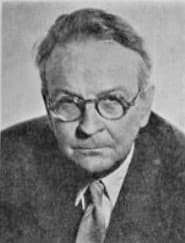
Raymond Thornton Chandler was an American-British novelist and screenwriter. In 1932, at the age of forty-four, Chandler became a detective fiction writer after losing his job as an oil company executive during the Great Depression. His first short story, "Blackmailers Don't Shoot", was published in 1933 in Black Mask, a popular pulp magazine. His first novel, The Big Sleep, was published in 1939. In addition to his short stories, Chandler published seven novels during his lifetime. All but Playback have been made into motion pictures, some more than once. In the year before his death, he was elected president of the Mystery Writers of America.







