“The greatest enemy of knowledge is not ignorance, it is the illusion of knowledge.”
— Early in the novel, as Harrison reflects on societal understanding.

Barbara Kingsolver (2009)
Genre
Literary Fiction / Historical Fiction / Creativity
Reading Time
1270 min
Key Themes
See below
Sign in to track this book
Between Frida Kahlo's Mexico and WWII America, Harrison Shepherd navigates a life shaped by art, revolution, and the space between personal truth and public perception.
Harrison William Shepherd, born in the U.S. but left by his mother, Salome, with housekeepers, spends his early years on Isla Pixol, a small Mexican island. He learns to cook, read, and observe nature. His mother, a beautiful and careless woman, eventually takes him back, moving them to Mexico City in the late 1930s. There, Salome gets involved with wealthy men, leaving Harrison mostly alone. He becomes interested in ancient Aztec culture and gets a job mixing plaster for the muralist Diego Rivera, entering the political Mexican art world.
Working for Diego Rivera, Harrison becomes a minor figure in the artist's busy home. He watches Rivera's art process and his difficult relationship with Frida Kahlo. Frida, seeing Harrison's quiet intelligence and skill, likes him. She encourages his art interests, especially in Aztec history, and gives him some stability and affection. Through them, he hears fervent political discussions and revolutionary ideas, preparing him for his next important role.
When Leon Trotsky and his wife Natalia Sedova are given asylum in Mexico, they first stay with Rivera and Kahlo. Harrison, because he is discreet and can type, is soon hired as Trotsky's personal secretary. He moves into their compound in Coyoacán, becoming involved in the daily life and political struggles of the exiled revolutionary. Harrison carefully types Trotsky's manuscripts, including his biography of Stalin, and sees firsthand the constant fear of assassination and the intense political schemes around Trotsky, which shapes his understanding of power and propaganda.
The threat to Trotsky's life happens when Ramón Mercader, an NKVD agent, enters the compound and murders Trotsky with an ice axe. Harrison is there during the aftermath, a traumatic event that strengthens his dislike for political extremism and dangerous ideologies. After the assassination, Harrison is linked to the events and, wanting to escape the political trouble and Trotsky's shadow, decides to return to the United States. He hopes to find a new identity and a sense of belonging in his birth country.
Harrison settles in Asheville, North Carolina, a place he chose randomly. He tries to start a new life, distancing himself from his past in Mexico. He begins to write historical novels, inspired by his knowledge of Aztec history and his experiences. His first novel, 'The Serpent and the Eagle,' is a fictional story of the conquest of Mexico. He hires a careful and dedicated stenographer, Mrs. Alice Brown, who becomes a key part of his new career and a quiet, steady presence in his life, helping him with publishing and American society.
Harrison's historical novels become popular, making him a celebrated author. However, his growing public profile draws attention to his mysterious past in Mexico, especially his connection with Leon Trotsky. Journalists and the public become curious about his early life. Harrison tries to keep his life private, but suspicion, fueled by anti-communist feelings in America, begins to grow. His unique background, once a source of inspiration, slowly becomes a problem.
As the Cold War grows and McCarthyism takes hold in the United States, anyone with a slight connection to communism becomes a suspect. Harrison, having been Trotsky's secretary, is a clear target. His private life is examined, his writings are checked for hidden messages, and his Mexican past is seen with suspicion. J. Edgar Hoover's FBI starts a file on him, twisting facts and making up accusations, showing the destructive power of unchecked fear and public hysteria.
Harrison is questioned intensely by government agents, who accuse him of communist sympathies and anti-American acts. His attempts to explain his position and his historical work are ignored or twisted. The media, wanting dramatic stories, joins in, painting him as a dangerous intellectual and a possible spy. His reputation is systematically ruined, and his life's work is damaged. Mrs. Brown, his loyal stenographer, remains a steady supporter, carefully recording the injustice.
During his personal and professional difficulties, Harrison hears of Frida Kahlo's death. This news deeply affects him, as Frida was one of the few people who truly understood and accepted him. He makes a secret trip back to Mexico for her funeral, a sad return to the place that shaped much of his early life. This journey reminds him of his dual identity and how impossible it is to fully escape his past, even as he faces a grim future in the U.S.
Despite being innocent, Harrison is found guilty of charges related to his alleged communist ties. He is imprisoned, his career is destroyed, and his reputation is permanently damaged. In prison, he continues to write, finding comfort in putting his thoughts on paper, even if they cannot be published. He experiences deep isolation, a sharp contrast to the lively, though dangerous, life he once led. His only regular contact with the outside world is through Mrs. Brown, who continues to support him and preserve his writings.
After Harrison's death in prison, Mrs. Brown works to gather his writings, diaries, and letters. She carefully arranges them, creating 'The Lacuna,' a full account of his life. Through this work, she aims to tell the true story of Harrison's experiences, revealing the injustices he suffered and challenging the false public perception. Her efforts show his character and condemn the political climate that destroyed him, giving Harrison a voice beyond his critics.
Years after his death, with Cold War tensions easing and the McCarthy era re-evaluated, Harrison Shepherd's story begins to be heard more kindly. 'The Lacuna,' collected by Mrs. Brown, becomes an important document for understanding not only Harrison's life but also the wider historical period. His work is re-examined, and his reputation is slowly restored. His life, marked by the 'lacuna'—the gap between truth and public perception—becomes a strong example of individual integrity against political oppression and misinformation.
The Protagonist
From a stateless, rootless boy, Harrison strives to find a home and identity, only to be unjustly persecuted for his unique history, ultimately finding posthumous vindication through his writings.
The Supporting
Frida remains a constant, guiding presence in Harrison's memory, embodying artistic integrity and personal strength until her death.
The Supporting
Trotsky's life is a tragic arc of revolution, exile, and assassination, serving as a cautionary tale of political extremism.
The Supporting
From a professional assistant, Mrs. Brown evolves into Harrison's most ardent defender and the architect of his historical legacy.
The Supporting
Salome remains largely unchanged throughout the narrative, a constant symbol of Harrison's early abandonment and emotional deprivation.
The Supporting
Rivera remains a powerful artistic and political force in Mexico, a constant backdrop to Harrison's early life.
The Antagonist
Hoover's influence grows throughout the Red Scare, culminating in Harrison's destruction, serving as the antagonist representing institutional injustice.
The Mentioned
Mercader's role is singular and impactful, serving as the instrument of Trotsky's tragic end.
Harrison Shepherd's life is a constant search for a home and a stable self. Raised between two cultures (American by birth, Mexican by upbringing) and left by his mother, he is always an outsider. He tries to build an identity through his historical novels and by seeking a quiet life in America, but his past always interferes. This theme appears from his early years on Isla Pixol, his quiet observation in the Kahlo/Rivera household, to his desperate attempts to fit into Asheville society. His failure to find a 'home' in America due to political persecution shows how fragile identity is when faced with outside forces.
“A person can be as much a mystery to himself as to anyone else.”
The novel explores how stories—both personal and public—are made, controlled, and can shape or ruin lives. Harrison's life is changed by the stories told by the press and government during the Red Scare, turning him from a respected author into a 'communist sympathizer.' His historical novels try to tell accurate stories, but he learns that 'truth' is often subjective and easily twisted. Mrs. Brown's collection of 'The Lacuna' is a meta-narrative, an attempt to correct the false public record with Harrison's own words, showing the lasting power of a truthful account against propaganda. This theme is central to the 'lacuna' itself—the gap between the truth and what people publicly believe.
“A lacuna is a gap, a missing part. It is the part of a story that is not told, or that is not known.”
Art, in different forms, serves as expression, historical record, and subtle resistance throughout the novel. Diego Rivera's murals show grand historical stories, while Frida Kahlo's paintings are deeply personal and emotional. Harrison's own historical novels are his attempt to understand the past and human events. Even his careful secretarial work for Trotsky can be seen as preserving a historical narrative. When Harrison is silenced and imprisoned, his continued writing in his journals becomes his last act of defiance, a way to show his own truth. Mrs. Brown's preservation of these writings ensures that art, as literature, eventually wins over censorship and historical revisionism.
“Art is a weapon. It is also a shield.”
The novel shows the destructive power of unchecked political beliefs, from the strong communism around Trotsky to the fearful anti-communism of McCarthyism. Harrison, having seen Trotsky's assassination and the Red Scare, becomes wary of any absolute belief system that suppresses individual thought and truth. The novel shows how ideologies can lead to violence, censorship, and the persecution of innocent people. Harrison's quiet honesty contrasts with the fanaticism he meets on both sides of the political spectrum, highlighting the importance of critical thinking and human empathy over strict adherence to dogma.
“The greatest enemy of truth is often not the lie, but the myth.”
The story quietly champions the contributions of those who work hard behind the scenes, often without recognition. Harrison himself, as a secretary and later a historical novelist, observes and records rather than being a public figure, yet his work holds great value. More importantly, Mrs. Alice Brown embodies this theme. Her quiet dedication, carefulness, and steady loyalty are key to preserving Harrison's true story. She is the 'unsung hero' who ensures that the 'lacuna' in Harrison's public story is eventually filled, showing that great impact can come from unassuming individuals committed to truth and justice.
“There are people who make history, and there are people who write it. And then there are people who simply preserve it.”
The story is primarily told through Harrison's personal writings and Mrs. Brown's compilation.
The novel is presented as a collection of Harrison Shepherd's diary entries, letters, government documents, and newspaper clippings, compiled and annotated by his stenographer, Mrs. Alice Brown. This format offers an intimate, first-person perspective on Harrison's experiences, allowing the reader direct access to his thoughts and observations. It also highlights the theme of narrative construction, as the reader sees how Harrison's private truths contrast with public representations. The interspersion of external documents emphasizes the conflict between personal truth and public perception, forming the 'lacuna' at the heart of the story.
A central metaphor representing gaps in knowledge, truth, and historical record.
The 'lacuna' is a pervasive metaphor throughout the novel, referring to gaps or missing parts—in history, in personal memory, and most significantly, in the public's understanding of Harrison Shepherd's life. It represents the space between what is true and what is believed, often due to deliberate obfuscation or sensationalism. The entire novel, titled 'The Lacuna,' is an attempt by Mrs. Brown to fill these gaps, to present the complete, unvarnished truth of Harrison's experiences, exposing how easily truth can be distorted and lost in the machinery of propaganda and public opinion.
Integration of real historical figures and events into the fictional narrative.
The novel is deeply embedded in real historical events and features prominent historical figures such as Diego Rivera, Frida Kahlo, Leon Trotsky, and J. Edgar Hoover. This device lends authenticity and gravitas to Harrison's fictional journey, placing him directly within the tumultuous political and artistic landscapes of the 1930s-1950s. By having a fictional character interact with these icons, Kingsolver explores how individuals are shaped by and react to major historical forces, blurring the lines between fiction and historical fact and making the narrative feel both epic and deeply personal.
The primary viewpoint is Harrison's subjective experience.
The majority of the narrative unfolds through Harrison's diary entries, offering a deep immersion into his thoughts, feelings, and observations. This limited perspective allows the reader to experience events as Harrison does, fostering empathy and understanding for his quiet, introspective nature. It also subtly highlights his isolation and his role as an outsider, as his internal world is often richer and more truthful than his external interactions. This device is crucial for establishing the contrast between his private reality and the public's misperceptions, central to the 'lacuna' theme.
“The greatest enemy of knowledge is not ignorance, it is the illusion of knowledge.”
— Early in the novel, as Harrison reflects on societal understanding.
“Every person is a book, Harrison, and the world is a library. You must learn to read them, not just look at the covers.”
— Fido, Harrison's mentor, imparts wisdom about understanding people.
“A man who believes in nothing is a man who is afraid of everything.”
— Harrison's internal reflection on the nature of belief and fear.
“Art is not a mirror held up to reality but a hammer with which to shape it.”
— A discussion about the purpose and power of art.
“The past is not dead. It is not even past.”
— Reflecting on how historical events and personal histories continue to influence the present.
“To write is to choose, to leave out, to create a lacuna in the flow of information.”
— Harrison's meditation on the act of writing and the meaning of the book's title.
“The most dangerous lies are the ones you tell yourself.”
— Internal thought about self-deception and its consequences.
“Silence is not empty. It's full of answers.”
— Harrison finding solace and clarity in quiet moments.
“You can't make a revolution without breaking some eggs, but you also can't make an omelet without a recipe.”
— A nuanced view on social change and the need for structure.
“The world is not a stage, it's a carnival. And we are all just trying to win a prize.”
— A cynical yet insightful observation on human ambition and societal roles.
“Every story has two sides, and the truth is usually somewhere in the middle, wearing a disguise.”
— As Harrison navigates conflicting accounts and propaganda.
“Creativity is not about thinking outside the box, it's about seeing the box for what it truly is.”
— A discussion about the nature of artistic insight.
“To be truly free, you must first be free of your own expectations.”
— Harrison's journey towards self-acceptance and liberation.
“The best way to escape your problems is to solve them.”
— A pragmatic piece of advice Harrison receives.
Ready to see how well you understood this book? Take our interactive quiz with 10 questions.
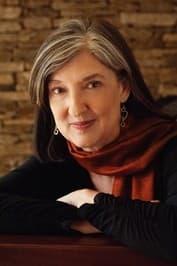
Barbara Kingsolver is a Pulitzer Prize winning American novelist, essayist and poet. She was raised in rural Kentucky and lived briefly in the Congo in her early childhood. Kingsolver earned degrees in biology at DePauw University and the University of Arizona and worked as a freelance writer before she began writing novels. Her widely known works include The Poisonwood Bible, the tale of a missionary family in the Congo, and Animal, Vegetable, Miracle, a non-fiction account of her family's attempts to eat locally.







