“For the future, I must remember that when a woman says she has lost something, she means she has put it somewhere safe and forgotten where.”
— Hercules Poirot musing on women's habits during a case.

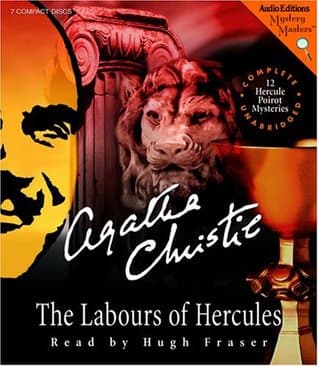
Agatha Christie (1947)
Genre
Thriller / Mystery
Reading Time
2-3 hours (approx. 10-15 min per story)
Key Themes
See below
Sign in to track this book
Before he can retire, Hercule Poirot takes on twelve final cases, each a mystery mirroring the ancient Greek myths, from tracking a lost poet to unmasking a deadly cult leader.
Hercule Poirot, deciding to take on twelve cases mirroring the Labours of Hercules, begins with 'The Nemean Lion.' Lady Veronica Carlton-Sandways asks Poirot for help, upset about her kidnapped Pekinese, Shan Tung. The kidnappers demand a large ransom, and Lady Veronica suspects her chauffeur, Marius, who has since vanished. Poirot investigates the luxurious estate and talks to the staff, including the secretary and the dog's handler. He finds problems in their stories and the strange behavior of Shan Tung, who was unusually aggressive. Poirot realizes the 'kidnapping' is a cover for a more serious plot involving the sale of valuable furs, with the dog as a distraction. He uncovers a smuggling ring operating under the guise of the dog's disappearance, exposing the true 'lion' in this case.
Dr. Charles Oldfield approaches Poirot. His reputation is being ruined by gossip that he is responsible for the deaths of several patients. The whispers are everywhere and seem untraceable, like the multi-headed Lernean Hydra. Oldfield's wife, a former nurse, is also suspected. Poirot looks into the lives of the dead patients, including Mrs. Moncrieffe and Mrs. Harrison, and speaks with their families and friends. He sees how quickly the rumors spread, despite no real proof. Poirot realizes the gossip is a planned campaign by one person with a hidden reason, not just public opinion. He carefully traces the whispers, unmasking the true source of the poison and their hurtful plan.
A rich American, Mr. G. P. Bewlay, asks Poirot to find his fiancée, a beautiful young woman named Nita Valetta, who has disappeared. Bewlay says her beauty reminds him of an Arcadian Deer. Nita was last seen in a remote village in Yugoslavia. Poirot travels to the isolated village, interviewing locals, including a gruff innkeeper and a suspicious artist. He learns that Nita had charmed everyone but also seemed to have a mysterious past. Poirot uncovers a complex story involving mistaken identity, a forgotten tragedy, and a desperate attempt to escape a previous life. He finds Nita, revealing her true identity and why she disappeared, bringing peace to Bewlay.
Inspector Japp asks Poirot to help find Marrascaud, a known and violent murderer who has escaped from prison. Marrascaud is thought to be hiding in a remote sanatorium in the Swiss Alps, a place known for its secrecy. Poirot travels to the snow-covered sanatorium, a place as wild and dangerous as the Erymanthian Boar. He observes the group of patients and staff, all of whom have reasons to be hidden. The air is tense with fear and suspicion, as Marrascaud is known for his ruthlessness. Poirot carefully checks alibis and reasons, realizing the killer is not who he seems. He uses his understanding of people to find Marrascaud, who has been cleverly disguised among the other patients, bringing the dangerous 'boar' to justice.
Sir George Connan, a politician, approaches Poirot. His career is about to end due to a large public scandal. The scandal involves wide corruption and financial wrongdoing within a government department, a situation so bad it is compared to the Augean Stables. Connan is innocent but has been blamed, and public opinion is against him. Poirot must untangle a web of lies, blackmail, and political moves. He interviews various government officials, journalists, and others connected to the scandal, facing resistance. Poirot systematically finds the true culprits and their complex plan to discredit Connan, clearing his name and exposing the real wrongdoers, thus 'cleaning' the stables.
Poirot is invited to a ladies' finishing school in Switzerland, Campden House, by its headmistress, Miss Stoddart. She is worried about the bad influence of two unpleasant, gossiping students, Katriona and Sheila, who are causing trouble among the other girls, like the Stymphalean Birds. Poirot observes the school, noting how these two girls manipulate and torment their peers, leading to sadness and even a suicide attempt. He realizes their actions are more than childish mischief; they are planned and harmful. Poirot creates a clever plan to show their true natures and harmful influence, making a situation where the 'birds' must reveal their true, mean characters, leading to their removal from the school.
Poirot is hired by Diana Maberly to investigate her fiancé, Hugh Chandler. She fears he is falling prey to a hereditary madness, a family curse like the Cretan Bull. Hugh’s father died in a mental institution, and Hugh himself shows increasingly strange and violent behavior, especially during a full moon. Diana is worried. Poirot travels to the Chandler family estate, a place with a long history and dark rumors. He observes Hugh and talks with other family members, including Hugh’s stepmother and a local doctor. Poirot uncovers a complex plot involving manipulation and gaslighting, designed to drive Hugh insane and take his inheritance. He exposes the real villain who is causing Hugh’s supposed madness, saving him from a tragic fate.
Poirot is approached by Colonel Race, a concerned father whose daughter, Sheila, has joined a dangerous and wild group known for their parties and drug use. This group is like the wild Mares of Diomedes. Sheila has become involved with a man named Michael, who is part of this circle. Poirot goes into this social scene, observing the reckless behavior, casual drug abuse, and underlying sadness. He finds a pattern of psychological manipulation and exploitation within the group, especially by a charming but sinister figure. Poirot works to expose the person responsible for selling drugs and preying on vulnerable young people, rescuing Sheila and others from the destructive influence of this dangerous 'herd.'
Poirot is asked by authorities to recover a valuable Rubens painting, 'The Girdle of Hippolyta,' stolen from an art exhibition in Paris. The painting is part of a larger collection, and its disappearance is a major scandal. The investigation leads Poirot into the world of art theft, a network of criminals. He travels across Europe, following clues and interviewing art dealers, collectors, and suspected criminals. Poirot discovers that the theft is linked to a larger criminal operation, and the painting is not just a stolen item but a key to a more significant illegal operation. He uses his detective skills to find the masterpiece and expose the international art group responsible for its disappearance.
Poirot is contacted by Miss Emmeline Clegg, an ordinary woman worried about her friend, who has joined a mysterious religious cult called 'The Flock of Geryon.' Emmeline suspects foul play as several cult members have died strangely, all leaving their money to the cult's leader, Dr. Andersen. Poirot goes into the secluded cult, pretending to be a potential member, and observes the unsettling group. He notices Dr. Andersen's hypnotic influence and his followers' complete devotion. Poirot systematically investigates the deaths, finding a pattern of poisoning and manipulation. He exposes Dr. Andersen as a calculating murderer who preys on the vulnerable, bringing down the sinister 'flock' and saving its remaining members.
Poirot is hired by a wealthy Irish art collector, Mr. Augustus Savaran, to recover a priceless golden goblet, known as the 'Apples of the Hesperides,' stolen from his collection years ago. The goblet is intricately designed and holds great sentimental and historical value. The theft happened during a party, and the culprit was never found. Poirot begins a long and complex search, following a trail that spans several countries and involves various shady characters in the art world. He looks into old records, interviews Savaran's former associates, and uncovers long-hidden secrets. Poirot eventually traces the goblet to a remote, almost mythical place, revealing a story of obsession and betrayal, and finally recovers the treasured 'apples.'
Poirot’s final labour brings him to the 'Inferno' nightclub, a place of bad reputation and illegal activities, which he compares to the underworld guarded by Cerberus. He is drawn into the case by Countess Vera Rossakoff, a flamboyant figure from his past, who now owns the club. Vera claims she is worried about the club’s sinister atmosphere and the strange behavior of some of its patrons. Poirot investigates the club’s operations, uncovering a network of spying and political intrigue, with the 'Inferno' acting as a center for dangerous international dealings. He confronts the true mastermind behind the operations, a figure who uses the club to manipulate. Poirot exposes the villain, and Vera Rossakoff plays an important part in the solution, marking a memorable end to Poirot’s twelve labours.
The Protagonist
Poirot begins the collection contemplating retirement but uses the 'labours' as a final, grand intellectual exercise, reinforcing his legendary status before his eventual exit from the world of crime.
The Supporting
Her character remains largely static, serving as the catalyst for Poirot's first labour.
The Supporting
He is a static character, serving as the victim whose reputation Poirot must salvage.
The Supporting
Her arc involves being found and having her true identity and past revealed, bringing closure to her disappearance.
The Antagonist
His arc is defined by his escape and subsequent capture by Poirot, bringing him to justice.
The Supporting
His arc involves being cleared of false accusations and having his reputation restored by Poirot.
The Antagonists
Their arc involves being exposed and removed from the school due to Poirot's intervention.
The Supporting
His arc involves being saved from a manufactured mental breakdown and the exposure of his manipulators.
The Supporting
Her arc involves her unexpected assistance to Poirot in his final labour, solidifying their unique bond.
The main theme of the collection is Poirot's search for justice, often leading to punishment for the guilty. Each labour presents a unique challenge to justice, from holding a murderer accountable ('The Erymanthian Boar') to clearing an innocent man's name ('The Augean Stables'). Poirot's methods ensure that those who do wrong, whether through direct violence or subtle manipulation, face consequences, restoring balance and order. He does not just solve crimes; he fixes wrongs, often with a sense of finality.
“''Order and method,' he would say, 'those are the two great things. But also, what is justice?'”
Christie explores different kinds of evil, showing it takes many forms beyond clear violence. From malicious gossip that ruins a reputation ('The Lernean Hydra') to psychological manipulation that drives someone mad ('The Cretan Bull') or the bad influence of a cult leader ('The Flock of Geryon'), the book shows how evil can be subtle, widespread, and very damaging. It highlights that villains are not always obvious monsters but can hide behind respectable appearances or even seem charming.
“''Evil is not always a dagger in the dark. Sometimes it is a whisper, a suggestion, a poison that spreads unseen.'”
Many cases involve exposing hidden truths and, sometimes, offering a form of freedom for the victims. Whether it's saving Sheila from a drug-filled social circle ('The Mares of Diomedes') or freeing Hugh Chandler from a manufactured madness, Poirot's investigations often lead to showing deception and saving the innocent. The theme also applies to exposing the criminals themselves, bringing their hidden actions into the light and ending their control.
“''The truth, mademoiselle, is like a strong light. It exposes all the shadows.'”
A repeated theme is how appearances can be misleading. Characters and situations are rarely what they seem. A kidnapped dog leads to a smuggling ring ('The Nemean Lion'), a finishing school hides mean gossips ('The Stymphalean Birds'), and a religious cult conceals murder ('The Flock of Geryon'). Poirot consistently looks past the surface, using his 'little grey cells' to uncover the hidden truths and real reasons that lie beneath careful facades. This theme shows the importance of thinking critically and not trusting things at face value.
“''It is the human heart, mademoiselle, that is the most devious labyrinth of all.'”
A structural device where each case mirrors a mythological Labour of Hercules.
This is the primary framing device for the entire collection. Poirot's decision to undertake twelve cases, each symbolically linked to one of the mythological Labours of Hercules, provides a unique structure. This framework allows Christie to present a diverse range of mysteries, from seemingly trivial to gravely dangerous, while maintaining thematic coherence. It also adds a layer of classical grandeur and intellectual challenge to Poirot's final cases, elevating them beyond mere crime-solving into a heroic quest for justice.
Misleading clues or suspects designed to divert the reader's and detective's attention.
Christie expertly employs red herrings in nearly every story. For instance, in 'The Nemean Lion,' the focus on the kidnapped dog and the missing chauffeur is a red herring for a fur smuggling operation. In 'The Lernean Hydra,' the widespread gossip is the red herring for a single, malicious orchestrator. These misdirections keep the reader guessing and highlight Poirot's ability to see through deception, focusing on the subtle details that reveal the true culprit or motive.
Mysteries confined to a limited group of suspects or a secluded location.
Several of the labours utilize a closed circle of suspects or an isolated setting, intensifying the mystery and limiting the scope of the investigation. Examples include the remote sanatorium in 'The Erymanthian Boar,' the ladies' finishing school in 'The Stymphalean Birds,' the family estate in 'The Cretan Bull,' and the religious cult in 'The Flock of Geryon.' This device allows for intense character interactions and heightens the tension, as the culprit is almost certainly among the confined group.
“For the future, I must remember that when a woman says she has lost something, she means she has put it somewhere safe and forgotten where.”
— Hercules Poirot musing on women's habits during a case.
“It is not the crime that matters, but the motive.”
— Poirot reflecting on the underlying reasons for a criminal act.
“The little grey cells, they do not deceive.”
— Poirot referring to his brainpower and logical deduction.
“A man who is tired of London is tired of life.”
— A character quoting a well-known saying, reflecting on urban life.
“One must always be prepared for the unexpected.”
— Poirot's general philosophy on detective work.
“The truth, it is a very peculiar thing. Sometimes it is hidden in plain sight.”
— Poirot discussing the elusive nature of truth in a case.
“Everyone has a secret. Some are just better at keeping them than others.”
— A general observation on human nature and secrets.
“It is not enough to have a good brain. One must know how to use it.”
— Poirot emphasizing the importance of applying intelligence.
“The greatest joy for a detective is to restore order where there has been chaos.”
— Poirot reflecting on the satisfaction of solving a difficult case.
“Human nature, Hastings, is a very curious thing. It is full of contradictions.”
— Poirot discussing the complexities of human behavior.
“The past is never really dead. It is always there, waiting to catch up with us.”
— A character reflecting on the lingering impact of past events.
“Sometimes, the most innocent-looking person can be the most dangerous.”
— Poirot's warning about appearances being deceptive.
“Logic, my friend, is a beautiful thing. It clears the mind.”
— Poirot expressing his appreciation for logical thought.
“There are times, my friend, when a little imagination is more useful than a lot of facts.”
— Poirot acknowledging the role of imagination in problem-solving.
Ready to see how well you understood this book? Take our interactive quiz with 10 questions.
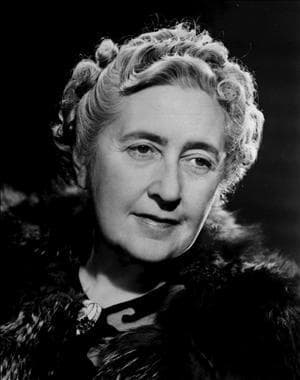
Dame Agatha Mary Clarissa Christie, Lady Mallowan, was an English writer known for her 66 detective novels and 14 short story collections, particularly those revolving around fictional detectives Hercule Poirot and Miss Marple. She also wrote the world's longest-running play, the murder mystery The Mousetrap, which has been performed in the West End since 1952. A writer during the "Golden Age of Detective Fiction", Christie has been called the "Queen of Crime". She also wrote six novels under the pseudonym Mary Westmacott. In 1971, she was made a Dame (DBE) by Queen Elizabeth II for her contributions to literature. Guinness World Records lists Christie as the best-selling fiction writer of all time, her novels having sold more than two billion copies.







