“When you have to choose between two evils, choose the one that you have not yet tried.”
— Professor Hiren's advice to Vijay as he faces difficult choices.

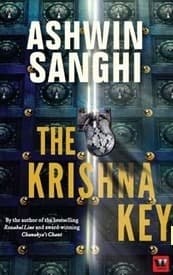
Ashwin Sanghi (2012)
Genre
Thriller / Fantasy / Historical Fiction / Mystery
Reading Time
1000 min
Key Themes
See below
Sign in to track this book
A historian races to uncover Krishna's ancient legacy, battling a serial killer who believes he is the deity's final avatar, as a conspiracy threatens to reshape the Vedic Age.
The novel opens with the murder of a young woman, Geeta, in Dwarka, her body arranged ritually. At the same time, Professor Ravi Mohan Saini, a disgraced historian at the University of Delhi, meets his former mentor, Professor Homi Sorabjee. Sorabjee, fearing for his life, gives Ravi a coded message and a replica of a unique conch shell, hinting at a dangerous secret connected to Krishna. Sorabjee believes a killer is targeting people based on an ancient prophecy and warns Ravi about a 'final avatar' who will begin the Kali Yug. Before Ravi understands, Sorabjee is found dead, seemingly by suicide, but Ravi suspects murder.
Ravi begins to decode Sorabjee's clues, which point to an ancient prophecy about Krishna's final avatar and the start of Kali Yug. He realizes the conch shell is a replica of the Panchajanya, Krishna's divine conch. His investigation leads him to Priya, a child prodigy and student of Sanskrit and ancient texts, who offers more insights into the prophecies. Meanwhile, the killer, a charismatic man named Taarak, continues his murders. Each victim embodies a flaw Taarak believes must be removed for humanity's salvation. Taarak believes he is the final avatar and is carrying out divine justice.
Ravi, with Priya's knowledge and Inspector Dawood Ibrahim's help, examines ancient texts and symbols. He discovers a secret society, the 'Krishna-Dharma,' dedicated to preserving Krishna's legacy. He learns about a lost manuscript, the 'Krishna Key,' which is said to contain Krishna's wisdom and a powerful secret. Taarak also seeks this key, believing it will give him power and validate his divine mission. Ravi realizes that Taarak is not just a murderer but is removing anyone who could stop him or reveal the truth about Krishna's legacy.
Following clues from Sorabjee's notes and ancient scriptures, Ravi travels to the submerged city of Dwarka, Krishna's fabled kingdom. He believes a piece of the puzzle lies underwater. With marine archaeologists, he explores the ruins, finding an ancient inscription that clarifies the prophecy and the 'Krishna Key.' During his dangerous exploration, he encounters Taarak's operatives, who are also searching for the same clues, showing the killer's ruthless determination and network. Ravi realizes the danger he is in as he nears the truth.
Ravi's journey takes him to the historic Somnath Temple, also linked to Krishna and ancient legends. He learns about the Jyotirlingam, a sacred Shiva lingam, and its hidden meaning in Krishna's legacy. Through his research and talks with local scholars, he uncovers that the lingam is not just a religious artifact but has a symbolic or actual connection to the 'Krishna Key.' Taarak's presence is evident, as Ravi finds proof that the killer has also been to Somnath, tracking the same ancient knowledge and leaving a trail of fear. The stakes rise as Ravi understands the killer's careful planning.
The plot continues with another murder at the ancient archaeological site of Kalibangan, linked to the Indus Valley Civilization. The victim is an archaeologist close to uncovering information. Taarak leaves a cryptic message, crafted to mimic ancient scripts, which Ravi and Priya must decipher. This message hints at the 'Krishna Key' being a concept rather than a physical object, or perhaps both. The killer's intelligence and his deep understanding of history and mythology become clear, making him a formidable enemy.
The trail leads Ravi to Mount Kailash, believed to be Shiva's home and a place of spiritual power. Here, Krishna's legacy is said to be hidden. Ravi faces dangers from nature and Taarak's followers. He discovers that the 'Krishna Key' is not a single artifact but a collection of ancient knowledge, a scientific principle disguised as mythology, related to advanced technology or understanding of the universe. This challenges Ravi's understanding of history and science.
Ravi finally confronts Taarak, who reveals his identity and his twisted reasons for the murders. Taarak believes he is fulfilling a divine command to cleanse humanity and begin a new age using the 'Krishna Key.' The 'Krishna Key' is a genetic blueprint or ancient bio-weaponry, a devastating power Krishna hid to prevent its misuse. Taarak intends to unleash this power, believing it will purify the world. Ravi, with Inspector Dawood's help, races to stop Taarak from activating the key and causing global destruction.
A climax unfolds as Ravi and Inspector Dawood try to stop Taarak's plans. The battle is intellectual and physical, as Ravi uses his historical and scientific knowledge to counter Taarak's interpretation of ancient texts and his access to the 'Krishna Key.' They prevent Taarak from fully activating the key, though with struggle and sacrifice. Taarak is defeated, and the immediate threat is neutralized. However, the revelation of the 'Krishna Key's' true nature impacts Ravi and the world, showing the balance between ancient wisdom and modern responsibility.
Afterward, the world deals with the discovery of the 'Krishna Key' and its implications. The existence of such powerful, ancient technology challenges established history and science. Ravi Mohan Saini, now a hero, must ensure this ancient knowledge is guarded and never misused. He understands the responsibility that comes with such a discovery and dedicates his life to understanding and protecting Krishna's legacy, ensuring it is used for good, not destruction. The experience changes him, a scholar with an extraordinary secret.
The Protagonist
Ravi transforms from a disgraced academic to a reluctant hero, regaining his self-respect and proving his theories while protecting humanity.
The Antagonist
Taarak's arc is one of escalating delusion and violence, culminating in his defeat and the exposure of his twisted ideology.
The Supporting
Priya grows in confidence and becomes a vital intellectual partner to Ravi, proving that youth can hold profound wisdom.
The Supporting
Dawood evolves from a skeptical investigator to a key protector of Ravi and the truth, broadening his understanding of the world.
The Supporting
Sorabjee's arc is cut short, but his actions posthumously guide Ravi, demonstrating the lasting impact of a mentor's wisdom.
The Mentioned
Geeta's arc is tragically brief, serving as the initial spark for the plot's progression.
The novel explores how ancient myths and historical accounts can be reinterpreted, often with dangerous results. Taarak, the antagonist, twists Vedic scriptures and Krishna's prophecies to justify his acts, believing he is the 'final avatar.' Ravi, on the other hand, seeks historical and scientific truths within these narratives, often finding rational explanations for seemingly supernatural events. This theme is central to Ravi's intellectual journey as he deciphers clues from Dwarka and Somnath, distinguishing between literal belief and symbolic meaning.
“History is not what happened. It is what is remembered. And what is remembered depends on who is doing the remembering.”
A theme concerns divine justice and whether humanity has the right to enact it. Taarak acts as a divine agent, punishing those he deems 'unworthy' to purify the world, echoing ancient concepts of Kali Yug and divine retribution. The novel questions the morality of such actions and the dangers of self-appointed saviors. Ravi and Dawood, representing reason and law, challenge this twisted ideology, emphasizing that justice, even if inspired by higher principles, must be administered ethically and humanely, not through murder. Victims are chosen based on Taarak's warped view of 'sins' against a pure society.
“When man plays God, he creates a devil.”
The 'Krishna Key' itself shows this theme. It is not a magical artifact but advanced ancient knowledge, potentially a genetic blueprint or bio-weaponry, hidden in mythological narratives. The novel shows how such discoveries, if misinterpreted or misused, can lead to disaster. Ravi's quest is not just to find the key but to understand its true nature and prevent its destructive use, highlighting the responsibility that comes with uncovering powerful secrets. The journey to Kailash emphasizes the sacred and perilous nature of this knowledge.
“The greatest secrets are often hidden in plain sight, veiled by the very stories we tell ourselves.”
The book contrasts blind faith with rational inquiry. Taarak's actions are driven by an unshakeable, twisted faith in his divine mandate and a literal reading of prophecies. Ravi, a historian, uses evidence, logic, and analysis to solve the mystery, seeking scientific or historical explanations for events. The narrative explores the tension between these two approaches, showing how an imbalance can lead to fanaticism or dismissal. Priya, with her blend of scriptural knowledge and logical deduction, often bridges this divide, showing that faith and reason can inform each other.
“To believe without questioning is to invite deception.”
The central object of desire and mystery that drives the plot.
The 'Krishna Key' serves as the primary MacGuffin. Initially, it is shrouded in mystery, believed to be a powerful artifact or secret left by Krishna. Both Ravi and Taarak are intensely focused on acquiring or understanding it, albeit for vastly different purposes. Its true nature is gradually revealed to be not a physical key but a profound, ancient scientific or genetic knowledge, capable of immense creation or destruction. Its ambiguity and eventual revelation propel the narrative forward, forcing characters to constantly reassess their understanding of Krishna and his legacy.
An ancient prophecy that fuels the antagonist's delusion and guides the protagonist's investigation.
The ancient prophecy of the Kalki Avatar, the final incarnation of Vishnu destined to appear at the end of Kali Yug to cleanse the world, is a critical plot device. Taarak interprets this prophecy literally and believes he is this avatar, using it to justify his serial killings. Ravi, conversely, must delve into the origins and various interpretations of this prophecy to understand Taarak's motives and anticipate his next moves. The prophecy provides a mythological framework for the thriller, blurring the lines between ancient belief and modern crime, and creating a sense of impending doom.
Real-world historical and mythological sites that serve as integral puzzle pieces.
The novel extensively uses real historical and mythological locations like Dwarka, Somnath, Kalibangan, and Mount Kailash as crucial plot devices. Each location holds a piece of the puzzle, containing inscriptions, artifacts, or legends that guide Ravi's investigation. These sites are not merely backdrops; they are active participants in the unfolding mystery. Ravi must physically travel to these places, deciphering clues embedded in their history and architecture. This device grounds the fantastical elements in tangible, recognizable settings, enhancing the sense of historical authenticity and adventure.
Cryptic texts and symbols that Ravi must decipher to advance the plot.
From Professor Sorabjee's initial coded message to the ancient inscriptions found in Dwarka and the symbolic messages left by Taarak at crime scenes, coded messages and ancient scripts are central to the plot. Ravi, often with Priya's help, must painstakingly translate and interpret these texts. This device highlights Ravi's academic expertise and provides intellectual challenges for the characters. Each deciphered message reveals a new layer of the mystery, pushing the narrative forward and gradually unveiling the true nature of the 'Krishna Key' and Taarak's grand plan.
“When you have to choose between two evils, choose the one that you have not yet tried.”
— Professor Hiren's advice to Vijay as he faces difficult choices.
“The past is never dead. It's not even past.”
— A recurring theme highlighting how historical events and prophecies influence the present.
“Every lie contains an element of truth. That's what makes it believable.”
— Vijay's realization about the nature of deception.
“Sometimes, the greatest truths are hidden in plain sight, disguised as myth or legend.”
— Reflecting on the ancient stories and their connection to modern events.
“Faith is not about believing in something. It's about believing in yourself.”
— A moment of introspection for Vijay regarding his own capabilities.
“The line between genius and madness is often blurred, especially when one is driven by a singular purpose.”
— Considering the motivations of the antagonist, Taarak.
“Destiny is not a road you find, but a road you create.”
— Vijay's evolving understanding of his role in the unfolding prophecy.
“Power corrupts, and absolute power corrupts absolutely. But sometimes, it also reveals absolute truth.”
— Exploring the dual nature of power and its impact on individuals.
“The greatest battles are not fought on fields of war, but within the human heart.”
— A reflection on the internal struggles faced by the characters.
“History is written by the victors, but sometimes, the vanquished leave behind clues that rewrite it.”
— The importance of forgotten or overlooked historical details.
“The universe doesn't give you what you want, it gives you what you need.”
— Vijay contemplating the unexpected turns his life has taken.
“There are no coincidences, only patterns waiting to be discovered.”
— As the characters piece together seemingly unrelated events.
“Knowledge without wisdom is a dangerous weapon.”
— A warning about the misuse of ancient knowledge and power.
“Sometimes, the only way to find your path is to get lost.”
— Vijay's journey of self-discovery amidst chaos.
Ready to see how well you understood this book? Take our interactive quiz with 10 questions.

Ashwin Sanghi is a critically acclaimed Indian author known for his bestselling thriller novels. His works, including "The Krishna Key," "The Rozabal Line," and "The Sialkot Saga," blend mythology, history, and suspense. Sanghi's ability to weave intricate plots with ancient Indian lore has earned him a significant readership in the Indian fiction scene and beyond.







