“The greatest battles are not fought with swords and shields, but within the confines of one's own heart.”
— A reflection on inner conflict and moral choices faced by the protagonist.

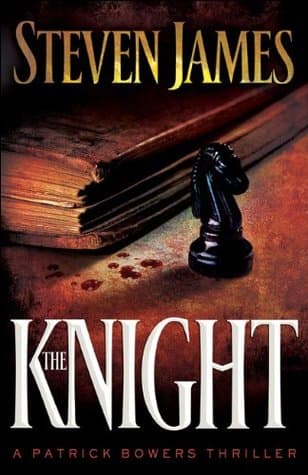
Genre
Fantasy / Science Fiction
Reading Time
12-15 hours
Key Themes
See below
Sign in to track this book
An FBI criminologist known for tracking dangerous killers becomes the hunted when a murderer uses an ancient manuscript as a gruesome blueprint, forcing him to decipher its deadly clues before he becomes the final, shocking victim.
FBI Agent Patrick Bowers investigates the murder of Dr. Arthur Penhaligon, a historian found killed in his study. The scene is staged, with a rare, ancient manuscript, 'The Knight's Testament,' displayed. Bowers realizes the killer is not just using historical methods but also using the text as a blueprint for the crimes. The manuscript, known for its cryptic narratives about medieval knights and their quests, seems to hold the key to understanding the killer's motives and predicting future victims. Bowers, a criminologist with a knack for patterns, feels an unsettling connection to the case, as if the killer is communicating with him through these clues, setting a sinister intellectual game in motion.
A second victim, Eleanor Vance, a wealthy collector, is discovered. Her death echoes a passage from 'The Knight's Testament' more explicitly than the first. The killer leaves another obscure hint, directly addressing Bowers through a manipulated phrase from the manuscript, making the hunt more personal. Agent Bowers, with his team including Special Agent Tessa Leoni, studies the manuscript's history and interpretations. They consult Dr. Evelyn Reed, a medieval literature expert, who helps them unravel the symbolism and historical context in the text. This reveals a narrative of loyalty, betrayal, and a quest for a mythical relic, all seemingly mirrored by the killer's actions.
As Bowers and Leoni investigate the victims' backgrounds, they uncover a surprising connection: all victims, including Penhaligon and Vance, were part of a secretive academic society focused on medieval history and the manuscript. More disturbingly, Bowers realizes his own name, or a variant, appears in a coded section of the manuscript that only recently became accessible. This revelation suggests the killer is not just playing a game with him, but specifically targeting him, perhaps for reasons rooted in his past or an unknown connection to the society. The stakes become personal as Bowers understands he might be hunted.
Working with Dr. Reed, Bowers deciphers a complex cipher in 'The Knight's Testament' that speaks of a 'traitor among the knights' and a 'false quest.' This reveals that the killer is likely someone familiar with the manuscript and the academic society, possibly a member. The decoded passages hint at a betrayal in the original knight narrative, and Bowers suspects this historical betrayal is being reenacted. The team races to identify other society members and their roles, realizing the killer's motive might stem from a perceived injustice or a twisted interpretation of the manuscript's moral code. The pressure mounts as they fear another victim is imminent.
Despite their efforts, a third victim, Dr. Julian Thorne, a scholar, is found. His death mirrors another passage from the manuscript detailing a knight's fall. This time, the killer leaves a more direct taunt for Bowers. Following deductions based on the latest clue and the killer's pattern, Bowers tracks the killer to a remote, historically significant location: an old, abandoned monastery featured in the manuscript's lore. A tense confrontation ensues, where Bowers faces the killer, who reveals a deep grievance and a twisted justification for their actions, believing they are enacting divine justice or historical correction based on 'The Knight's Testament.' The killer's identity is a shock, someone previously thought to be an ally or a peripheral figure.
During the confrontation and interrogation, the killer, Dr. Alistair Finch, a medievalist and fellow member of the academic society, confesses his obsession with 'The Knight's Testament.' Finch believed the manuscript contained a hidden truth about a historical injustice, a betrayal that led to a virtuous knight's downfall. Finch planned the murders, seeing the victims as modern counterparts to the 'betrayers' in the manuscript, believing they had misinterpreted the text, profited from its secrets, or slighted Finch's own interpretation. The killer's actions were an attempt to 'correct' history and bring about a twisted form of justice, using Bowers as an unwitting participant in their grand, macabre reenactment.
Even after Finch's capture, Bowers feels an unsettling incompleteness. He revisits 'The Knight's Testament' one last time, focusing on the final, most cryptic passages that speak of a 'final sacrifice' to complete the quest. A chilling realization dawns on him: Finch's ultimate plan was not just to kill the 'traitors,' but to make Bowers himself the final victim, the 'pure knight' whose sacrifice would truly complete the twisted narrative. Finch had laid traps and left specific clues that would lead Bowers to this conclusion, turning the entire investigation into a path to his own demise. Bowers realizes Finch had intended to escape and complete this final act, making the race against time even more critical.
Bowers, with Leoni's urgent assistance, discovers that Finch had orchestrated an elaborate escape plan from custody, detailed in a hidden section of the manuscript that only Bowers could fully decipher. Finch's plan involved exploiting a weakness in the security system, timed to coincide with a specific celestial event, mirroring another obscure detail in the text. The team mobilizes, realizing that Finch's escape is imminent and that the 'final sacrifice' will be Bowers himself. The chase leads them through a series of historical landmarks and hidden passages that Finch had prepared, each location a reference to 'The Knight's Testament,' turning the pursuit into a desperate scramble to intercept Finch before he could complete his ultimate, personal vendetta against Bowers.
The final confrontation takes place at a secluded, historically significant site, one that 'The Knight's Testament' describes as the 'resting place of the true knight.' Finch, having escaped and prepared the scene for Bowers's sacrifice, awaits him. A tense cat-and-mouse game ensues, with Finch attempting to lure Bowers into a trap designed to fulfill the prophecy of the manuscript. Using his understanding of the killer's psychology and the manuscript's lore, Bowers outmaneuvers Finch. After a brutal struggle, Bowers subdues Finch, preventing his own murder and ending the killer's reign of terror. The manuscript is secured, its dark influence neutralized, but the experience leaves Bowers changed, haunted by human obsession and the personal nature of the hunt.
In the aftermath, Dr. Alistair Finch is remanded to a high-security psychiatric facility, deemed insane due to his extreme obsession with 'The Knight's Testament.' The academic society is disbanded, its secrets exposed. Bowers takes time to recover, both physically and psychologically, from the personal nature of the case. He reflects on the line between scholarship and madness, and the power of ancient texts to shape, and sometimes warp, human minds. Though the immediate threat is neutralized, the experience leaves an indelible mark on Bowers, deepening his understanding of the darker corners of the human psyche and the intricate ways history and literature can be twisted to justify horrific acts. The manuscript itself remains a powerful, albeit now infamous, artifact.
The Protagonist
Bowers confronts a killer who targets him personally, forcing him to face his own vulnerabilities and the dark reflections of his intellect in the killer's obsession. He emerges more resilient but profoundly changed.
The Supporting
Leoni grows in her trust and reliance on Bowers's unique methods, while also providing essential stability and support as the case becomes increasingly dangerous and personal for him.
The Supporting
Reed moves from academic detachment to active engagement in a dangerous criminal investigation, realizing the real-world implications of her scholarly pursuits.
The Antagonist
Finch's descent into madness is revealed through his actions, culminating in his capture and the exposure of his profound delusion and obsession.
The Mentioned
His death sets the entire plot in motion, revealing the dark undercurrents within the academic world.
The Mentioned
Her death reinforces the killer's pattern and deepens the mystery surrounding the manuscript and the society.
The Mentioned
His death confirms the killer's escalating pattern and brings Bowers closer to identifying the perpetrator.
This theme is central, showing Dr. Alistair Finch's destructive obsession with 'The Knight's Testament.' Finch's scholarly pursuit becomes a delusional quest for 'justice,' where he interprets the ancient text as a literal blueprint for murder. His inability to separate historical narrative from contemporary reality drives him to commit heinous acts, believing he is fulfilling a higher purpose. The theme highlights how intellectual pursuits, taken to an extreme, can warp an individual's perception and lead to moral decay, turning a scholar into a serial killer. This is evident in his meticulous planning and the ritualistic nature of the murders, all in service of his twisted interpretation.
“The line between genius and madness is often blurred, especially when one's entire world is built upon the fragile edifice of a single, ancient text.”
The novel explores how ancient texts can be interpreted in many ways, and the dangerous consequences when those interpretations become dogmatic and divorced from reality. 'The Knight's Testament' is a complex, cryptic manuscript, open to scholarly debate. Finch, however, interprets it as an infallible guide to a historical truth that demands violent retribution. This theme contrasts Finch's literal and destructive reading with Dr. Reed's academic approach and Bowers's analytical, pattern-seeking perspective. It shows how the meaning we get from stories and history can shape our actions, for good or ill, and how a singular, unyielding interpretation can lead to catastrophic outcomes, blurring the lines between fiction and a horrifying reality.
“Words, once written, take on a life of their own. Their meaning, however, belongs to the reader, for better or for worse.”
Patrick Bowers's journey in 'The Knight' shows the personal cost of pursuing justice, especially when the case becomes deeply personal. As the killer targets Bowers, the line between investigator and victim blurs, forcing him to confront a dangerous criminal and his own vulnerabilities. The relentless intellectual and physical demands of the investigation, coupled with the killer's personal taunts, take a toll on Bowers's mental and emotional well-being. This theme explores the sacrifices made by those who dedicate their lives to solving crimes, highlighting the psychological scars that remain even after justice is served, and the constant battle to maintain objectivity in the face of personal threat.
“Every pattern I see, every truth I uncover, leaves a mark. Sometimes, the cost of seeing too clearly is to be seen yourself.”
The novel shows how historical narratives and perceived past injustices can influence actions in the present. 'The Knight's Testament,' an ancient text detailing medieval quests and betrayals, is the direct blueprint for modern-day murders. The killer, Alistair Finch, believes he is correcting historical wrongs, enacting retribution for events centuries old. This theme highlights how history is not just past events but a living force that can shape contemporary conflicts and motivations, especially when individuals become consumed by its narratives. It shows how the past can haunt and drive individuals to reenact its dramas in brutal, modern contexts.
“The past is never truly gone. It merely waits for a new stage, a new actor, to play out its ancient dramas once more.”
The central MacGuffin and blueprint for the killer's actions.
This rare, cryptic medieval manuscript serves as the primary plot device. It acts as both the killer's motive and their instruction manual, containing the clues and narrative structure that dictate each murder. For Bowers, it's a puzzle to be solved, a key to understanding the killer's mind and predicting their next move. Its historical context, hidden ciphers, and obscure passages drive the entire investigation, forcing Bowers and Dr. Reed to delve into its complex lore to unravel the mystery and prevent further deaths. The manuscript is not just an object but a character in itself, influencing the fate of all involved.
The killer's deliberate challenge to Bowers, turning the investigation into a personal duel.
The killer, Dr. Alistair Finch, intentionally engages Patrick Bowers in an intellectual game, leaving specific clues derived from 'The Knight's Testament' that only Bowers, with his unique analytical mind, can fully decipher. This device elevates the conflict beyond a simple detective hunt, transforming it into a high-stakes duel of wits. The killer's taunts and personalized messages are designed to challenge and provoke Bowers, making the investigation intensely personal and forcing him to confront a dark reflection of his own intellect. This adds psychological depth and tension, as Bowers realizes he is not just solving a case, but being played by a cunning adversary.
A secretive group of scholars providing both victims and context.
This exclusive, secretive academic society, focused on medieval history and 'The Knight's Testament,' serves as a crucial plot device. It provides a closed circle of potential victims and suspects, and its internal dynamics, rivalries, and shared knowledge of the manuscript are essential to the plot. The society's existence justifies the victims' connections to the manuscript and explains the killer's intimate understanding of its lore. It creates a sense of insular danger, where the threat comes from within a seemingly innocuous intellectual community, highlighting how shared passions can turn deadly when twisted by obsession.
Misleading information designed to divert the investigation.
Throughout the investigation, the killer strategically plants red herring clues—misinterpretations of the manuscript, false leads, or seemingly significant but ultimately irrelevant historical details. These diversions are designed to mislead Bowers and his team, consuming valuable time and resources. This device heightens the suspense and complexity of the plot, forcing Bowers to constantly re-evaluate his assumptions and dig deeper into the true meaning behind the killer's actions, rather than falling for superficial connections. It underscores the killer's cunning and their desire to control the narrative of the investigation.
“The greatest battles are not fought with swords and shields, but within the confines of one's own heart.”
— A reflection on inner conflict and moral choices faced by the protagonist.
“Hope is a fragile thing, easily crushed, but even in its shattered pieces, it can still reflect the light.”
— Describing the resilience of hope in the face of despair during a dark period.
“Sometimes the most dangerous path is the one that seems safest.”
— A warning about deceptive appearances and the true nature of challenges.
“Fear is a cage, and courage is the key, but only you can choose to unlock the door.”
— An encouraging statement about overcoming fear and taking agency.
“The past is a shadow that follows us, but it does not dictate where we are going.”
— A character grappling with past mistakes and looking towards the future.
“True strength isn't about how many battles you win, but how many times you stand up after falling.”
— A mentor figure advising on the nature of true strength and perseverance.
“Knowledge without wisdom is a weapon in the hands of a fool.”
— A cautionary remark about the responsible use of knowledge and power.
“Every choice carves a new path, and every path leads to a new destiny.”
— Highlighting the impact of individual choices on one's life trajectory.
“The silence between words often speaks the loudest truths.”
— A moment of unspoken understanding or revelation between characters.
“Even the mightiest fortress can crumble from within if its foundations are weak.”
— A metaphorical statement about internal vulnerabilities and their potential for destruction.
“To truly see, you must first learn to look beyond what is obvious.”
— A lesson taught about perception and the importance of deeper understanding.
“The weight of a crown is not in its gold, but in the burdens it carries.”
— A king reflecting on the responsibilities and sacrifices of leadership.
“Sometimes, the greatest act of courage is simply to keep breathing.”
— A character enduring immense pain and struggle, finding strength in sheer endurance.
“Magic is not a force to be controlled, but a current to be navigated.”
— A wizard explaining the nature of magic and the respect it demands.
Ready to see how well you understood this book? Take our interactive quiz with 10 questions.

Biography coming soon.







