“For you, a thousand times over.”
— Hassan's unwavering loyalty to Amir.

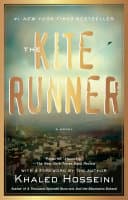
Khaled Hosseini (2013)
Genre
Historical Fiction
Reading Time
360 min
Key Themes
See below
Sign in to track this book
In pre-Taliban Afghanistan, a wealthy boy's betrayal of his servant's son during a kite-running tournament starts a lifelong journey for amends as his country collapses.
In 2001, Amir, a successful novelist in San Francisco, gets a call from Rahim Khan, his father's old friend. Rahim Khan is very sick in Peshawar, Pakistan. His message, 'There is a way to be good again,' brings up Amir's guilt and pain from childhood in Afghanistan. The call makes Amir face the past, especially his relationship with Hassan, his Hazara playmate and servant, and a betrayal that has bothered him for decades. Amir does not want to go, but he feels he must answer Rahim Khan's call. He knows this is his last chance to make things right.
The story goes back to Amir's childhood in 1970s Kabul. Amir is a Pashtun boy from a rich family. Hassan is a Hazara boy, his father's servant, and Amir's constant companion. They have an unusual bond. Despite their different social statuses, they are always together. Hassan is very loyal and protective of Amir. Amir, however, often resents Hassan's devotion and his father Baba's affection for Hassan. Amir wants to get Baba's approval, so he takes up kite fighting, a popular Afghan sport. Hassan is Amir's helpful 'kite runner' because he can always find where a cut kite will land. Their friendship reaches a high point in the annual winter kite tournament, which Amir desperately wants to win to impress Baba.
Amir wins the kite tournament, finally getting Baba's approval. Hassan runs off to get the last fallen kite, a symbol of their win. Amir follows him and sees Hassan cornered and raped by Assef, a known neighborhood bully, and his two friends. Amir is frozen by fear and a selfish wish to keep Baba's new pride in him. He hides and does nothing to help Hassan. This act of cowardice and betrayal becomes the main trauma of Amir's life. It is a secret he carries with much guilt and shame. He leaves Hassan in the alley, taking the prize kite. This breaks their bond and Amir's conscience forever.
Amir feels guilty and cannot face Hassan. He becomes more distant and mean to him. He tries to make Hassan react, hoping it will ease his own pain, but Hassan stays loyal. Desperate to get Hassan out of his life, Amir hides money and a watch under Hassan's mattress. Then he accuses him of stealing. Hassan knows the truth but confesses to protect Amir, staying loyal even when falsely accused. Baba is sad but accepts Hassan's 'confession.' He reluctantly lets Hassan and Ali, Hassan's father, leave their home. This decision makes Amir feel even more guilty and sad.
Years later, in 1981, the Soviet invasion of Afghanistan forces Amir and Baba to leave their country. They have a dangerous journey, hiding in a fuel truck and facing Soviet soldiers. They eventually reach Peshawar, Pakistan, and then Fremont, California. In America, Baba finds it hard to adjust to his new, less important status, working at a gas station despite his past wealth. Amir, meanwhile, likes his new life. He goes to community college and works to become a writer. He falls in love with Soraya Taheri, another Afghan immigrant, and they marry. They build a new life together. His past in Afghanistan slowly fades, but he never truly forgets it.
Baba gets lung cancer. In his last years, he sees Amir's growing relationship with Soraya Taheri, the daughter of a former Afghan general. Despite his illness, Baba is happy to see Amir content and supports their marriage. Amir asks Soraya to marry him in the traditional Afghan way, and they have a big wedding. Soon after the wedding, Baba dies peacefully. Amir and Soraya settle into married life, but their happiness is mixed with sadness when they learn they cannot have children. Amir becomes a successful novelist, but the guilt from his past stays beneath the surface of his seemingly perfect American life.
Amir travels to Peshawar, Pakistan, to visit Rahim Khan, who is now weak and dying. Rahim Khan tells Amir several shocking truths. First, he says Hassan was not just his father's servant's son, but his half-brother. Baba and Sanaubar, Ali's wife, had an affair. This changes Amir's understanding of his childhood and Baba's behavior. Rahim Khan also tells Amir that Hassan, after Ali's death, married and had a son named Sohrab. Sadly, Hassan and his wife, Farzana, were killed by the Taliban in Bamiyan because they were Hazaras and would not give up Baba's old house. This left Sohrab an orphan in a Taliban-controlled orphanage in Kabul.
Rahim Khan asks Amir to go back to Afghanistan, now ruled by the Taliban, to find and save Sohrab. He says this is Amir's chance to make amends, a way to 'be good again' for betraying Hassan. Amir is afraid, and it is very dangerous, but he agrees to the trip to Kabul. He gets help from Farid, an Afghan taxi driver and former fighter. Farid first dislikes Amir because of his Western appearance but becomes an important friend. Going back to his homeland makes Amir see the terrible changes caused by war and the Taliban's harsh rule.
Amir and Farid travel through war-torn Afghanistan. They find the orphanage where Sohrab is supposed to be. They learn that a high-ranking Taliban official often visits the orphanage and takes children. Amir arranges a meeting with this official. He finds out it is Assef, the same bully who raped Hassan years ago. Assef is now a cruel and powerful Taliban leader and has taken Sohrab. Amir confronts Assef, who tortures Amir, fulfilling a childhood threat. Sohrab sees Amir being beaten and uses his slingshot to blind Assef with a brass ball, just like Hassan once did for Amir. This allows them to escape.
Amir is badly hurt but alive. He flees with Sohrab to Peshawar. He promises Sohrab a new life in America and plans to adopt him, facing many official difficulties. Sohrab is traumatized and quiet, finding it hard to adjust. After problems with adoption agencies and the possibility of Sohrab going back to an orphanage, Sohrab tries to kill himself. This makes Amir feel terrible. Amir understands Sohrab's deep pain and his own responsibility. He eventually gets a humanitarian visa for Sohrab, bringing him to America to live with him and Soraya.
Sohrab stays very quiet and withdrawn for months after arriving in America. He is a constant reminder of what he has been through. Amir and Soraya try to reach him patiently, but he does not respond. During a picnic, Amir sees a father and son flying a kite. He buys a kite and tries to fly it with Sohrab. Sohrab is quiet at first, but when Amir does some of Hassan's old kite-fighting tricks, Sohrab shows a little emotion. Amir then runs the kite for Sohrab, saying Hassan's phrase, 'For you, a thousand times over.' For the first time since his rescue, Sohrab gives a small, shy smile. This suggests healing and a new start are possible.
The Protagonist
Amir transforms from a cowardly and guilt-ridden boy into a courageous man willing to sacrifice for others, finding redemption by rescuing Sohrab.
The Supporting
Hassan remains steadfastly loyal and good-hearted despite immense suffering, serving as a moral compass and a symbol of unconditional love.
The Supporting
Baba remains a complex figure, embodying both great strength and profound moral compromise, never fully revealing his secrets but demonstrating his love in imperfect ways.
The Supporting
Rahim Khan serves as a wise, guiding figure whose ultimate act is to set Amir on a path toward atonement.
The Antagonist
Assef's character remains consistently evil, evolving from a childhood bully to a monstrous figure of power and sadism.
The Supporting
Soraya grows into a loving and steadfast wife, overcoming her own past to build a strong partnership with Amir.
The Supporting
Sohrab endures immense trauma and loss, slowly beginning a journey of healing through Amir's patient love.
The Supporting
Ali remains a figure of quiet dignity and unwavering loyalty throughout his life.
The Mentioned
Sanaubar returns seeking forgiveness for her past abandonment, finding peace in her final years with Hassan and Sohrab.
The Supporting
Farid's initial skepticism and resentment towards Amir evolve into respect and loyalty, demonstrating the complexities of Afghan identity and solidarity.
The novel's main theme is Amir's lifelong struggle with guilt over betraying Hassan and his search for making amends. His fear in the alley and his part in Hassan's leaving bother him for decades. Rahim Khan's call to 'be good again' sends Amir on a path to make up for his past mistakes by saving Sohrab, Hassan's son. This journey through war-torn Afghanistan and his meeting with Assef becomes his way of atoning. It offers him a chance for moral forgiveness, shown by his final act of running the kite for Sohrab.
“'There is a way to be good again,' he'd said on the phone. A way to end the ***** of a lifetime. And maybe, just maybe, Rahim Khan had been right.”
The complicated and flawed friendship between Amir and Hassan is the emotional center of the novel. Despite their social differences, their bond is strong at first, built on shared experiences and Hassan's great loyalty. However, Amir's jealousy, insecurity, and his failure to protect Hassan from Assef break this friendship. This causes Amir's lifelong guilt. The novel shows how deeply such a betrayal affects both the victim and the person who did it, and the long road to healing, even if the person is no longer there.
“I was a Pashtun and he was a Hazara, and ***** were not meant to be friends. But Hassan and I were kids who had learned to crawl together, and our first words were to each other.”
The relationships between fathers and sons are important to the story, especially the difficult one between Amir and Baba, and the hidden bond between Baba and Hassan. Amir always seeks Baba's approval, feeling he is not good enough compared to his father. Baba feels guilty about secretly being Hassan's father, which makes him treat Hassan with a generosity Amir does not understand. The novel shows how much fathers' expectations, secrets, and lies shape these relationships. It shows how a son's identity is tied to his father's past, both good and bad.
“I always felt like Baba hated me a little. And why not? He'd had a son who was a Pashtun, a son who had a cleft lip, a son who was a Hazara. But he'd wanted a son who was a Pashtun, a son who was perfect, a son who was me.”
The novel explores how identity forms through ethnic, social, and personal experiences. Amir deals with being Pashtun, his rich upbringing, and later adapting to American culture. He often feels like he does not belong in either world. Hassan, as a Hazara, faces constant prejudice and tries to be accepted in Afghan society. The characters' sense of belonging comes from their homeland, family, and choices. War's destruction in Afghanistan further disrupts these identities, forcing characters like Amir and Baba to redefine themselves in a new place.
“I wondered if that was how it was with all of us, that we were all just waiting for someone to save us. Or maybe it was just me.”
The past, especially the traumatic events of Amir's childhood in Afghanistan, strongly affects the present. Amir's betrayal of Hassan, Baba's secret, and Afghanistan's political problems are not just old events. They are living forces that shape the characters' lives and choices decades later. The novel shows how unresolved guilt, unacknowledged truths, and past injustices continue to have an impact, needing to be faced and resolved. Amir's journey back to his homeland is a journey into his past, trying to fix what was broken.
“History is not an anchor, but a sail. It's the wind that carries us forward, not the chain that holds us back.”
A symbol of childhood innocence, cultural tradition, and the pursuit of a prize.
Kite running is a significant motif and plot device. Initially, it symbolizes the carefree joy of childhood and the bond between Amir and Hassan, with Hassan's exceptional skill as a kite runner highlighting his loyalty. The winter kite tournament becomes the pivotal moment for Amir's betrayal, forever tainting the activity. Later, kite flying becomes a symbol of hope and a means for Amir to connect with Sohrab, echoing Hassan's own words, 'For you, a thousand times over,' and representing a fragile return to innocence and a chance for new beginnings.
A physical mark symbolizing vulnerability, difference, and a shared familial trait.
Hassan's cleft lip is a prominent physical characteristic that marks him as different and vulnerable. It is a source of ridicule in his childhood but is later surgically corrected by Baba, symbolizing Baba's unspoken affection and guilt. When Sohrab is also born with a cleft lip, it serves as a powerful genetic link to Hassan and Baba, further solidifying the familial ties that Amir discovers. It becomes a visual reminder of the Hazara identity and the injustices faced by them, as well as the enduring connection between generations.
Symbols of violence and defense, reflecting cycles of abuse and protection.
Assef's brass knuckles are a recurring symbol of his sadism and brutality, first used to terrorize children and later to torture Amir. They represent the oppressive violence that permeates the narrative. Conversely, Hassan's slingshot, an unassuming toy, becomes a symbol of defense and courage when he uses it against Assef in childhood. This symbolism is powerfully echoed when Sohrab, Hassan's son, uses a slingshot to blind Assef and save Amir, creating a full-circle moment of poetic justice and illustrating the inherited spirit of protection and defiance against evil.
A symbol of shared childhood, innocence, and the irreparable nature of betrayal.
The pomegranate tree in Baba's garden is initially a symbol of Amir and Hassan's innocent friendship, a place where they carve their names and share stories. After the alleyway incident, Amir attempts to provoke Hassan by pelting him with pomegranates under the tree, but Hassan refuses to retaliate, instead crushing a pomegranate on his own head. This act highlights Hassan's unwavering loyalty and Amir's guilt. The tree later withers, symbolizing the death of their childhood innocence and the irreparable damage caused by Amir's betrayal, a poignant reminder of a lost past.
A metaphorical representation of strength, weakness, and moral sacrifice.
Baba tells Amir a story about a bear and a lamb, where the bear saves the lamb from a wolf. This story metaphorically reflects Baba's own character—his strength and protectiveness (the bear) and his secret sacrifice (the lamb, representing Hassan's true identity, which he protects by keeping it secret). It also relates to Amir's own struggle with courage and cowardice, highlighting the moral dilemma of choosing to be a 'bear' (courageous and protective) or a 'lamb' (vulnerable and passive) in the face of injustice, ultimately pushing him towards a heroic act of protection.
“For you, a thousand times over.”
— Hassan's unwavering loyalty to Amir.
“There is a way to be good again.”
— Rahim Khan's words to Amir, prompting his return to Afghanistan.
“It was the look of the lamb.”
— Amir's description of Hassan's expression during the alley incident.
“A boy who won't stand up for himself becomes a man who can't stand up to anything.”
— Baba's disappointment in Amir's lack of assertiveness.
“History isn't easy to overcome. Neither is religion.”
— Amir reflecting on the deep-rooted conflicts in Afghanistan.
“I wondered if that was how forgiveness budded, not with the fanfare of a trumpet, but with the quiet, floral bloom of a rose.”
— Amir's internal thoughts on the nature of forgiveness.
“Children aren't coloring books. You don't get to fill them with your favorite colors.”
— Soraya's mother's wisdom about raising children.
“Like a kite, I'd been cut loose and was now flying on my own.”
— Amir's feeling of freedom and independence after leaving Afghanistan.
“Better to get hurt by the truth than comforted by a lie.”
— Rahim Khan's belief in facing harsh realities.
“And that, I believe, is what true redemption is, Amir Jan. When guilt leads to good.”
— Rahim Khan explaining the path to redemption.
“It's wrong what they say about the past, I've learned, about how you can bury it. Because the past claws its way out.”
— Amir's realization that he cannot escape his past actions.
“We've all sinned, Amir. I'm just as guilty as you. But I'm not going to let a mistake define me.”
— Baba's confession to Amir about his own past mistakes.
“I finally had a chance to be good.”
— Amir's internal thought as he decides to rescue Sohrab.
Ready to see how well you understood this book? Take our interactive quiz with 10 questions.

Khaled Hosseini is an Afghan-American novelist, UNHCR goodwill ambassador, and former physician. His debut novel The Kite Runner (2003) was a critical and commercial success; the book and his subsequent novels have all been at least partially set in Afghanistan and have featured an Afghan as the protagonist.







