BookBrief
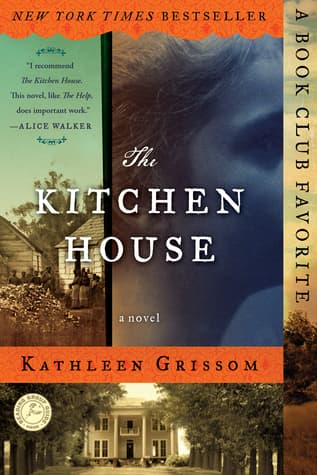
The Kitchen House cover
Archivist's Choice

The Kitchen House

Kathleen Grissom (2010)

Genre

Historical Fiction

Reading Time

9-10 hours

Key Themes

See below

Track Your Reading

Sign in to track this book

Orphaned and sent to live in a 1790s tobacco plantation kitchen, a young Irish indentured servant navigates racial divides and family secrets, making a choice that reveals dangerous truths and threatens those she cares about.

Synopsis

Seven-year-old Irish orphan Lavinia arrives at Tall Oaks, a Virginia tobacco plantation, after her parents die at sea. She goes to live and work in the kitchen house with the enslaved people. She forms a close bond with Belle, the master's illegitimate daughter, and the other residents. Though white, Lavinia grows up among them, learning their ways and experiencing their hardships. As Lavinia gets older, she moves into the "big house" to serve the mistress, Miss Martha, who struggles with an opium addiction. Lavinia finds herself caught between these two worlds, learning the secrets and suffering of both. When Captain Pyke, the master, returns, tensions grow. A tragic event involving Ben, an enslaved boy, makes Lavinia confront her loyalties and the dangerous truths of the plantation. Ultimately, Lavinia makes a desperate choice to protect those she loves. This leads to a devastating fire, Belle's escape, and Lavinia's own uncertain future away from Tall Oaks, changed forever by the family she found and the sacrifices she made.
Reading time
9-10 hours
Difficulty
Medium
Pacing
Moderate
Mood
Atmospheric, Poignant, Intense, Melancholy
✓ Read this if...
You enjoy immersive historical fiction exploring complex social dynamics, racial injustice, and the bonds of family in the antebellum South, with a focus on the experiences of enslaved people and those caught between worlds.
✗ Skip this if...
You prefer lighthearted stories or are uncomfortable with graphic depictions of slavery, addiction, and violence common in the historical context.

Plot Summary

Lavinia's Arrival at Tall Oaks

In 1791, seven-year-old Lavinia, an Irish indentured servant, arrives at Tall Oaks, a Virginia tobacco plantation. Her parents died from fever during the transatlantic journey. She goes to live and work in the kitchen house, where the enslaved people live, under the care of Belle, the master's illegitimate daughter and the cook. Lavinia is initially disoriented and scared. She struggles to understand the customs and language of her new family, especially the strict hierarchy and unfamiliar tasks. Mama Mae, the matriarch, and Aunt Minta, along with the other enslaved people, teach her about the kitchen. This includes churning butter and tending the garden. They slowly bring her into their close community despite her white skin and different background. She forms a strong bond with Belle and the young boy, Ben.

Growing Up in the Kitchen House

Lavinia spends her early years in the kitchen house. She learns their dialect and becomes part of their daily lives. She sees the harsh realities of slavery, including beatings, the constant threat of sale, and the emotional toll it takes on her adopted family. Belle secretly teaches her to read and write, a dangerous act for an enslaved person or someone living among them. Her closest companions are Belle, Ben, and the other children. She experiences their culture, the comfort of their spiritual practices, and the support they offer one another. Her white skin sets her apart, but she feels a strong sense of belonging and love within this community. She often feels more connected to them than to the white world of the big house.

Transition to the Big House

When Lavinia reaches adolescence, her indentured servitude changes. She moves from the kitchen house to serve in the big house, directly under Miss Martha, the master's wife, and her sister, Miss Sally. This is a painful move, making Lavinia navigate the differences between the two worlds. She is now expected to act as a white servant, adopting a more formal manner and distancing herself from her kitchen house family. She sees the problems within the big house: Captain Pyke, the master, is often away, and Miss Martha struggles with an opium addiction, often using Laudanum. Lavinia finds herself caught between her loyalty and love for her kitchen house family and her new duties, feeling like an outsider in both places.

Unveiling Miss Martha's Addiction

Lavinia quickly understands Miss Martha's 'illness' is an addiction to laudanum. She sees Miss Martha's erratic behavior, her desperate need for the drug, and the efforts of Miss Sally and the enslaved housekeeper, Dory, to manage and hide it. Lavinia often has to give Miss Martha the laudanum, making her an unwilling participant in the mistress's dependency. This shows Lavinia the moral complexities and hidden struggles within the white family. She feels pity and resentment towards Miss Martha, but also recognizes the vulnerability and power dynamics, especially how the enslaved people must navigate and enable the addiction.

Captain Pyke's Return and Ben's Tragedy

Captain Pyke returns to Tall Oaks, bringing a temporary sense of order and some hope for the plantation's future. He is a stern but generally fair master. During this time, Ben, Lavinia's childhood friend from the kitchen house, starts to assert his independence and express his desire for freedom. One evening, after a tense interaction with Captain Pyke, Ben is found dead, having fallen from a tree. While officially ruled an accident, the kitchen house community, and Lavinia, suspect foul play, believing Ben was murdered by the overseer, Marshall, for his rebellious spirit. This tragedy affects Lavinia deeply, strengthening her hatred for the injustices of slavery and her resolve to protect those she loves.

Lavinia's Marriage and Growing Distance

After Ben's death, Miss Martha and Miss Sally pressure Lavinia to marry Marshall, the overseer. They see it as a way to secure her future and maintain social order. Lavinia, still grieving Ben and suspicious of Marshall, is devastated by this forced marriage. The marriage creates a permanent rift between Lavinia and her kitchen house family, especially Belle, who sees it as a betrayal. Lavinia's new status as Marshall's wife, a white woman of the big house, separates her from the people who raised her. She is now firmly in the white world, but her heart stays with her adopted family, leaving her feeling isolated and unhappy in her new role.

The Truth About Ben's Death

Lavinia believes Ben's death was not an accident and starts to find clues. Through overheard conversations and her own observations, she discovers that Marshall, in anger or because he thought Ben was defiant, brutally beat Ben, causing his death. Marshall then made the scene look like an accidental fall. This confirms Lavinia's worst fears and fuels her resentment towards her husband. Knowing that the man she is married to murdered her childhood friend is a crushing burden, increasing her internal conflict and solidifying her hatred for Marshall. She now has a dangerous secret, isolating her further.

Belle's Pregnancy and Captain Pyke's Return

Belle becomes pregnant, and it is revealed that Captain Pyke is the father. This is not the first time he has had children with enslaved women, as Belle herself is his daughter. The pregnancy is a source of quiet joy and immense fear for Belle, as she knows her child's future is uncertain. Captain Pyke, upon his return, knows about the pregnancy and struggles with his responsibilities and the societal implications. Lavinia, now married to Marshall, knows these intimate family secrets, showing the interconnectedness and moral ambiguities of the plantation. The situation shows the sexual exploitation in slavery and the complex, often tragic, family ties it creates.

The Fire and Its Aftermath

A fire starts at the big house, possibly set by Miss Martha in a drug-induced state or by the enslaved woman Dory to protect her. In the chaos, Miss Martha dies, and Captain Pyke is badly hurt trying to save his wife. The fire is a turning point, destroying the physical symbol of the white family's power and forcing a reckoning. After, Captain Pyke, weakened and despairing, dies. Lavinia is now a widow, but the tragedy continues. Marshall, wanting to gain power and control, plans to sell Belle and her infant child, further separating Lavinia from her remaining family and threatening the lives of those she loves most.

Lavinia's Desperate Act and Belle's Escape

Facing Marshall's plan to sell Belle and her baby, Lavinia realizes she must act. Driven by her deep love and loyalty, and remembering Ben's fate, she decides to poison Marshall. She carefully gives him a fatal dose of poison, making it look like he died of natural causes. This act shows her change from an innocent orphan to a woman willing to commit a crime for justice and love. With Marshall dead, Lavinia helps Belle escape to freedom, giving her money and directions to the Underground Railroad. This final, dangerous act ensures Belle and her child's survival and shows Lavinia's ultimate rejection of the plantation system's injustices.

Life After Tall Oaks

After Marshall's death and Belle's escape, Lavinia sells Tall Oaks. She cannot bear to stay in a place with so much pain and loss. She leaves Virginia, carrying the burden of her past but also some hope for the future. She moves to Philadelphia, a free state, where she starts a new life, working as a governess and trying to come to terms with her choices. She lives a life of purpose, often thinking of her memories but also hoping to one day reunite with Belle and her child, confirming her commitment to the family she chose over the one she was forced into.

Principal Figures

Lavinia

The Protagonist

Lavinia transforms from a naive, innocent orphan into a woman hardened by tragedy, who ultimately chooses loyalty and justice over societal expectations, even resorting to murder to protect her loved ones.

Belle

The Supporting

Belle endures the hardships of slavery and personal loss, ultimately finding freedom and a new life thanks to Lavinia's sacrifice.

Ben

The Supporting

Ben's arc is tragically cut short by his murder, serving as a catalyst for Lavinia's transformation and ultimate revenge.

Miss Martha

The Supporting

Miss Martha's life is defined by her addiction, which ultimately leads to her accidental death in the big house fire.

Captain Pyke

The Supporting

Captain Pyke's arc is one of a man attempting to maintain his estate and his family, ultimately succumbing to the pressures and consequences of his life and choices.

Marshall

The Antagonist

Marshall rises in power through brutality and manipulation, only to be ultimately poisoned by Lavinia in an act of desperate justice.

Mama Mae

The Supporting

Mama Mae remains a constant source of strength and wisdom, witnessing and enduring the tragedies of Tall Oaks, symbolizing the enduring spirit of her people.

Miss Sally

The Supporting

Miss Sally's arc is one of attempting to maintain a crumbling facade, ultimately failing to prevent the downfall of the Pyke family.

Dory

The Supporting

Dory's arc is tied to her service in the big house, ultimately culminating in her possible role in the fire that destroys it.

Themes & Insights

Identity and Belonging

Lavinia's journey explores identity. As a white orphan raised by enslaved people, she lives in two worlds, feeling like an outsider in both. Her sense of self is tied to her kitchen house family, and her struggle to reconcile her white skin with her chosen family's experiences is her main internal conflict. This theme is also clear in Belle, who, as Captain Pyke's illegitimate daughter, lives between freedom and bondage. This complicates her sense of identity and belonging within the plantation's social structure.

“My skin was white, but my heart was black. I belonged to them, and they belonged to me.”

Lavinia (narrator)

The Corrupting Nature of Power and Slavery

The novel shows how slavery corrupts everyone involved, not just the enslaved. Marshall's unchecked power as overseer leads to brutality and murder. Captain Pyke's position allows him to exploit enslaved women, including his own daughter. Miss Martha's opium addiction can be seen as a result of her privileged yet suffocating life within a morally compromised system. The economic and social power dynamics in slavery distort relationships, encourage cruelty, and force individuals into impossible choices. This shows its devastating impact on human morality and dignity.

“Slavery was a poison, seeping into every corner of Tall Oaks, tainting every soul.”

Narrator

Family, Chosen and Biological

Family is central to the story, especially the difference between biological and chosen family. Lavinia's closest bonds are with the enslaved community in the kitchen house. They become her true family, offering love, support, and belonging that her biological parents could not. Her forced marriage to Marshall, and her later rejection by her kitchen house family, shows the painful results when these loyalties conflict. Belle's dual parentage, with Captain Pyke as her biological father and an enslaved woman as her mother, further complicates the idea of family, revealing the hidden and often tragic family ties born from slavery.

“They were my family, not by blood, but by the deeper bond of shared life and love.”

Lavinia (narrator)

Justice and Retribution

The novel explores justice and retribution, especially through Lavinia's actions. After seeing many injustices, particularly Ben's murder and Marshall's attempts to sell Belle and her child, Lavinia takes action. Her decision to poison Marshall is a desperate act of retribution, a personal form of justice against a system that offers none to the enslaved. This theme questions the limits of morality and what justice means when legal and societal systems fail to protect the innocent and punish the guilty, forcing individuals to become both judge and executioner.

“There was no justice for Ben, no justice for Belle, not in this world. So I would make my own.”

Lavinia (internal thought)

Resilience and Survival

The strength of the human spirit, especially among the enslaved community, is a strong theme. Despite constant oppression, violence, and the threat of family separation, the kitchen house community keeps their culture, faith, and inner strength. Characters like Belle and Mama Mae show this strength, finding ways to endure, resist, and even find joy amidst great suffering. Lavinia's own journey from a vulnerable orphan to a strong, independent woman who makes difficult choices for survival also shows this theme. It demonstrates people's ability to adapt and fight for their lives and the lives of those they love.

“We lived in the shadow of the big house, but our light, our spirit, could not be extinguished.”

Mama Mae

Plot Devices & Literary Techniques

First-Person Perspective (Dual Narrators)

The story is primarily told through Lavinia's eyes, with Belle's perspective offering crucial insights.

The novel is largely narrated by Lavinia in the first person, providing an intimate look into her internal struggles, observations, and emotional journey. This perspective allows the reader to experience the plantation from the unique vantage point of someone straddling both the white and enslaved worlds. Crucially, chapters are interspersed with Belle's first-person narration, typically in italics, offering a contrasting and equally vital perspective from the heart of the enslaved community. This dual narration enriches the story by presenting different facets of the same events, deepening the emotional impact and providing a more comprehensive understanding of the complex social dynamics at Tall Oaks.

Symbolism of the Kitchen House

The kitchen house represents family, community, and resistance for the enslaved people.

The kitchen house serves as a powerful symbol throughout the novel. More than just a place of work, it represents the heart of the enslaved community at Tall Oaks. It is a sanctuary where family bonds are forged, traditions are maintained, and a sense of belonging thrives despite the brutal realities of slavery. For Lavinia, it is her true home and the source of her deepest affections. In contrast to the cold, dysfunctional 'big house,' the kitchen house symbolizes warmth, resilience, and the enduring spirit of human connection and resistance against oppression, highlighting the stark moral divide on the plantation.

The Laudanum Addiction

Miss Martha's addiction symbolizes the hidden decay and moral compromises within the white planter class.

Miss Martha's laudanum addiction functions as a significant plot device and symbol. It introduces an element of chaos and dysfunction into the big house, forcing Lavinia and the enslaved staff to navigate its erratic demands. Symbolically, the addiction represents the hidden rot and moral decay within the seemingly genteel white society of the plantation. It highlights the privilege that allows such a dependency to be maintained and concealed, and the burden it places on others, particularly those with less power. The laudanum also serves as a catalyst for certain events, including Lavinia's initial distrust of the big house and possibly the fire itself.

Ben's Death

Ben's murder acts as a catalyst for Lavinia's transformation and ultimate act of defiance.

Ben's death, initially disguised as an accident but later revealed to be murder, is a pivotal turning point in the narrative. It serves as a powerful catalyst for Lavinia's character development, transforming her from a relatively passive observer into an active agent of change. His death fuels her hatred for Marshall and the injustices of slavery, solidifying her loyalty to her kitchen house family and ultimately leading to her desperate act of poisoning Marshall. Ben's tragic end underscores the brutal realities faced by enslaved individuals and galvanizes the protagonist's resolve for justice.

Critical analysis

Notable Quotes

I was seven years old when I came to live at the big house. I didn't know then that I was an orphan, or that the people who lived there were my family.

Laufeys opening narration, setting the scene for her arrival at the Pyke household after her parents' death.

The kitchen house was a world unto itself, a place of warmth and noise and laughter, but also of secrets and unspoken rules.

Laufey describing her initial impressions and understanding of the kitchen house where the enslaved people lived and worked.

I learned that there were different kinds of freedom. There was the freedom of the white folk, and the freedom of the black folk, and they were not the same.

Laufey's growing awareness of the racial divide and the stark differences in status and liberty.

A secret is a heavy thing to carry, especially when you are a child.

Laufey reflecting on the burden of keeping the secret of her true parentage.

Love, I found, could be a dangerous thing. It could make you do things you never thought you would, and it could break your heart in ways you didn't know were possible.

Laufey's reflections on her romantic relationships and the complexities of love in her circumstances.

Sometimes, the only way to survive was to pretend you weren't there, to make yourself invisible.

Laufey describing a coping mechanism she and other enslaved people used to endure harsh conditions and avoid attention.

The past is never truly past. It lives inside us, shaping who we are, whether we know it or not.

A general reflection on the lasting impact of history and personal experiences.

There were things you learned in the kitchen house that you couldn't learn anywhere else. Things about strength, and endurance, and the quiet dignity of suffering.

Laufey appreciating the lessons and resilience she observed and learned from the enslaved women in the kitchen house.

Hope was a flickering flame, easily extinguished, but sometimes, just sometimes, it could burn bright enough to light your way through the darkest night.

A reflection on the persistent presence of hope even in dire circumstances.

I was a white girl, raised by black people, living in a world that didn't know what to do with me.

Laufey's struggle with her biracial identity and her ambiguous position within the household and society.

The fear of discovery was a constant companion, a shadow that followed me everywhere.

Laufey's ongoing anxiety about her true parentage being revealed.

Sometimes, the hardest thing was not to fight, but to choose when to let go.

Laufey's realization about the wisdom of knowing when to release a struggle or a person.

Silence could be a weapon, or a shield, or a comfort. It all depended on who was wielding it, and why.

A reflection on the multifaceted nature and power of silence within the household dynamics.

The lines between master and slave, white and black, were not always as clear as they seemed from the outside.

Laufey's internal understanding of the complex and often blurred relationships and power dynamics within the Pyke household.

Quiz

Test Your Knowledge

Ready to see how well you understood this book? Take our interactive quiz with 10 questions.

10
Questions
~5
Minutes
?
Best Score

Key Questions (FAQ)

"The Kitchen House" tells the story of Lavinia, a white Irish orphan who is brought to a tobacco plantation in the late 18th century and raised among the enslaved people in the kitchen house. She navigates the complex racial and social hierarchies, forming deep bonds with both the enslaved community and the white family in the big house, ultimately leading to tragic revelations and choices.

About the author






