“Power is a tricky thing. It can be a weapon, a shield, a promise. But it’s never just yours. It always belongs to someone else, even if you’re the one wielding it.”
— Nahri reflecting on the nature of power and its true ownership.

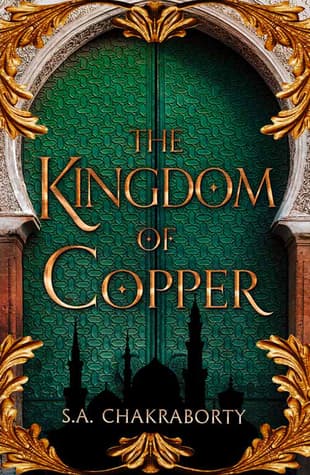
S.A. Chakraborty (2019)
Genre
Fantasy / Historical Fiction / Young Adult
Reading Time
15-20 hours
Key Themes
See below
Sign in to track this book
As Daevabad recovers from civil war, Nahri navigates a dangerous court under a watchful king, Ali grapples with new powers in exile, and an old evil stirs to consume a world already broken by betrayal and bloodshed.
After the battle that led to Dara's death and Ali's exile, Nahri spends five years in Daevabad. She is now married to Prince Muntadhir, a political marriage to stabilize the kingdom. Nahri focuses on her healing work at the royal hospital, earning respect from the common Daeva. However, King Ghassan al-Qahtani monitors her constantly. Nahri secretly uses the royal library to research her Nahid ancestors and Daevabad's true history, especially the Nahid genocide and the wards' creation. She wants to uncover her family's past and the magic in her blood, often clashing with Ghassan's control.
Ali al-Qahtani, exiled for defying his father, lives among the Ammu, his mother's desert tribe. He struggles with the unpredictable water abilities he gained from the marid, which act as a sentient, controlling force within him. He dedicates himself to protecting the Ammu from the desert and Ghassan's growing incursions. Ali often consults his mentor, Hatem, an Ammu elder, about his powers and djinn history. His time in the desert helps him reconnect with his heritage and understand the suffering of those marginalized by Qahtani rule, strengthening his desire for justice and equality.
Dara, thought dead, is brought back to life by Manizheh, Nahri's mother and the last Nahid royal. Manizheh, driven by centuries of resentment and a desire for revenge against the Qahtanis, binds Dara to her will using powerful ancient magic. Dara is horrified to be enslaved to Manizheh, forced to serve her plan to reclaim Daevabad and destroy the Qahtani line. He struggles with his memories of Nahri and his past actions, wrestling with Manizheh's brutal plans. Manizheh reveals the true history of the Nahid genocide and the extent of the Qahtani betrayal, manipulating Dara's loyalty and sense of duty.
As Daevabad prepares for the Qahtani dynasty's centennial celebration, King Ghassan, pressured by the Daeva tribes, reluctantly recalls Ali from exile. Ali's return receives mixed reactions; some see it as reconciliation, others as a political move. Nahri is relieved to see Ali but wary of renewed political scheming. Ghassan tasks Ali with a diplomatic mission to the Daeva tribes, hoping to reassert control and prevent dissent. Ali, however, uses his position to gather information and subtly undermine his father's policies, especially those that oppress the shafit and other marginalized groups.
Through her secret research in the royal library, Nahri uncovers truths about the Nahid empire and the true purpose of Daevabad's wards. She learns that the wards were not just defensive but also used to control other djinn tribes, and that her ancestors had a unique, powerful healing magic tied to their bloodline. Nahri realizes her own healing abilities are more potent than she imagined, and that she is key to understanding and possibly dismantling the oppressive systems. She also discovers that the Nahid had a complex relationship with the marid, hinting at deeper connections to Ali's new powers.
During the centennial celebrations, Manizheh and Dara launch a surprise attack on Daevabad. Manizheh, using ancient Nahid magic, bypasses the city's defenses and unleashes an assault. The city falls into chaos as Manizheh's forces, made up of resentful shafit and other displaced djinn, target the Qahtani regime. Dara, despite his internal conflict, is forced to fight against the city he once swore to protect, his actions guided by Manizheh's powerful binding. The invasion reveals deep divisions within Daevabad and the Qahtani rule's vulnerability, leading to destruction and loss of life.
As Manizheh's forces besiege Daevabad, King Ghassan orders a brutal crackdown, further alienating the common people. Nahri, using her healing skills, works tirelessly to save lives in the besieged city, often defying Ghassan's orders to prioritize the royal family. Ali, torn between loyalty to his family and protecting the shafit, uses his marid powers to defend the innocent and organize resistance. He works with Nahri to establish safe zones and provide aid, solidifying their alliance. The siege highlights the moral compromises war demands and its devastating consequences for civilians.
Nahri eventually confronts Manizheh, her mother, and Dara amidst the siege's chaos. Manizheh reveals the full extent of the Qahtani's betrayal against the Nahid, detailing the genocide and the theft of their magic. Nahri is horrified by her mother's ruthlessness but also understands her deep pain. Dara, caught between loyalty to Manizheh and his lingering feelings for Nahri, struggles with his actions. During their confrontation, Nahri's Nahid powers fully awaken, allowing her to sense and manipulate the city's wards in unexpected ways, hinting at her true potential.
As the battle intensifies, Ali is forced to fully unleash the marid's power within him. The sentient water spirit takes over, transforming him into a formidable, almost uncontrollable force. He fights in devastating battles, especially against some of Manizheh's powerful lieutenants. While effective, his use of marid power comes at a great cost, both physically and mentally, as he struggles to maintain control and prevent the spirit from consuming his identity. His actions cause significant collateral damage but are crucial in turning the tide against Manizheh's initial assault.
In the final battle, King Ghassan is overthrown and killed, either by Manizheh's forces or in the chaos. With Ghassan gone, Manizheh declares herself Daevabad's rightful ruler, aiming to restore the Nahid empire. Nahri, however, refuses to simply replace one tyrant with another. She recognizes that Manizheh's vengeance will only continue the violence. Faced with her home's destruction and her people's suffering, Nahri makes a decision: to use her growing Nahid powers and understanding of the city's wards to challenge Manizheh's claim and create a new, fairer path for Daevabad, even if it means sacrificing her own desires.
Nahri, with Ali's reluctant aid and a conflicted Dara, defeats Manizheh, though with further sacrifices. Manizheh is either killed or severely weakened, her reign short. However, the victory is bittersweet. Daevabad is deeply scarred, its political landscape shattered, and its people reeling from the conflict. While Manizheh's immediate threat is removed, the underlying tensions between the djinn tribes, the shafit, and remaining Qahtani loyalists persist. The ending leaves Daevabad's future uncertain, with Nahri and Ali facing the task of rebuilding a fractured kingdom and preventing further bloodshed, while the true power of the marid and other ancient forces still remain.
The Protagonist
Nahri evolves from a pawn in a political game to an active agent of change, embracing her Nahid heritage and taking on the burden of leadership for a fractured Daevabad.
The Protagonist/Supporting
Ali transforms from an idealistic, somewhat naive prince into a hardened leader who embraces his unique powers and responsibilities, striving for true equity in Daevabad.
The Antagonist/Supporting
Dara is resurrected into a new form of servitude, forced to confront the consequences of his past and the moral implications of his new master's vengeance, ultimately seeking a fragmented path to self-determination.
The Antagonist
Manizheh's arc is one of escalating vengeance, culminating in her invasion of Daevabad and a final confrontation, showcasing the destructive nature of unchecked retribution.
The Antagonist/Supporting
Ghassan's arc is one of increasingly desperate attempts to hold onto power in the face of internal dissent and external threats, ultimately leading to his downfall.
The Supporting
Muntadhir navigates his complicated marriage and his role as crown prince, often finding himself caught between his father's demands and his own growing sense of responsibility to Daevabad.
The Supporting
Hatem provides consistent guidance and wisdom to Ali, helping him understand his unique powers and his role in the larger conflict.
The Supporting/Plot Device
The marid's influence on Ali grows throughout the story, becoming a more direct and powerful force that he must learn to master or be consumed by.
The novel explores the destructive nature of vengeance versus the pursuit of justice. Manizheh's motivation is to avenge the Nahid genocide, leading her to commit atrocities similar to those she condemns. Nahri and Ali, in contrast, aim for a fairer future, recognizing that replacing one oppressor with another only continues the violence. This is clear in Nahri's refusal to align with Manizheh's brutal methods, despite understanding her mother's pain, and Ali's advocacy for the shafit and other marginalized groups, even when it conflicts with his family. The book asks if true justice can be achieved without seeking retribution.
“Vengeance was a poison. It had consumed her mother, and it threatened to consume them all.”
Characters struggle with who they are versus who they are told to be, and how their heritage shapes their future. Nahri, a half-shafit foundling, discovers her Nahid lineage and the power and responsibility that comes with it. She must reconcile her past as a street thief with her royal, magical heritage. Ali struggles with his Qahtani identity and his family's legacy of oppression, while embracing his mother's Ammu heritage and the marid's ancient power. Dara, brought back to life, faces his past as a loyal Nahid warrior and his new, unwilling servitude, questioning his sense of self. The novel suggests that identity is not just about blood, but about choices and actions.
“She was not just a healer, not just a grifter, not just a queen's daughter. She was Daevabad.”
The novel examines how power, whether political, magical, or military, can corrupt even those with good intentions. King Ghassan's harsh rule, driven by a desire to maintain Qahtani dominance, leads to suffering and rebellion. Manizheh's pursuit of power, fueled by past injustices, turns her into a tyrannical figure mirroring her oppressors. Even Ali, with his noble goals, struggles to control his marid powers' destructive potential. The book suggests that using power requires constant vigilance and a strong moral compass to prevent it from becoming a tool of oppression, highlighting the temptation to use power for personal gain or revenge.
“The throne always demanded a price, and sometimes that price was your soul.”
The past is not just background in 'The Kingdom of Copper'; it is an active force that shapes the present. The centuries-old Nahid genocide, the treaties, betrayals, and ancient magic continue to dictate the political landscape and characters' destinies. Nahri's discoveries about Daevabad's true history and her Nahid ancestors directly affect her present decisions. Ali's understanding of his family's role in past injustices fuels his desire for reform. The novel emphasizes that escaping history's echoes is difficult, and true progress requires confronting and atoning for past wrongs, rather than ignoring them.
“The past was a living thing in Daevabad, always lurking, always demanding its due.”
Characters often must choose between personal desires and their duties, often leading to sacrifices. Nahri's marriage to Muntadhir is a duty-bound alliance, forcing her to suppress her own romantic feelings. Dara is bound by duty to Manizheh, forcing him to betray Nahri and commit acts he despises. Ali's duty to his people and his ideals often puts him at odds with his family and risks his life. The novel explores the different forms love can take—familial, romantic, platonic—and how these bonds are tested and sometimes broken by the demands of a larger conflict, asking what individuals will give up for the greater good or for those they care about.
“Sometimes, love wasn't enough to save you. Sometimes, it was what damned you.”
Foreshadowing and guiding plot points through historical texts and legends.
The narrative is heavily influenced by ancient prophecies, historical texts, and forgotten lore, particularly regarding the Nahid and their return. These serve to both foreshadow future events and to reveal crucial information about the world's history, the characters' destinies, and the true nature of their powers. Nahri's research in the royal library is a prime example, uncovering truths that directly impact the unfolding conflict. This device builds a rich backstory and gives a sense of inevitability to certain events, while also providing clues for characters to decipher.
Magical barriers that protect and control, holding hidden secrets and power.
The wards surrounding Daevabad are not merely defensive magical barriers; they are integral to the city's history and power dynamics. Initially presented as protective, Nahri discovers their true nature as tools of control, imbued with Nahid magic. Their manipulation becomes a critical plot point, allowing Manizheh's invasion and later becoming a source of Nahri's burgeoning power. The wards represent the hidden layers of history and the potential for magic to be used for both good and ill, serving as a physical manifestation of the city's secrets and vulnerabilities.
A magical force that compels characters to act against their will.
The magical binding of Dara to Manizheh is a central plot device. It forces Dara, a powerful character, into an antagonistic role against his personal desires and moral compass. This device creates significant internal conflict for Dara, shaping his actions and deepening his tragic arc. It also highlights Manizheh's ruthlessness and the extent of her ancient Nahid magic, demonstrating her ability to control even the most formidable beings. The binding raises questions about free will, duty, and the nature of servitude, driving much of the emotional and physical conflict involving Dara.
Diverse factions with long-standing grievances, fueling political and social conflict.
The various djinn tribes (Daeva, Marid, Peris, Ifri) and the shafit (half-djinn) are not just background elements; their long-standing animosities, historical grievances, and social hierarchy are the primary drivers of the political conflict. The oppression of the shafit and non-Daeva tribes by the Qahtani Daeva fuels rebellion and forms the core of Manizheh's motivations. Ali's empathy for these groups and Nahri's own shafit heritage make them central figures in addressing these divisions. This device provides a rich tapestry of social and political commentary, reflecting real-world issues of class, race, and systemic injustice.
“Power is a tricky thing. It can be a weapon, a shield, a promise. But it’s never just yours. It always belongs to someone else, even if you’re the one wielding it.”
— Nahri reflecting on the nature of power and its true ownership.
“History is a weapon. It can be used to inspire, to educate, to justify… or to destroy.”
— A character's observation on how history is manipulated.
“Every lie we tell, no matter how small, becomes a link in a chain that binds us.”
— Nahri considering the consequences of her deceptions.
“There are no easy answers in war, only choices that lead to more difficult ones.”
— Ali grappling with the moral complexities of his actions during conflict.
“Sometimes, the greatest strength lies not in fighting, but in enduring.”
— A moment of quiet reflection on resilience.
“Love, even when it’s painful, is never a weakness. It’s the greatest strength of all.”
— A character expressing a profound truth about love amidst hardship.
“The past is never truly gone. It’s always there, humming beneath the surface, waiting for its moment to rise.”
— Reflecting on the enduring impact of past events.
“Fear is a powerful motivator, but it’s a poor guide.”
— A warning against making decisions based solely on fear.
“To truly lead, you must first understand those you wish to guide.”
— A lesson in leadership and empathy.
“There’s a difference between what you can do and what you should do.”
— A moral dilemma faced by a powerful character.
“Hope is a dangerous thing. It can keep you going when all else fails, or it can blind you to the truth.”
— Nahri's complex view on the nature of hope.
“Family is not always blood. It is who you choose to fight for, who you choose to protect.”
— A character defining family beyond traditional ties.
“Sometimes, the only way to save something is to let it go.”
— A difficult realization about sacrifice and letting go.
“Knowledge is a fire. It can light your way or burn you alive.”
— Discussing the dual nature of knowledge and its potential dangers.
Ready to see how well you understood this book? Take our interactive quiz with 10 questions.

Biography coming soon.







