“There are two kinds of lawyers in this world: those who are good at it and those who are not. The ones who are good at it are usually rich.”
— Early in the book, reflecting on the legal profession.

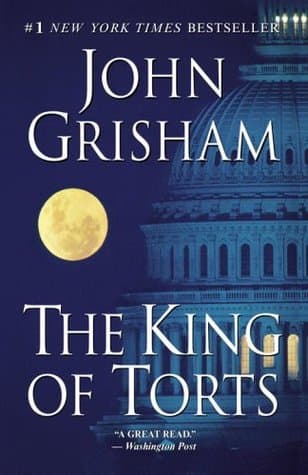
John Grisham (1999)
Genre
Thriller / Mystery
Reading Time
276 min
Key Themes
See below
Sign in to track this book
A public defender's routine murder case turns into a complex conspiracy against a pharmaceutical company, offering him a life-changing fortune or professional ruin.
Clay Carter, a public defender in Washington D.C., is unhappy with his low pay, heavy workload, and the constant crime he sees. He shares a small office with other unmotivated public defenders, including his friend Jared Reynolds. His personal life is not much better; he is in a stale relationship with Rebecca, a paralegal who wants him to find a more profitable job. Clay dreams of leaving his office and making a name for himself, but sees no clear way. He often feels overwhelmed and unappreciated, fighting the legal system's inefficiencies and unfairness, which only makes him more cynical about his job.
Clay takes the case of Tequila Watson, a young man accused of brutally murdering two strangers in Georgetown. The murders are random and violent. During their first meeting, Clay finds Tequila calm but strangely detached, giving a chilling confession about the killings. Tequila claims he felt an irresistible urge to kill, describing it as a 'darkness' taking him over. This unusual behavior and the lack of a clear motive strike Clay as odd, prompting his deeper investigation into Tequila's background and the events surrounding the crime.
After Tequila Watson's strange behavior and subsequent suicide in jail, a mysterious, well-dressed man named Mr. Rudd approaches Clay. Rudd offers Clay a multi-million dollar settlement if he stops investigating Tequila's past and signs a confidentiality agreement. Rudd suggests Tequila was part of a secret drug trial and the murders were a side effect. Clay, at first skeptical, is tempted by the large sum, which promises to end his financial struggles and career stagnation. He begins to suspect a major cover-up by a powerful drug company.
Overwhelmed by the chance for instant wealth, Clay accepts Mr. Rudd's offer, signing the confidentiality agreement and receiving $5 million. He immediately resigns from the public defender's office, buys a luxurious apartment, and starts living a life he only dreamed of. His relationship with Rebecca quickly sours as she grows suspicious of his sudden wealth and secrecy. Clay struggles to keep the agreement secret, experiencing both the thrill of his new riches and the moral compromise he has made. He tries to adjust to his new life, but the secret begins to weigh on him.
Mr. Rudd, now revealed as the person behind the settlement, introduces Clay to the world of mass tort litigation. Rudd explains that the initial payment was a test of Clay's discretion and ambition. He offers Clay the chance to become a 'King of Torts,' leading a large class-action lawsuit against Varrick Labs, a major drug company, for their experimental drug 'Pirate,' which caused violent side effects similar to Tequila Watson's. Rudd promises Clay a large percentage of the projected billions in settlements, painting a picture of power and wealth, further drawing Clay into the morally questionable plan.
With Rudd's guidance, Clay quickly starts a new law firm, hiring eager young lawyers and investigators. He begins the difficult process of finding other victims of Pirate, focusing on people who showed similar violent outbursts after taking the drug. The team finds a disturbing pattern of hidden clinical trials, manipulated data, and suppressed adverse event reports by Varrick Labs. Clay, despite his initial moral concerns, becomes more involved in building a strong case, driven by both the promise of immense financial reward and a growing sense of justice for the victims.
As Clay's firm gathers evidence and files lawsuits, Varrick Labs, wanting to avoid a public trial and more scrutiny, starts offering large individual settlements to the victims. These early successes build Clay's reputation and attract more clients, quickly expanding his firm's influence and wealth. The media calls Clay a rising star, a 'King of Torts.' However, the large number of cases and the emotional toll of dealing with victims and their families begin to affect Clay, reminding him of the human cost behind the large payouts.
Rebecca, watching Clay's rapid rise, confronts him. She expresses deep concern about the mysterious source of his wealth and the aggressive, almost predatory, nature of his new legal practice. She questions his ethics and warns him about the potential dangers of his ambition, reminding him of his old ideals as a public defender. Her words affect Clay, stirring a dormant sense of guilt and unease about his chosen path, forcing him to face the moral compromises he has made for success.
As the Pirate litigation continues, Clay uncovers more evidence of corporate wrongdoing and learns that Mr. Rudd's involvement goes beyond just facilitating settlements. Rudd has a network of informants and a deep understanding of Varrick Labs' weaknesses, almost like an insider. Clay learns that Rudd is not just a fixer but a calculated planner, manipulating events and people for his own financial gain, possibly even exploiting victims for profit. This discovery makes Clay more suspicious of Rudd's true motives and his own role in the larger scheme.
With a large class-action settlement against Varrick Labs likely, Clay faces a choice. The settlement promises to make him incredibly rich, solidifying his status as a 'King of Torts.' However, he also realizes how much he has compromised his integrity and the potential for Rudd to continue his manipulative practices. Clay begins to question if justice, in this context, has become secondary to money. He must decide whether to continue on this path, accepting the moral compromises, or to find a way to regain his ethical compass.
Clay, seeing the full extent of Rudd's manipulation and the ethical problems he has gotten into, decides to act. He secretly gathers evidence of Rudd's illegal activities and his exploitation of victims and the legal system. In a confrontation, Clay exposes Rudd, threatening to reveal his schemes to the authorities and the media. This act puts Clay in danger, but he is determined to cut ties with Rudd and the corrupt world he represents. He tries to get out of the legal and moral mess he has created, even if it means losing some of his new wealth and status.
After exposing Rudd and separating himself from the worst parts of the mass tort litigation, Clay tries to start fresh. He uses some of his remaining wealth to create a more ethical practice, focusing on legitimate cases and seeking real justice for his clients. He reconciles with Rebecca, admitting his mistakes and wanting a more principled life. While he may no longer be the 'King of Torts' in the same flashy way, Clay plans to use his experience and resources to make a real, positive impact on the legal system, aiming for redemption and a purpose beyond just profit.
The Protagonist
Clay transforms from a jaded public defender to a morally compromised 'King of Torts,' only to eventually seek redemption and a more ethical path in his legal career.
The Antagonist/Mentor
Rudd remains a constant, calculating force, revealing the depth of his manipulative genius as Clay uncovers his true motives.
The Supporting
Rebecca initially pushes Clay for success but later becomes a critical voice, challenging his ethical choices before eventually reconciling with him.
The Mentioned/Catalyst
Tequila's tragic story serves as the initial spark and a recurring reminder of the human cost of the pharmaceutical conspiracy.
The Antagonist (Corporate Entity)
Varrick Labs is consistently portrayed as a corporate villain, resisting accountability until forced by overwhelming legal pressure and public exposure.
The Supporting
Jared remains a steadfast public defender, representing the path Clay chose to leave behind.
The Supporting/Collective
Their collective suffering fuels the mass tort litigation, moving from isolated incidents to a powerful class-action claim for justice.
The novel shows how great wealth and power can change one's moral values. Clay Carter, initially a well-meaning public defender, is quickly drawn in by the millions Mr. Rudd offers. His fast rise from poverty to luxury makes him overlook the ethical compromises he makes, like signing a confidentiality agreement that hides the truth about Tequila Watson's death. The theme also shows through Varrick Labs, whose corporate power and desire for profit lead them to knowingly sell a dangerous drug, showing how institutions can lose their morals when seeking money. The appeal of becoming a 'King of Torts' eventually forces Clay to consider the cost of his ambition.
“Money changed everything. It always did.”
This theme looks at the conflict between seeking true justice and earning money within the legal system. Clay first believes he is fighting for justice for the 'Pirate' victims, but the mass tort litigation process, as directed by Mr. Rudd, often puts large settlements before full accountability or systemic change. The novel questions if 'justice' can truly be served when billions of dollars are involved, and when the legal system itself becomes a way for lawyers like Clay and manipulators like Rudd to profit. Clay's ethical problem is whether he is truly helping victims or just getting rich from their suffering.
“When the damages are in the billions, justice becomes a relative term.”
The novel reveals the dark side of corporate greed, especially in the drug industry. Varrick Labs knowingly develops and sells a dangerous drug, 'Pirate,' while hiding bad research and faking data. This theme highlights the power corporations have and their willingness to put profits over public safety. The story details how such companies can avoid responsibility through legal tactics, vast resources, and a network of complicit people. Clay's journey becomes a fight, though a complicated one, to hold these powerful entities responsible for their actions and the suffering they cause.
“They knew the risks. They just thought they could get away with it.”
Ambition is shown as a powerful force with good and bad sides. Clay Carter's initial ambition is to escape his ordinary life and succeed professionally. However, under Mr. Rudd's influence, his ambition turns into a relentless pursuit of wealth and status, blurring his ethical lines. The novel explores how ambition, without moral principles, can lead to bad choices and a loss of self. Clay's journey makes him confront what kind of lawyer and person he wants to be, questioning if the 'King of Torts' title is worth losing his integrity. His eventual attempt at redemption suggests a re-evaluation of what real success means.
“Ambition is a hungry beast, Clay. It devours everything in its path if you let it.”
An enigmatic figure who offers Clay a path to wealth and power.
Mr. Rudd serves as a classic mysterious benefactor, appearing out of nowhere with an impossible offer that fundamentally changes the protagonist's life. His ambiguity and lack of clear motivation initially intrigue Clay, but as the story progresses, he evolves into a manipulative puppet master. This device allows for the rapid escalation of the plot, pulling Clay into a world he never imagined. Rudd's opaque nature keeps the reader guessing about his true intentions and the extent of his involvement in the conspiracy, adding a layer of suspense and moral ambiguity to Clay's journey.
Clay's agreement to secrecy in exchange for immense wealth.
Clay's initial agreement with Mr. Rudd to accept a multi-million dollar settlement in exchange for his silence regarding Tequila Watson's case functions as a Faustian bargain. He trades his integrity and the pursuit of truth for instant wealth and a lavish lifestyle. This device immediately establishes the central moral conflict of the novel and sets Clay on a path where he must constantly weigh his conscience against the allure of power and money. The bargain's terms, particularly the confidentiality clause, create constant tension and ethical dilemmas for Clay throughout the story.
A title representing ultimate success and moral compromise in mass tort litigation.
The 'King of Torts' moniker serves as a powerful symbol throughout the novel. It represents the pinnacle of success and recognition within a specific, lucrative, and often ethically questionable branch of law. For Clay, it is both a goal and a burden. The title embodies the allure of power and wealth, but also the moral compromises and cutthroat nature required to achieve it. It acts as a constant reminder of the price of his ambition and the kind of lawyer he has become, highlighting the novel's exploration of justice versus profit.
A seemingly random murder case that unravels a corporate conspiracy.
Tequila Watson's bizarre and seemingly motiveless murder case acts as the primary catalyst for the entire plot. What appears to be a routine public defender case quickly unravels into a complex corporate conspiracy involving experimental drugs and cover-ups. This device is crucial for drawing Clay, and by extension the reader, into the larger narrative. It grounds the abstract concept of corporate malfeasance in a tangible, tragic human story, providing the initial moral impetus for Clay's investigation before his ambition takes over.
“There are two kinds of lawyers in this world: those who are good at it and those who are not. The ones who are good at it are usually rich.”
— Early in the book, reflecting on the legal profession.
“The dirty little secret of law school is that they don't teach you how to be a lawyer. They teach you how to think like one.”
— Jared thinking about his legal education and its practical shortcomings.
“Justice is a game, and the rules are made up by those with the most money.”
— Jared's cynical view of the legal system, especially in civil cases.
“Every lawyer dreams of the big one, the case that changes everything, the one that makes you famous and rich beyond belief.”
— Jared's internal monologue about the allure of a blockbuster lawsuit.
“The truth, in a courtroom, is whatever the jury believes it to be.”
— A reflection on the subjective nature of truth in legal proceedings.
“There's nothing quite like the smell of a new lawsuit, the promise of discovery, the potential for blood.”
— Jared's initial excitement and aggressive mindset when taking on a new case.
“Lawyers are like sharks. They smell blood and they circle.”
— A common analogy used to describe the predatory nature of some lawyers.
“The greatest trick the devil ever pulled was convincing the world he didn't exist. The greatest trick a lawyer ever pulled was convincing his client the case was a sure thing.”
— Jared's thoughts on the deceptive nature of legal assurances.
“Money talks, and in the world of torts, it screams.”
— Highlighting the immense financial stakes and influence in mass tort litigation.
“The bigger the case, the bigger the egos. And the bigger the egos, the bigger the mess.”
— Observing the dynamics and conflicts among high-powered lawyers in major cases.
“Every settlement is a compromise, a surrender of some sort, but sometimes it's the smartest move.”
— Reflecting on the strategic decisions involved in settling a lawsuit.
“He learned quickly that in the high-stakes world of mass torts, loyalty was a fluid concept, easily bought and sold.”
— Jared's realization about the lack of steadfast loyalty among colleagues and clients in lucrative cases.
“The moral high ground is a lonely place when there's a mountain of cash sitting in front of you.”
— Jared grappling with ethical dilemmas versus the temptation of immense wealth.
“There's always another angle, another loophole, another way to twist the law.”
— Jared's insight into the manipulative aspects of legal practice.
Ready to see how well you understood this book? Take our interactive quiz with 10 questions.
Biography coming soon.







