“There are some things in this world that are not meant to be known.”
— Elspeth reflects on the harsh realities of her isolated life and the secrets she uncovers.

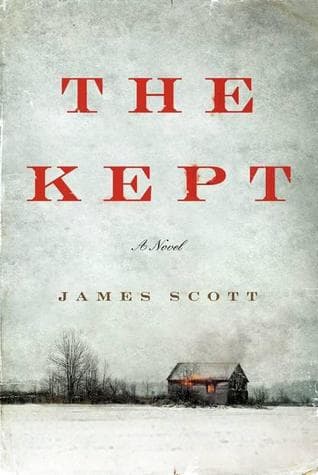
James Scott (2014)
Genre
Literary Fiction / Thriller / Historical Fiction / Mystery
Reading Time
9-11 hours
Key Themes
See below
Sign in to track this book
In the brutal winter of 1897, a hardened midwife and her traumatized young son seek vengeance across the snow-covered New York wilderness, haunted by their slaughtered family.
In the harsh winter of 1897, midwife Elspeth Howell returns home to her isolated upstate New York farm. She finds a horrific scene: her husband and four of her children, Thomas, Mary, John, and Sarah, have been murdered by three attackers. The house is a bloodbath. She finds her twelve-year-old son, Caleb, alive and hidden in the kitchen pantry, traumatized but unharmed. As Elspeth deals with the shock and grief, another gunshot hits her in the chest, leaving her severely wounded. Caleb, despite his young age, must now care for his injured mother and the bodies of his family, facing an unimaginable ordeal alone.
After Elspeth is shot, Caleb is forced into a grim maturity. He drags his mother inside, cleans her wound, and tries to keep her alive with what little medical knowledge he learned from her midwifery. He buries his father and siblings in the frozen ground, a task too heavy for a boy. Days turn into weeks as he struggles to provide for himself and his unconscious mother, battling the cold, hunger, and the weight of solitude and fear. Elspeth slowly recovers, her physical wounds healing, but her mind focuses on revenge. She is a shadow of her former self, hardened by grief and obsession.
Once Elspeth is strong enough, her only goal is to find the men who destroyed her family. She tells Caleb she knows one of the killers: Silas, a man who worked on their farm. She arms herself with a rifle and a hatchet, and despite Caleb's reluctance, she makes him go with her. Their journey begins, a desperate trek through the winter landscape. Caleb is a reluctant participant, often questioning his mother's methods and the morality of their quest, but he is bound to her by circumstance and shared trauma. Elspeth's determination is absolute.
Elspeth and Caleb follow clues to a remote logging camp. There, they find Silas, the first murderer. The confrontation is swift and brutal. Elspeth, full of rage, attacks Silas, taking her revenge. Caleb sees the violence, further traumatized by his mother's actions. This event marks a turning point, solidifying Elspeth's transformation into a vengeful force and deepening Caleb's internal conflict. He is appalled by the brutality but understands the grief driving his mother, leaving him caught between his innocence and their quest's harsh realities.
With Silas dead, Elspeth and Caleb continue, their next target being Elias. Their pursuit takes them through desolate wilderness and to a small, isolated town. Elspeth is relentless in her questioning, drawing attention. Caleb, trying to remain unnoticed, observes the town and its people, learning about society's dark side. He starts to develop a keen sense of observation and survival, forced to adapt to their mission's dangers. Elspeth's single-mindedness often puts them in precarious situations, but her cunning usually helps them through.
As they travel, Caleb notices inconsistencies and strange reactions from people who knew Elspeth in the past. Whispers and veiled comments suggest a history more complex than he imagined. Elspeth, always guarded, offers no explanations, deepening the mystery. Caleb begins to question not only his mother's current actions but her entire life, realizing the woman he thought he knew might be a stranger. This gradual reveal of Elspeth's hidden past adds tension to their journey, making Caleb increasingly wary.
Elspeth and Caleb eventually find Elias. The confrontation is tense and leads to another violent encounter. During this, Elias reveals important information, not only about the massacre but also about Elspeth's past and her connection to the killers. These revelations are unsettling for Caleb, who begins to understand that the tragedy at the farm was not random but rooted in a complex history of betrayal and revenge. Elspeth's reaction to these truths is a mix of anger, pain, and a grim determination to finish her quest, no matter the cost.
With two killers dealt with, Elspeth and Caleb focus on the third, and most elusive, man: Jude. It becomes clear that Jude is the mastermind, the one with the deepest connection to Elspeth's past and the true instigator of the massacre. Their pursuit becomes more desperate and dangerous as they get closer to him. Caleb, now hardened and observant, plays a more active role in tracking, but the weight of the violence and the truths about his mother continue to haunt him. The journey takes them to increasingly remote locations, reflecting the harshness of their mission.
As they close in on Jude, the full truth about Elspeth's past is finally revealed. Caleb learns that Jude is not just a random killer but Elspeth's former lover and the biological father of some of her children, including Caleb. The massacre was an act of vengeance by Jude, fueled by Elspeth's abandonment and the life she built with another man. This revelation shatters Caleb's understanding of his family, his mother, and himself. He grapples with the immense betrayal and the realization that his entire life has been built on lies and hidden pain.
The final confrontation with Jude happens in a remote, desolate setting, mirroring the bleakness of their journey. It is a brutal and emotional encounter. Elspeth, consumed by vengeance and the weight of her past, faces Jude directly. Caleb is caught in the middle, forced to witness the end of his mother's quest and the destruction of his remaining family. The fight is not just physical; it is a battle of old wounds, betrayals, and the devastating results of past choices. The violence is harrowing, and the outcome leaves a lasting mark on Caleb.
After the final confrontation, Elspeth and Caleb are emotionally and physically exhausted. The quest for revenge, while complete, leaves behind devastation. Caleb, now stripped of his childhood innocence, must grapple with the truths about his origins, his mother, and the brutal world he has been forced to inhabit. He must decide what kind of person he will become, carrying the heavy burden of his experiences. The story ends with Caleb starting a new, uncertain path, forever changed by the violence and revelations he has endured.
The Protagonist
Elspeth transforms from a grieving mother into a single-minded avenger, eventually revealing a complex past that explains her motivations, though her ultimate fate remains ambiguous.
The Protagonist
Caleb evolves from an innocent, traumatized boy into a hardened, self-reliant young man, grappling with the loss of his innocence and the shattering truths about his family.
The Antagonist
Jude is revealed as the architect of the tragedy, his past with Elspeth fully exposed, leading to a final, fatal confrontation.
The Supporting
Silas serves as the first target of Elspeth's vengeance, his swift demise setting the precedent for the violent quest.
The Supporting
Elias's capture provides key exposition, revealing deeper layers of Elspeth's history and the plot's complexity before his inevitable demise.
The Mentioned
Their deaths serve as the catalyst for the entire plot, their memory driving Elspeth's quest and traumatizing Caleb.
The Mentioned
His death instigates Elspeth's vengeance; his true relationship to Caleb is later revealed as a deception.
The novel explores how seeking revenge consumes people. Elspeth's quest, born from grief, strips away her humanity, turning her into a brutal, single-minded force. Caleb sees this change, and the violence he experiences warps his morality. Each act of revenge, though seemingly justified, leaves deeper scars and diminishes the avenger, as seen in Elspeth's ruthless actions.
“What had been done to them was an atrocity, but what Elspeth was doing now was something else, something that made a knot in Caleb's gut.”
Caleb's journey shows childhood innocence lost. From discovering his murdered family and caring for his wounded mother, he faces humanity's darkest aspects. His experiences, from burying his siblings to witnessing his mother's brutal acts, take away his youth and force him into early maturity. The revelations about his mother's past and his true parentage further shatter his world, leaving him with betrayal and a cynical view, much like Mattie Ross in True Grit.
“He knew then that his mother was not the woman he had always believed her to be, and that the world was not the place he had thought he lived in.”
The story is driven by the slow reveal of Elspeth's past and the truths that led to the massacre. The present tragedy is a direct result of past choices, betrayals, and relationships. As Caleb uncovers parts of his mother's history and his own parentage, it becomes clear that secrets have a devastating ripple effect, shaping destinies. The revelation that Jude is his biological father and Elspeth's former lover completely changes the story, exposing the deep roots of the violence.
“Every secret had a weight, and this one, heavier than any he could have imagined, threatened to crush him.”
Amidst the violence and despair, survival is key. Caleb, a young boy, shows great resilience in caring for his mother, burying his family, and enduring the harsh winter. Both Elspeth and Caleb show an almost primal will to survive, physically and emotionally, even when pushed to their limits. Their ability to persevere through extreme conditions, hunger, cold, and constant danger highlights the human capacity for endurance, though often at a great cost to their humanity.
“He learned to move without thought, to breathe without effort, to exist in the cold, hard world as if he had been born to it.”
The novel blurs lines between right and wrong, challenging ideas of justice. While the initial massacre is evil, Elspeth's acts of vengeance, driven by grief, are equally brutal and often morally questionable. Caleb struggles with this ambiguity, torn between understanding his mother's pain and being horrified by her actions. The story offers no easy answers, forcing readers to consider the complex motivations and consequences of violence, even when provoked.
“What was justice, he wondered, when it tasted so much like blood?”
The withholding and gradual revelation of Elspeth's true history creates suspense and redefines the narrative.
For much of the story, Elspeth's past is shrouded in mystery, and her motivations are presented as purely righteous vengeance for a random act. However, the gradual unveiling of her prior relationship with Jude and the true parentage of Caleb, through hints and revelations from other characters, creates a sense of an unreliable or incomplete narrative from her perspective. This device keeps the reader and Caleb constantly questioning, adding layers of suspense and ultimately recontextualizing the entire plot, transforming it from a simple revenge story into a complex tragedy rooted in past betrayals.
The remote, harsh upstate New York winter landscape amplifies the characters' vulnerability and the story's bleakness.
The setting of rural upstate New York in the bitter winter of 1897 is more than just a backdrop; it's a character in itself. The isolation of the Howell farm and the unforgiving winter landscape amplify the characters' vulnerability, their struggle for survival, and the bleakness of their quest. The frozen wilderness acts as a constant obstacle and a mirror to the emotional desolation of Elspeth and Caleb. It also ensures their encounters with others are rare and impactful, heightening the tension and sense of danger as they pursue their vengeance without the aid or intervention of civilization.
The identities of the three killers serve as the primary driving force for the plot.
While the identities of Silas, Elias, and Jude are eventually revealed and are central to the plot's resolution, their initial unknown or partially known status acts as a MacGuffin. The quest to find them is the explicit goal that propels Elspeth and Caleb forward. Each killer, once found, not only brings them closer to vengeance but also unlocks more pieces of the puzzle of Elspeth's past, transforming the simple 'who' into a much more complex 'why,' deepening the narrative beyond a straightforward revenge tale.
Subtle hints and reactions from others about Elspeth's history hint at deeper, darker truths.
Throughout the narrative, there are subtle hints and unsettling reactions from characters who knew Elspeth in her past, suggesting that her life before the farm was more complex and perhaps morally compromised than initially presented. These instances of foreshadowing create a growing sense of unease and curiosity for Caleb and the reader, building anticipation for the eventual, shocking revelations about her connection to Jude and the true nature of the massacre. This device effectively builds suspense and makes the final reveals more impactful.
“There are some things in this world that are not meant to be known.”
— Elspeth reflects on the harsh realities of her isolated life and the secrets she uncovers.
“Grief, she was learning, was not a single thing but a thousand small cuts, each one bleeding anew.”
— Elspeth grapples with the immense loss of her family after the initial tragedy.
“The house was a tomb, and she, the last ghost to haunt it.”
— Elspeth's perception of her home after the massacre, filled with memories and absence.
“A secret was a living thing, and it wanted to be let out.”
— Elspeth's growing realization that the truth behind the murders is trying to surface.
“The cold was a constant companion, a reminder of what had been lost.”
— The pervasive cold of winter mirrors Elspeth's emotional state and the emptiness around her.
“Revenge was a dish best served cold, but she found it was also a dish that froze you from the inside out.”
— Elspeth's pursuit of vengeance and its toll on her own humanity.
“The past was a weight, heavy and suffocating, and it clung to her like a shroud.”
— Elspeth feels trapped by the events of the past and their lingering impact.
“Trust was a fragile thing, easily broken, and once shattered, almost impossible to mend.”
— Elspeth's struggle to trust others after the betrayals she experiences.
“Sometimes, the only way to survive was to become something else, something harder.”
— Elspeth's transformation as she adapts to the harsh realities and seeks retribution.
“The woods held their own secrets, older and deeper than any human could fathom.”
— The natural setting of the story, particularly the surrounding wilderness, is imbued with its own mysteries.
“Hope was a dangerous thing in a world like this, a flicker that could just as easily burn you.”
— Elspeth's cautious approach to hope amidst the despair and violence.
“She was a daughter, a sister, a survivor. But most of all, she was a witness.”
— Elspeth's evolving identity as she carries the burden of what she has seen.
“The snow fell like a burial shroud, covering everything, clean and unforgiving.”
— The recurring motif of snow, symbolizing both purity and the burying of secrets/lives.
“The silence was not empty, but full of all the things that could not be said.”
— The unspoken truths and lingering tension within the household and community.
Ready to see how well you understood this book? Take our interactive quiz with 10 questions.
Biography coming soon.







