“The past is a stubborn ghost, always lurking, always ready to reach out and pull you back.”
— Early reflection on the protagonist's unresolved history.

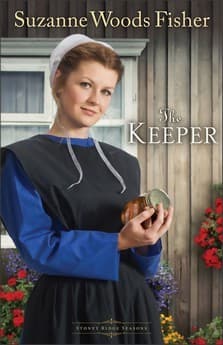
Suzanne Woods Fisher (2011)
Genre
Thriller / Fantasy / Mystery
Reading Time
360 min
Key Themes
See below
Sign in to track this book
A determined Amish woman, set on marrying her childhood sweetheart, confronts a mysterious beekeeper she blames for their wedding's delay, only to discover her heart's true path might lie beyond her carefully laid plans.
Julia Lapp, a 21-year-old Amish woman, looks forward to her wedding to Paul Fisher, a childhood friend and neighbor in Stoney Ridge, Pennsylvania. Her family's Windmill Farm struggles because her father, Samuel Lapp, has heart problems. When Paul unexpectedly postpones their wedding for the third time, Julia is upset and confused. She immediately suspects Roman Troyer, the mysterious 'Bee Man' who travels through Amish communities with his beehives, renting them to farmers for pollination. Roman has recently arrived at Windmill Farm, and Julia believes his presence and different views are unsettling Paul and causing his reluctance to commit.
Roman Troyer, the Bee Man, arrives at Windmill Farm to set up his hives. He is a solitary, thoughtful man, drawn to the nomadic life and the quiet wisdom of his bees. Julia, however, views him with suspicion and clear hostility, convinced he is a bad influence on Paul and an obstacle to her planned future. She is frustrated by his calm manner and his seemingly detached observations about life and faith, which she sees as a challenge to her community's established ways. Roman, for his part, finds Julia's strong will and quick judgments both irritating and interesting, observing her struggles with quiet intensity.
Samuel Lapp's heart condition worsens, making it hard for him to manage Windmill Farm. The farm faces financial difficulties, and its future seems uncertain. Julia's mother, Sarah Lapp, worries about her husband and the farm, adding to Julia's stress. Julia feels pressure to secure her future with Paul, believing their marriage will provide stability for herself and possibly help her family. The farm's struggles highlight the contrast between Julia's desire for security and Roman's transient, unburdened life, further fueling her resentment towards him.
Frustrated, Julia confronts Paul about why he keeps postponing the wedding. Paul, hesitant and conflicted, eventually admits he is unsure about their marriage and his future. He confesses he feels drawn to a different life, possibly even considering leaving the Amish community to explore the 'English' world. He reveals that Roman's philosophical discussions and independent lifestyle have made him question his own choices. This devastates Julia, as it shatters her long-held dreams and forces her to face the possibility that her future with Paul may never happen.
A crisis on Windmill Farm—a sudden storm damaging crops and threatening the beehives—forces Julia and Roman to work together. During the intense effort to protect the farm and the bees, Julia sees Roman's competence, calm under pressure, and real concern for the farm. She sees a side of him beyond her first judgments, noticing his gentle handling of the bees and his practical skills. This shared experience begins to lessen her animosity, and for the first time, she finds herself relying on him and even appreciating his presence. A subtle, unspoken understanding starts to grow between them amidst the chaos.
As Roman stays longer at Windmill Farm, Julia learns bits of his past. She overhears conversations and observes his interactions, realizing he carries a quiet sadness. She discovers that Roman was once married and lost his wife, which led to his nomadic life. This revelation humanizes him, making her see him not just as an outsider, but as someone who has experienced deep loss. Her initial judgments soften, replaced by growing empathy and curiosity about the man behind the Bee Man persona. She finds herself drawn to his quiet strength and his unique view on life.
Through her talks with Paul and her own thoughts, Julia starts to understand that Paul's wavering commitment is not just due to Roman. She realizes Paul struggles with his own identity, his place in the Amish community, and his true desires for the future. He feels stifled by expectations and longs for something more, or at least different, than the life he has always known. Julia recognizes that Paul's journey is his own, and she cannot force him to be someone he is not. This understanding brings a bittersweet acceptance and allows her to release some of her anger and disappointment.
As Samuel Lapp's health worsens, he makes a heartfelt confession to Julia and Sarah. He reveals a long-held secret from his youth: he once loved a woman named Mary, who was Roman's mother. Due to circumstances and the community's strictness, they were separated, and Mary later married Roman's father. Samuel confesses his regret and the burden of this secret, which he believes contributed to his present heart troubles. This revelation deeply affects Julia, shedding new light on her father and forging an unexpected, deeper connection between the Lapp and Troyer families.
Further truths about Windmill Farm's history come out. It is discovered that the land originally belonged to Roman's family, the Troyers, and was lost under complicated circumstances years ago. Samuel Lapp had acquired it, and while his ownership was legal, the emotional weight of the past ownership, especially given his relationship with Roman's mother, adds another layer of complexity to the intertwined lives. This discovery challenges Julia's understanding of her family's legacy and the very foundation of her home, forcing her to rethink what she thought she knew about her family's past and their connection to Roman's.
With the truths about her father and the farm revealed, Julia begins to let go of her rigid expectations for the future. She has a final, honest conversation with Paul, where they both acknowledge their different paths and decide to end their engagement amicably. Julia finds a sense of peace in this decision, realizing that true happiness comes from within, not from a predetermined plan. She focuses on supporting her family and helping her father through his illness, finding strength in her community and her faith. She starts to see the beauty in accepting uncertainty and trusting in God's plan.
As the season progresses and Roman prepares to move his bees, Julia and Roman's bond grows. They share quiet moments, discussing life, faith, and the future. Julia finds herself drawn to Roman's wisdom, his quiet strength, and his deep connection to nature. Roman, in turn, is captivated by Julia's resilience, her growing maturity, and her compassionate spirit. They recognize a deep connection, a quiet love that has grown unexpectedly amidst challenges. While their futures remain uncertain, they acknowledge the possibility of a shared path, one that respects their individual journeys while intertwining their lives.
Samuel Lapp, having unburdened his conscience, finds peace before his passing. His death, while sad, brings closure and healing to the family. Windmill Farm, though changed, continues. Julia, no longer defined by her past expectations, embraces a future with new hope. She recognizes that love can take unexpected forms and that God's plan often differs from her own. While Roman, the Bee Man, must continue his nomadic journey with his hives, there is an unspoken promise of his return and a future where Julia, transformed by loss and love, finds her own true keeper in the quiet, wise man she once resisted.
The Protagonist
Julia transforms from a rigid, plan-driven young woman into one who embraces uncertainty, forgiveness, and a deeper understanding of love and faith.
The Love Interest / Catalyst
Roman remains largely consistent in his wisdom and quiet strength, but his interactions with Julia and the Lapp family allow him to open up to the possibility of a less solitary future.
The Supporting / Former Love Interest
Paul moves from indecision to a clearer understanding of his own desires, ultimately choosing a path that diverges from Julia's.
The Supporting / Father Figure
Samuel finds peace and spiritual healing by confessing his past secrets before his eventual death.
The Supporting / Mother Figure
Sarah remains a consistent source of maternal support and strength for her family.
The Mentioned / Catalyst
Her past actions and relationships are revealed, impacting the present-day characters.
This theme is central to Julia's journey. Julia initially wants to control her future, planning her marriage to Paul and her life on Windmill Farm. She resists any change to this plan, seeing Roman as an obstacle. However, as her plans fall apart due to Paul's doubts, her father's illness, and revelations about the farm's history, Julia must give up her need for control. The story shows that true peace comes from trusting in a higher power's design, even when it is unexpected or means letting go of old dreams. Roman's calm acceptance of his nomadic life and his faith in nature's order gently challenges Julia's rigid planning.
““Man plans his way, but the Lord directs his steps.””
The novel explores how unconfessed secrets can burden people and affect generations. Samuel Lapp's heart condition is not just physical; it shows the emotional weight of his past love for Mary and the circumstances that separated them. His eventual confession, though painful, brings him peace and allows for healing within the family. This theme also includes forgiveness—Julia must learn to forgive Paul for his indecision, her father for his past, and herself for her initial judgments and resistance to change. The unraveling of the farm's true history also shows how past events, kept secret, can resurface with deep consequences.
““A secret is a burden that weighs heavily on the heart.””
Julia's first idea of love is conventional and linked to security and tradition—marrying Paul, a childhood sweetheart. However, as her relationship with Paul ends and her family's history is revealed, her definition of love grows. She learns that love is not always about perfect plans or predictable paths. Her growing feelings for Roman, the unconventional Bee Man, challenge her ideas of what a partner should be. The revelations about Samuel's past also broaden the idea of family, showing how connections can be deeper and more intertwined than first thought, extending beyond immediate bloodlines to shared histories and unspoken bonds. The story suggests that true love often arrives unexpectedly and requires an open heart.
““Sometimes the truest love is the one you never expected, the one that doesn’t fit into your carefully made plans.””
The novel subtly explores the tension between following community traditions and an individual's unique calling. Paul Fisher's internal struggle to commit to Julia and the traditional Amish life shows this. He feels drawn to something more, or different, than what is expected of him. Roman Troyer, the nomadic Bee Man, lives outside strict community norms, yet is still deeply spiritual and connected to nature. His life offers an alternative perspective, suggesting that faith and purpose can be found even beyond the most rigid traditions. Julia also navigates this tension as her personal desires and understanding of happiness change beyond the traditional path she first imagined.
““The path God lays before us is not always the one we expect, but it is always the one meant for us.””
A mysterious, nomadic figure who acts as a catalyst for change and spiritual guide.
Roman Troyer, the 'Bee Man,' serves as a significant plot device. His nomadic lifestyle, quiet wisdom, and philosophical observations challenge Julia's rigid worldview and Paul's complacency. He is a catalyst for the unraveling of Julia's plans and a mirror reflecting Paul's internal conflicts. His presence on Windmill Farm brings an element of the unknown and unconventional into Julia's structured world, forcing her to confront her assumptions about faith, love, and the future. He also provides a connection to the past through his mother, which is crucial for the plot's resolution.
A physical ailment that symbolizes emotional burdens and drives key plot revelations.
Samuel Lapp's failing heart is more than a medical condition; it's a powerful symbol of the emotional burden he carries due to his unconfessed past. His worsening health creates urgency and financial strain for the Lapp family, directly impacting Julia's desire for stability through marriage. Ultimately, it serves as the impetus for his confession about Mary, Roman's mother, which is a critical turning point in the narrative, revealing the deep, hidden connections between the characters and their families.
The setting that represents home, tradition, and the family's legacy, undergoing internal and external challenges.
Windmill Farm is not just a setting; it's a character in itself, symbolizing home, tradition, and the Lapp family's legacy. Its struggles (financial, Samuel's health, bee pollination needs) mirror the internal struggles of the characters. The farm becomes the central stage for the unfolding drama, the point where Julia's past, present, and desired future converge. The revelations about its historical ownership further entwine its fate with the characters' personal stories, making it a focal point for themes of belonging, inheritance, and the weight of the past.
A recurring event that signifies Julia's loss of control and the unreliability of her carefully laid plans.
Paul and Julia's repeatedly postponed wedding is a key plot device that directly drives Julia's initial frustration and ultimately forces her to re-evaluate her life. Each postponement shatters Julia's expectations and highlights Paul's growing doubts, serving as a constant reminder that her carefully constructed future is crumbling. It forces Julia out of her comfort zone and into a journey of self-discovery, allowing other relationships and truths to emerge that would have remained hidden had the wedding proceeded as planned.
“The past is a stubborn ghost, always lurking, always ready to reach out and pull you back.”
— Early reflection on the protagonist's unresolved history.
“Some secrets are meant to stay buried, no matter how much the truth begs to be set free.”
— A character's internal struggle with a moral dilemma.
“Fear has a way of twisting reality, making monsters out of shadows.”
— Describing the protagonist's growing paranoia.
“The lighthouse was more than a beacon; it was a sentinel, watching over secrets as old as the sea itself.”
— A description of the central setting and its mystical aura.
“Every family has its darkness, but some run deeper than others, like roots gripping the very soul of a place.”
— Reflecting on the generational secrets of the island.
“Sometimes, the greatest monsters aren't the ones you imagine, but the ones hiding in plain sight.”
— A realization about the true antagonist.
“Hope is a fragile thing, easily shattered, but impossible to live without.”
— A moment of despair followed by a glimmer of resilience.
“The line between sanity and madness can be as thin as a single thread, and easily snapped.”
— The protagonist's struggle with their own mental state.
“Not all magic comes from spells and incantations; some resides in the unexplainable whispers of the world.”
— Exploring the subtle fantasy elements of the island.
“The sea gives, and the sea takes, and it never truly forgets what it holds.”
— A metaphorical statement about the ocean's role in the island's history.
“Trust is a weapon that can cut both ways, forging alliances or betraying hearts.”
— A character grappling with who to confide in.
“Sometimes the only way to find your way out of the darkness is to walk deeper into it.”
— The protagonist's decision to confront a terrifying truth.
“The truth is a wild creature; once unleashed, it can never truly be caged again.”
— The irreversible consequences of revealing long-held secrets.
“Home isn't always a place, but a feeling of belonging, even amidst the greatest chaos.”
— The protagonist's eventual understanding of their place.
Ready to see how well you understood this book? Take our interactive quiz with 10 questions.

Biography coming soon.







