“For the strength of the Pack is the Wolf, and the strength of the Wolf is the Pack.”
— Mowgli learns the Law of the Jungle.


Rudyard Kipling (2017)
Genre
Fantasy / Children's / Young Adult
Reading Time
130 min
Key Themes
See below
Sign in to track this book
Mowgli, a boy raised by wolves, learns the jungle's rules and faces its dangers, guided by animal friends and challenged by human and animal adversaries.
One evening, Father Wolf finds a human baby in their cave. Mother Wolf, Raksha, feels an immediate connection, naming him Mowgli, 'little frog'. Shere Khan, a tiger, arrives, demanding the cub as his prey. Father Wolf refuses, protecting Mowgli. At the next Pack Council, Mother Wolf presents Mowgli. Baloo, a bear, speaks for Mowgli, supporting his right to stay. Bagheera, a panther, offers a freshly killed bull to pay the 'adoption price' required by jungle law, ensuring Mowgli's place in the Seeonee Wolf Pack, despite Shere Khan's protests.
Mowgli grows up with the wolves, learning their language and the jungle's laws. Baloo teaches him the calls of all creatures and the rules of their lives. Bagheera mentors him, teaching hunting skills, stealth, and self-reliance. Mowgli, with his human intelligence, often finds ways to solve problems that even animals find hard. He forms close bonds with his wolf siblings and the pack, but he knows he is human among animals, often feeling like an outsider.
Despite warnings, Mowgli sometimes interacts with the Bandar-log, the Monkey-People, who are lawless and disliked by other animals. One day, the monkeys, intrigued by Mowgli's human abilities, kidnap him and take him to their ruined city, the Cold Lairs. Mowgli cleverly uses a bird's 'Master-Word' to send a message to Kaa, a python feared by monkeys. Baloo and Bagheera, worried, get Kaa's help. They track Mowgli to the Cold Lairs and fight the monkeys, with Kaa's hypnotic gaze and strength being key to rescuing Mowgli.
As Mowgli becomes a young man, Akela, the old leader of the Seeonee Wolf Pack, loses strength. Shere Khan, who always hated Mowgli, uses this chance to turn younger wolves against him. He spreads rumors and poisons the pack's minds, claiming Mowgli, as a human, does not belong. Bagheera warns Mowgli and advises him to get 'Red Flower' (fire) from the human village to protect himself, reminding him he is human and can use tools animals cannot.
At the next Pack Council, Shere Khan openly challenges Mowgli, supported by younger wolves. Mowgli, following Bagheera's advice, brings burning coals from the village. He uses the fire to scare Shere Khan, hitting him with a burning branch and showing his human power. He then expresses his disappointment with the pack for their disloyalty to Akela and their willingness to betray him. Despite defeating Shere Khan, Mowgli, saddened by the pack's betrayal, realizes he no longer belongs. He cries for the first time, a human emotion, and decides to leave the jungle for human society.
Mowgli arrives at a human village. Messua and her husband take him in, believing he is their lost son Nathoo. Mowgli struggles to adapt to human customs, language, and the idea of private property. He finds human laws and behaviors confusing, often seeing them as worse than the jungle's clear rules. He learns to herd buffalo but feels trapped and misunderstood. His jungle instincts and physical skills make him an outsider. He finds it hard to connect with other children, preferring animals and the wild.
Mowgli learns from Grey Brother, a wolf sibling, that Shere Khan is still hunting near the village and plans to ambush him. With Grey Brother and Akela's help, Mowgli plans. He leads the village's buffalo herd to a deep ravine, instructing them to stampede Shere Khan into a narrow gorge. The buffalo, guided by Mowgli, trap and kill the tiger. Mowgli skins Shere Khan, a trophy and a promise kept to the jungle, and brings the hide to the village. This act shows his skill but also makes the villagers more uneasy about his wild nature.
After killing Shere Khan, Mowgli brings the tiger's hide to the village. However, the villagers, especially the priest and hunter Buldeo, suspect his methods and his close ties to animals. They accuse him of witchcraft and being a wolf-child, fearing his wildness and inability to conform. Buldeo, wanting the tiger's skin and envious of Mowgli's hunting skill, turns the villagers against him. The human community rejects Mowgli, banishing him from the village and declaring him an outcast. He realizes he is truly an outsider, belonging fully to neither the human world nor the animal.
With no other place to go, Mowgli returns to the jungle. His loyal friends, Baloo, Bagheera, and his wolf siblings, including Grey Brother, welcome him back. He finds comfort and belonging among the animals, understanding that the jungle, with its clear laws and acceptance, is his true home. He lives freely, hunting and thriving, no longer tied to the conflicting rules of human and animal societies. He becomes a respected figure, a master of both worlds, understanding all creatures, and sometimes using his human insight in jungle matters.
Years pass, and Mowgli lives happily in the jungle, a powerful and respected figure. As he becomes a young adult, he feels a restlessness, a vague desire for something more. This is 'the Spring Running,' a time of change. He meets a young woman from a human village and feels drawn to her and the human world. Though he loves his jungle family, he knows his human nature, which he once tried to hide, is calling him. The story ends with Mowgli thinking about this new phase of his life, hinting at a possible return to human society, but with the wisdom and strength from his jungle upbringing.
The Protagonist
Mowgli transforms from a vulnerable infant into a powerful 'Master of the Jungle', eventually accepting his human heritage while retaining the wisdom of the wild.
The Supporting
Baloo remains a steadfast mentor and friend to Mowgli, unwavering in his support and guidance.
The Supporting
Bagheera consistently acts as Mowgli's guardian and confidante, guiding him through various trials.
The Antagonist
Shere Khan remains a villain throughout, ultimately meeting his demise at Mowgli's hands.
The Supporting
Akela's strength declines, leading to his eventual displacement as pack leader, but he remains loyal to Mowgli.
The Supporting
Raksha remains a constant source of love and protection for Mowgli, her bond with him unwavering.
The Supporting
Kaa acts as a powerful, albeit sometimes terrifying, ally to Mowgli, using his strength to aid his friends.
The Supporting
Messua provides Mowgli with his first experience of human family, but ultimately cannot protect him from human prejudice.
The Antagonist
Buldeo's antagonism leads to Mowgli's rejection from the human world.
This theme explores the difference between the animal kingdom's clear, often strict but consistent rules and human society's complex, often unfair, and biased laws. The Law of the Jungle, taught by Baloo, stresses mutual respect, survival, and the pack's well-being ('For the strength of the Pack is the Wolf, and the strength of the Wolf is the Pack'). Mowgli finds human laws confusing and hypocritical, especially when villagers accuse him of witchcraft and banish him despite his good deeds. This contrast shows that 'savagery' can exist in both worlds, but order and fairness are often more reliable in the jungle.
“Now these are the Laws of the Jungle, and many and mighty are they. But the head and the hoof of the Law and the haunch and the hump is — Obey!”
Mowgli's main challenge is finding his true place. Raised by wolves, he is neither fully human nor fully animal. He is too wild for the human village and their customs, but too human for the jungle, with his unique intelligence and ability to use fire. His journey is a search for identity, moving between these two worlds. The jungle offers him acceptance and family, while the human world offers his own kind but often rejects him. He ultimately finds a unique identity, a bridge between both worlds, a 'Master of the Jungle' who understands both.
“He was a man, though he was naked, and what man had ever died for sheer loneliness since the world began?”
The story shows how Mowgli's upbringing shapes him. Born human, his early years with wolves give him jungle instincts, values, and language. His physical abilities and senses sharpen to an animalistic level. However, his human intelligence and ability to think complexly, like using fire and planning against Shere Khan, set him apart. The story suggests that while upbringing greatly influences a person, their inherent nature (his 'humanity') will eventually show itself, creating a unique mix of both.
“Man goes to Man at the last, though the Jungle has been good to him.”
Loyalty is a core value in the jungle, especially within the wolf pack and among Mowgli's animal friends. Baloo, Bagheera, Kaa, and his wolf siblings consistently show strong loyalty to Mowgli, even risking their lives for him. In contrast, Shere Khan embodies disloyalty, always plotting against Mowgli and manipulating younger wolves. The wolf pack's wavering loyalty to Akela and Mowgli, influenced by Shere Khan, highlights how fragile trust can be. Similarly, the human villagers' quickness to accuse and banish Mowgli after he helps them shows human inconsistency and betrayal.
“For the strength of the Pack is the Wolf, and the strength of the Wolf is the Pack.”
Mowgli's story is a classic coming-of-age tale. He goes from a 'man-cub' to a young adult making complex choices about his place in the world. His experiences, from learning jungle ways to facing Shere Khan, navigating human society, and choosing his path, mark his growth. He develops from a dependent child to a self-sufficient person capable of leadership and making hard choices, ending with his understanding of his unique position between two worlds and 'the Spring Running' that signals a new life phase.
“But Mowgli was a man, though he was naked, and what man had ever died for sheer loneliness since the world began?”
Animals exhibiting human-like qualities and social structures.
Kipling imbues the jungle animals with human-like intelligence, language, and complex social structures, particularly the 'Law of the Jungle'. This device allows the animals to serve as allegorical figures, delivering moral lessons and exploring themes of law, loyalty, and community. For example, the wolves hold councils, Baloo teaches lessons, and Bagheera offers philosophical insights, making the animal characters relatable and their actions resonant with human experiences and dilemmas.
A codified set of rules governing the animal kingdom.
This is a detailed, often poetic, set of rules and customs that dictate behavior, hunting practices, and social interactions within the jungle. It serves as a moral compass and a framework for order and survival. It's explicitly taught to Mowgli by Baloo and repeatedly referenced to justify actions or condemn transgressions. The Law provides a stark contrast to human laws, highlighting themes of justice, community, and the natural order, and is central to Mowgli's education and understanding of his world.
A symbol of human power and a tool for survival.
Fire, referred to as 'the Red Flower' by the animals, is a powerful symbol of human capability and dominance over nature. It is feared by most animals, but Mowgli learns to control it. His use of fire to subdue Shere Khan and assert his authority at the Pack Council demonstrates his unique human power and intelligence, marking his distinction from the animals. It represents both protection and destruction, and Mowgli's mastery of it signifies his bridging of the human and animal worlds.
A ruined, abandoned city, home to the Bandar-log.
The Cold Lairs are the ruins of an ancient, abandoned human city, now inhabited by the chaotic and lawless Bandar-log (monkeys). This setting represents the decay of human civilization when left without purpose or order. It serves as a stark contrast to the living, ordered jungle and highlights the destructive and purposeless nature of the monkeys. It's the site of Mowgli's kidnapping, emphasizing the dangers of straying from the Law of the Jungle and interacting with those who disregard it.
“For the strength of the Pack is the Wolf, and the strength of the Wolf is the Pack.”
— Mowgli learns the Law of the Jungle.
“Now Chil, the Kite, swooped down, all but touching Mowgli's head, and screamed: 'Where do you hunt, Little Brother?'”
— Mowgli is being taught the Master-Words for different jungle inhabitants.
“We be of one blood, ye and I.”
— Mowgli uses this phrase to declare kinship with various animals.
“Man goes to Man at the last, though the Jungle has fed him for years.”
— Bagheera's reflection on Mowgli's eventual return to human society.
“All the Jungle knows that I am Mowgli – Mowgli’s own flesh and blood.”
— Mowgli asserting his identity and connection to the jungle.
“The one thing that is not allowed in the Jungle is to kill Man, except when he hunts for food.”
— A core tenet of the Law of the Jungle.
“Trust an elephant to remember. And they have a good memory, too.”
— Baloo talking about elephants' wisdom and memory.
“The kill is for the hunter, not for the one who watches.”
— Shere Khan's selfish philosophy contrasting with the Law of the Jungle.
“No! Let him go to his own kind. He has been a man-cub for too long.”
— Akela's decision regarding Mowgli's future.
“Listen, Manling, and remember. We are thy brothers, we are thy brothers, to the death.”
— The wolves reaffirming their bond with Mowgli.
“He knew that he was a man, but he was more than a man, for he had been a wolf.”
— Mowgli's complex identity after leaving the jungle.
“Though he had been born among men, he had been reared by wolves, and he thought as a wolf.”
— Narrator describing Mowgli's upbringing and mindset.
“The Jungle moves itself; the Jungle does not wait for a signal.”
— Bagheera explaining the inherent nature and unpredictability of the jungle.
“The law of the jungle is that it is always changing, and those who do not change with it will perish.”
— A broader interpretation of the jungle's adaptability.
Ready to see how well you understood this book? Take our interactive quiz with 10 questions.
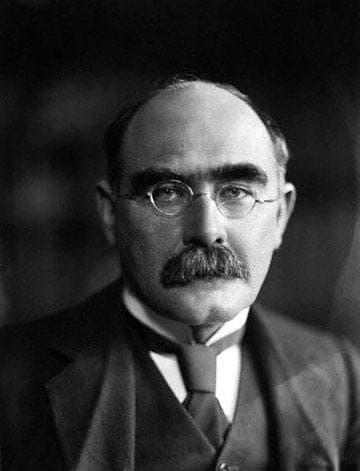
Joseph Rudyard Kipling was an English novelist, short-story writer, poet, and journalist. He was born in British India, which inspired much of his work.







