“Living in Lagos was like living in a big market, where everything was for sale, even people's souls.”
— Nnu Ego's initial impressions of Lagos after moving from Ibuza.

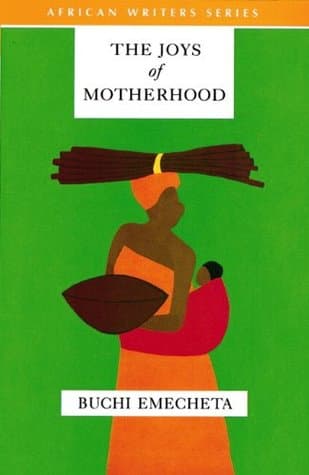
Buchi Emecheta (1979)
Genre
Historical Fiction
Reading Time
224 min
Key Themes
See below
Sign in to track this book
In colonial Nigeria, Nnu Ego's devotion to motherhood becomes a heartbreaking journey of sacrifice, leaving her isolated and unfulfilled despite her large family.
Nnu Ego's birth is difficult; her mother, Ona, nearly dies, and Nnu Ego is first thought to be stillborn. Her father, Nwokocha Agbadi, a respected Ibuza chief, deeply loves Ona, his favorite concubine. Nnu Ego grows up in Ibuza, a traditional Igbo village, observing her father's household with multiple wives and children. Her childhood is marked by her parents' unusual and intense relationship, which often sets them apart from the community. This early exposure to a world where women's value is often tied to their fertility and ability to produce sons influences Nnu Ego's understanding of her future role.
As a young woman, Nnu Ego marries Amatokwu, a wealthy farmer from a nearby village. Her family arranges this marriage, following customs. However, Nnu Ego fails to conceive a child. In Igbo society, barrenness is a severe misfortune and a source of shame for a woman, often blamed on spiritual causes or personal failings. Amatokwu's other wives already have children, and Nnu Ego becomes an object of pity and scorn within his household. Her inability to fulfill her duty as a wife—to bear children—leads to her isolation and mistreatment, ending in her expulsion from Amatokwu's compound.
After Amatokwu casts her out, Nnu Ego, disgraced and desperate, travels to Lagos, a busy colonial city offering anonymity and new opportunities. She finds refuge with a relative and soon meets Nnaife, a launderman who works for white colonial officers. Nnaife is a kind but somewhat irresponsible man, also a relative of Nnu Ego's family. Their marriage is one of convenience and a desire for social acceptance. Nnu Ego sees in Nnaife a chance to escape her barren past and secure a future, while Nnaife, though not wealthy, offers her a home and the promise of a family. The move to city life is a significant cultural shift for Nnu Ego, bringing new challenges and fewer traditional support systems.
To Nnu Ego's immense relief, she finally conceives and gives birth to a son. This event validates her womanhood and silences the whispers of barrenness that haunted her. She goes on to have more children, mostly sons, fulfilling her societal duty. However, this fertility comes at a great cost. Nnaife's meager earnings as a laundryman are not enough to support their growing family, especially with his irresponsible spending and the demands of his other wives and relatives who often live with them. Nnu Ego becomes the primary provider, engaging in petty trading and various laborious tasks, often going hungry herself to ensure her children are fed and educated, even minimally.
Nnaife is an unreliable and often selfish husband. He gambles away his meager earnings, drinks too much, and brings more wives into their already crowded compound, further straining Nnu Ego's resources. His inability to provide adequately for his family forces Nnu Ego into constant toil. She works tirelessly, selling goods in the market, doing odd jobs, and constantly worrying about how to feed and clothe her many children. Nnaife's traditional mindset, where he believes his primary duty is simply to 'be a man' and procreate, clashes with the harsh economic realities of Lagos, leaving Nnu Ego to bear the brunt of their financial struggles and domestic responsibilities.
Despite her dedication, Nnu Ego experiences the tragedy of losing several of her children, especially in infancy, due to poverty, lack of medical care, and harsh living conditions in Lagos. Each death is a devastating blow, deeply affecting her already fragile emotional state. She pours all her love and energy into her surviving children, seeing them as her only true source of joy and purpose. These losses reinforce her belief that her worth as a woman is tied to her ability to produce and sustain children, driving her to sacrifice everything for the remaining ones.
Understanding that education offers the best hope for her children's future, Nnu Ego makes immense sacrifices to send her sons to school. She works harder, denies herself even basic necessities, and endures humiliation and hardship to pay their school fees. She believes that a good education will enable them to secure well-paying jobs and uplift the family from poverty, fulfilling the promise of a better life she herself never had. Her daughters, however, are largely overlooked in terms of formal education, as the societal preference for investing in sons' futures dictates her choices, reflecting the patriarchal norms of the time and culture.
Nnu Ego's eldest son, Oshia, gets a scholarship to study in America, a great achievement that brings both pride and a deep sense of loss. Later, her second son, Adim, also leaves for America. While she is proud of their accomplishments and opportunities, their departure leaves Nnu Ego feeling increasingly isolated and unfulfilled. She had poured her entire life into raising them, expecting they would be her support and comfort in old age. Instead, they are far away, and their infrequent letters and meager financial contributions do little to ease her loneliness or daily struggles.
As she ages, Nnu Ego decides to return to her ancestral village of Ibuza, hoping to find peace and traditional community support in her old age. However, her return is not the homecoming she imagined. The village has changed, and the younger generation is more influenced by modern ways. Her children, particularly her daughters, are busy with their own lives and families and do not offer the consistent care or reverence she expected. She finds herself alienated, a 'stranger' even in her own home, suffering from poverty and neglect. The traditional systems of support for the elderly are eroding, and Nnu Ego feels increasingly irrelevant and forgotten.
Nnu Ego dies alone, by the roadside, a solitary and unceremonious end to a life defined by constant sacrifice. Her death goes unnoticed for some time, a stark contrast to the traditional elaborate funerals given to respected elders. Her children, upon hearing the news, eventually arrange a grand funeral, not out of genuine grief or respect for her life, but more out of duty and a desire to maintain appearances within the community. The irony is that in death, she receives the grand ceremony she never experienced in life, but it is a hollow gesture, failing to truly honor her struggles and the emptiness she felt in her final years.
The Protagonist
Nnu Ego starts as a hopeful young woman, desperate for children, and evolves into a sacrificing mother who gives everything for her sons, only to die alone and disillusioned, realizing her sacrifices did not bring her personal fulfillment or the expected care in old age.
The Supporting/Antagonist
Nnaife remains largely static, consistently demonstrating irresponsibility and a traditional male perspective that clashes with the demands of his family's survival in Lagos.
The Supporting
Oshia develops from a promising young boy into an educated man who achieves success abroad but becomes detached from his mother's immediate struggles, reflecting the changing dynamics of family obligations.
The Supporting
Adim follows a similar path to Oshia, achieving educational and career success abroad but becoming physically and emotionally distant from his mother.
The Supporting/Mentioned
Ona remains a strong, independent figure throughout her life, influencing Nnu Ego's early understanding of female agency, even as Nnu Ego chooses a different path.
The Supporting/Mentioned
Agbadi remains a consistent figure of traditional authority and the patriarchal head of his family, influencing Nnu Ego's early life and understanding of societal structure.
The Supporting
Amatokwu remains a static character, serving as the catalyst for Nnu Ego's move to Lagos by rejecting her due to her barrenness.
The Supporting
Adaku evolves from a co-wife in Nnaife's compound to an independent woman who rejects traditional marital roles for financial autonomy.
This central theme explores how important motherhood is in Igbo society and the personal cost it takes. Nnu Ego's entire life is defined by her desire for and devotion to children, especially sons. While she experiences great joy in having children after her initial barrenness, this joy is tied to deep sorrow: the loss of several children, the constant poverty she endures to raise the survivors, and the ultimate loneliness she faces when her grown sons leave her. The novel critiques the societal pressure on women to find their only fulfillment in motherhood, showing how it can lead to a life of thankless sacrifice and unfulfilled personal dreams. Nnu Ego's final disappointment highlights the 'sorrows' that often outweigh the 'joys' when motherhood is idealized to an extreme.
“A woman's only hope for a good old age was to have children, especially sons, who would care for her.”
The novel shows the tension between traditional Igbo values and modern influences, especially in Lagos. Nnu Ego, a woman rooted in traditional beliefs about family and a woman's role, struggles to navigate a rapidly changing world. Traditional expectations of community support and respect for elders clash with the individualism and economic realities of city life, where extended families are separated and children seek opportunities far from home. Nnaife's traditional polygamy and irresponsibility are also ill-suited to modern urban economics. This theme is clear when Nnu Ego's sons pursue Western education and leave for America, symbolizing the erosion of old ways and the challenges of adapting to new societal structures.
“She was a prisoner of her own flesh and blood, like a bird caught in a net, watching her children fly away.”
The novel explores the subjugation women face in patriarchal Nigerian society, along with their remarkable resilience. Nnu Ego's worth is first determined by her fertility, leading to her rejection by her first husband. Throughout her life, she depends on men economically, even as she does most of the labor to support her family. She endures polygamy, poverty, and emotional neglect. However, Nnu Ego's story also highlights women's strength and endurance in the face of adversity. She is the backbone of her family, constantly striving to provide and protect her children, showing a quiet but deep resilience. Adaku's choice to become a prostitute, though controversial, also represents a form of female agency and an alternative path to economic independence, even if outside societal norms.
“To be a woman was to be a mother, and to be a mother was to be a slave.”
Poverty is a constant and relentless force throughout Nnu Ego's life, shaping nearly every decision and outcome. From her early struggles with Amatokwu to the constant hunger and deprivation in Lagos, economic hardship is a central problem. Nnaife's irresponsibility and the sheer number of children, combined with the high cost of living in the city, plunge the family into destitution. Nnu Ego's daily existence is a testament to the struggle to survive, to feed her children, and to afford their education. The theme highlights how poverty worsens other societal problems, such as lack of healthcare leading to infant mortality, and how it can undermine traditional family structures and expectations.
“Her life was like a market, always busy, always bargaining, never resting.”
Early events and character traits hint at future struggles and outcomes.
The difficult circumstances of Nnu Ego's birth, with her mother nearly dying and Nnu Ego initially thought stillborn, foreshadow the arduous and often painful life she will lead. Her early barrenness and the societal reaction to it also foreshadow the lifelong obsession with motherhood and the sacrifices she will make. The narrative voice occasionally offers glimpses into the future, such as Nnu Ego's eventual lonely death, reinforcing the tragic trajectory of her life and the unfulfilled promise of her sacrifices.
Situational irony highlights the disparity between Nnu Ego's efforts and their ultimate rewards.
The novel is replete with situational irony. Nnu Ego dedicates her entire life, sacrificing her own well-being, to her children, particularly her sons, expecting them to be her comfort and support in old age. The irony lies in her dying alone and unmourned, only to receive a lavish funeral orchestrated by those same children out of a sense of public duty rather than genuine affection. This stark contrast between her immense sacrifices and her desolate end underscores the novel's critique of the societal expectations placed on women and the often-unrewarded nature of their devotion.
Characters whose contrasting traits illuminate the protagonist's qualities and choices.
Adaku serves as a foil to Nnu Ego. While Nnu Ego adheres strictly to traditional ideals of motherhood and self-sacrifice, Adaku is more pragmatic and self-serving, eventually leaving Nnaife to pursue financial independence through prostitution. Adaku's choices, though morally ambiguous, highlight Nnu Ego's unwavering commitment to her children and her inability or unwillingness to deviate from the prescribed path of motherhood, thereby emphasizing Nnu Ego's traditionalism and the heavy cost of her devotion.
Children, especially sons, symbolize a woman's worth, security, and future.
For Nnu Ego, children, particularly sons, are not just offspring but symbols of her identity, her social standing, and her hope for a secure old age. Her initial barrenness means she is 'nothing,' while the birth of her sons elevates her status. She invests everything in them, believing they are her 'insurance policy' for the future. The eventual departure of her sons for America, and their subsequent distance, symbolizes the shattering of this traditional belief and the erosion of the old system where children guaranteed parental care, leaving Nnu Ego without the 'joys' she sacrificed for.
“Living in Lagos was like living in a big market, where everything was for sale, even people's souls.”
— Nnu Ego's initial impressions of Lagos after moving from Ibuza.
“A woman's only hope was in her children, particularly her sons.”
— A prevailing societal belief that shapes Nnu Ego's life choices and aspirations.
“Being a woman was a punishment. Being a mother was a reward.”
— Nnu Ego's internal conflict and understanding of her identity.
“The white man's language, the white man's ways, the white man's god – all these were good, but they were not ours.”
— Reflections on the impact of colonialism on Nigerian culture and identity.
“She wanted to be a mother, to have children, to be respected. But the respect never came.”
— Nnu Ego's unfulfilled desires despite having many children.
“What was the good of having many children if they all went away to follow the white man's way?”
— Nnu Ego's lament as her children prioritize Western education and opportunities over traditional family roles.
“She had given her life to her children, and in return, they had given her nothing but loneliness.”
— Nnu Ego's final reflections on her life as she faces old age and isolation.
“Marriage was not a bed of roses, but a bed of thorns, especially for a woman.”
— Nnu Ego's experiences with her multiple marriages and the hardships she endures.
“The world was changing too fast for her to keep up, and she was being left behind.”
— Nnu Ego's feeling of being anachronistic in a rapidly modernizing Lagos.
“A woman’s pride was in her womb, not in her head.”
— Another reflection on the traditional values placed on women's fertility.
“To be barren was to be nothing, to be a ghost among the living.”
— The intense social pressure and stigma associated with infertility for women in Ibuza society.
“She had built her life on the shifting sands of tradition, and now the tide was coming in.”
— Nnu Ego's realization that the traditional values she upheld are being eroded by new influences.
“The greatest joy of motherhood was often paid for with the greatest sorrow.”
— A poignant summary of Nnu Ego's life experiences, highlighting the bittersweet nature of her sacrifices.
“She had lived, she had loved, she had given birth. But what had it all been for?”
— Nnu Ego's existential questioning at the end of her life, reflecting on the meaning of her existence.
Ready to see how well you understood this book? Take our interactive quiz with 10 questions.
Buchi Emecheta was a prolific Nigerian novelist andонер known for her unflinching portrayal of the experiences of African women. Her seminal works, including 'The Joys of Motherhood,' 'The Bride Price,' and 'Second Class Citizen,' explore themes of female independence, cultural conflict, and post-colonial identity. Emecheta's powerful narrative voice and realistic depiction of societal pressures cemented her status as a significant voice in post-colonial literature.







