“My mother loved me. She just didn't know how to show it.”
— Waverly reflects on her mother's tough love and her own childhood perceptions.

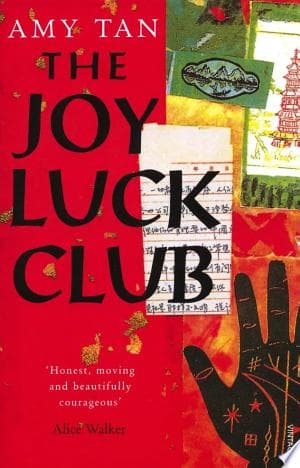
Amy Tan (2008)
Genre
Historical Fiction
Reading Time
960 min
Key Themes
See below
Sign in to track this book
Four Chinese immigrant mothers, connected by mahjong and their pasts, navigate the generational divide with their American-born daughters, who must learn their mothers' stories to understand themselves.
The novel begins with Jing-mei 'June' Woo, whose mother, Suyuan Woo, recently died. June's father reluctantly asks her to take her mother's place at the weekly mahjong gathering of the Joy Luck Club, a social group started by Suyuan and three other Chinese immigrant women: Lindo Jong, An-mei Hsu, and Ying-ying St. Clair. The women, called 'Aunties,' surprise June by saying that Suyuan had twin daughters in China before escaping the war, and they want June to travel to China to reunite with them. This news bothers June, who feels she never truly understood her mother and now has this unexpected responsibility.
An-mei Hsu's story tells about her difficult childhood in China. Her mother, shamed after being forced into concubinage by the wealthy Wu Tsing, was disowned by her family. An-mei was raised by her grandmother, Popo, who taught her the importance of family and the dangers of a 'flesh heart' that can easily break. An-mei remembers the day her mother returned, after Popo's death, to take her away. She tells of her mother's desperate attempts to escape Wu Tsing's control and the sacrifice her mother made by taking her own life on the Lunar New Year, believing it would free An-mei and her brother from their fate.
Lindo Jong tells of her childhood in China, specifically her arranged marriage at a young age to Tyan-yu, the son of the wealthy Huang family. Feeling trapped and mistreated by her mother-in-law, who constantly criticized her and thought she was barren, Lindo made a plan to escape the marriage without shaming her family. She convinced her mother-in-law and Tyan-yu that a ghost had visited her, saying the marriage was cursed and that Tyan-yu was meant to marry a servant girl. Her clever actions allowed her to get her freedom and move to America, where she later married Tin Jong.
Ying-ying St. Clair, often quiet, thinks about her early life in China, particularly a difficult event during the Moon Festival. As a young girl, she fell off a boat and was lost in the crowds, feeling her spirit separate from her body. This feeling of being lost and unseen stayed with her throughout her life. She tells of her first marriage to a man who left her, and her abortion. She later moved to America and married an American man, Clifford St. Clair, but feels she has lost her true self, her 'tiger spirit,' and has become a passive observer in her own life, a trait she sees in her daughter, Lena.
Waverly Jong, Lindo's daughter, remembers her childhood as a chess prodigy. Her mother, Lindo, proudly encouraged Waverly's talent, often taking credit for her wins and giving her advice that Waverly found limiting. This constant public display of Lindo's pride and control eventually led to a big argument when Waverly, feeling stifled, publicly shamed her mother. This fight caused Waverly to temporarily quit chess and created lasting tension in their relationship. Now an adult, Waverly has trouble introducing her white fiancé, Rich Schields, to her mother, fearing Lindo's judgment.
Lena St. Clair, Ying-ying's daughter, describes her marriage to Harold Livotny, an architect. Their relationship has a careful division of expenses and little emotional closeness, showing Lena's inherited passivity and her mother's warning that she would 'slip through the cracks.' Lena tells of a past event where she did not warn her mother about a loose step, leading to her mother's injury, a memory that causes her guilt and fear of speaking up. She worries about the financial and emotional imbalance in her marriage and her inability to assert herself, reflecting her mother's 'lost' spirit.
Rose Hsu Jordan, An-mei's daughter, struggles with indecisiveness, which contributed to the end of her marriage to Ted Jordan. Her inability to stand up for herself or make choices began after a difficult childhood event: while watching her younger brother, Bing, at the beach, she looked away for a moment, and he drowned. This incident, combined with her mother's later religious devotion and belief in fate, made Rose afraid of making wrong decisions. Ted's decision to divorce her forces Rose to finally confront her passivity and find her voice, encouraged by her mother's subtle guidance.
June Woo thinks about her difficult relationship with her mother, Suyuan. She felt constant pressure to do well, whether at playing the piano or pursuing a career, but always felt she did not meet her mother's high expectations. June tells of the 'Prodigy' incident, where her mother made her take piano lessons, leading to a public performance disaster and a bitter argument where June said she wished she was not her mother's daughter. This unresolved conflict and June's feelings of not being good enough make her hesitant to fulfill her mother's last wish of reuniting with her long-lost twin sisters.
The daughters make progress in their relationships with their mothers. Rose, inspired by her mother An-mei's quiet strength, finally stands up to Ted about their divorce and demands respect. Waverly, after a bad dinner where Rich accidentally offends Lindo, finally talks to her mother about their strained relationship and the pressure she felt. Lena, seeing her mother Ying-ying's quiet sadness and recognizing her own similar passivity, starts to question her unequal marriage with Harold, realizing she needs her own voice.
June, with her father, finally travels to China to meet her twin half-sisters, Chwun Yu and Chwun Hwa. During the trip, her father tells more details about Suyuan's past: her desperate escape from Kweilin during the war, her heartbreaking decision to leave her twin babies by the roadside with valuables and a note, hoping they would be found and cared for, and her lifelong grief and search for them. When she meets her sisters, June finally understands her mother's love and loss, feeling her mother's spirit connect them. She realizes she carries her mother's story within her.
The Protagonist
June evolves from a reluctant, insecure daughter into someone who understands and honors her mother's legacy, ultimately finding peace with her identity.
The Central Figure (posthumous)
Her character arc is revealed posthumously, showing her journey from a hopeful young woman to a survivor of immense loss, who never gave up hope.
The Supporting (Mother)
Lindo's arc shows her journey from a trapped young bride to a strong matriarch, who eventually seeks a deeper understanding with her daughter.
The Supporting (Daughter)
Waverly moves from a state of rebellion and resentment towards her mother to a place of seeking understanding and reconciliation.
The Supporting (Mother)
An-mei's arc shows her journey from a traumatized child to a woman who finds her voice and quietly empowers her daughter.
The Supporting (Daughter)
Rose transforms from an indecisive, passive woman into someone capable of making her own choices and standing up for herself.
The Supporting (Mother)
Ying-ying's arc reveals her journey from a vibrant young girl to a lost and passive woman, who ultimately finds the strength to guide her daughter.
The Supporting (Daughter)
Lena moves from a state of passive acceptance in her life and marriage to recognizing her own strength and the need to speak up.
The Mentioned
Ted's actions serve as a catalyst for Rose's character development.
The Mentioned
Rich's role is primarily to act as a foil that exacerbates and ultimately helps resolve the tension between Waverly and Lindo.
This is the main theme, looking at the complex, often difficult, and deeply loving bonds between Chinese immigrant mothers and their American-born daughters. The mothers try to pass on wisdom and strength, often in indirect or culturally specific ways, which their daughters frequently misunderstand or resist. The daughters struggle with their mothers' expectations, their own American identities, and the weight of their mothers' pasts. The novel shows how these relationships change from conflict and misunderstanding to eventual empathy and acceptance, especially as the daughters begin to understand their mothers' sacrifices and histories. For example, June's journey to China helps her connect with her deceased mother, Suyuan.
“And I think, My mother was right. I am an a-ma. All my life, I have been a daughter, an a-ma to my mother. But I am not my mother's daughter. I am not my mother's daughter.”
The characters, especially the daughters, deal with their dual identities as Chinese Americans. They navigate the tension between traditional Chinese values, often shown by their mothers, and modern American culture. Each daughter's journey involves understanding how her mother's past and culture have shaped her own sense of self, leading to a more complete identity. Lena St. Clair, for instance, must confront her inherited passivity to find her true voice, while June Woo's trip to China confirms her understanding of who she is in relation to her mother's legacy.
“I was a tiger lady. I had a tiger inside me. But I lost it. I lost my innocence, but I also lost my spirit.”
The mothers' difficult experiences in China—war, famine, arranged marriages, loss of family—deeply shape their lives and, in turn, their daughters' lives. These past events are not just historical facts but active forces that influence the present, appearing in the mothers' fears, expectations, and the daughters' anxieties and struggles. Suyuan Woo's abandonment of her twin daughters, for example, is a central, hidden secret that affects June's understanding of her mother and her own identity. The novel shows how the past, even when unspoken, continues to affect later generations.
“My mother and I are two halves of the same melon.”
A key theme is the lack of communication between mothers and daughters, often due to cultural and generational differences. The mothers' attempts to share wisdom or love are often misunderstood by their Americanized daughters, who see their advice as criticism or old-fashioned. Similarly, the daughters often have trouble telling their mothers how they feel. This theme is clear in Waverly and Lindo's arguments, where Lindo's pride is seen as judgment, and in June's inability to understand her mother's expectations. The novel shows the painful silences and unspoken truths in these families.
“My mother and I never talked about the past, her past, in China.”
The mothers, having faced great hardship and loss in China, show remarkable resilience and a unique form of 'invisible strength.' This strength is not always obvious but appears as adaptability, cleverness, and an enduring spirit. Lindo Jong's escape from her arranged marriage and Suyuan Woo's survival during wartime are clear examples. This theme looks at how these women not only survived but also found ways to succeed and keep hope, a legacy they try to pass on to their daughters, often through subtle lessons rather than direct teaching.
“I was strong. I was like the wind. I could be seen, but I could not be caught.”
Provides diverse perspectives and insights into each character's inner world.
The novel uses a rotating first-person narrative, with each of the four mothers and four daughters taking turns to tell their stories. This device allows the reader to gain deep insight into the individual experiences, perspectives, and emotional landscapes of eight distinct characters. It highlights the subjective nature of truth and the different ways each woman perceives her own life and her relationships with others, particularly the mother-daughter dynamic. This structure also creates a fragmented yet comprehensive tapestry of their shared histories and cultural heritage.
Interweaves past and present, revealing the profound impact of history on current lives.
The story is not told chronologically but jumps back and forth in time, particularly through extensive flashbacks to the mothers' lives in China. These flashbacks are crucial for understanding the motivations, fears, and wisdom of the mothers, and how their past experiences continue to shape their present relationships with their daughters. This non-linear structure emphasizes the idea that the past is never truly gone but constantly influences the present, providing context for the generational conflicts and misunderstandings.
Objects and events carry deeper cultural and emotional meanings.
Tan employs rich symbolism throughout the novel. The mahjong game, for instance, symbolizes the mothers' bond, their shared history, and the intricate strategies of life. Food often represents love, tradition, and cultural identity, but also conflict when daughters reject traditional dishes. An-mei's scar on her neck symbolizes her mother's sacrifice and the indelible marks of trauma. Ying-ying's 'tiger spirit' represents lost inner strength. These symbols enrich the narrative, providing layers of meaning beyond the literal events.
The club serves as a central gathering point and narrative catalyst.
The Joy Luck Club itself acts as a framing device. It is the initial setting where June learns about her mother's past and the catalyst for her journey to China. The club gatherings, where the women share stories and play mahjong, provide a recurring backdrop for the narrative. It symbolizes the mothers' enduring friendship, their shared heritage, and their collective hope for their daughters. It also represents the cultural bridge between their Chinese past and their American present, a space where traditions are maintained and stories are passed down.
“My mother loved me. She just didn't know how to show it.”
— Waverly reflects on her mother's tough love and her own childhood perceptions.
“I wanted my children to have the best combination: American circumstances and Chinese character. How could I know these things do not mix?”
— Lindo Jong reflects on her immigrant dreams for her children and the cultural clash they experience.
“We are like the two halves of a Chinese coin. Pushed together, they can be seen, but apart, they are nothing.”
— An-mei Hsu's mother uses this metaphor to describe the bond between mother and daughter, even after death.
“I am like the wind. I will blow and then I will be gone.”
— Ying-ying St. Clair often feels invisible and tries to warn her daughter Lena about her own similar tendencies.
“I was strong. I was pure. I had a good heart. I was not a victim.”
— Rose Hsu Jordan tries to reclaim her agency after feeling lost and indecisive in her marriage.
“My mother and I are two halves of the same story, but we don't know the other half.”
— June Woo reflects on the gap in understanding and communication with her mother, Suyuan.
“Only you can change your fate. You have the power.”
— An-mei Hsu encourages her daughter Rose to take control of her life and stop being indecisive.
“To Chinese people, a good daughter is a person who listens to her mother.”
— Lindo Jong expresses the traditional Chinese expectation of obedience in children, particularly daughters.
“And now I see that everything was a test. And I must have failed.”
— Waverly Jong often feels she never lives up to her mother's expectations, viewing their interactions as constant tests.
“A mother is one who can take the place of all others but whose place no one else can take.”
— This sentiment underpins many of the daughters' eventual understanding of their mothers' sacrifices and unique roles.
“I wanted to be a prodigy. My mother wanted me to be a prodigy. Nobody else did.”
— June Woo's internal struggle with her mother's ambitious dreams for her, particularly in piano.
“For a long time, I wanted to be an American girl. I didn't want to be Chinese.”
— Many of the daughters, like Rose, initially reject their Chinese heritage in favor of fitting into American culture.
“I knew what I wanted to do. I wanted to tell her everything, about my life, my dreams, my fears.”
— June Woo's belated desire to connect deeply with her mother after her mother's death, highlighting missed opportunities.
“She sees my face, my Chinese face, and she thinks she knows everything about me.”
— Waverly feels her mother's gaze carries a heavy burden of expectation and judgment based on her cultural background.
“The world is not a place where you can hide your face.”
— Ying-ying St. Clair's mother taught her that one must confront life, a lesson Ying-ying struggles to apply.
Ready to see how well you understood this book? Take our interactive quiz with 10 questions.
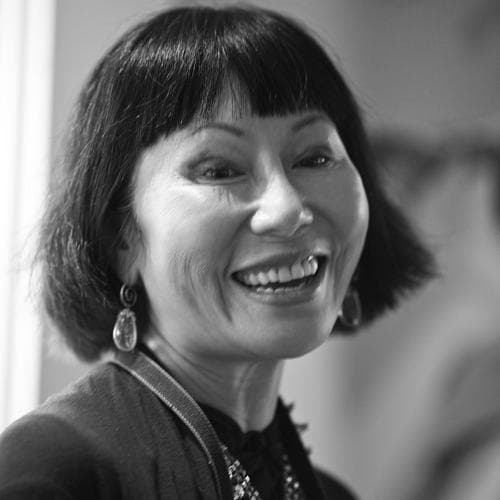
Amy Ruth Tan is an American author of Chinese heritage, best known for the novel The Joy Luck Club (1989), which was adapted into a 1993 film. She is also known for other novels, short story collections, children's books, and a memoir.







