“The journey to the East is not only an outward journey, but also a journey into ourselves, into the depths of our own being.”
— Reflecting on the nature of their pilgrimage and its dual purpose.


Genre
Fantasy / Spirituality / Philosophy
Reading Time
120 min
Key Themes
See below
Sign in to track this book
A choirmaster's journey with a secret society across time and space reveals his own part in the quest's failure, not external salvation.
The narrator, H.H., says he is a member of the League, a secret society of people from all times and places, working on a unifying spiritual quest. He remembers the League's biggest project: a pilgrimage to the East, a spiritual journey to the 'Home of the Light.' H.H. describes the group of participants, including historical and fictional figures like Mozart, Paul Klee, and Don Quixote. The League's rules stress service, humility, and faith, focusing on their shared ideal. The start of the journey has a strong sense of friendship and shared goal, helped by the League's ability to go through time and space.
As the trip begins, the League has a time of strong unity and joy. H.H. describes their experiences, which mix reality and fantasy: finding Noah's Ark in Zurich, meeting Don Quixote, and seeing other events out of time. These events are part of the League's journey, made possible by their group faith and the League's power. Leo, a servant, is important during this time. He can keep the group's spirits up and handle things with quiet skill. His presence reassures everyone and shows the League's values of service and simplicity, keeping their journey moving smoothly.
A turning point happens when Leo, the simple but needed servant, disappears. His absence causes problems and, more importantly, breaks the group's morale and unity. The pilgrims, who had been getting along, start to argue, blame each other, and question the journey's purpose and leadership. H.H. feels sad and angry, blaming others for the group's breakdown. The clear path to the East becomes hidden by arguments, doubt, and the loss of the shared ideal that brought them together. This marks the start of the journey's decline.
After Leo disappears, the journey quickly falls into chaos. The pilgrims, unable to get past their disagreements and problems, slowly give up. H.H. is one of the last to hope, but he also gives in to sadness and goes home, bitter and sure the journey failed. He blames the others for not having enough faith and commitment, believing they were not worthy of the League's ideals. The 'Home of the Light' is not reached, and the shared purpose is replaced by a deep sense of loss and individual disappointment, leaving H.H. hurt by the experience.
After the journey's collapse, H.H. goes back to his normal life, full of bitterness and a feeling of unfairness. He starts writing his own version of events, planning to show what he sees as the failures of his fellow pilgrims. His story is colored by his disappointment and his belief that the journey failed because of others' flaws. This time is marked by his isolation and his inability to move past the perceived failure, using his writing to deal with his grief and justify his own actions, while not knowing he is continuing his misunderstanding of the League's true nature.
Wanting to prove himself right, H.H. looks for Lukas, another former League member he blames for the journey's failure. Lukas, however, seems calm about the past and does not give H.H. the validation he wants. Instead, Lukas takes H.H. to the League's official archives, a large collection of documents and records about its projects. This unexpected event gives H.H. a chance to look deeper into the League's history and possibly find the 'truth' about the failed journey, though he still wants to justify himself and blame others.
In the League archives, H.H. carefully reads historical documents, looking for proof to support his story of the journey's failure. His research leads him to a shocking discovery: Leo, the humble servant whose disappearance caused the group's breakup, was the revered Head of the League. This revelation completely changes H.H.'s understanding of the journey, his own role, and Leo's presence. He realizes that Leo's 'disappearance' was a test of faith and that his focus on blaming others had kept him from seeing the real meaning of Leo and the League's deeper purpose.
Realizing Leo's true identity breaks H.H.'s story of being a victim and blaming others. He feels shame and regret, seeing his own arrogance, lack of faith, and quick judgments. He understands that Leo's humble manner was a lesson in service and that his focus on external failures had stopped him from seeing the spiritual truth. This moment is a big internal change for H.H., moving him from bitterness and self-pity to humility and a strong desire for redemption. He admits that the journey's real purpose was not just external discovery but internal change, which he had not done at first.
Full of regret and a new understanding, H.H. tries to make up for his past mistakes. He looks for Leo, now seeing him as the embodiment of the League's highest ideals. His search for Leo is a spiritual one, showing his renewed commitment to the League's principles of humility and service. When he finds Leo, H.H. is allowed to rejoin the League, not as a pilgrim seeking external validation, but as a humble servant ready to follow the true path. This acceptance shows his spiritual rebirth and his re-integration into the group, now with a deeper understanding of its purpose.
In a symbolic moment, Leo shows H.H. a vision. H.H. sees his own image, not as a separate person, but as a smaller, incomplete figure inside Leo's larger, encompassing being. This vision shows the League's ultimate goal: the individual ego dissolving into a greater, collective spiritual entity. It means H.H. fully gives himself to the League's ideals and understands that true self-discovery is not in individual achievement, but in selfless service and unity with the universal spirit Leo represents. The journey to the East ends with this internal revelation, not a physical destination.
The Protagonist
From a self-righteous and bitter individual convinced of external failure, H.H. transforms into a humbled, repentant seeker who understands the journey's true internal purpose.
The Antagonist/Supporting/Spiritual Master
Though seemingly static, Leo's revealed identity fundamentally redefines his role from a simple servant to the ultimate spiritual leader, driving H.H.'s transformation.
The Supporting
He remains largely stable, serving as a catalyst for H.H.'s transformation rather than undergoing one himself.
The Supporting/Collective Entity
The League's nature is constant, but H.H.'s understanding and appreciation of it evolve dramatically.
The Mentioned
No specific arc, serves to illustrate the League's diverse membership.
The Mentioned
No specific arc, serves to illustrate the League's diverse membership.
The Mentioned
No specific arc, serves as a symbolic encounter.
The novel is about H.H.'s journey from a self-righteous, ego-driven person to a humble truth-seeker. His initial identity comes from being a participant and writer, but he learns that real identity is in selfless service and unity with a greater whole, shown through Leo. The journey makes him face his own biases and the limits of his ego, leading to a new understanding of who he is and his place in the universe.
“My journey to the East was not a dream, but a spiritual event, a journey into my own self, into my own past and childhood, and into my own being.”
The journey is a constant test of faith. The League's initial harmony is kept by group faith, but Leo's disappearance brings doubt, leading to the group's breakup. H.H.'s struggle is largely defined by his loss of faith in others and the journey's purpose, replaced by bitterness. His discovery of Leo's true identity brings back his faith, not in an external result, but in the League's underlying spiritual principles, showing that true faith lasts beyond perceived failures.
“For the journey to the East was not only a journey in space, but also a journey through the times, through the ages, through the historical and fictional world.”
The novel explores leadership through Leo. At first seen as a humble servant, Leo is revealed as the true Head of the League. This surprise shows that real leadership is often found in humility, selfless service, and quiet dedication, not in obvious authority. His 'disappearance' tests the pilgrims' ability to lead themselves and serve the ideal without a visible leader, showing the importance of inner guidance and group responsibility.
“True faith is not belief in external things, but the inner strength that lives in us.”
A main theme is the conflict between individual ego and the collective ideal. The League thrives on unity and shared purpose, but individual complaints and self-interest lead to its breaking apart. H.H.'s journey is a struggle to overcome his ego and join the greater group consciousness the League represents. The final vision of H.H. within Leo symbolizes the ultimate goal: the individual self dissolving into a larger, interconnected spiritual whole, showing that true fulfillment comes from going beyond individual limits.
“Our League had no fixed program, no dogmas, no specific goals, other than service to the great cause, the journey to the East.”
H.H.'s initial account of the journey is biased and incomplete, reflecting his personal disillusionment.
H.H. serves as an unreliable narrator for much of the novel. His initial recounting of the journey's failure is heavily colored by his bitterness, self-pity, and an ego-driven need to blame others. He presents a distorted view of events, particularly regarding Leo's role and the reasons for the League's dissolution. This unreliability is crucial to the plot, as the eventual revelation from the archives completely overturns his narrative, forcing both H.H. and the reader to re-evaluate everything previously understood, highlighting the subjective nature of truth and the impact of personal bias.
Represents the ultimate spiritual destination, inner peace, and enlightenment.
The 'East' and the 'Home of the Light' are potent symbols in the novel. They are not merely geographical locations but represent a spiritual ideal, a state of enlightenment, inner peace, and profound understanding. The physical journey to the East mirrors an internal pilgrimage towards self-discovery and spiritual awakening. The fact that the physical journey fails, yet H.H. eventually finds the 'East' within himself (through his realization about Leo), underscores that the true destination is always internal and spiritual, not external or material. It signifies the ultimate unity of consciousness and purpose.
The blending of historical and fictional figures and events to create a timeless, spiritual reality.
Hesse employs anachronism and elements of magical realism to create a unique narrative landscape. The League includes figures like Mozart, Paul Klee, and Don Quixote, and encounters like Noah's Ark in Zurich, suggesting that the journey transcends conventional time and space. This device serves to elevate the narrative beyond a mere historical or fantastical adventure, imbuing it with a symbolic, dream-like quality. It emphasizes that the League's quest operates on a spiritual plane where all times and realities converge, highlighting the universality and timelessness of its ideals.
A plot device that acts as a test of faith and a catalyst for the protagonist's transformation.
Leo's disappearance is a critical plot device. Initially, it appears to be a practical problem and a cause for the League's disintegration. However, it functions as a profound test of faith and commitment for the pilgrims. His absence forces them to confront their reliance on an external figure and their internal disunity. For H.H., the later revelation of Leo's true identity and the significance of his 'disappearance' serves as the ultimate catalyst for his self-discovery and transformation, revealing that the test was not about Leo's absence, but about the pilgrims' ability to maintain faith and service without a visible leader.
“The journey to the East is not only an outward journey, but also a journey into ourselves, into the depths of our own being.”
— Reflecting on the nature of their pilgrimage and its dual purpose.
“We, the members of the League, were not only journeying in space, but also in time, or rather, we were striving to abolish time.”
— Explaining the League's mystical goals and their relationship with temporal existence.
“Every age, every culture, every custom has its own truth, its own beauty, its own life. We must respect them all.”
— A broader philosophical statement on cultural relativism and respect.
“The goal of our journey was not a fixed, geographical place, but a state of mind, a spiritual home.”
— Describing the true objective of the League's pilgrimage beyond physical locations.
“Faith is a living, dynamic force, not a rigid dogma.”
— A reflection on the nature of belief and its evolution.
“To understand life, you must love it, not fear it.”
— A simple yet profound statement on embracing existence.
“Our League was a community of seekers, each following his own star, yet united by a common longing.”
— Characterizing the members of the League and their individual yet collective quest.
“The greatest joy lies in giving, not in receiving.”
— A moral insight into the nature of true happiness.
“He who seeks finds, and he who knocks, to him it shall be opened.”
— A biblical allusion used to convey the principle of persistent seeking.
“The world is full of wonders for those who have eyes to see them.”
— Encouraging a perspective of appreciation and mindfulness.
“True wisdom is not found in books, but in experience.”
— Emphasizing the importance of lived experience over theoretical knowledge.
“Every step we take is a step towards enlightenment, if we but choose to see it so.”
— Framing every action as a potential part of a spiritual journey.
“The true East is not a place, but a spiritual attitude, a longing for simplicity, a return to the origins.”
— Further clarifying the symbolic meaning of the 'East' for the League.
“Our lives are but a dream, and we are the dreamers dreaming the dream.”
— A philosophical reflection on the nature of reality and existence.
Ready to see how well you understood this book? Take our interactive quiz with 10 questions.
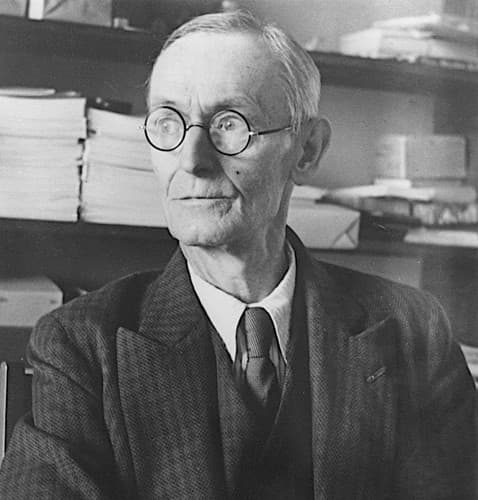
Hermann Karl Hesse was a German-Swiss poet, novelist, and painter. His best-known works include Demian, Steppenwolf, Siddhartha, and The Glass Bead Game, each of which explores an individual's search for authenticity, self-knowledge and spirituality. In 1946, he received the Nobel Prize in Literature.







