“The only reason people want to be masters of the future is to change the past.”
— Ludvik reflects on the nature of ambition and historical revisionism.

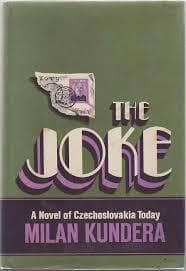
Milan Kundera (1969)
Genre
Literary Fiction / Historical Fiction / Philosophy
Reading Time
6-8 hours
Key Themes
See below
Sign in to track this book
A student's casual postcard joke about optimism leads to political persecution and a lifetime of misguided revenge, showing the lasting effects of one impulsive act on love, identity, and the human spirit.
Ludvik Jahn, a university student in Stalinist Czechoslovakia, sends a postcard to his girlfriend, Marketa, who is at a Party re-education camp. The postcard, a joke against communist optimism, reads: 'Optimism is the opium of the people! A healthy atmosphere stinks of stupidity! Long live Trotsky!' Marketa, taking it seriously or under pressure, shows it to Party authorities. This seemingly harmless joke is seen as political rebellion. Ludvik is expelled from the Communist Party and the university, drafted into a military unit for 're-education,' and forced into years of hard labor in Ostrava's coal mines. This is a severe, life-changing punishment for a simple, sarcastic remark.
Jaruslav, a friend of Ludvik's from their Moravian hometown, loves traditional folk music and customs. He leads a folk ensemble and works to preserve Moravian heritage, which he sees as real and important. However, the Communist Party tries to take over and sanitize folk culture, turning it into state-approved propaganda. Jaruslav constantly negotiates with Party officials who want to control his music. He believes in the true spirit of folk traditions but also tries to navigate the political system to ensure their survival. This creates a conflict between his artistic integrity and political needs.
Helena Zemánková, a radio journalist and wife of Pavel Zemánek, Ludvik's former Party comrade and accuser, feels a growing emptiness in her life. Her marriage to Pavel lacks real intimacy and intellectual connection. Helena is an idealist who first believed in the Party's promises but has become aware of the hypocrisy around her. She longs for authenticity and a meaningful relationship, often projecting her desires onto others. She is drawn to Ludvik, whom she meets at a Party conference, seeing him as a man of depth and suffering. She does not know he is using her for his revenge against Pavel.
After years of suffering from injustice, Ludvik carefully plans his revenge against Pavel Zemánek, the former Party comrade who played a big part in his expulsion. Ludvik learns that Pavel is now a well-known cultural figure and a womanizer, and that his wife, Helena, is unhappy. Ludvik's plan is to seduce Helena, not out of genuine attraction, but only to humiliate Pavel. He arranges to meet Helena, pretending interest in her and her work. He hides his true motives and the deep bitterness from his past. His revenge is a calculated act, designed to cause maximum emotional harm.
The annual Moravian 'Ride of the Kings' festival is a key setting for the novel's converging stories. Jaruslav is deeply involved in organizing and performing at the festival, seeing it as a vital expression of Moravian identity, even as Party officials try to control its message. Ludvik, having seduced Helena, brings her to the festival. He intends to publicly expose their affair and humiliate Pavel, who is also attending in an official role. The vibrant folk customs, music, and traditional costumes contrast sharply with the characters' inner turmoil, their political maneuvering, and Ludvik's cold revenge plot. This highlights the tension between authentic culture and manipulated ideology.
Ludvik seduces Helena, but his satisfaction is brief and complicated. Helena, genuinely attracted to Ludvik and seeking a deeper connection, sees their encounter as a profound, romantic event. She is unaware of his vengeful intentions. Ludvik, in his cold calculations, finds himself unexpectedly put off by her earnestness and vulnerability, which conflicts with his desire for a clean, detached act of revenge. The act itself is clumsy and unsatisfying for him. This misinterpretation of intentions leads to tragicomic events, including Helena's misguided suicide attempt after Ludvik cruelly reveals his true motives. This further complicates his careful plan.
Ludvik's elaborate revenge against Pavel Zemánek does not end in the dramatic confrontation he imagined. Instead, Pavel reacts with complete indifference to the affair with Helena. Pavel, a cynical and self-absorbed man, is neither surprised nor deeply hurt by his wife's infidelity. He treats it as a minor inconvenience, even a source of detached amusement. This nonchalance completely deflates Ludvik's long-held bitterness and years of planning. The revenge, rather than providing relief, leaves Ludvik feeling emptier and more disillusioned. He realizes that his suffering and his act of vengeance have meant nothing to his target.
Kostka, another old friend of Ludvik's, offers a different way to find meaning outside the Party's ideology. He was once a devoted communist but became disillusioned and converted to Christianity, finding spiritual solace and a new purpose. He now works as a physical therapist and practices his faith. Kostka tries to help Ludvik, offering him a path to forgiveness and spiritual peace, believing Ludvik's suffering comes from a lack of faith. His view contrasts sharply with Ludvik's atheistic cynicism and his pursuit of earthly revenge. This highlights an alternative way to cope with life's injustices and find redemption.
Ludvik unexpectedly meets Marketa, the girlfriend who reported his infamous postcard joke to the Party, many years later. Their meeting is brief and awkward. Marketa, now older and seemingly ordinary, shows no sign of understanding the profound impact her actions had on Ludvik's life. This encounter forces Ludvik to face the ordinary nature of evil and the random quality of his suffering. He realizes his torment was not from a grand, malicious conspiracy, but a chain of misunderstandings and rigid bureaucracy. This realization further shows the futility of his revenge and the absurdity of his initial punishment.
The novel ends with a folk concert where Jaruslav's ensemble performs. During the performance, Jaruslav, already burdened by compromises with the Party and his son's declining health, falls ill and collapses on stage. This collapse symbolizes his physical and spiritual exhaustion, the pressure of preserving authentic Moravian culture against state control, and the general loss of genuine human spirit under totalitarianism. Ludvik, present at the concert, sees this collapse. It reflects on the vulnerability of art and tradition, and the heavy price paid by those who try to uphold them in a repressive regime.
The Protagonist
Ludvik evolves from an idealistic student to a bitter, vengeful man, ultimately realizing the emptiness of his revenge and the absurdity of his past suffering.
The Supporting
Jaruslav remains steadfast in his love for folk culture but becomes increasingly weary and burdened by the compromises and challenges of preserving it under a totalitarian regime.
The Supporting
Helena moves from a state of romantic longing and idealism to a painful confrontation with the harsh realities of manipulation and unrequited emotion, though she retains a resilient, if bruised, spirit.
The Antagonist/Supporting
Pavel remains largely static, a representation of unchanging cynicism and self-interest, unaffected by the emotional turmoil he causes in others.
The Supporting
Kostka undergoes a significant transformation from a Party member to a devout Christian, finding stability and purpose in his faith.
The Mentioned/Supporting
Marketa's brief appearance highlights the past event, but her character arc remains largely unseen, serving more as a symbolic trigger for Ludvik's fate.
The novel shows how a harmless joke can lead to devastating consequences under a totalitarian regime. Ludvik's expulsion and forced labor for a sarcastic postcard show the disproportionate nature of state power. The Party's attempts to control folk culture, as seen in Jaruslav's struggles, illustrate the regime's reach into every part of life. It demonstrates its capacity for both cruelty and bureaucratic absurdity. The characters' struggles often come from a lack of individual freedom and the constant threat of state surveillance and punishment.
“Optimism is the opium of the people! A healthy atmosphere stinks of stupidity! Long live Trotsky!”
Ludvik spends years planning revenge against Pavel Zemánek, thinking it will bring him relief and justice. However, when he carries out his plan, it feels empty. Pavel's indifference to the affair with Helena deflates Ludvik's bitterness, leaving him feeling hollow. The novel suggests that revenge offers a temporary illusion of control but fails to heal past wounds or provide real satisfaction. It often continues a cycle of emptiness rather than resolution. Ludvik's realization shows that the 'joke' was ultimately on him.
“My revenge was as meaningless as the joke that had caused my downfall.”
A main theme is the widespread nature of misunderstanding. Ludvik's joke is taken seriously, and Helena misinterprets Ludvik's intentions. His sarcastic postcard is seen as political rebellion, causing his downfall. Helena, seeking genuine connection, completely misreads Ludvik's cold, vengeful seduction as a profound romantic encounter. Even Ludvik misjudges Pavel's reaction, expecting a dramatic confrontation instead of indifference. These layers of miscommunication drive much of the plot's tragicomic elements and highlight how difficult true human connection is, especially in a society where real expression is suppressed.
“What happens in the realm of misunderstanding is perhaps the most human of all stories.”
The novel explores how totalitarian regimes try to control and distort cultural expression, leading to a loss of authenticity. Jaruslav's efforts to preserve genuine Moravian folk music and traditions constantly clash with the Party's desire to sanitize and use them for propaganda. The 'Ride of the Kings,' an ancient ritual, becomes a stage for political maneuvering rather than pure cultural celebration. This theme highlights the struggle to maintain a connection to genuine heritage and individual expression against ideological conformity. It suggests that true culture is often suppressed or manipulated for political ends.
“The past is being systematically destroyed, liquidated, forgotten. Or, if it is remembered, it is remembered in a falsified, distorted form.”
The story is told from the perspectives of several main characters.
The novel employs a rotating first-person narrative, shifting between Ludvik, Jaruslav, Helena, and Kostka. This allows Kundera to present a multifaceted view of events, highlighting the subjective nature of truth and how each character interprets the same situations differently based on their experiences, beliefs, and emotional states. This technique deepens the theme of misunderstanding and provides a rich tapestry of internal monologues, revealing the characters' motivations, their internal conflicts, and the psychological impact of their environment. It also prevents any single character from holding complete authority over the narrative's 'truth'.
Ludvik's sarcastic postcard acts as the inciting incident and a symbol for the novel's central themes.
The postcard Ludvik sends is the primary catalyst for all the subsequent events, setting his life on a trajectory of suffering and revenge. Beyond its literal role, the 'joke' itself functions as a powerful metaphor. It represents the arbitrary nature of totalitarian power, where a lighthearted jest can be interpreted as serious subversion. It also symbolizes the profound miscommunication between individuals and between the individual and the state. The joke highlights the tragicomic absurdity of life under such a regime, where intent is irrelevant and consequences are severe, ultimately exposing the hollow nature of Ludvik's revenge.
Moravian folk music and customs serve as a cultural backdrop and a symbol of authenticity.
Moravian folk music, particularly through Jaruslav's character, is more than just a setting; it's a symbolic element representing genuine cultural identity and resistance against political manipulation. It embodies authenticity, a connection to the past, and a form of expression that the Communist Party attempts to co-opt and control. The 'Ride of the Kings' festival, with its ancient roots and vibrant traditions, stands in stark contrast to the sterile, ideological world of the Party. The vulnerability of this folk culture mirrors the vulnerability of individual freedom and truth in the face of totalitarian power, highlighting what is lost when authenticity is suppressed.
Kundera frequently places contrasting elements side-by-side to highlight absurdity and meaning.
Kundera uses ironic juxtaposition to underscore the novel's themes. For example, the vibrant, celebratory atmosphere of the 'Ride of the Kings' festival is juxtaposed with Ludvik's cold, calculated revenge plot and the characters' internal turmoil. The earnest idealism of Helena is contrasted with Ludvik's cynical manipulation. The profound suffering Ludvik endures for his joke is ironically contrasted with Pavel's utter indifference to the revenge. This device emphasizes the absurd disjuncture between intention and outcome, appearance and reality, and the human desire for meaning versus the often meaningless nature of existence under a repressive regime.
“The only reason people want to be masters of the future is to change the past.”
— Ludvik reflects on the nature of ambition and historical revisionism.
“A man who has lost his memory is like a man who has lost his shadow.”
— Ludvik ponders the importance of memory to identity.
“The joke is that there is no joke. Or rather, the joke is that we don't know there is a joke.”
— Ludvik reflects on the central 'joke' that sets the plot in motion and its unforeseen consequences.
“Humanity's true moral test, its fundamental test, consists of its attitude towards those who are at its mercy: animals.”
— Jaroslav's reflections on compassion and morality, though he is not a central character, this quote resonates with themes of human nature.
“The past is a foreign country; they do things differently there.”
— While a famous quote, its sentiment is deeply embedded in Ludvik's struggle to reconcile with his past actions and the changing political landscape.
“When we want to destroy a man, we say he is a traitor. Then we destroy him.”
— Ludvik recognizes the manipulative power of political labels and accusations.
“The more time passes, the more I am convinced that the world is governed by misunderstandings.”
— Ludvik's growing disillusionment with how events unfold and how people interpret them.
“There are things in life that are not a joke, but they are born from a joke.”
— Ludvik muses on the serious repercussions that can stem from seemingly trivial actions.
“Man can never know what to want, because he lives only one life and in no way can he compare it with his previous lives nor adjust it in his subsequent lives.”
— A philosophical reflection on the uniqueness and finality of individual experience.
“The most dangerous thing for a political regime is not the opposition, but the joke.”
— Ludvik understands how humor and irony can undermine authority more effectively than direct confrontation.
“The only way to be happy is to love your suffering.”
— Helena, in her own way, tries to find meaning and contentment despite her circumstances.
“A human life, once it is born, must continue to live, it must continue to develop, it must continue to grow old. It cannot stop and go back.”
— Ludvik's internal monologue about the irreversible flow of time and personal history.
“The beautiful is always strange.”
— Kundera's broader aesthetic philosophy, applicable to the complex and often unsettling beauty of human experience depicted in the novel.
“Life is a one-way street, and no matter how many detours you take, none of them lead back.”
— Ludvik's realization that there is no returning to the past or undoing his fundamental choices.
Ready to see how well you understood this book? Take our interactive quiz with 10 questions.
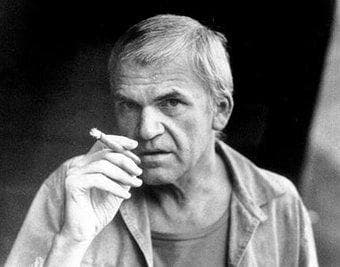
Milan Kundera is a Czech-born French writer. Kundera went into exile in France in 1975, acquiring citizenship in 1981. His Czech citizenship was revoked in 1979 and restored in 2019. He "sees himself as a French writer and insists his work should be studied as French literature and classified as such in book stores".







