“History is not a seamless narrative, but a collection of fragments, often contradictory, that must be pieced together like a mosaic.”
— Cotton Malone reflecting on the nature of historical research and truth.

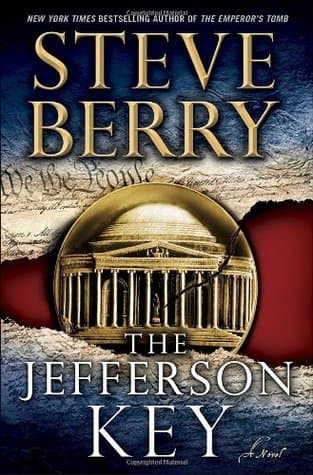
Steve Berry (2011)
Genre
Thriller / Historical Fiction / Mystery
Reading Time
9-10 hours
Key Themes
See below
Sign in to track this book
Cotton Malone uncovers Thomas Jefferson's secrets to stop a shadowy pirate society from using a hidden constitutional clause to fuel presidential assassinations.
Cotton Malone, a former Justice Department agent, is in New York City with his son, Gary, when President Danny Daniels' motorcade is attacked. A sniper targets the President from a nearby building. Malone acts on instinct, drawing the sniper's fire and saving President Daniels' life. The sniper escapes. This heroic act puts Malone into the investigation, where he learns the assassination attempt is linked to the Commonwealth, a secret society from the American Revolution. The Secret Service, led by Director Stephanie Nelle, is confused by the attack's precision. Malone quickly realizes this is not ordinary terrorism but a carefully planned operation with historical motives.
After the failed assassination, the Commonwealth reveals itself, sending President Daniels a series of demands about a specific clause in the U.S. Constitution. They communicate through cryptic messages, hinting at a long-held complaint and a desire to correct past wrongs. Malone, working with Stephanie Nelle, starts to investigate the Commonwealth's history. Their research leads them to Thomas Jefferson and a lost cipher he created, believed to hold clues to the society's motives and the constitutional clause they want to use. Malone understands that decoding this cipher is key to understanding the Commonwealth's ultimate goal and stopping more attacks.
Cassiopeia Vitt, a former agent and Malone's associate, joins the investigation. Her unique skills and historical knowledge are valuable as they look deeper into the Commonwealth's past. Together, they find a shocking pattern: the assassinations of Presidents Lincoln, Garfield, McKinley, and Kennedy were all planned by the Commonwealth for the same reason. This discovery raises the stakes, turning the current crisis into a centuries-old conspiracy. They realize the Commonwealth is not just a modern threat but a force that has influenced American history for generations, carefully planning and carrying out its agenda.
The investigation leads Malone and Vitt to Andrew Jackson's era. Jackson, unknown to many, had his own dealings with the Commonwealth. They discover that Jackson, aware of the society's dangerous ambitions, left behind clues and a complex mystery meant to stop their future plans. These clues, hidden in historical documents and architectural details, guide Malone and Vitt on a dangerous treasure hunt across various historical sites. Their journey uncovers a hidden document from the Founding Fathers, a document that could either empower or dismantle the Commonwealth, depending on how it's understood. This document is the key to understanding the constitutional clause.
Through their search, Malone and Vitt finally decode the Jefferson cipher and solve Jackson's mystery. They discover the specific constitutional clause the Commonwealth wants to use: Article 1, Section 8, Clause 17, which gives Congress exclusive power over the District of Columbia and other federal properties. The Commonwealth, a society of pirates and privateers from the Revolution, believes they were unfairly denied their promised share of prize money and land. They intend to use this clause to claim Washington D.C. as their own, effectively dismantling the federal government and establishing a new order based on their historical complaints. This reveals the huge scale of their ambition.
With the Commonwealth's plan clear, Malone, Vitt, and Stephanie Nelle realize they are in a desperate race against time. The Commonwealth is ready to carry out its coup, using its interpretation of the constitutional clause to justify its takeover. They have gathered significant resources and influence over centuries, positioning themselves to act. Malone and Vitt must not only understand the historical context but also predict the Commonwealth's next moves. Their journey takes them through historical archives, hidden passages, and high-stakes confrontations, all while being pursued by the Commonwealth's ruthless agents, who want to eliminate anyone who stands in their way.
The climax of the chase takes Malone and Vitt to the high seas. The Commonwealth, true to its pirate origins, tries a daring naval maneuver to assert its claim. They engage in a thrilling pursuit, involving modern naval assets and historical maritime strategies. Malone, using his training and instincts, must outsmart the Commonwealth's experienced agents in a series of intense confrontations. The stakes are very high, as the Commonwealth's success on the water would give them the leverage they need to enforce their demands and potentially destabilize the entire United States government. This sea battle becomes a symbolic clash between past and present.
At a critical moment, Malone and Vitt finally uncover the true meaning behind the Founding Fathers' inclusion of Article 1, Section 8, Clause 17, and the hidden document's meaning. They discover that the clause was not meant to be a loophole for a disgruntled society but a safeguard, a complex legal mechanism to ensure the new republic's stability. The document, once fully decoded, reveals a counter-measure to the Commonwealth's interpretation, a legal and historical argument that effectively negates their claims. This discovery is a turning point, giving Malone the legal tools needed to expose and dismantle the Commonwealth's century-long scheme.
Armed with the truth, Cotton Malone confronts the Commonwealth's leaders in a final, dramatic showdown. The confrontation happens in a historically significant location, adding to the tension of the moment. Malone presents the evidence he and Vitt have gathered, exposing the flaws in the Commonwealth's historical story and their misinterpretation of the Constitution. The revelation of the Founding Fathers' true intent undermines the very foundation of the Commonwealth's claims, leading to their downfall. President Daniels, informed by Malone's discoveries, can publicly refute the Commonwealth's demands and reassert federal authority, preserving the United States' integrity.
Afterward, the Commonwealth is broken up, its leaders arrested, and its century-long conspiracy revealed. While the immediate threat is gone, the events leave a lasting impact. President Daniels faces the challenge of addressing the historical complaints and constitutional interpretations that fueled the Commonwealth, ensuring such a threat cannot rise again. Cotton Malone, having again helped safeguard the nation, considers the connection between history, power, and the American republic's lasting principles. The experience deepens his understanding that the past continually shapes the present.
The Protagonist
Malone begins as a reluctant hero, but his journey solidifies his commitment to uncovering historical truths and protecting the nation from those who would exploit its past.
The Supporting
Cassiopeia's journey reinforces her commitment to fighting injustice and using her unique skills for the greater good, often pushing Malone to look beyond conventional solutions.
The Supporting
President Daniels gains a profound understanding of American history's hidden complexities and the enduring fragility of democratic institutions, strengthening his resolve as a leader.
The Supporting
Nelle's experience with the Commonwealth broadens her understanding of national security threats beyond conventional terrorism, deepening her trust in Malone's unconventional methods.
The Antagonist
The Commonwealth's centuries-long quest for vengeance and power culminates in a desperate, final attempt to reshape the United States, ultimately leading to their exposure and downfall.
The Mentioned
Gary's experience with his father's dangerous life strengthens their bond and his understanding of Cotton's unique world.
The Mentioned
Jefferson's historical actions, through his cipher and hidden documents, continue to influence the nation's fate centuries after his death, proving his enduring legacy.
The Mentioned
Jackson's foresight and strategic thinking, centuries after his presidency, prove instrumental in the modern-day fight against the Commonwealth, solidifying his historical impact.
The novel shows how historical events, complaints, and documents continue to shape the present. The Commonwealth's motivation comes from perceived injustices from the American Revolution, leading them to centuries of manipulation and assassination. Malone and Vitt succeed by looking into historical archives, decoding ciphers from Thomas Jefferson, and solving mysteries left by Andrew Jackson. The past is an active force, always threatening to change the future, as seen in the Commonwealth's attempts to use an obscure constitutional clause.
“History is not dead. It's merely sleeping, waiting for someone to wake it up.”
A main theme is the danger of constitutional interpretation. The Commonwealth bases its entire claim on a specific, obscure clause in Article 1, Section 8, Clause 17, twisting its original meaning to justify their revolutionary agenda. The story explores how legal texts, even fundamental ones like the Constitution, can be used as weapons when interpreted selectively or out of context. Malone's ultimate victory depends on uncovering the true, original intent of the Founding Fathers for this clause, showing the importance of thorough historical and legal understanding to protect democratic principles from those who would subvert them through clever interpretations.
“The Constitution is not a static document. It's a living, breathing entity, constantly subject to interpretation. And that's where the danger lies.”
The conflict between justice and vengeance is a driving force. The Commonwealth believes they seek justice for historical wrongs—the unpaid prize money and land promised to their ancestors. However, their methods (assassination, coup attempts) are clearly vengeance, showing a desire to punish the modern government for past perceived slights. The novel contrasts their destructive quest with Cotton Malone's pursuit of truth and preservation of the existing system. It explores whether historical grievances, no matter how legitimate, can justify such extreme and violent actions, ultimately arguing for the rule of law and constitutional process over blood-feuds.
“They called it justice. But it was nothing more than revenge, dressed up in a powdered wig and a three-cornered hat.”
The book shows how fragile democratic institutions are, even one as established as the United States. The ease with which a secret society, through centuries of careful planning, can almost dismantle the federal government highlights this vulnerability. The plot reveals that the nation's stability relies not just on its physical defenses but on the integrity of its founding documents and the vigilance of its citizens. The assassination attempts against presidents and the attempt to seize Washington D.C. show how easily a powerful group can use obscure laws and historical stories to threaten a republic's foundation.
“A republic, if you can keep it. Franklin knew. He knew how easily it could all unravel.”
A complex code created by Thomas Jefferson, crucial for unlocking the Commonwealth's secrets.
This is a historical cipher, a cryptographic puzzle devised by Thomas Jefferson, that serves as a central MacGuffin and plot driver. Its existence and the challenge of deciphering it propel Malone and Vitt's investigation. The cipher is not just a code; it's a representation of Jefferson's foresight and his potential hidden knowledge about the Commonwealth or similar threats. Unlocking it reveals crucial information about the society's motives, their historical connections, and the specific constitutional clause they intend to exploit, making it an indispensable tool in understanding and combating the antagonist's plans.
A series of historical puzzles and hidden messages left by President Jackson to thwart the Commonwealth.
This plot device involves a trail of clues, riddles, and hidden documents deliberately left behind by Andrew Jackson. These clues are dispersed across various historical locations and embedded within historical artifacts or architectural designs. They serve as a historical treasure hunt, guiding Malone and Vitt on their journey. The mystery reflects Jackson's cunning and his awareness of the Commonwealth's long-term threat. Solving these puzzles leads the protagonists to the vital 'Founding Fathers' document, which ultimately provides the legal counter-argument to the Commonwealth's claims, turning the tide of the conflict.
An obscure clause in the U.S. Constitution, central to the Commonwealth's plan.
This specific clause in the U.S. Constitution (Article 1, Section 8, Clause 17, granting Congress exclusive legislative authority over the District of Columbia and other federal properties) is the primary motivation and legal justification for the Commonwealth's actions. It functions as the central point of contention and the ultimate prize for the antagonists. The Commonwealth's entire conspiracy revolves around their interpretation and exploitation of this clause. For the protagonists, understanding its true historical intent and legal implications becomes paramount to discrediting and defeating the Commonwealth, making it a critical legal and historical fulcrum of the entire plot.
A series of past assassinations linked to the Commonwealth, revealing their long-standing agenda.
The historical assassinations of Presidents Lincoln, Garfield, McKinley, and Kennedy serve as a crucial revelation and a chilling testament to the Commonwealth's enduring power and ruthless commitment to their cause. This device establishes the deep historical roots of the conspiracy, demonstrating that the current threat against President Daniels is not an isolated incident but part of a centuries-old pattern. It elevates the stakes and provides a profound sense of urgency, showing the protagonists that they are dealing with an organization capable of immense historical impact and willing to go to extreme lengths to achieve its goals.
“History is not a seamless narrative, but a collection of fragments, often contradictory, that must be pieced together like a mosaic.”
— Cotton Malone reflecting on the nature of historical research and truth.
“The past is a foreign country; they do things differently there.”
— A general observation on the difficulty of understanding past motivations and actions.
“Power is never given; it is always taken.”
— A character discussing the ruthless nature of political and organizational power.
“Sometimes the greatest secrets are hidden in plain sight, dismissed as too obvious to be true.”
— Malone realizing a crucial clue was overlooked due to its simplicity.
“The line between patriot and traitor is often drawn by the victor.”
— A character contemplating the shifting definitions of loyalty and betrayal in times of conflict.
“Documents can be forged, but the truth, once discovered, has a way of asserting itself.”
— Malone's conviction that genuine historical facts will eventually emerge.
“Fear is a powerful motivator, capable of making people do things they never thought possible.”
— Observing the actions of characters under extreme duress.
“Every secret has a cost, and the longer it's kept, the higher the price.”
— A character discussing the burden and consequences of long-held secrets.
“The past doesn't just inform the present; it actively shapes it, often in ways we don't fully comprehend.”
— Reflecting on the enduring influence of historical events on contemporary life.
“Some truths are too dangerous to be widely known, for they can unravel the very fabric of society.”
— A justification for the suppression of certain historical facts.
“The greatest weapon in any conflict is information, and the ability to control its flow.”
— A strategic insight into the nature of espionage and power struggles.
“History is written by the survivors, and their version is rarely the complete one.”
— Malone's skepticism about official historical narratives.
“Sometimes, doing the right thing means breaking all the rules.”
— Cotton Malone's internal conflict and justification for his unconventional methods.
“The future is always uncertain, but understanding the past can provide the best guidance.”
— A thought on the utility of historical knowledge for navigating future challenges.
Ready to see how well you understood this book? Take our interactive quiz with 10 questions.

Biography coming soon.







