“Evie was the fairest of them all. She knew it, too. Her mother had drilled it into her since birth.”
— Describing Evie's self-perception and upbringing.

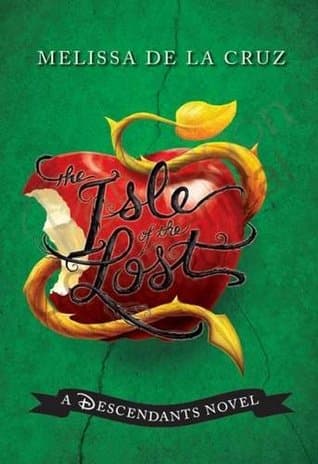
Melissa de la Cruz (2015)
Genre
Fantasy / Children's / Young Adult
Reading Time
320 min
Key Themes
See below
Sign in to track this book
On a desolate island prison, the forgotten offspring of Disney's most notorious villains embark on a treacherous quest for a mythical Dragon's Eye, only to discover that their inherited wickedness might just be a facade for an unexpected goodness.
The story opens on the Isle of the Lost, a desolate island where infamous villains and their children are imprisoned. Mal, daughter of Maleficent, Evie, daughter of the Evil Queen, Jay, son of Jafar, and Carlos, son of Cruella De Vil, are introduced. They live under the strict, often cruel, tutelage of their parents, who constantly remind them of their villainous heritage and the glory days of evil. Mal, the leader, feels the immense pressure of her mother's expectations. Their daily lives involve petty theft, avoiding the 'good' aspects of life, and enduring the island's decrepit conditions. They attend Dragon Hall, the island's only school, where they learn villainous history and strategies. The children are constantly reminded of the magical barrier that prevents their escape and the lost glory of their parents, creating resentment towards Auradon and a longing for power.
Maleficent, still bitter and obsessed with revenge against Auradon, gathers the four children – Mal, Evie, Jay, and Carlos – in her lair. She reveals her long-held secret: the Dragon's Eye, a powerful magical artifact hidden within the Forbidden Fortress on the Isle. She believes it is the key to breaking the magical barrier and escaping the Isle, allowing the villains to reclaim their power and conquer Auradon. Maleficent, ever manipulative, pits the children against each other, implying that only one evil villain will be able to claim it. She promises that the one who retrieves it will be rewarded with the freedom of all. This starts a competition among the four friends, each eager to prove their villainy and earn their parent's approval, as well as their own chance at a better life.
Driven by Maleficent's challenge, Mal, Evie, Jay, and Carlos begin their separate quests for the Dragon's Eye. Mal, relying on her mother's spell book and her cunning, starts by seeking out forgotten lore and old villain hideouts. Evie uses her mother's magic mirror, though its power is diminished on the Isle, to find clues. Jay, with his athletic prowess and knack for thievery, explores dangerous ruins and abandoned shops. Carlos, despite his fear of dogs and general timidity, uses his tech skills to search for information. Their initial searches are marked by rivalry and distrust, as each tries to outwit the others, hoarding any small piece of information they find. They encounter various minor villains and their children, who offer cryptic hints or try to impede their progress, all while navigating the decaying infrastructure of the Isle.
Through their individual efforts, Mal, Evie, Jay, and Carlos eventually piece together enough clues to realize the Dragon's Eye is indeed within the Forbidden Fortress, a notoriously dangerous and magically protected structure. They cautiously enter the fortress, which is filled with booby traps and illusions designed to deter intruders. Inside, they encounter the fortress's guardian: a benevolent, albeit eccentric, old wizard named Yen Sid, who was banished to the Isle long ago by Maleficent. Yen Sid, aware of Maleficent's true intentions, subtly tries to guide the children, testing their character and offering cryptic advice about true power and good versus evil, without directly revealing the full truth about the Dragon's Eye or Maleficent's ultimate plan.
As they go deeper into the Forbidden Fortress, the challenges become too complex for any one child to solve alone. They encounter puzzles requiring different skills: Mal's knowledge of spells, Evie's vanity and understanding of beauty (which surprisingly helps with certain illusions), Jay's strength and agility, and Carlos's technological aptitude. Forced to cooperate, they begin to shed some of their ingrained rivalry. Mal, initially resistant, finds herself relying on Evie's insights and Jay's strength. Carlos, overcoming his fears, contributes vital problem-solving. This forced collaboration slowly starts to chip away at their villainous conditioning, as they experience the benefits of teamwork and mutual support, something their parents never encouraged. Yen Sid observes their progress, seeing the potential for good within them.
After overcoming numerous obstacles together, the four children finally reach the heart of the Forbidden Fortress. Instead of finding a tangible, powerful artifact, they discover that the 'Dragon's Eye' is not a physical object but a magical challenge – a test of character and intent. Yen Sid reveals that the true power to break the barrier lies not in a magical object, but in a selfless act of good. The Dragon's Eye is a metaphor for the potential for good within them, and the only way to activate its power is to make a choice that prioritizes the well-being of others over personal gain or villainous ambition. This revelation shocks the children, as it completely contradicts everything their parents have taught them and Maleficent's instructions.
Mal, having been groomed by Maleficent to be the most evil, struggles intensely with this revelation. She sees the opportunity to betray her friends and claim the 'power' for herself, fulfilling her mother's wishes. However, the bonds she has formed with Evie, Jay, and Carlos throughout their quest weigh heavily on her. She remembers their teamwork, their shared laughter, and the camaraderie that developed. Faced with a choice between pure evil and the new good she has discovered, Mal makes a decision. Instead of trying to seize power for herself, she chooses to protect her friends from a final magical trap, demonstrating a selfless act that goes against her villainous upbringing.
Mal's act of selflessness, supported by her friends, triggers a subtle magical reaction within the Forbidden Fortress, but it does not break the magical barrier around the Isle of the Lost. Yen Sid explains that while their new good cannot immediately undo generations of evil magic, their choice has awakened a different kind of power within them – the power to choose their own path. He emphasizes that the barrier is a complex magical construct, and that true freedom comes from within. The children, though initially disappointed that they haven't escaped, feel a shift. They understand that the Dragon's Eye was never about a physical escape, but about the choice between good and evil. They return from the fortress with a new perspective and a stronger bond, having made a collective decision that defied their parents' expectations.
Upon their return, Maleficent and the other villains are furious that the children did not retrieve the Dragon's Eye and break the barrier. They accuse them of failure and question their villainy. The children, however, present a united front, vaguely explaining that the Dragon's Eye was more complex than anticipated, and that they couldn't 'find' it in the way their parents expected. They cleverly twist their account to sound like they faced insurmountable evil challenges, satisfying their parents' desire for villainous tales without revealing their new understanding of good. They decide to keep the true nature of the Dragon's Eye and their collective act of selflessness a secret, knowing their parents would never understand or approve. This shared secret further solidifies their bond.
Life on the Isle of the Lost largely returns to its grim routine. The villains remain imprisoned, and the children continue to navigate their oppressive environment. However, Mal, Evie, Jay, and Carlos are changed. Their experience in the Forbidden Fortress, their act of cooperation, and Mal's choice have planted seeds of goodness within them. They still perform minor acts of mischief and adhere to their villainous personas to satisfy their parents, but there's an underlying shift in their motivations and interactions. They now have a shared secret and a new understanding that they can choose their own destiny, rather than being defined solely by their villainous lineage. The book ends with them looking towards the future, silently contemplating a different path, hinting at the events of the Descendants movies.
The Protagonist
Mal transforms from a cynical, self-serving villain-in-training to a leader who understands the value of friendship and makes a selfless choice, beginning to forge her own identity beyond her mother's shadow.
The Protagonist
Evie evolves from a superficial girl seeking validation through beauty to a confident, intelligent young woman who values friendship and her own cleverness over external appearances.
The Protagonist
Jay transforms from a selfish, lone wolf thief to a team player who values the collective success and well-being of his friends, embracing loyalty over individual gain.
The Protagonist
Carlos grows from a timid, fear-driven boy into a brave, self-assured young man who confronts his fears and utilizes his intelligence for the good of his friends.
The Antagonist
Maleficent remains static in her villainy, serving as a catalyst for the children's journey but showing no personal growth or change.
The Supporting
The Evil Queen remains unchanged, fixated on vanity and perceived status, serving as a representation of the stagnant villainy on the Isle.
The Supporting
Jafar remains a static character, consumed by greed and a desire to regain his former power.
The Supporting
Cruella remains a static character, defined by her vanity and cruelty, serving as a direct antagonist to Carlos's personal growth.
The Supporting
Yen Sid acts as a catalyst for the main characters' growth, offering wisdom and guidance without directly interfering.
This theme explores whether the villain kids are evil due to their lineage (nature) or if their environment and personal choices (nurture) can shape their destiny. The Isle's oppressive atmosphere and their parents' constant pressure aim to mold them into villains. However, their journey for the Dragon's Eye forces them to make choices that defy their upbringing, particularly Mal's selfless act. The book argues that true identity is not predetermined by birth but forged through individual decisions, showing the potential for good even in those raised in evil circumstances.
“You are not your parents. You are not your destiny. You are who you choose to be.”
The concept of redemption, even for the children of villains, is central. The children are initially driven by selfish, villainous motives, but their shared experience in the Forbidden Fortress gradually introduces them to cooperation and selflessness. Mal's choice to protect her friends over fulfilling her mother's evil wishes is a moment of redemption. While the barrier isn't broken, their internal shift signifies a personal redemption and the awakening of their capacity for good, suggesting that even a small act of kindness can begin to counteract a lifetime of villainous conditioning.
“The greatest power is not found in darkness, but in the light within.”
Initially, the four villain kids are rivals, competing for their parents' approval and personal gain. However, the difficult challenges within the Forbidden Fortress force them to rely on each other's unique skills. Mal's leadership, Evie's intelligence, Jay's strength, and Carlos's tech savvy become essential for their survival. This forced cooperation develops into genuine friendship, revealing that collective strength and loyalty are more powerful than individual ambition. Their bond is solidified by their shared secret and their mutual understanding that they can choose a different path together.
“Sometimes, the only way to get through something truly difficult is together.”
The villains on the Isle are obsessed with regaining their magical powers and conquering Auradon, believing this will bring them true power. Maleficent's quest for the Dragon's Eye is rooted in this belief. However, the true nature of the Dragon's Eye reveals that real power isn't about magical artifacts or domination, but about moral choice and selfless action. Yen Sid shows that the villains' understanding of power is superficial and ultimately self-defeating. The children learn that the greatest power is free will and the ability to choose good over evil, contrasting sharply with their parents' misguided pursuits.
“True power comes not from what you take, but from what you choose to give.”
A magical force field trapping villains on the Isle of the Lost.
The magical barrier serves as the central conflict-driving device. It physically imprisons all the villains and their descendants on the Isle, preventing their escape and their ability to use full magic. This confinement fuels the villains' resentment and their children's desire for freedom. The quest to break the barrier, specifically by finding the Dragon's Eye, is the primary motivation for the protagonists. Its existence symbolizes the divide between good and evil, and its resilience reinforces the idea that true change must come from within rather than through external force.
A mythical artifact that is actually a test of character.
Initially presented as a powerful magical artifact capable of breaking the barrier, the Dragon's Eye is a classic MacGuffin. Its true nature is revealed to be a metaphorical test of character and moral choice rather than a physical object. This twist subverts expectations and shifts the narrative focus from external power to internal change. It acts as a catalyst for the villain kids' moral development, forcing them to confront their ingrained villainy and make a selfless decision, thus representing their potential for good.
A dangerous, magically protected location serving as a crucible for the protagonists.
The Forbidden Fortress is a classic quest setting, filled with traps, puzzles, and a wise guardian. It functions as a crucible for the villain kids, forcing them to confront their fears, utilize their diverse skills, and, crucially, learn to cooperate. The fortress's challenges are designed to test not just their cunning, but their character, ultimately leading them to the revelation about the Dragon's Eye. Its decaying, dangerous environment reflects the overall state of the Isle, while its hidden truths offer hope for change.
Constant external pressure reinforcing villainous behavior.
The villain parents (Maleficent, Evil Queen, Jafar, Cruella De Vil) act as a collective antagonist, constantly pressuring their children to embrace evil and fulfill their own ambitions. They represent the 'nurture' aspect of the nature vs. nurture debate, trying to mold their children into extensions of their villainy. Their presence creates internal conflict for the children, who struggle between their innate goodness and the desire to gain their parents' approval. They serve as a constant reminder of the life the children are trying to escape and the expectations they must defy.
“Evie was the fairest of them all. She knew it, too. Her mother had drilled it into her since birth.”
— Describing Evie's self-perception and upbringing.
“Mal was never one for rules. Rules were for people who didn't know how to make their own fun.”
— Introducing Mal's rebellious nature.
“Carlos was a genius, a tinkerer, a schemer. He just wished his mother would notice something other than her dogs.”
— Highlighting Carlos's intelligence and desire for his mother's attention.
“Jay was a thief, a charmer, a daredevil. He lived for the thrill of the chase and the glint of stolen gold.”
— Characterizing Jay's adventurous and mischievous personality.
“The barrier wasn't just a magical shield; it was a constant reminder of their parents' failures and their own confinement.”
— Reflecting on the emotional impact of the magical barrier around the Isle.
“Hope was a dangerous thing on the Isle. It made you vulnerable. It made you weak.”
— Discussing the cynical view of hope among the Isle's inhabitants.
“They were the children of the most infamous villains, but what if they were meant for something more?”
— Pondering the potential for the villain kids to break free from their parents' legacies.
“Even on the Isle, there were whispers of a world beyond, a world of sunshine and magic that wasn't twisted by evil.”
— Hinting at the existence of Auradon and the hopes of some Isle residents.
“Maleficent's shadow loomed large over Mal, a constant pressure to be as evil as her mother.”
— Describing Mal's internal struggle with her mother's expectations.
“The Royal Proclamation changed everything. It was a crack in their prison, a glimmer of light.”
— Referring to Ben's decision to invite the villain kids to Auradon.
“Beneath the grime and the mischief, there was a fierce loyalty that bound them together.”
— Observing the strong bond between Mal, Evie, Carlos, and Jay.
“They had to prove they were worthy, not just of a chance, but of a new life.”
— Reflecting on the challenge facing the villain kids as they prepare to leave the Isle.
“Magic on the Isle was a desperate, dangerous thing, born of necessity and dark intent.”
— Contrasting the nature of magic on the Isle with that of Auradon.
“To truly escape the Isle, they had to escape the expectations that came with being a villain's child.”
— Highlighting the internal struggle of overcoming their heritage.
Ready to see how well you understood this book? Take our interactive quiz with 10 questions.

Biography coming soon.







