“The gods watch over us, even when we do not know it.”
— Early in the journey, reflecting on divine protection.

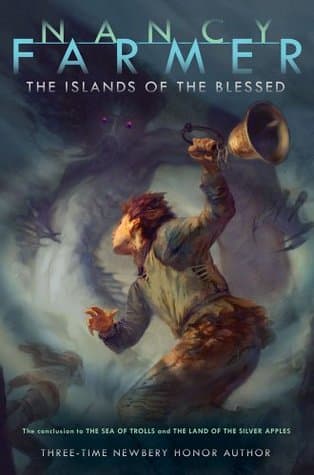
Nancy Farmer (2009)
Genre
Fantasy / Children's / Historical Fiction / Young Adult
Reading Time
10-12 hours
Key Themes
See below
Sign in to track this book
After a devastating tornado and a draugr's appearance, a young berserker, a bard, and a boy travel to the fin folk's realm to atone for a death, battling mythical creatures and their own beliefs in a world where Norse, Pagan, and Christian lore intertwine.
The story opens with a catastrophic tornado, which the young berserker Thorgil believes is Odin on a Wild Hunt, destroying the fields of Jack's remote English village. The destruction means a harsh winter and famine. Amidst the chaos, a terrifying draugr—an undead creature—emerges from the forest, preying on the villagers' livestock and causing fear. Jack, a resourceful and somewhat skeptical boy, sees the creature's malice firsthand. The villagers are desperate, their traditional remedies proving useless against the supernatural threat, setting a grim tone for the challenges ahead and highlighting their isolated community's vulnerability.
Father Severus, the village priest, tries to exorcise the draugr using Christian rites, but the creature is too powerful and kills him. His death leaves the village without spiritual guidance and increases their despair. Soon after, a mysterious Bard arrives, a man of great knowledge and a powerful storyteller. He reveals that Father Severus's death was not just an accident but a result of a broken oath and a life taken unjustly in the past. The Bard explains that the draugr is a manifestation of this past wrong, specifically tied to the priest's actions against the fin folk, a mythical race.
The Bard tells Jack and Thorgil that to appease the draugr and prevent further suffering, they must travel to Notland, the fin folk's realm, to seek atonement for Father Severus's past wrongs. This journey is not just physical but a spiritual quest to correct a serious wrong. Jack, initially reluctant and practical, feels he must go, driven by a sense of responsibility for his village and the lingering threat. Thorgil, eager for adventure and a chance to prove her warrior skills, readily agrees. Their destination is shrouded in mystery and danger, known only through ancient lore.
Their journey begins with a dangerous sea voyage. The Bard, knowing ancient navigation and the sea, guides them. During their travels, they encounter merrows, beautiful yet dangerous siren-like creatures who try to lure them to their deaths. The merrows' songs are enchanting, playing on the travelers' deepest desires and fears. Jack's practicality and the Bard's wisdom help them resist the allure, while Thorgil's berserker instincts provide a fierce defense. This encounter tests their resolve and highlights the supernatural dangers in the world beyond their village.
After enduring the sea's dangers, the trio finally reaches Notland, a land unlike any they have seen. It is a place of ethereal beauty, with strange plants and animals, and an atmosphere filled with ancient magic. Here, they encounter the fin folk, sea-dwelling beings who can shift between human and seal forms. The fin folk are initially wary of the human intruders, especially given Father Severus's past betrayal. The Bard acts as their envoy, trying to bridge the gap between their worlds and explain their quest's purpose, emphasizing the need for reconciliation.
The fin folk, led by their elders, subject Jack, Thorgil, and the Bard to a trial to determine their intentions' sincerity. During this trial, the full, tragic story of Father Severus's broken oath is revealed. It is shown that in his youth, Father Severus had fallen in love with a fin folk woman, made a promise to her, and then cruelly abandoned her and their child for his monastic life, leading to her death and the child's suffering. This betrayal is the root cause of the draugr's manifestation, a spirit of vengeance tied to the wronged fin folk mother.
As the trial unfolds, Jack, initially a rational and somewhat detached observer, begins to feel deep empathy for the fin folk. He witnesses their pain and the injustice they have suffered, understanding that the draugr is not just a monster but a symbol of unresolved grief and anger. He realizes that true atonement requires more than a ritual; it demands genuine understanding and compassion. Jack's growing empathy allows him to connect with the fin folk on a deeper level, persuading them of his sincere desire for peace and reconciliation, and solidifying his role as a mediator.
Throughout the journey, Thorgil struggles with her berserker nature. She is used to solving problems with strength and aggression, but in Notland, these traits are often unhelpful. She faces moments where her impulsive desire for battle clashes with the need for diplomacy and understanding. Seeing the fin folk's sorrow and Jack's empathetic approach, Thorgil slowly begins to temper her warrior instincts. She learns that true strength is not just in fighting, but also in compassion and the ability to connect with others, marking a significant step in her personal growth and understanding of the world.
With the understanding gained and trust established, the trio, guided by the Bard, works with the fin folk to perform an act of atonement. This ritual is symbolic, aiming to bring peace to the spirit of the wronged fin folk mother and her child. It involves a heartfelt acknowledgment of the injustice, a plea for forgiveness, and a promise of respect for the fin folk's ways. This act is not about punishment but about healing and reconciliation, a moment that bridges the human and magical worlds and seeks to mend the ancient wound inflicted by Father Severus.
Having completed their quest, Jack, Thorgil, and the Bard return to their village. The changes are subtle but significant. The draugr, its purpose fulfilled and the ancient wrong addressed, leaves the forest, its malevolent presence no longer a threat. The village, though still recovering from the tornado, begins to heal, both physically and spiritually. Jack and Thorgil are changed by their experiences, having gained a deeper understanding of the world's interconnectedness, empathy's power, and justice and forgiveness's complexities. Their journey leaves a lasting mark on their community, fostering new respect for forgotten lore.
The Protagonist
Jack evolves from a skeptical villager to an empathetic mediator, learning to understand and bridge the gap between human and magical worlds.
The Supporting
Thorgil learns to temper her berserker rage with empathy and diplomacy, discovering that true strength encompasses more than just physical prowess.
The Supporting
The Bard acts as a catalyst for others' growth, his arc is more about revealing ancient truths and facilitating atonement than personal transformation.
The Mentioned
His past actions are revealed posthumously, driving the narrative and highlighting the long-reaching consequences of moral failings.
The Antagonist
The draugr's presence is a static force of vengeance that is eventually appeased through the protagonists' acts of atonement.
The Supporting
Their collective arc involves moving from suspicion and anger towards humans to a degree of reconciliation and understanding through the protagonists' efforts.
The Mentioned
They serve as an obstacle and do not have a personal arc, rather a function within the plot.
The central theme is about atoning for past wrongs and the possibility of forgiveness. Father Severus's broken oath creates a draugr, a manifestation of unaddressed pain. Jack, Thorgil, and the Bard undertake a quest not for vengeance, but for reconciliation. The story shows that true atonement requires understanding, empathy, and a willingness to confront difficult truths, as seen in Jack's growing compassion for the fin folk and the ritualistic act of seeking peace for the wronged spirit.
““Some wounds run so deep that only the sea can wash them clean, and only time can heal them. But the first step is always to acknowledge the wound.””
The novel weaves together Christian, Pagan, and Norse traditions. The villagers initially rely on Christian rites against the draugr, while Thorgil interprets events through Norse mythology (Odin's Wild Hunt). The Bard, however, knows truths that connect these systems. The fin folk represent an ancient, nature-based spirituality. Resolving the conflict requires acknowledging and respecting all traditions' lore, suggesting a universal spirituality that includes diverse beliefs, rather than one superseding another.
““There are many names for the wind, and many stories about its coming. But it is always the same wind.””
Empathy is essential for resolving the central conflict. Initially, the draugr is seen as a monstrous threat, but as Jack and his companions learn Father Severus's story and the fin folk's, they begin to understand the creature's origins in suffering. Jack's ability to empathize with the fin folk's pain and sense of betrayal allows him to bridge the gap between their worlds. This theme highlights that true justice and peace come not from force or rigid judgment, but from the capacity to understand and share others' feelings, even those who seem alien.
““To understand a monster, one must first understand the pain that created it.””
Father Severus's broken oath to the fin folk woman drives the entire plot. His betrayal, from choosing his religious calling, causes suffering and a vengeful spirit that haunts his former village. This theme underscores promises' gravity and betrayal's far-reaching, unforeseen consequences. It suggests that actions, especially those involving deep trust, have ripple effects that can span generations and even cross into the spiritual realm, demanding acknowledgment and resolution.
““An oath broken echoes through the world, and sometimes, the world echoes back with sorrow.””
Both Jack and Thorgil grow significantly during their quest. Jack, initially a practical boy, develops deep empathy and moral courage, learning to navigate complex spiritual landscapes. Thorgil, the impulsive berserker, learns to temper her aggression with understanding and diplomacy, discovering that true strength is beyond physical prowess. Their physical journey to Notland is mirrored by an internal journey of self-discovery, where they confront their limitations and expand their understanding of the world and their place within it.
““Sometimes, the longest journey is the one inside your own heart.””
A physical manifestation of unresolved spiritual conflict and vengeance.
The draugr serves as the primary antagonist and a potent symbol. It is not merely a monster to be defeated by force, but a manifestation of Father Severus's broken oath and the fin folk woman's unaddressed suffering. Its presence drives the plot, forcing the protagonists to embark on a quest for atonement rather than simple combat. It functions as a constant reminder of the consequences of past actions and the need for spiritual and emotional resolution.
The wise mentor figure who provides crucial exposition and guidance.
The Bard acts as the archetypal wise old man or mentor figure. He possesses ancient knowledge, understands the true nature of the draugr, and guides Jack and Thorgil on their perilous journey. He provides exposition through storytelling, revealing the historical context and spiritual truths necessary for the protagonists to understand their mission. He is the bridge between the mundane world and the magical, spiritual realms, ensuring the quest stays on its path towards atonement rather than mere vengeance.
A structured journey undertaken to achieve a specific, usually redemptive, goal.
The entire narrative is framed as a quest: a journey to Notland to atone for Father Severus's sin. This device provides a clear narrative structure, allowing for episodic encounters (merrows, fin folk trials) that test the characters and reveal more about the world. The quest is not just physical but also spiritual, demanding internal growth and moral development from the protagonists. It ensures a clear objective and a sense of progression towards a resolution, which is the appeasement of the draugr and healing of the village.
The integration of diverse mythologies to create a rich, complex world.
The story expertly blends elements from Christian, Norse, and Celtic (fin folk) mythologies. This device enriches the world-building, creating a unique setting where different belief systems coexist and sometimes clash. It allows for a broader exploration of spiritual truths and the universal themes of good, evil, justice, and atonement. The success of the quest often relies on understanding and respecting the lore from each tradition, highlighting the interconnectedness of human belief and the magical world.
A past transgression that serves as the inciting incident and central conflict.
Father Severus's broken oath to the fin folk woman is the foundational plot device that sets everything in motion. It is the original sin that creates the draugr and necessitates the quest for atonement. This device provides a clear cause-and-effect relationship, demonstrating how past actions, even those long forgotten by some, can have profound and lasting consequences. It underscores the theme of responsibility and the need to address historical injustices.
“The gods watch over us, even when we do not know it.”
— Early in the journey, reflecting on divine protection.
“There is a difference between being brave and being foolish.”
— Chiron advising a young hero about facing danger.
“Sometimes the greatest treasures are not gold or jewels, but knowledge and kindness.”
— A lesson learned after a difficult encounter.
“Fear can be a friend, if it teaches you caution.”
— During a perilous journey through unknown lands.
“The past is a story we tell ourselves, but the future is a story we write.”
— A philosophical reflection on agency and destiny.
“Even the mightiest heroes need help sometimes.”
— When a proud character finally accepts assistance.
“It is not the size of the monster that matters, but the size of the heart that faces it.”
— Before a confrontation with a mythical beast.
“A true leader does not command respect, but earns it.”
— Observing the dynamics within a group of heroes.
“The sea holds many secrets, and not all of them are meant for mortal ears.”
— Exploring the mysteries of the ocean and its inhabitants.
“Every journey changes you, whether you wish it or not.”
— Reflecting on personal growth throughout the adventure.
“Sometimes the greatest battles are fought within oneself.”
— A character struggling with internal conflict and doubt.
“The world is full of wonders, if only you open your eyes to see them.”
— Discovering a beautiful and unexpected new land.
“Loyalty is a bond stronger than any chain.”
— Witnessing an act of unwavering faithfulness between companions.
“Even in the darkest of times, hope can be a beacon.”
— Finding a glimmer of optimism amidst despair.
Ready to see how well you understood this book? Take our interactive quiz with 10 questions.

Biography coming soon.







