“The world is ending, but we are not.”
— Leilani reflects on survival amidst global catastrophe.

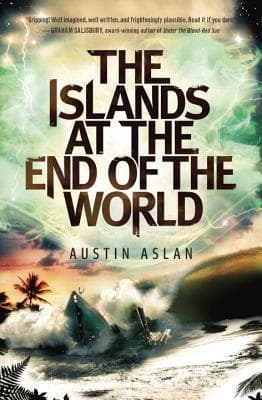
Austin Aslan (2014)
Genre
Fantasy / Science Fiction / Young Adult
Reading Time
450 min
Key Themes
See below
Sign in to track this book
After a global blackout leaves Hawaii without power, an epileptic teenager with a mixed heritage uses her unique connection to the islands and her perceived 'weakness' to journey home and help save her changing world.
Sixteen-year-old Leilani, who has both Hawaiian and white heritage, lives in Hilo on the Big Island of Hawaii with her family. She and her father, Kumu, a Hawaiian history professor, go to Oahu for her epilepsy medication check-up with Dr. Chin. While Lei is at her appointment, going through tests, Kumu attends a conference. The day seems normal, but news reports mention strange atmospheric events. Lei feels a connection to the land and ocean, a sensitivity that often increases before her seizures. She tries to ignore it. This trip is about to change completely due to an event beyond their understanding.
As Leilani and Kumu prepare to leave Oahu, a large electromagnetic pulse (EMP) strikes. All technology, from phones and cars to power grids and planes, stops working instantly. The modern world halts. People across the islands panic as they realize they are cut off from the outside world and each other. Lei and Kumu see the chaos in Honolulu. With no communication or transportation, and no way to know about their family on the Big Island, their goal shifts from a medical check-up to a desperate journey for survival and reunion. The islands return to a pre-technological state.
Right after the blackout, Leilani and Kumu struggle to find food, water, and shelter in Honolulu, which quickly deteriorates. They see social order break down, with looting and desperation common. Kumu's knowledge of Hawaiian history and traditional survival skills becomes very useful. Lei's epilepsy, usually a weakness, sometimes gives her unusual perceptions of the environment, a heightened sense of the changing world. They meet other survivors, some helpful, some dangerous. Their main goal becomes clear: they must find a way back to Hilo to check on Lei's mother, older sister, and younger brother. The size of the disaster and the islands' isolation become clear.
Knowing modern transportation is gone, Kumu decides their best chance to reach the Big Island is by sea. They join a small, varied group of survivors, including a skilled fisherman named Uncle Kimo and a young woman named Malia, who also want to return to their home islands. Together, they get a traditional Hawaiian outrigger canoe, a wa'a, which Kumu helps prepare and navigate using his historical knowledge. This starts their difficult journey between islands. The group faces challenges like learning to work together, navigating without modern tools, and dealing with the weather, all while the world's fate remains unknown.
The trip from Oahu to Maui is dangerous. The group encounters severe storms, testing their sailing skills and the canoe's strength. Supplies run low, and the stress of their situation affects everyone. Lei's epilepsy is both a burden and a strange help; sometimes, her pre-seizure auras seem to match weather changes or an increased sensitivity to ocean currents. They learn to use old navigation methods, like stars and ocean swells, guided by Kumu's knowledge and Uncle Kimo's experience. The journey is slow and tiring, showing the deep isolation and the return to a simpler life where survival is a daily struggle.
On Maui, the group finds a society dealing with the same breakdown they saw on Oahu. Resources are scarce, and communities are either working together or falling into chaos. They learn the global blackout is widespread, and there is no quick hope for rescue or technology returning. Lei and Kumu better understand the challenges facing the islands: food shortages, no medical supplies, and local groups trying to control what little remains. This stop on Maui gives a harsh look at what they might expect on the Big Island and makes their mission to reunite with family and help rebuild even more urgent.
As the journey continues, Leilani's epileptic episodes become stronger and take on a new, mystical quality. Instead of just confusing seizures, she has vivid visions and a strong connection to the 'aina (land) and kai (sea). These are not just hallucinations; they seem to give information or a deeper understanding of the natural world and the unfolding disaster. She starts to feel the changes in the islands on a basic level, as if the land itself is talking to her. Kumu, knowing the sacred nature of such experiences in Hawaiian culture, begins to see Lei's condition not just as an illness, but as a possible gift, a link to old wisdom that might be needed to understand or even solve the crisis.
The group starts the last, most dangerous part of their journey from Maui to the Big Island. As they get closer to Hilo, the effects of the global disruption become more noticeable. Lei's visions become stronger, and she starts to feel a strange, magnetic disturbance from the Big Island, especially from the volcanoes. The natural environment itself seems to be reacting to the global event in unusual ways. They meet more desperate and sometimes hostile groups of survivors, making their approach to Hilo risky. The true nature of the EMP, and its deeper link to the islands and Lei's own body, begins to become clearer, suggesting a cause more complex than a simple technology failure.
After a difficult and dangerous journey, Leilani and Kumu finally reach Hilo on the Big Island. The town, like others, is struggling, but there is a fragile sense of community trying to rebuild. Their main concern is finding Lei's mother, older sister, and younger brother. The reunion is uncertain, and the fear of what they might find is huge. They walk through the changed streets, seeing how people have adapted to life without technology, using old ways and resourcefulness. The landscape itself seems subtly changed, as if the 'aina is adjusting. Lei's visions become more frequent and urgent, guiding her towards a specific, mysterious place on the island, suggesting her role in the crisis is far from over.
Lei's visions and heightened senses direct her towards the volcanoes, specifically Mauna Loa. She starts to understand that her epilepsy is not just a medical condition but a unique sensitivity to the planet's electromagnetic field, which the global event has disrupted. Her seizures are a response to this disruption, and her visions are a way for the 'aina to communicate its distress. Kumu supports her, understanding the old Hawaiian belief in 'aumakua and the spiritual connection to the land. Lei realizes she has an important role in understanding and possibly lessening the crisis, a role tied to her heritage and her unique body, linking her deeply to the fate of Hawaii and perhaps the world.
The Protagonist
Lei transforms from a self-conscious epileptic into a resilient young woman who embraces her unique connection to the land as a source of strength and guidance.
The Supporting
Kumu transitions from an academic to a practical leader, applying his historical knowledge to real-world survival and guiding his daughter through her extraordinary transformation.
The Supporting
Uncle Kimo serves as a steady, experienced guide, demonstrating the enduring value of traditional skills in a collapsed world.
The Supporting
Malia adapts from a typical modern young woman to a resourceful survivor, finding strength in collective effort.
The Supporting
Her unseen presence acts as a powerful motivator for the protagonists, symbolizing the enduring importance of family.
The Mentioned
Her character serves as part of the emotional stakes and motivation for Lei and Kumu's journey.
The Mentioned
His character serves as part of the emotional stakes and motivation for Lei and Kumu's journey.
The Mentioned
Serves as a symbol of the modern world's collapse and the obsolescence of technology in the face of disaster.
Leilani, as an epileptic with Hawaiian and white heritage, struggles with her identity and feels like an outsider. The crisis makes her face and accept her Hawaiian heritage, especially her spiritual connection to the 'aina. The journey home becomes a journey of self-discovery, where her unique sensitivities, first seen as a weakness, become her greatest strength and define her place within her culture and the natural world. The novel explores what it means to belong to a place and a people when outside markers of identity are gone.
“"The islands were changing. And so was she. The two were bound together, always had been, always would be."”
The novel clearly contrasts dependence on modern technology with the wisdom of traditional Hawaiian practices. The global EMP makes all modern conveniences useless, forcing survivors to return to old methods of navigation, farming, and community building. Kumu's knowledge of Hawaiian history becomes vital for practical survival, and Uncle Kimo's experience is essential. This theme shows the resilience of local knowledge systems when facing a global disaster, suggesting that true survival comes from living in harmony with nature rather than relying on technology.
“"The haole ways were gone now, swept away like so much sand. But the old ways, the true ways, they still remained."”
A main theme is the deep, spiritual connection between Hawaiians and their land ('aina) and sea (kai). Leilani's epilepsy is shown not just as a medical condition but as a heightened sensitivity to the earth's electromagnetic field and a way for the 'aina to communicate. The global disaster is linked to a disruption in this natural balance. The story emphasizes that humans are not separate from nature but are part of it, and understanding this connection is needed for survival and healing. The islands are presented as living things that react to human actions and global events.
“"The land was alive. And it was speaking to her. Through her."”
The story is about a father and daughter's desperate journey to reunite with their family. The importance of 'ohana (family) and community ('ohana nui) is central. When society breaks down, survival depends on cooperation, shared resources, and mutual support. The small group formed by Lei, Kumu, Uncle Kimo, and Malia shows how different people must work together and use each other's strengths to overcome difficulties. The ultimate goal is not just individual survival but keeping family together and rebuilding community.
“"We are 'ohana. We take care of each other. Always."”
Leilani's epilepsy is first shown as a source of shame and vulnerability. She tries to hide it and fears its effects. However, as the world changes, her 'disability' becomes a unique ability. Her seizures, once debilitating, become a way to receive visions and sense important environmental changes. This theme questions common ideas about disability, suggesting that what is seen as a weakness in one situation can be a great strength or even a gift in another, especially when viewed through a different cultural perspective.
“"Her seizures were not a curse. They were a key. A way to see what others could not."”
The catalyst for the global disaster, stripping the world of technology.
The EMP is the central inciting incident of the novel. It instantaneously renders all modern electronic technology inoperable, plunging the Hawaiian islands and the world into a pre-industrial state. This device serves as a powerful reset button, forcing characters to abandon their reliance on conveniences and revert to traditional survival methods. It creates the core conflict and sets the stage for the themes of traditional knowledge, resilience, and humanity's vulnerability to technological dependence. The EMP's mysterious origin also hints at a deeper, possibly natural, cause linked to the planet's own energetic shifts.
A narrative device that provides foreshadowing and a deeper connection to the 'aina.
Leilani's epileptic episodes, particularly her pre-seizure auras and the visions experienced during and after them, serve as a crucial plot device. Initially perceived as a medical condition, these visions evolve into a form of extrasensory perception, allowing Lei to sense changes in the environment, foreshadow events, and ultimately connect with the 'aina on a profound, almost spiritual level. They guide her decisions, offer clues about the nature of the global phenomenon, and become integral to her developing role as a potential solution to the crisis, blurring the lines between science and mysticism.
A symbol and practical tool for inter-island travel and cultural resurgence.
The wa'a, or traditional Hawaiian outrigger canoe, is both a critical plot device for transportation and a powerful symbol. With modern transportation defunct, the wa'a becomes the only viable means for Lei and Kumu to traverse the islands. Its construction, maintenance, and navigation require traditional skills and knowledge, highlighting the importance of Hawaiian cultural heritage. The canoe represents resilience, community effort, and the enduring spirit of Hawaiian seafaring. It forces the characters to rely on ancient wisdom and their connection to the ocean, embodying the return to 'old ways' for survival.
A symbolic and literal destination, representing the heart of the 'aina's power.
Mauna Loa, the active volcano on the Big Island, functions as a significant symbolic and literal destination. It is the place Lei's visions increasingly direct her towards, suggesting it holds a key to understanding or even influencing the global EMP event. As a sacred and powerful natural landmark, it embodies the raw, untamed power of the 'aina and its deep connection to the planet's energetic forces. The journey towards Mauna Loa represents Lei's journey towards embracing her full identity and understanding her unique role in the unfolding crisis, linking her personal narrative to the fate of the islands.
“The world is ending, but we are not.”
— Leilani reflects on survival amidst global catastrophe.
“Sometimes the only way to find your way is to get lost first.”
— Leilani navigating the chaotic islands.
“We are all islands, but the ocean connects us.”
— A theme about human connection in isolation.
“The stars have fallen, but the sky is still there.”
— Observations after a celestial event changes the world.
“Fear is a compass that points to what you need to face.”
— Leilani confronting dangers in the new world.
“In the silence, you can hear the truth of things.”
— Moments of quiet reflection amidst chaos.
“The old maps are useless now; we have to draw new ones.”
— Adapting to a radically altered world.
“Home isn't a place; it's the people who remember you.”
— Leilani thinking about family and belonging.
“The end of the world is just the beginning of another story.”
— A philosophical take on the apocalypse.
“Strength isn't about not breaking; it's about putting yourself back together.”
— Leilani's growth through adversity.
“The islands are our prison, but they are also our sanctuary.”
— The dual nature of the isolated setting.
“We are the ghosts of the old world, haunting the new one.”
— Reflecting on humanity's place in the changed environment.
“Every storm passes, but it leaves its mark on the land.”
— Metaphor for enduring through hardships.
Ready to see how well you understood this book? Take our interactive quiz with 10 questions.

Austin Aslan is the author of the acclaimed young adult novel, The Islands at the End of the World. This fantasy novel, praised for its intricate world-building and compelling characters, explores themes of environmentalism and adventure. Aslan's writing often delves into unique magical systems and the challenges faced by young protagonists in extraordinary circumstances.







