“We are haenyeo. We are the women of the sea. We are the ones who dive.”
— Mi-ja reflects on the identity and pride of the haenyeo divers of Jeju Island.

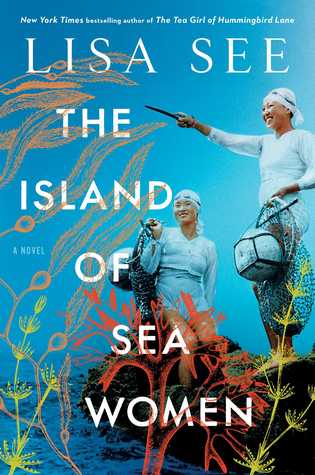
Lisa See (2019)
Genre
Historical Fiction
Reading Time
10-12 hours
Key Themes
See below
Sign in to track this book
On Jeju Island, two lifelong friends in an all-female diving group navigate war, colonialism, and betrayals that threaten to break their bond and their unique matriarchal world.
In 1938, on the remote Korean island of Jeju, Young-sook, born into a respected haenyeo (sea women) family, befriends Mi-ja, an orphaned girl from a lower-class family whose parents died from smallpox. Despite their different social standings, they share a strong bond and a common goal: to become skilled haenyeo. They train under Young-sook's strong mother, a leader of the diving group, learning ancient free-diving methods for seafood. Their childhood happens during Japanese colonial rule, where Korean culture is suppressed and resources are taken. Their friendship offers a safe place from the outside world as they dive in Jeju's dangerous waters, gathering abalone, octopus, and sea urchins.
As they grow up, both girls experience first love. Young-sook falls for a kind, educated man named Dong-soo. Mi-ja becomes involved with Kenji, a Japanese man who works for the Japanese colonial government. Kenji's family is rich, and his connections offer Mi-ja a comfortable life away from the hard haenyeo work. Young-sook's mother strongly disapproves of Mi-ja's choice, but Mi-ja marries Kenji, cutting her direct ties to the haenyeo community and becoming a collaborator's wife. This decision creates the first big split in their friendship. Young-sook and her family see Mi-ja's marriage as a betrayal of their Korean heritage and the haenyeo way of life, especially as Japanese control on the island gets stronger.
World War II brings hardship to Jeju. The Japanese military occupies the island, building bunkers and forcing both men and women into labor. The haenyeo must dive for Japanese military supplies, and their catches are taken. Many young Korean women, including some from Jeju, are taken and forced into sexual slavery as 'comfort women' for Japanese soldiers. Young-sook and her fellow haenyeo live in constant fear, seeing their community starve and suffer brutal treatment. Mi-ja, protected by her husband's position, lives a different, though not entirely easy, life, further widening the gap between the two friends.
After the Japanese surrender, Korea is freed, bringing a short time of hope and celebration to Jeju. Young-sook marries Dong-soo, and they start a family, looking forward to an independent Korea. However, the joy does not last. The island becomes a center for political unrest, with growing tensions between communist supporters and the U.S.-backed South Korean government. Mi-ja, now isolated for her past connections, struggles to find her place in the new society. Despite lingering resentment, a fragile link remains between Mi-ja and Young-sook, though their lives differ greatly because of their war experiences and the political situation.
Political tensions lead to the Jeju Uprising (known as the 4.3 Incident) in 1948. What starts as a local rebellion against the oppressive South Korean government turns into a brutal anti-communist purge. Villages are destroyed, and many civilians are killed by government forces, often without distinction. Young-sook and her family see terrible acts. Her husband, Dong-soo, is suspected of communist sympathies and killed, leaving Young-sook a widow with young children. Mi-ja's family, because of their Japanese connections, is also targeted, and she loses her husband and children in the violence. The island falls into chaos, and the trauma of this time leaves lasting scars on the survivors, including Young-sook and Mi-ja, though they experience the tragedy from different sides.
The Korean War (1950-1953) follows the Jeju Uprising, bringing more destruction and poverty to the island. With many men dead or imprisoned, the haenyeo become the main providers for their families, facing great hardship and danger in the sea. Young-sook, now a single mother, dives tirelessly to feed her children, carrying the grief of her husband's death. Mi-ja, having lost her whole family, is left alone and poor, struggling to survive in a community that still views her with suspicion. The war confirms the haenyeo's important role but also deepens the emotional wounds of the islanders, making reconciliation between former friends even harder.
Years later, after the wars, Mi-ja, with nowhere else to go and needing to earn a living, returns to the haenyeo community. She seeks to rejoin the diving group. Young-sook, now a respected leader like her mother, reluctantly allows Mi-ja to dive with them. Young-sook recognizes Mi-ja's skill but cannot fully forgive her past connections and the perceived betrayal. The two women work side-by-side in the water, their movements in sync from years of practice, yet a wall of unspoken pain and resentment divides them on land. Young-sook's bitterness about Mi-ja's perceived comfort during the Japanese occupation and the loss of her own family during the uprising prevents their earlier friendship from truly restarting.
Decades pass, and the haenyeo continue their dangerous work, adapting to modern changes like wetsuits and tourism. Young-sook, now an elder haenyeo, learns through conversations and flashbacks that Mi-ja's life during and after the wars was not comfortable. She discovers that Mi-ja's Japanese husband, Kenji, was killed during the 4.3 Incident, and her children were murdered by Korean villagers seeking revenge against perceived collaborators. Mi-ja, consumed by grief and unable to speak of her pain, had suffered in silence. This led Young-sook to misunderstand her past and hold onto resentment for decades, unaware of Mi-ja's full losses.
With the full, devastating truth of Mi-ja's suffering, Young-sook feels remorse and regret for her lifelong bitterness. She realizes that both of them were victims of larger historical forces, and that Mi-ja's choices, while seeming like a betrayal at the time, were also made for survival and a desperate attempt to protect her family. Young-sook finds Mi-ja, now an old woman, and apologizes, expressing her deep regret for not understanding Mi-ja's pain sooner. This act of humility and empathy finally breaks down the wall between them, allowing for a fragile, but deep, reconciliation after a lifetime of misunderstanding and unspoken grief. They acknowledge their shared trauma and their bond's lasting power.
In their old age, Young-sook and Mi-ja find comfort in their renewed friendship, sharing memories and recognizing the deep love that was always at the heart of their relationship, despite the historical tragedies that tried to separate them. The novel ends with Young-sook thinking about the haenyeo's strength, who have survived centuries of hardship, embodying the spirit of Jeju Island. She recognizes that the sea, which both supported and endangered them, also saw their unbreakable bond. The tradition of the sea women continues, passed down through generations, showing the power of women, community, and the human spirit to find connection even amidst great loss.
The Protagonist
From a loyal haenyeo apprentice, she becomes a grieving widow and a rigid leader, eventually finding empathy and forgiveness for her lifelong friend.
The Protagonist/Supporting
She seeks a different life, endures profound loss and ostracization, and eventually finds a measure of peace through reconciliation.
The Supporting
She remains a steadfast figure, passing on her knowledge and strength to the next generation.
The Supporting
His life is tragically cut short by political violence, leaving a lasting impact on Young-sook.
The Supporting
His marriage to Mi-ja offers her a different path but ultimately leads to tragedy.
The Supporting
She embraces her heritage and continues the haenyeo tradition, symbolizing the future.
The Supporting
She remains a consistent and supportive figure within the haenyeo community.
The Mentioned
Her legacy and stories contribute to Young-sook's understanding of her heritage.
The Supporting
He provides consistent, quiet support to the haenyeo community.
The novel shows the strength of the haenyeo, the sea women of Jeju Island. In a society where women are the main economic providers, they face physical dangers in the sea and historical trauma on land. Young-sook and her mother, as leaders, show this strength. They navigate Japanese colonialism, war, and political massacres while supporting their families and communities. Their ability to survive through hardship, often without men, highlights a matriarchal structure where women's physical and emotional strength is most important.
“We were women, but we were also haenyeo. We were the providers. We were the ones who went to sea, who faced the dangers of the ocean, who fed our families.”
At its heart, the novel explores the complex bond between Young-sook and Mi-ja. Their lives are shaped by historical events. Their friendship, formed in childhood and tested by war, political division, and personal tragedy, shows how deep connections can break from misunderstanding and trauma. Despite decades of resentment and unspoken grief, their eventual reconciliation shows the human need for connection and forgiveness. It suggests that even deep wounds can heal when truth and empathy are present.
“I had carried my anger for so long that it had become a part of me, a second skin. But now, seeing her, truly seeing her, I felt it begin to peel away.”
The novel shows how major historical events—Japanese colonialism, World War II, the Jeju Uprising (4.3 Incident), and the Korean War—impact ordinary people. The political unrest and violence on Jeju Island lead to suffering, loss, and the destruction of families and communities. Both Young-sook and Mi-ja are victims of these conflicts, losing loved ones and experiencing trauma. The book emphasizes how these big events create personal scars, shape choices, and cause long-lasting resentment and misunderstanding between people.
“The past, I had learned, was not a story that could be left behind. It clung to you, to your family, to your village, like the scent of the sea after a storm.”
Identity is a central theme, especially the tension between individual choices and community expectations. Mi-ja's decision to marry a Japanese man is seen as a betrayal of her Korean identity and the haenyeo community, leading to her being excluded. This perceived betrayal fuels Young-sook's resentment for decades. The story looks at the complexities of these choices and their results, leading to an exploration of forgiveness. Young-sook's journey to understand Mi-ja's suffering and to offer forgiveness shows the power of empathy and the healing from letting go of old grievances.
“How could I have judged her so harshly, when her own heart had been ripped out, just like mine?”
The novel explores how the trauma of historical events, especially the Jeju Uprising, passes down through generations, often unspoken but deeply felt. Young-sook carries the weight of her husband's death and the island's devastation throughout her life. At the same time, the strength of the haenyeo tradition also passes down, from Young-sook's mother to Young-sook, and then to her daughter, Hana. This dual inheritance of pain and strength shows the lasting impact of the past and the continuous cycle of survival and adaptation within the haenyeo culture.
“We were all children of the sea, and the sea never forgets. It holds our memories, our joys, our sorrows, and our strength.”
Narrative shifts between Young-sook's present and her past memories.
The novel employs a dual timeline structure. The primary narrative is framed by an elderly Young-sook reflecting on her life in the present day (around 2008). This present-day perspective is interspersed with extensive flashbacks that delve into her youth and the traumatic historical events from the 1930s through the late 20th century. This allows the reader to experience the unfolding events with the wisdom and hindsight of the older Young-sook, providing context and emotional depth to her long-held grievances and eventual path to reconciliation. The frame story emphasizes the lasting impact of the past on the present.
The story is told exclusively through Young-sook's eyes.
The entire novel is narrated from Young-sook's first-person point of view. This narrative choice immerses the reader directly into her experiences, emotions, and biases. It allows for a deep understanding of her perspective on the historical events, her motivations, and her long-standing resentment towards Mi-ja. Crucially, it also highlights the limitations of her perspective, as the reader only fully understands Mi-ja's suffering when Young-sook herself comes to that realization, making the eventual reconciliation more impactful and earned.
The ocean represents life, danger, sustenance, and memory.
The sea is a potent and multifaceted symbol throughout the novel. It is the source of life and livelihood for the haenyeo, representing their independence, strength, and connection to their heritage. However, it also represents danger, hardship, and loss, with divers often facing injury or death. Furthermore, the sea acts as a silent witness to the island's history, holding the memories of joy, sorrow, and survival. It is the constant backdrop against which the women's lives unfold, reflecting their resilience and the cyclical nature of their existence.
The diving collective mirrors the larger society and its struggles.
The all-female haenyeo diving collective serves as a powerful microcosm of Jeju society and Korean culture. It reflects traditional gender roles, community dynamics, economic struggles, and the impact of external political forces. The collective's internal conflicts, loyalties, and ostracizations mirror the larger societal divisions and historical traumas experienced by the islanders. The strength, solidarity, and eventual reconciliation within the collective, particularly between Young-sook and Mi-ja, reflect the broader themes of resilience and healing within the community.
Young-sook's initial narration is shaped by her biases and lack of full information.
While Young-sook is the protagonist and narrator, her initial perspective on Mi-ja is shaped by her personal grief, perceived betrayal, and an incomplete understanding of Mi-ja's experiences. For much of the novel, her narration of their estrangement is colored by her long-held resentment. This makes her an 'initially unreliable' narrator regarding Mi-ja's motivations and suffering. The gradual revelation of Mi-ja's tragic losses, through flashbacks and later conversations, corrects Young-sook's (and thus the reader's) understanding, leading to a more complete and empathetic view of the past.
“We are haenyeo. We are the women of the sea. We are the ones who dive.”
— Mi-ja reflects on the identity and pride of the haenyeo divers of Jeju Island.
“The sea is like a mother. It gives, but it also takes away.”
— Young-sook contemplates the dual nature of the ocean that sustains and endangers the haenyeo.
“A woman's heart is a deep ocean of secrets.”
— Mi-ja speaks about the hidden emotions and burdens carried by the haenyeo.
“We may be poor, but we are free. We answer to no one but the sea.”
— Young-sook asserts the independence and resilience of the haenyeo community.
“In the water, we are all equal. There is no rich or poor, only skill and breath.”
— Describing the egalitarian nature of diving, where social status fades underwater.
“The past is a ghost that haunts us, but we must learn to live with it.”
— Young-sook reflects on the lingering trauma from historical events like the Jeju Uprising.
“A true friend is like a sister of the sea—always there, even in the deepest waters.”
— Mi-ja emphasizes the bond of friendship among haenyeo, tested by life's challenges.
“We do not mourn the dead; we celebrate their lives and the sea that claimed them.”
— A haenyeo elder explains the community's acceptance of death as part of their way of life.
“Every dive is a prayer, every breath a promise to return.”
— Young-sook describes the spiritual and perilous act of diving for sustenance.
“The island remembers what the world forgets.”
— Narrator reflects on Jeju's history of conflict and the haenyeo's enduring legacy.
“To be a haenyeo is to know both the bounty and the brutality of nature.”
— Mi-ja explains the harsh realities and rewards of their diving profession.
“In the end, it is not the sea that divides us, but the secrets we keep.”
— Young-sook realizes how hidden truths can fracture even the closest relationships.
“We are the keepers of stories, the weavers of history.”
— A haenyeo speaks about their role in preserving oral traditions and community history.
“The ocean does not care for our sorrows; it only asks for our strength.”
— Young-sook acknowledges the demanding and unforgiving nature of their work.
Ready to see how well you understood this book? Take our interactive quiz with 10 questions.

Lisa See is an American writer and novelist. Her books include On Gold Mountain: The One-Hundred-Year Odyssey of My Chinese-American Family (1995), a detailed account of See's family history, and the novels Flower Net (1997), The Interior (1999), Dragon Bones (2003), Snow Flower and the Secret Fan (2005), Peony in Love (2007) and Shanghai Girls (2009), which made it to the 2010 New York Times bestseller list. Both Shanghai Girls and Snow Flower and the Secret Fan received honorable mentions from the Asian/Pacific American Awards for Literature.







