““What is a person, if not the marks they leave behind?””
— Addie reflects on her curse and the inability to leave a lasting impression.

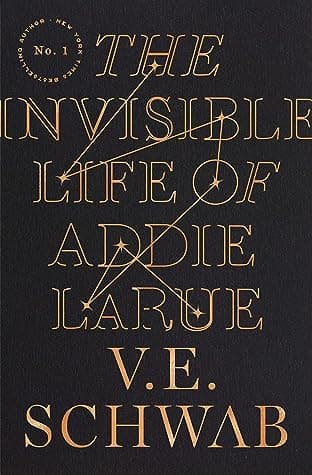
V.E. Schwab (2020)
Genre
Fantasy / Historical Fiction / Young Adult / Romance
Reading Time
9-10 hours
Key Themes
See below
Sign in to track this book
Cursed to be forgotten by everyone she meets, Addie LaRue navigates three centuries of art and history, a ghost in her own life, until a chance encounter in a hidden bookstore finally offers the one thing she’s always longed for: to be remembered.
In 1714, Adeline LaRue, a young woman from the small French village of Villon, faces an arranged marriage she wishes to avoid. Feeling trapped and yearning for a life of freedom and experience beyond her village, Addie flees into the woods on the eve of her wedding. There, in a moment of desperation, after praying to older gods, she encounters a shadowy entity, a 'darkness' she later names Luc. Luc offers her freedom and immortality, but with a terrible price: she will be forgotten by everyone she meets, unable to leave any lasting mark on the world. Exhausted and desperate, Addie accepts the bargain, unaware of the full extent of the curse.
Immediately after making the deal, Addie discovers the nature of her curse. Her parents forget her, her friends forget her, and even her own reflection sometimes seems to waver. She cannot speak her name to anyone without them instantly forgetting it, nor can she write it down. She wanders through France and eventually the world, experiencing history firsthand but always as an unseen observer. She learns to steal for survival, to charm for fleeting moments of attention, and to live with the constant ache of never being remembered. Luc, the dark entity, visits her periodically, tempting her to give up and surrender her soul, but Addie defiantly clings to her life and freedom, finding small ways to leave impressions on the world through art and ideas.
In 2014, nearly 300 years after her bargain, Addie finds herself in a small, independent bookstore in New York City. She attempts her usual routine of 'borrowing' a book, but as she leaves, the shop assistant, Henry Strauss, calls out, 'Excuse me, Addie?' Shocked and disbelieving, Addie returns. Henry not only remembers her name but also seems to genuinely see her. This unprecedented event changes Addie's long-held understanding of her curse. For the first time in centuries, she is remembered, sparking a fragile hope and an overwhelming sense of wonder and fear.
Addie and Henry begin a tentative relationship, navigating the strangeness of their connection. Addie, cautious from centuries of heartbreak, tests Henry's memory repeatedly. Henry, meanwhile, is captivated by Addie's mysterious nature and her vast, unspoken history. As their bond deepens, Addie learns more about Henry's own struggles with depression and his sense of being 'broken.' Eventually, Henry reveals his own desperate bargain made exactly one year prior to meeting Addie: in a moment of despair, he wished to be loved and to be enough for everyone. In return, everyone he meets loves him, but he is unable to feel genuine love himself, living in a constant state of emotional numbness. This explains why he remembers Addie — her unique curse somehow bypasses his own.
As Addie and Henry's relationship grows, Luc, who has been a constant, tormenting presence in Addie's life for centuries, grows increasingly jealous and possessive. He observes their interactions, sometimes appearing to Addie to taunt her or remind her of her impending surrender. Luc sees Henry as a threat to his claim on Addie's soul and a disruption to their centuries-long dance. He begins to subtly manipulate events, trying to isolate Addie and push her back towards him, reminding her that her time is finite and that Henry, like everyone else, will eventually be taken from her.
The story constantly shifts between Addie's past and present. Flashbacks detail Addie's life across centuries: her time in London during the Enlightenment, her travels through Europe during various wars and artistic movements, her brief, fleeting connections with artists and thinkers, and her constant struggle for survival and identity. These historical vignettes show her resilience and her subtle ways of influencing the world. In the present, Addie and Henry grow closer, sharing their deepest fears and secrets. Henry's ability to see and remember Addie allows her to finally share her story, a luxury she has been denied for 300 years, leading to an unprecedented intimacy.
Henry confesses the full truth of his bargain to Addie: he wished to be 'enough' for everyone, to be loved, and in return, he feels nothing. He is constantly adored, but it's a hollow love that leaves him emotionally numb and desperately lonely. He sees himself as a 'black hole' for affection. This revelation deepens Addie's understanding of Henry's own unique curse and why their connection is so strong. They are two damaged souls, each cursed in opposite ways, yet finding comfort and genuine connection in each other. This shared vulnerability strengthens their bond, making their relationship feel more real than anything Addie has experienced in centuries.
As the year of Henry's bargain approaches its end, Addie grapples with the impending loss. She knows Luc will come for Henry's soul, just as he will eventually come for hers. The happiness she has found with Henry is tinged with the bitter knowledge that it is temporary. Luc becomes more insistent, reminding Addie of her original debt and the futility of her resistance. He offers her a way out—to take Henry's place or to simply surrender—but Addie refuses to give up her freedom or sacrifice Henry, even if it means enduring the pain of his inevitable forgetting.
On the anniversary of Henry's bargain, Luc appears to Henry, revealing the true nature of his deal and Addie's. Luc offers Henry a choice: to die as his original bargain dictates, or to live, but at the cost of forgetting Addie and becoming like everyone else, loved but numb. Henry, horrified by the prospect of forgetting Addie and the genuine connection they share, refuses. He chooses to die rather than live a life without the memory of Addie, recognizing that his time with her has been the only true feeling he's experienced in years.
Knowing Luc's possessive nature, Addie makes a desperate, cunning new bargain. She approaches Luc and offers him her soul, not in exchange for death, but for the guarantee that Henry will live and be truly free of his curse, able to feel and love again. Luc, seeing a way to finally claim Addie and keep her for himself, agrees. However, Addie's true intention is not to surrender but to trap Luc. She agrees to stay with him, to be his companion and muse, but only if he never forgets her, essentially making him her captor but also her only permanent witness. This ensures Henry's survival and happiness, while Addie continues her eternal dance with Luc, now with a new, more active role in their dynamic, subtly influencing him and planting seeds of her story.
The Protagonist
Addie transforms from a naive girl seeking freedom to a wise, resilient woman who learns to find agency and connection despite her curse, ultimately making a final, strategic bargain.
The Antagonist/Love Interest
Luc's character remains largely consistent as a powerful, ancient force, but his interactions with Addie evolve from purely transactional to a more complex, possessive companionship.
The Love Interest/Supporting Protagonist
Henry moves from a state of emotional numbness and despair to finding genuine connection and the ability to feel again through his relationship with Addie, ultimately choosing to live a full life.
The Supporting
Estele's arc is brief, serving as a catalyst for Addie's initial desperation and connection to the 'old gods'.
The Supporting
Remy's arc is static, serving as an early example of Addie's struggle to connect and her subtle influence on art.
The Supporting
Beau's arc is static, providing context for Henry's family life and struggles.
The Mentioned
Isabelle's arc is brief, serving to establish the immediate, devastating impact of Addie's curse.
The Mentioned
Pierre's arc is brief, establishing the familial context from which Addie flees.
The novel explores what constitutes identity when one cannot be remembered. Addie constantly grapples with who she is without the external validation of others' memories. She defines herself by her experiences, her resilience, and her subtle acts of rebellion against her curse. Her journey is one of self-discovery, learning to embrace her unique existence and finding ways to leave her mark, even if indirectly. Henry's struggle with identity, feeling like a 'black hole' of emotion, provides a parallel, as both characters strive to understand and accept who they are in the face of their extraordinary circumstances.
“What is a person, if not the marks they leave behind?”
Both Addie and Henry make desperate bargains for freedom and desire, respectively, and both pay a terrible price. Addie's desire for freedom from an arranged marriage and a provincial life leads to eternal solitude. Henry's desire to be loved and 'enough' for others leads to emotional numbness. The novel examines the Faustian nature of these deals, showing how unchecked desires can lead to unforeseen and devastating consequences. It questions whether the freedom or the 'love' gained is truly worth the cost of true connection or genuine feeling, suggesting that some desires are best left unfulfilled if the price is too high.
“She wants to live. She wants to be free. She wants to be more than a wife, more than a mother, more than a village girl. She wants to be Addie.”
Memory is central to the novel. Addie's curse is the inability to be remembered, making every interaction fleeting and every relationship impossible. This forces her to find alternative ways to create a legacy, subtly influencing art, music, and literature through ideas and fleeting inspiration. The book contrasts personal memory (being remembered by loved ones) with collective memory (leaving a mark on history or culture). Henry's ability to remember Addie is revolutionary, giving her a chance to finally share her story and solidify her existence, showing the human need to be seen and remembered.
“A life without a legacy is a life unlived.”
Throughout her centuries of invisibility, Addie finds comfort and a way to leave her mark through art and storytelling. She inspires artists, writers, and musicians, planting ideas and subtle imagery in their minds that persist even when she herself is forgotten. A seven-dotted constellation, a girl with red hair, a certain melancholy in a painting — these become her fragmented legacy. The novel itself is a story about the power of storytelling, as Addie's narrative is finally told, allowing her to exist beyond the confines of her curse. This theme suggests that art and stories are vehicles for immortality, capable of preserving essences and memories across time.
“Stories are a way to preserve one's self. To be remembered. And to forget.”
Despite her curse, Addie yearns for love and connection, making fleeting attempts throughout her life. Her relationship with Henry is the culmination of this desire, as he is the first person to truly remember her and offer genuine intimacy. Their unique curses—Addie's inability to be remembered, Henry's inability to feel love—create a paradox that allows them to truly 'see' each other. The novel explores different facets of love: the desperate, possessive 'love' of Luc, the fleeting human connections Addie experiences, and the deep, transformative love she finds with Henry. It suggests that true connection requires vulnerability and mutual recognition, something Addie and Henry uniquely offer each other.
“To be loved, truly, deeply loved, is to be seen. And to be seen is to be remembered.”
A central plot device where characters trade their souls or aspects of themselves for supernatural gifts.
The entire premise of the novel hinges on two Faustian bargains. Addie trades her soul for freedom and immortality, cursed to be forgotten. Henry trades his ability to feel love for being loved by everyone. These bargains drive the narrative, establishing the core conflicts and the characters' motivations. They highlight the danger of desperate wishes and the unforeseen, often devastating, consequences of supernatural deals. Luc, the dark entity, serves as the embodiment of the tempter in these classic tales, always waiting to collect his due.
The story alternates between Addie's past (18th century to present) and her present-day interactions with Henry.
The novel masterfully employs a dual timeline, constantly shifting between Addie's centuries-long journey through history and her present-day relationship with Henry in New York. This structure allows the reader to understand the profound impact of her curse through historical vignettes, showcasing her resilience and the evolution of her coping mechanisms. It also builds suspense around her past encounters with Luc and provides context for her present-day cautiousness and longing. The two timelines converge and inform each other, enriching both Addie's character development and the unfolding romance with Henry.
A recurring physical mark that serves as Addie's subtle, indirect legacy.
Addie has a distinctive constellation of seven freckles across her nose. This small, unique physical trait becomes a recurring motif and a subtle way for Addie to leave her mark on the world. As she cannot be remembered or directly depicted, these seven freckles appear in paintings, drawings, and sculptures inspired by her fleeting presence. They are a visual testament to her existence, a signature she leaves behind without ever being able to claim it. It symbolizes her persistent desire for a legacy, even an anonymous one, and her subtle influence on art and culture across centuries.
Luc's periodic appearances to Addie, offering release or tempting her to surrender.
Luc's consistent presence throughout Addie's centuries of life is a significant plot device. His periodic appearances are not just antagonistic encounters but also serve as markers of time, reflections of Addie's emotional state, and moments of intense psychological struggle. He consistently tempts her to give up her life and surrender her soul, challenging her resolve. These encounters highlight Addie's fierce independence and her refusal to break, deepening her character and making her eventual, more strategic 'surrender' to him all the more impactful. Their conversations also reveal more about Luc's own complex, possessive nature.
““What is a person, if not the marks they leave behind?””
— Addie reflects on her curse and the inability to leave a lasting impression.
““Three words. A simple phrase. I remember you.””
— Henry first says these words to Addie, breaking her curse's hold on him.
““She has spent three hundred years learning how to be forgotten, and now she must learn how to be remembered.””
— Describing Addie's new challenge after meeting Henry.
““To be remembered is to live forever.””
— A recurring theme, highlighting the importance of memory.
““It is a lonely thing, to be a god. It is a lonely thing, to be a devil. It is a lonely thing, to be a girl who cannot die.””
— The Darker Shade of Night's perspective on Addie's curse.
““Books, she has found, are a way to live a thousand lives—or to find strength in a very long one.””
— Addie's love for books as a coping mechanism and source of solace.
““A life without art is a life half-lived.””
— Addie's deep appreciation for art and its role in human experience.
““It is easy to be a muse when you are a ghost.””
— Addie reflecting on her unintentional influence on artists throughout history.
““You can’t steal something that was never yours to begin with.””
— Addie's internal thought about the Darker Shade of Night's attempts to claim her soul.
““The greatest prison is a life without love.””
— Henry's realization about his own struggles and desires.
““Because I would rather have a morsel of you than a feast of anyone else.””
— Henry expressing his profound love for Addie.
““There are always other options, if you are brave enough to take them.””
— Addie's enduring spirit and refusal to give up on finding a way to live.
““Darkness, like light, can be a choice.””
— The Darker Shade of Night's philosophical musings about his nature and Addie's.
““She learns that the human heart is a resilient thing, capable of finding beauty in the ruins, and love in the absence.””
— Addie's observation about humanity over her long life.
Ready to see how well you understood this book? Take our interactive quiz with 10 questions.

Biography coming soon.







