“He knew then that she was the most beautiful woman he had ever seen, and that he would love her for the rest of his life.”
— Andras's immediate infatuation upon first seeing Klara.

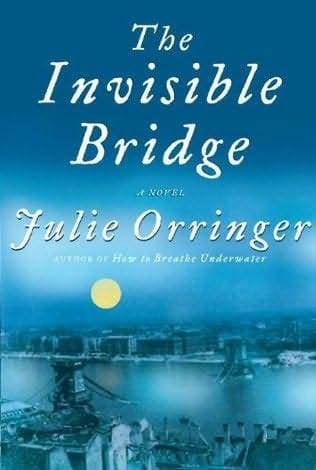
Julie Orringer (2010)
Genre
Historical Fiction / Romance
Reading Time
27 hrs 51 min
Key Themes
See below
Sign in to track this book
During WWII, a Hungarian Jewish architecture student's Parisian romance becomes the 'invisible bridge' that connects his family across a war-torn continent.
In 1937, Andras Lévi, a young Hungarian Jewish architecture student, arrives in Paris on a scholarship, leaving his family in Konyár, Hungary. He carries a suitcase and a cryptic letter for C. Morgenstern on the rue de Sévigné. Andras finds a small room and begins his studies at the École des Beaux-Arts. His initial attempts to deliver the letter are met with resistance, but he eventually meets Klara Morgenstern, a beautiful and enigmatic older dancer. Despite their age difference and Klara's mysterious past, Andras is immediately captivated, starting an intense relationship that shapes his Parisian experience.
In Hungary, Andras's older brother, Tibor, begins medical studies in Modena, Italy, while the youngest brother, Matyas, pursues theater, joining a traveling acting troupe. The Lévi family, though close, feels the growing threat of anti-Semitism. Laws restricting Jewish citizens are slowly implemented in Hungary, causing anxiety. Andras writes to his family, especially his mother, sharing details of his Paris life while trying to hide his romance with Klara. The escalating political climate in Europe foreshadows disruptions to come.
Andras and Klara's relationship deepens with passion, intellectual connection, and a shared love for art and culture. Klara, a former dancer with a mysterious past, slowly reveals parts of her life, including a previous marriage and the loss of a child. Andras is drawn into her world, finding comfort and inspiration in her presence. Their connection becomes a refuge for Andras amid his studies and the growing political unrest in Paris. Despite societal expectations and some friends' disapproval, Andras commits to Klara, envisioning a future with her, unaware of the coming catastrophe that will test their love.
As Europe's political situation worsens with Austria's annexation and Poland's invasion, Andras must return to Hungary. Anti-Jewish laws make it hard for him to stay in Paris, and his scholarship is revoked. Klara follows him, showing her commitment. Despite the serious circumstances and objections from Andras's family, who are wary of Klara's past and non-Jewish background, Andras and Klara decide to marry. Their wedding in Hungary is a bittersweet event, a defiant act of love against a backdrop of fear, solidifying their bond as the world crumbles.
Soon after their marriage, Andras, like many other Jewish men, is conscripted into forced labor battalions by the Hungarian government, allied with Nazi Germany. He is sent to various work camps, often in harsh conditions, building roads and fortifications in remote parts of Hungary and later on the Eastern Front. This separates him from Klara and his family. Andras endures immense physical hardship, starvation, and constant fear, witnessing atrocities against fellow laborers. His architectural skills are sometimes used, but mostly he is treated as expendable, his spirit sustained only by Klara's memory and the hope of reunion.
While Andras is in forced labor, Klara remains in Budapest, facing immense challenges as a Jewish woman in a city increasingly hostile to Jews. She struggles to find work, secure food, and avoid escalating roundups and deportations. Despite the danger, Klara tries to communicate with Andras, sending him what little aid she can and clinging to the hope of his return. She experiences loneliness and fear, witnessing the systematic destruction of the Jewish community around her. Her resilience and determination to survive, if only to be reunited with Andras, drives her during these dark times.
The war also affects Andras's brothers. Tibor, in Italy, initially avoids the worst, but eventually faces persecution as anti-Jewish laws tighten there. Matyas, with his acting troupe, experiences a brief period of safety but ultimately becomes caught in the war's violence, his artistic dreams shattered. The Lévi family in Konyár endures growing hardship and fear as news of mass deportations and atrocities spreads. Each brother's journey shows the brutal ways the Holocaust consumed lives, tearing apart families and forcing impossible choices due to their heritage.
Andras is transferred to the Eastern Front, where conditions are even more brutal. He endures extreme cold, starvation, and the constant threat of death, forced to work under sadistic Hungarian and German officers. Witnessing massacres and the systematic extermination of Jews, Andras's will to live is severely tested. He and his fellow laborers cling to any small act of resistance or solidarity. During a particularly harrowing period, facing execution or death from exposure, Andras makes a desperate escape attempt, driven by his will to survive and return to Klara, even against impossible odds.
Andras endures until the war's end, eventually liberated by Allied forces. His liberation is not a sudden joyous event but a slow, arduous journey back to health and sanity. Emaciated and traumatized, he begins the heartbreaking task of searching for Klara and his family. He travels through a devastated Europe, encountering countless displaced persons and hearing horrifying stories of concentration camps. The process of piecing together what happened to his loved ones is agonizing, filled with false hopes and crushing disappointments, as he confronts the full scope of the tragedy that has befallen the Jewish people.
Miraculously, Andras and Klara are reunited in Budapest, a deeply emotional and almost unbelievable moment. Their reunion is not easy; both are deeply scarred by their experiences, struggling with trauma, loss, and the weight of what they have endured. They must learn to reconnect, to share their unspeakable stories, and to find a way to live again in a world changed forever. Together, they begin the slow and painful process of rebuilding their lives and their relationship, carrying the invisible bridge of their love and shared history into an uncertain future, honoring the memory of those they lost while forging a new path.
In the years following the war, Andras and Klara settle in Budapest, trying to create a normal life. Andras resumes his architectural work, though his experiences have changed his perspective. Klara also struggles to find her place in the shattered world, often dealing with her own trauma and past ghosts. They learn to navigate their shared grief for lost family and friends, and the deep psychological wounds left by the war. Their love, tested beyond measure, remains a cornerstone, allowing them to support each other as they try to heal and find meaning in their survival. They work to build a future, remembering the past but striving for hope.
As time passes, Andras and Klara continue to carry the marks of the Holocaust. They understand the importance of remembering and bearing witness, though the memories are often painful. Their lives become a story of survival, resilience, and love in the face of evil. They build a life together, scarred but not broken, always aware of the 'invisible bridge' that connected them through the darkest times and continues to connect them to their past. Their story is a quiet but powerful statement about the human spirit's endurance and the importance of holding onto hope and love.
The Protagonist
Andras transforms from an idealistic student into a traumatized but resilient survivor, learning to find hope and rebuild a life after profound loss.
The Protagonist/Love Interest
Klara, initially guarded, opens herself to love and demonstrates immense resilience and resourcefulness in surviving the Holocaust and rebuilding her life.
The Supporting
Tibor's promising medical career is tragically cut short by the war, illustrating the destruction of a generation's potential.
The Supporting
Matyas's youthful artistic aspirations are tragically extinguished by the war, representing the destruction of culture and potential.
The Supporting
Her character remains largely consistent as a loving mother, but her tragic fate exemplifies the destruction of an entire generation.
The Supporting
His character embodies the tragic loss of patriarchal protection and the decimation of traditional family structures during the Holocaust.
The Supporting
Gábor's journey mirrors the displacement and uncertainty faced by many young intellectuals during the war.
The novel's central theme is love's strength to overcome hardship and separation. The love between Andras and Klara is the 'invisible bridge' that sustains them through the Holocaust. Their commitment, letters, and the memory of their bond provide comfort and a reason to survive cruelty and loss. This is clear in Andras's desperate efforts to escape forced labor, driven by the hope of reuniting with Klara, and Klara's efforts to send him aid and maintain contact in Budapest.
““The invisible bridge of love, the one you build in your heart for the person you love, that's what connects you.””
The novel shows the destruction caused by World War II and the Holocaust, not just to individuals but to entire families, communities, and cultures. It details the gradual erosion of rights, forced labor, concentration camps, and arbitrary violence against Jews. The story of the Lévi brothers, each facing a different aspect of the war's brutality—from forced labor to displacement and death—shows the widespread nature of the destruction. The narrative shows how anti-Semitism changes from prejudice into state-sanctioned annihilation, tearing apart society.
““They were not simply taking away their homes, their jobs, their lives. They were taking away their history, their very existence.””
Despite immense suffering and loss, the characters, especially Andras and Klara, show great resilience. They endure starvation, torture, separation, and the trauma of witnessing horrific acts, yet they cling to life and hope. Andras's will to live, often fueled by the memory of Klara and his family, helps him survive the forced labor camps. Klara's resourcefulness and determination to navigate wartime Budapest show this resilience. The novel highlights the human capacity for endurance, adaptation, and the will to rebuild, even after experiencing deep despair.
““Survival was not a choice, but a stubborn, burning refusal to be extinguished.””
Art, architecture, and dance are important motifs in the novel, representing beauty, meaning, and a connection to humanity that lasts even in the darkest times. Andras's passion for architecture and Klara's background as a dancer are central to their identities and initial connection. In the camps, small acts of artistic expression or the memory of beauty offer momentary comfort and a reminder of a world beyond brutality. The destruction of cultural life and the suppression of artistic freedom by the Nazis show the regime's goal to dehumanize and erase identity. Art, in this context, is an act of defiance and a testament to the enduring human spirit.
““Beauty was a kind of defiance, a refusal to let the darkness consume everything.””
A metaphor for the enduring connection between loved ones, especially Andras and Klara.
The 'invisible bridge' is a central metaphor, representing the unbreakable bond between Andras and Klara. It symbolizes their spiritual and emotional connection that transcends physical separation, time, and the horrors of war. This bridge is built through shared memories, letters, and the sheer force of their love and hope. It functions as a source of strength and motivation for both characters, particularly Andras in the forced labor camps, reminding them of what they are fighting to return to and who they are fighting for. It underscores the novel's core message about love's enduring power.
A means of maintaining connection and hope across vast distances and wartime censorship.
Letters play a crucial role in maintaining the emotional and psychological connection between Andras, Klara, and the Lévi family, especially during their separation. They are lifelines of hope, providing glimpses into each other's lives and proving that the other still exists. While often delayed, censored, or never received, the act of writing and sending letters is an act of defiance against the forces trying to isolate and dehumanize them. The initial mysterious letter to C. Morgenstern also serves as a catalyst for Andras's relationship with Klara, highlighting the power of written communication to shape destinies.
Used to provide context, deepen character, and highlight the contrast between pre-war and wartime life.
The narrative occasionally employs flashbacks and detailed memories, particularly for Klara's backstory and Andras's recollections of his family. These serve to enrich the characters' emotional depth, revealing their past traumas and joys. More significantly, they create a stark contrast between the vibrant, culturally rich lives and dreams of the pre-war era and the brutal, dehumanizing reality of the Holocaust. This device emphasizes the profound loss and transformation experienced by the characters, highlighting what was destroyed and what they are fighting to remember and preserve.
“He knew then that she was the most beautiful woman he had ever seen, and that he would love her for the rest of his life.”
— Andras's immediate infatuation upon first seeing Klara.
“The bridge, he thought, invisible and strong, was what connected them, across all the distances, all the separations.”
— Andras reflecting on the enduring bond with Klara amidst their forced separation during the war.
“History was not a thing that happened to other people, in other places. It happened to them, every day.”
— The characters' growing realization of the encroaching war and its personal impact.
“There were two kinds of people in the world, he thought: those who built bridges, and those who burned them.”
— Andras contemplating the choices people make in times of conflict and division.
“Grief was a country no one wanted to visit, but once you were there, you found yourself mapping its strange geography.”
— A character's internal reflection on the process of mourning and adapting to loss.
“Every day was a gift, a borrowed moment, a fragile, exquisite thing.”
— Living under the constant threat of war, the characters learn to appreciate the present.
“He understood then that courage was not the absence of fear, but the ability to act in spite of it.”
— Andras facing a dangerous situation, pushing past his own terror.
“The past was a weight, but also a foundation. You built your future on what had come before.”
— Reflecting on the importance of memory and history in shaping one's future.
“Love was not a shield against the world's cruelty, but a reason to endure it.”
— Klara's perspective on love's role amidst the harsh realities of their lives.
“Sometimes, the only way to keep living was to pretend you weren't afraid.”
— A coping mechanism used by characters to navigate the daily dangers and uncertainties.
“To forget was a kind of death, but to remember everything was a kind of madness.”
— The struggle to process trauma and the balance between remembering and moving forward.
“Art was not a luxury; it was a necessity. It was how they made sense of the senseless.”
— Andras, an architecture student, finding purpose and meaning through his passion amidst chaos.
“The world was shrinking, closing in, but the spaces inside them, their memories and hopes, remained vast.”
— Despite external confinement, the characters find internal freedom and solace.
“He learned that even in the darkest places, there were glimmers of beauty, if you only knew how to look.”
— Andras finding small moments of grace and beauty even in the labor camps.
Ready to see how well you understood this book? Take our interactive quiz with 10 questions.







