“There's a painful grace in getting what you want and finding out it's not what you dreamed.”
— Sarah Grimké reflects on her disillusionment after achieving some of her goals.

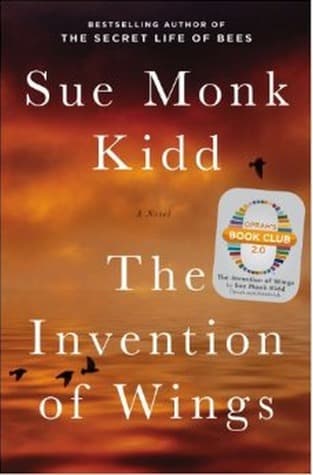
Sue Monk Kidd (2014)
Genre
Historical Fiction
Reading Time
10-12 hours
Key Themes
See below
Sign in to track this book
In early 19th-century Charleston, an enslaved housemaid and her Quaker owner's daughter navigate a complex, decades-long relationship as they both secretly want freedom, a voice, and a life beyond their society's strict rules.
In 1803 Charleston, South Carolina, eleven-year-old Sarah Grimké, daughter of a prominent judge and plantation owner, receives ten-year-old Handful as a birthday present. Sarah, an intelligent and independent child, is deeply bothered by this act of ownership and slavery's unfairness. She tries to free Handful by announcing her emancipation in front of her family, an act her mother, Mary, immediately dismisses and punishes. Despite this, Sarah secretly tries to teach Handful to read using a primer and a slate. When her mother discovers their secret, the primer is burned, and Handful is severely punished. This leaves Sarah with deep guilt and a growing belief in abolition that will shape her life.
Handful's mother, Charlotte, is a skilled seamstress and a defiant person, often seen as troublesome by the Grimké family. She secretly makes detailed story quilts, each square showing a memory, a hope for freedom, or a person she has lost. These quilts preserve history, express her voice, and plan for an eventual escape. She also tells Handful stories of her African heritage and her own mother's resistance, giving her daughter a sense of identity and a desire for freedom. Charlotte's rebellious nature and her storytelling become an important legacy for Handful, shaping her understanding of her own worth and the injustices she faces.
As Sarah grows into young womanhood, her intellectual curiosity and desire for a meaningful life conflict with the strict expectations for women in Charleston society. She wants to become a lawyer like her father but is told such goals are not suitable for a lady. Her attempts to get an education are stopped, leading to a deep spiritual crisis. She seeks comfort in religion, believing she must give up her worldly desires to serve God. This inner conflict, along with her family's strong support of slavery, causes her great frustration and a feeling of being trapped, similar to Handful's physical captivity.
When Judge Grimké becomes ill, Sarah nurses him, finding a brief period of intellectual conversation as they discuss legal texts. After his death, his will states that Sarah can choose three slaves to be freed upon her mother's death. Sarah immediately chooses Handful, Charlotte, and a young boy named Denmark, believing this is a step towards justice. However, her mother, Mary Grimké, refuses to honor this, seeing it as an insult to her authority and the family's standing. This betrayal destroys Sarah's hope and shows her helplessness within the patriarchal system.
Driven by her desire for freedom, Charlotte, using her sewing skills to make a disguise, tries to escape Charleston. Handful helps her mother by distracting the overseer, Mr. Prentiss. Charlotte manages to get out of the city but is caught and killed by slave catchers. Her body is returned to the Grimké household, a sight that deeply traumatizes Handful and further fuels her quiet defiance. Charlotte's death is a clear reminder of slavery's brutal realities and the great risks involved in seeking freedom, leaving Handful with a deep sense of loss but also a stronger resolve.
After her father's death and her growing disappointment with Charleston society and slavery, Sarah decides to leave home. She moves to Philadelphia, a city known for its Quaker community and abolitionist views. Here, she finds intellectual and spiritual freedom, joining the Quakers and accepting their equal principles. She attends lectures, reads widely, and begins to express her own thoughts on social justice. This move is an important step in Sarah's journey to find her voice and purpose, though she continues to feel guilt about leaving Handful behind.
While Sarah is in Philadelphia, Handful stays in Charleston, experiencing slavery's harsh realities under the increasingly cruel Mrs. Grimké. She becomes involved with Denmark Vesey, a charismatic free Black man who is secretly organizing a large slave rebellion in Charleston. Handful, drawn to Vesey's vision of freedom and his strong leadership, becomes one of his trusted people and helps with preparations, including making a flag for the uprising. This involvement fills her with purpose and a dangerous hope, connecting her to a larger movement for liberation.
The planned Denmark Vesey rebellion is betrayed by some of the conspirators before it can begin. A large crackdown follows, leading to the arrest of hundreds of slaves and free Black people. Denmark Vesey and many of his co-conspirators are tried, convicted, and publicly executed. Handful, though not directly involved in the trials, witnesses the terror and brutality of the aftermath. The executions and the increased surveillance and repression of the slave community leave her devastated but also strengthen her resilience and determination to live a life worthy of those who died for freedom.
Sarah's younger sister, Angelina Grimké, initially a devout Episcopalian, experiences her own spiritual and moral awakening in Charleston. She becomes increasingly uncomfortable with slavery and eventually joins Sarah in Philadelphia, embracing Quakerism and the abolitionist cause. Angelina is more outspoken and charismatic than Sarah, quickly becoming a powerful speaker against slavery. Inspired by Angelina's passion and finding her own voice, Sarah returns to public advocacy, writing and speaking alongside her sister, becoming one of America's first female abolitionist lecturers, defying societal norms for women.
Sarah and Angelina Grimké begin a public speaking tour, addressing mixed-gender audiences about slavery's evils. Their bold act of women speaking publicly on political matters causes outrage and controversy, leading to attacks from religious leaders and the press. This criticism, however, inspires them to also advocate for women's rights, arguing that suppressing women's voices is linked to suppressing enslaved people. Their work creates a foundation for both the abolitionist and women's suffrage movements, making them pioneers in social reform.
Back in Charleston, Handful endures slavery's continued hardships, including Mrs. Grimké's death and the subsequent sale of some of her fellow slaves. She finds comfort and strength in her community, especially with Mauma, an older slave woman, and through her own art. She continues Charlotte's legacy by secretly making her own story quilts, showing her experiences, hopes, and her mother's memory. These quilts become her personal record of resilience and a quiet act of rebellion, allowing her to claim her voice and identity even while enslaved.
Years later, after the Civil War and the Emancipation Proclamation, Sarah Grimké returns to Charleston for the first time since leaving. She finds Handful living in a small cabin, now an old woman, still sewing. Their reunion is complex and full of unspoken history, guilt, and affection. Sarah tries to apologize, but Handful, having made her own path and found her own freedom, simply acknowledges their shared past. The novel ends with Handful reflecting on her life and her mother's legacy, having found an inner liberty that goes beyond physical emancipation, while Sarah deals with the lasting weight of her past actions and inactions.
The Protagonist
Sarah transforms from a guilt-ridden, suppressed Charleston belle into a radical, outspoken advocate for social justice, finding her voice and purpose despite societal condemnation.
The Protagonist
Handful evolves from a young, hopeful girl to a resilient woman who, despite physical bondage, finds a powerful inner freedom and voice through art and defiance.
The Supporting
Charlotte remains a defiant figure throughout her life, passing on her legacy of resistance and artistry to her daughter, even in death.
The Supporting
Angelina transforms from a conventional Southern lady into a radical, fearless orator for social justice, becoming a national figure in the abolitionist and women's rights movements.
The Antagonist/Supporting
Mary Grimké remains largely static, a symbol of the oppressive patriarchal and slave-owning society, consistently clashing with her daughters' evolving moral compass.
The Supporting
Judge Grimké's influence on Sarah is primarily in her youth, inspiring her intellect but ultimately failing to provide the support she needed to break societal norms.
The Supporting
Vesey rises as a revolutionary leader, his actions and ultimate sacrifice becoming a powerful symbol of resistance against slavery.
The Supporting
Mauma acts as a steady, guiding presence, her wisdom and spiritual strength providing continuity and support for Handful throughout her life in bondage.
The Mentioned
Weld serves as a catalyst for Angelina's public life and a partner in her activism.
The novel explores freedom on many levels: physical freedom from slavery, intellectual freedom to learn, and spiritual freedom to live truly. Handful wants physical liberation from her bondage, a desire her mother, Charlotte, tragically embodies. Sarah seeks freedom from society's limits on women, fighting against expectations that deny her intellectual and spiritual independence. Both protagonists, through their individual struggles, redefine what it is to be free, finding liberation not just in legal status but in self-expression, defiance, and purpose. The book shows that freedom is a varied and personal goal.
““I wished for a map to the next place. I wished for a map to the next me.””
Having a voice and telling one's story is central to the characters' efforts for self-determination. For Handful, denied literacy, her voice appears through her mother's story quilts and her own continuation of this tradition. These quilts are a hidden form of autobiography and resistance. Sarah, initially silenced by her family and society, finds her voice first in writing, then in public speaking, becoming a strong speaker for abolition and women's rights. The novel itself gives voice to those historically marginalized, showing the power of storytelling to reclaim identity and challenge injustice.
““If I had my way, I’d write a whole new Bible, just for women, with a new God, too.””
Sarah Grimké's character is largely defined by her deep guilt over her family's involvement in slavery and her own initial part in it, especially regarding Handful. Her attempts to 'fix' her past actions, such as trying to teach Handful to read or seeking her emancipation, often fail, deepening her emotional burden. This theme explores the moral responsibility of individuals born into unfair systems and the lifelong effort to make up for inherited wrongs. Her guilt drives her abolitionist work, but it also creates a complex, often strained, dynamic in her relationship with Handful.
““I wanted to rip the world apart and start over. I wanted to be free of my own skin, free of my name, free of my history.””
The relationship between Sarah and Handful, though marked by power imbalances and historical injustice, develops into a complex form of sisterhood. Despite their very different circumstances, their lives are linked, each shaping the other's destiny. The bond between Sarah and her biological sister, Angelina, also shows sisterhood, as they unite in their abolitionist and feminist work, providing mutual support and inspiration. The novel shows how women, across racial and social divides, can influence, challenge, and help each other, even amidst conflict and misunderstanding, in their shared pursuit of liberation.
““I believed in the power of women. I believed in the power of two women. What one could not do, the other could.””
The novel clearly shows the great personal cost of resisting oppressive systems. Charlotte pays the highest price for her attempt at physical freedom, while Denmark Vesey and his conspirators face execution for their rebellion. Sarah and Angelina Grimké endure ostracism, public ridicule, and threats for defying societal norms by speaking publicly against slavery and for women's rights. Handful, through her quiet acts of defiance and artistic expression, lives under constant threat of violence and separation. The book shows that challenging the status quo, while necessary, often requires great courage and comes with severe consequences, both personal and communal.
““There is a price for standing up, and a price for sitting down. The trick is to know which price you’re paying.””
Alternating first-person viewpoints of Sarah and Handful.
The novel is told through alternating first-person chapters, one from Sarah Grimké's perspective and the other from Handful Grimké's. This device allows the reader to experience the same historical events and settings from two vastly different social positions and emotional landscapes. It creates a rich, multi-layered understanding of slavery, gender inequality, and the complexities of human relationships, fostering empathy for both protagonists while highlighting their contrasting internal and external struggles for freedom and identity.
A recurring motif and symbolic representation of history, memory, and resistance.
Charlotte's story quilts serve as a powerful symbolic plot device. Each quilt square depicts a memory, a lost loved one, a hope for freedom, or a plan for escape. These quilts function as Handful's inheritance, a tangible link to her mother's spirit and a testament to their family's history, denied to them in written form. They are a form of hidden literacy, a way to preserve identity and communicate truth in a world that seeks to silence and erase. Handful continues this tradition, using her own quilts to express her experiences and assert her voice, making them a continuous thread of resistance and self-expression throughout the narrative.
Integration of real historical individuals and documented events into the fictional narrative.
The novel is based on the real-life Grimké sisters, Sarah and Angelina, and incorporates actual historical events such as the Denmark Vesey slave rebellion and the early abolitionist and women's rights movements. This device grounds the fictional story in historical reality, lending authenticity and weight to the characters' struggles. By weaving the invented character of Handful into the known lives of the Grimkés, the author provides a vivid, personal perspective on the impact of these historical forces, humanizing the statistics and abstract concepts of the era.
Literary forms used by Sarah and Angelina to articulate their beliefs and activism.
As Sarah and Angelina become public figures, their letters and transcribed speeches are integrated into the narrative. These serve as a direct window into their evolving philosophical and political beliefs, showcasing their intellectual development and the growing boldness of their abolitionist and feminist arguments. These documents underscore the theme of 'voice' and the challenges women faced in public discourse, providing context for the societal backlash they experienced and highlighting their pioneering role in using written and spoken words for social change.
“There's a painful grace in getting what you want and finding out it's not what you dreamed.”
— Sarah Grimké reflects on her disillusionment after achieving some of her goals.
“My body might be a slave, but not my mind. For you, it's the other way around.”
— Handful says this to Sarah, highlighting their different forms of bondage.
“We are all yearning for a wedge of sky, aren't we?”
— Sarah contemplates the universal human desire for freedom and self-expression.
“I knew what it was to be bent under the weight of something you couldn't change.”
— Sarah describes the burden of societal expectations and limitations.
“Sometimes, you have to listen with more than your ears.”
— Handful speaks about understanding deeper truths beyond spoken words.
“The truth may set you free, but first it will shatter the safe, sweet world you know.”
— Sarah reflects on the painful process of awakening to harsh realities.
“We carry the wounds and the wings of our mothers.”
— Handful considers the legacy passed down through generations of enslaved women.
“Courage isn't the absence of fear, but the determination to move forward in spite of it.”
— Sarah muses on the nature of bravery during her abolitionist work.
“A bird trapped in a cage will spend its life trying to escape, even if it's never seen the sky.”
— Handful uses this metaphor to describe the innate desire for freedom.
“We write our lives with the ink of our choices, but the paper is often chosen for us.”
— Sarah reflects on the interplay between personal agency and societal constraints.
“The heart is a map that shows where we've been and where we must go.”
— Handful speaks about following one's inner guidance through hardship.
“To be silent is to be complicit. I will not be a stone in the river of injustice.”
— Sarah declares her commitment to speaking out against slavery.
“Hope is the thing with feathers that perches in the soul, but sometimes it must build its own nest.”
— An adaptation of Emily Dickinson, used by Sarah to describe sustaining hope.
“They can chain my hands and feet, but they cannot chain my dreams.”
— Handful asserts the indomitable nature of her inner world.
Ready to see how well you understood this book? Take our interactive quiz with 10 questions.

Biography coming soon.