“Great men are forged in fire. It is the only way a strong enough metal can be produced to withstand the trials ahead.”
— Mrs. Sigsby's philosophy on the children's suffering.

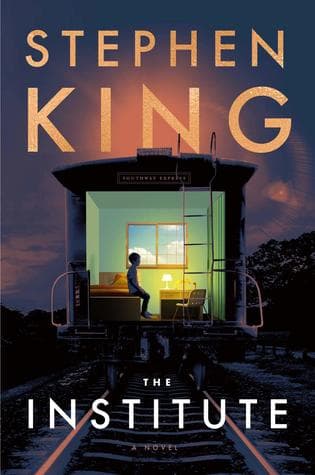
Stephen King (2019)
Genre
Thriller / Fantasy / Mystery / Science Fiction
Reading Time
11-14 hours
Key Themes
See below
Sign in to track this book
In a secret facility, children with psychic powers are harvested, forcing a defiant boy to escape his captors before his unique ability is weaponized.
One night in suburban Minneapolis, twelve-year-old Luke Ellis, a smart boy with hidden telekinetic abilities, is taken from his home. Intruders, later identified as agents of The Institute, kill his parents before drugging him and putting him in a black SUV. Luke briefly wakes up, seeing his parents' dead bodies, a memory that will drive him later. He wakes again in a room like his own, but without a window. He quickly realizes he is not home. His first attempts to call for help or understand where he is fail, marking the start of his captivity.
Luke wakes in a sterile, windowless room, an exact copy of his bedroom, but he soon realizes it is a cell within The Institute. He meets other children in 'Front Half'—Kalisha, Nick, George, Iris, and the younger, highly telepathic Avery Dixon—who all have similar abduction stories and abilities like telekinesis (TK) and telepathy (TP). Kalisha, an older resident, explains their harsh reality, the 'token' system for good behavior, and the dark 'Back Half,' where children go after their powers are 'processed' and never return. Luke immediately starts planning his escape, sensing the danger they are all in.
Life in Front Half involves constant 'processing' sessions and tests. Under Mrs. Sigsby, the director, and Dr. Stackhouse, the children undergo experiments to boost their telekinetic and telepathic abilities. These sessions often include sensory deprivation, psychological manipulation, and direct stimulation of their powers, frequently causing headaches, nosebleeds, and exhaustion. Children get 'tokens' for following rules, which they can trade for small comforts. But defiance leads to harsh punishments in 'the box' or the more feared 'bad place.' Luke watches his fellow captives grow weaker and more afraid, strengthening his resolve to resist.
Luke quickly forms a bond with Avery Dixon, a ten-year-old telepath whose abilities are very strong, often overwhelming him. Avery is part of a smaller, more isolated group of 'TPs' (telepaths) who experience a different, often more intense, type of processing. Luke notices the staff's special interest in Avery, understanding that the boy's unique sensitivity makes him both valuable and vulnerable. Avery's innocence and vulnerability deeply affect Luke, increasing his desire to escape and protect the younger children. The TPs, including Avery, often share their fears and worries, creating a tense atmosphere in the Institute.
The dark 'Back Half' hangs over the children in Front Half. Kalisha's chilling description of it as a 'roach motel' where you check in but never check out stays with them. Children disappear regularly, either after their TK/TP abilities are 'activated' enough or as punishment for serious defiance. Luke sees the fear and despair as friends like George and Iris are taken to Back Half. Their fate is unknown but clearly bad. He learns that children in Back Half face more extreme experiments, their abilities pushed to their limits, often leading to their death, all to serve the Institute's mysterious goal.
Motivated by his friends' disappearances and the injustice of their captivity, Luke begins to plan his escape carefully. He uses his memory and intelligence to observe the Institute's routines, security, and staff habits. He notices a rarely used ventilation shaft, a possible way to freedom. He recruits Kalisha and Nick, sharing his observations and asking for their help. His plan involves creating a distraction during a group activity and using his hidden TK to move objects, aiming to reach the ventilation system and eventually the outside world, something no child has ever done.
Luke carries out his escape plan, moving through the ventilation shafts and avoiding security. He makes it outside the heavily guarded compound, finding himself disoriented but free in the vast wilderness of rural Maine. Tired and scared, he eventually finds a small town, DuPray, and takes shelter with Tim Jamieson, a former police officer working at a local gas station. Tim, at first unsure about Luke's unbelievable story, soon recognizes the boy's honesty and the seriousness of his claims. He offers Luke protection and becomes his first true ally outside the Institute.
Tim Jamieson, disturbed by Luke's story and his own sense of justice, quietly starts investigating The Institute. He uses his old police contacts and local knowledge to gather information, confirming the existence of a very secret, heavily guarded facility nearby. Meanwhile, Mrs. Sigsby, angry about Luke's escape, sends her agents, led by the ruthless Stonesy, to hunt him down. The pursuit is relentless, with the Institute's vast resources and lack of morals making them a powerful enemy. Tim and Luke must constantly stay ahead, knowing their lives are in great danger.
Through Luke's memories, Avery's telepathic insights (sent from afar), and Tim's investigations, the terrible truth about The Institute's purpose becomes clear. It is revealed that the children's amplified telekinetic and telepathic abilities are being used as weapons by a secret group of powerful people to influence world events, kill targets, and maintain global control. The children in Back Half are not just 'processed' but are living weapons, their minds pushed to their breaking point for political manipulation. This discovery strengthens Luke's decision to expose and destroy the entire operation.
Luke's escape accidentally starts a rebellion inside The Institute. Avery Dixon, now in Back Half and undergoing extreme processing, uses his strong telepathy to connect with the other children, both TPs and TKs. Inspired by Luke's defiance and their shared suffering, they begin to resist their captors using their powers. They create mental diversions, subtly damage equipment, and cause chaos, disrupting the Institute's operations from within. Their combined abilities, though raw, become a strong force against the staff, creating an internal struggle that happens at the same time as Luke's external efforts.
With the truth and a growing group of allies (including some sympathetic local police and even a former Institute guard), Luke and Tim launch a direct attack on The Institute. They plan to expose its crimes and rescue the children. Inside, Avery and the other children, now united, create a massive telepathic and telekinetic disturbance, overwhelming the staff and causing significant damage. The combined external attack and internal uprising lead to a chaotic and violent fight, with the Institute's security forces trying to maintain control against the children's growing powers and the approaching external threat.
The combined efforts of Luke, Tim, and the children lead to the complete destruction of The Institute. The children's unleashed powers, along with the external attack, cause explosions, structural collapse, and total disarray of the facility. Mrs. Sigsby and many of her staff are killed or captured in the chaos. While many children from Back Half die due to the extreme conditions and the final disaster, the remaining survivors from both Front and Back Half are freed. Luke, though scarred, achieves his goal of dismantling the organization, but the victory is mixed with the deep loss of his friends and the trauma everyone endured.
After The Institute's destruction, Luke and the few surviving children are put in protective custody and begin the slow, difficult process of healing and rejoining society. Tim Jamieson, now a hero, helps ensure their safety and well-being, becoming like a father to Luke. The truth about The Institute is revealed, though carefully, to prevent widespread panic. The children, forever marked by their ordeal and their unique abilities, learn to cope with their trauma and find ways to live in a world that doesn't understand their gifts. Luke, still brilliant, dedicates himself to making sure such an institution can never rise again, carrying the heavy burden of his past but also hope for a future free from fear.
The Protagonist
Luke transforms from a terrified captive into the leader of a rebellion, using his intellect and courage to dismantle a powerful, sinister organization.
The Supporting
Tim rediscovers his purpose and courage, moving past personal trauma to become a hero who fights for justice.
The Antagonist
Mrs. Sigsby remains steadfast in her villainy, ultimately meeting her demise with her convictions intact.
The Supporting
Avery, initially a vulnerable captive, becomes a catalyst for the children's rebellion, using his immense power to fight back.
The Supporting
Kalisha moves from resigned acceptance to active participation in Luke's escape plan, demonstrating her enduring hope and courage.
The Supporting
Nick shifts from passive endurance to active defiance, becoming a vital part of Luke's escape.
The Supporting
Dr. Stackhouse remains committed to his scientific pursuits within The Institute, oblivious or uncaring of the moral implications.
The Supporting
Stonesy remains a steadfast and brutal enforcer until the very end of The Institute.
The Institute abuses and exploits children, taking away their innocence and childhoods for bad purposes. The 'processing' sessions and harsh punishments force the children to face terrible horror, leaving them deeply traumatized. Avery Dixon, especially, shows this theme, as his strong telepathy, a natural gift, becomes a source of great pain and exploitation. The difference between the children's playful natures and the grim reality of their captivity highlights the tragedy of their stolen youth.
“You check in, but you don't check out. It's like the roach motel for kids.”
Despite huge challenges, the children of The Institute, led by Luke, constantly resist their oppressors. Luke's careful planning and strong will to escape show the power of individual choice against a harsh system. Later, Avery and the other children in Back Half, inspired by Luke's defiance, start a telepathic and telekinetic rebellion from inside. This theme shows that even the most vulnerable, when united, can challenge and eventually bring down powerful, evil institutions. Their resistance shows that the human spirit refuses to be broken.
“Evil triumphs when good men do nothing. I'm not a good man, but I'm not nothing.”
The novel explores two kinds of power: the children's extraordinary abilities and the institutional power of The Institute. The children's telekinesis and telepathy are first shown as unique gifts but are quickly twisted into weapons by the Institute's staff. Mrs. Sigsby and her organization represent unchecked power, working outside the law and morality, believing their 'greater good' justifies any actions. The story criticizes how power, when concentrated and without ethical oversight, leads to corruption and terrible abuse, turning people into tools.
“We're not just saving the world, you understand. We're running it.”
Amidst the harsh isolation of The Institute, the bonds formed between the children become their greatest strength. Luke's protective relationship with Avery, his alliance with Kalisha and Nick, and the shared telepathic connection among the TPs show how important human connection is. Tim Jamieson's empathy and willingness to believe Luke's impossible story are key to The Institute's downfall. The story suggests that true strength comes not from individual power but from the ability to connect, empathize, and fight for one another, a sharp contrast to the Institute's dehumanizing methods.
“Sometimes you gotta be a bad guy to stop the really bad guys.”
A prison design that allows guards to observe all prisoners without the prisoners knowing if they are being watched.
The Institute functions as a modern panopticon. While not a literal circular building, its design and operational philosophy create an illusion of constant surveillance and control. The identical, windowless rooms, the omnipresent cameras, the unpredictable 'processing' sessions, and the mystery surrounding Back Half ensure that the children always feel watched and powerless. This constant psychological pressure is designed to break their will and make them compliant, maximizing the extraction of their abilities while minimizing resistance, until Luke's unique intellect allows him to exploit its gaps.
An object or device that serves merely as a trigger for the plot.
The 'Back Half' serves as a chilling, ever-present threat and a primary motivator for the children. Its true nature and the fate of those sent there are initially shrouded in mystery, but its purpose is clear: it's a place of no return, where children are subjected to the ultimate 'processing.' While its precise mechanisms are gradually revealed, its primary function in the plot is to instill fear, highlight the Institute's ruthlessness, and fuel Luke's desperate desire to escape and save his friends before they too are sent to this ominous destination. It's a looming shadow that drives much of the early narrative tension.
A unique cognitive ability that allows Luke to recall images, sounds, or objects with extreme accuracy.
Luke's photographic memory is a crucial plot device that enables his escape and the eventual unraveling of The Institute. It allows him to meticulously observe and recall every detail of the facility's layout, staff routines, security weaknesses, and even the subtle tells of his captors. This extraordinary ability makes him uniquely suited to plan an escape that no other child could conceive, as he can mentally map the entire complex and anticipate obstacles. It transforms him from a helpless captive into a strategic mastermind, giving him an intellectual edge against his technologically superior captors.
Supernatural powers of telekinesis and telepathy.
The children's telekinetic (TK) and telepathic (TP) abilities are the central fantastical element and the entire reason for The Institute's existence. These powers are initially presented as latent gifts, but The Institute's 'processing' forces their amplification and control. They serve as both the source of the children's suffering (being exploited) and ultimately their means of resistance and liberation. The development and combined use of these powers, particularly in the climax, demonstrate their destructive potential when weaponized and their liberating power when used in concert against oppression.
“Great men are forged in fire. It is the only way a strong enough metal can be produced to withstand the trials ahead.”
— Mrs. Sigsby's philosophy on the children's suffering.
“The world was full of monsters, and they didn't all have fangs and claws. Some of them wore business suits and smiled.”
— Luke's realization about the true nature of evil.
“Memory is a funny thing. Sometimes you want it to go away, and sometimes you want to hold onto it like a life raft.”
— Tim Jamieson reflecting on his past.
“Kids are like sponges, they soak up everything. The good and the bad.”
— A general observation on children's development.
“Hope is a dangerous thing. It can drive a man insane.”
— A character's cynical view on maintaining hope in a dire situation.
“The biggest lies are always told in silence.”
— Luke understanding the unspoken truths and deceptions within the Institute.
“Sometimes you have to break a few rules to do the right thing.”
— Tim's internal justification for his actions.
“The human mind is a terrible thing to waste, but an even more terrible thing to break.”
— Dr. Sigsby's twisted perspective on the children's psychic abilities.
“Even in the darkest places, there can be light, if you know where to look.”
— A moment of small comfort or discovery amidst the horror.
“They didn't want to save the world; they wanted to control it.”
— Luke's realization about the true motives of the Institute.
“Fear is a great motivator, but it's a terrible master.”
— A character's reflection on the role of fear in the Institute.
“You can't always choose your battles, but you can choose how you fight them.”
— A moment of resolve and determination.
“The greatest weapon isn't a gun or a knife. It's an idea.”
— The power of thought and strategy against brute force.
“There are no bad children, only bad circumstances and bad adults.”
— A sympathetic view on the children's plight.
Ready to see how well you understood this book? Take our interactive quiz with 10 questions.

Stephen Edwin King is an American author of horror, supernatural fiction, suspense, crime, science-fiction, and fantasy novels. Described as the "King of Horror", his books have sold more than 350 million copies as of 2006, and many have been adapted into films, television series, miniseries, and comic books. King has published over 65 novels/novellas, including seven under the pen name Richard Bachman, and five non-fiction books. He has also written approximately 200 short stories, most of which have been published in book collections.







