“The feeling was one of being caught in the beam of a searchlight, illuminated and exposed, and yet at the same time, cherished.”
— Elodie's early feelings about Adam's attention and love.

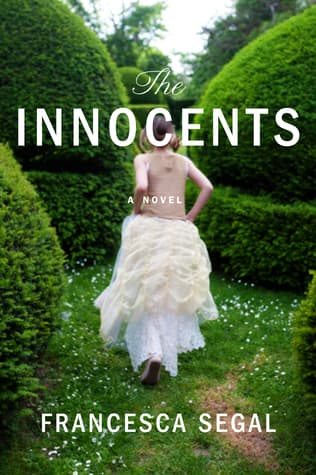
Francesca Segal (2012)
Genre
Literary Fiction / Romance
Reading Time
300 min
Key Themes
See below
Sign in to track this book
A man about to marry his childhood sweetheart has his world turned upside down when his fiancée's wild cousin returns, making him choose between duty and forbidden desire.
Adam and Rachel are childhood sweethearts, deeply part of their close North London Jewish community and families. Their upcoming wedding brings great joy and excitement to everyone, seen as the peak of their long relationship. Adam, a careful trainee lawyer, and Rachel, a kind teacher, represent their community's values. Their lives have always been connected, their families close friends, and their future seems perfectly planned. As wedding preparations begin, a sense of comfortable certainty hangs over their union. Adam, despite seeming content, sometimes feels a vague longing for something more, a quiet feeling beneath his seemingly perfect life.
Rachel's cousin, Ellie, unexpectedly returns to London after years abroad, mainly in New York. She had been away from her family for a while. Ellie is very different from Rachel: beautiful, bohemian, and seemingly free from rules. She has a history of unpredictable behavior and a reputation as a 'wild card.' Her sudden return causes a stir in the family, especially with Rachel's mother, who sees Ellie with both worry and disapproval. Ellie's presence immediately changes family gatherings. Her unusual lifestyle and direct manner quietly challenge the community's established norms and expectations, especially as the wedding gets closer.
From their first meeting again, Adam is clearly fascinated by Ellie. Her strong energy, quick wit, and seemingly carefree attitude are a sharp contrast to Rachel's steady reliability and the predictable rhythm of his own life. Adam, who has always prided himself on making sensible choices and following the expected path, finds Ellie's disregard for convention both exciting and unsettling. He watches her closely during family events, noticing how she quietly challenges and livens up conversations. This fascination quickly grows into a strong attraction, stirring feelings in Adam he had not known he had. It makes him question how complete his upcoming marriage to Rachel is.
As Ellie settles back into London, she becomes more involved in family life, attending pre-wedding events and dinners. This closeness means Adam and Ellie spend more time together, often in groups, but with a clear sense of tension and mutual attraction. They find themselves having deeper conversations, sharing life views and desires that Adam has never openly discussed with Rachel. Ellie's honesty and willingness to challenge his ideas are exciting for Adam, who has always valued order. Their interactions, though appearing innocent, are filled with a growing emotional closeness that Adam struggles to match with his commitment to Rachel.
During a family event, Adam and Ellie find themselves alone, away from their relatives' eyes. In this moment, they have an intimate, almost confessional talk, revealing their weaknesses and unspoken desires. This close exchange, though not physical, marks a major turning point, forming a strong emotional bond between them. Adam feels an unprecedented sense of understanding and excitement with Ellie, a feeling that both thrills and scares him. The shared secret of this connection creates a growing gap between Adam and Rachel, even as wedding preparations continue. He starts to see Rachel differently, noting the comfort and familiarity, but also a perceived lack of the spark he now feels with Ellie.
The clear tension between Adam and Ellie finally breaks during a private meeting. Overwhelmed by their mutual attraction and strong connection, they share a passionate, secret kiss. This act of disloyalty, though short, shatters Adam's sense of duty and commitment to Rachel. The kiss shows the emotional affair that has been building, and it forces Adam to face the depth of his feelings for Ellie. He is troubled by guilt and confusion, torn between the life he has always planned with Rachel and the exciting, unpredictable future Ellie seems to offer. The weight of his actions becomes a heavy burden as the wedding day gets closer.
After the kiss, Adam enters a period of strong inner conflict. He loves Rachel and values the security, warmth, and shared history they have. He understands the deep disappointment and hurt his actions would cause not just Rachel, but their entire connected families. However, he is equally consumed by his feelings for Ellie, who represents freedom, excitement, and a different kind of happiness he had not known he wanted. He spends sleepless nights agonizing over his decision, weighing duty against desire, and the familiar comfort of his established life against the thrilling uncertainty of a new path. He tries to explain his feelings, but the emotional pull towards Ellie is too strong to ignore.
Rachel, despite her trusting nature, slowly starts to notice small changes in Adam's behavior. He becomes more distracted, quiet, and sometimes irritable. While she first dismisses these as pre-wedding nerves, a growing unease settles over her, especially concerning Adam's interactions with Ellie. She sees the lingering looks, the quiet talks, and the clear chemistry between them. Though she tries to deny her suspicions, a nagging doubt begins to weaken her confidence in their upcoming marriage. Rachel's quiet observations show her intuitive understanding of Adam, even as he tries to hide his unfaithfulness, adding another layer of tension to the story.
Adam's bachelor party is a celebratory but ultimately empty event for him. Surrounded by his closest friends and family, all eagerly awaiting his wedding, he feels increasingly alone with his secret. The festivities, meant to be a joyful send-off into married life, only increase his inner turmoil. He feels like a fraud, unable to fully join in the fun, haunted by the knowledge of his betrayal and the coming choice he must make. The party serves as a clear reminder of the life he is about to either fully embrace or permanently break, pushing him closer to a decision about his future with Rachel and Ellie.
Overwhelmed by guilt and unable to go through with the wedding under false pretenses, Adam finally tells Rachel about his feelings for Ellie. The confession is devastating, shattering Rachel's world and the dreams they had built together. The immediate aftermath is marked by strong emotional pain, anger, and heartbreak for Rachel, and deep regret for Adam. The news spreads through their connected families, causing shock, betrayal, and deep divisions. The once-celebrated wedding plans are suddenly stopped, and the community is left reeling from the unexpected turn of events. Adam is left to face the consequences of his actions, having permanently changed the lives of those he supposedly loved.
After Adam's confession and the family upset, Ellie, true to her changeable nature, finds herself unable to fully commit to the chaos and responsibility. Despite the clear connection she shared with Adam, the reality of the situation—the broken engagement, the hurt families, the community's judgment—proves too much for her. She decides to leave London again, seeking to escape the emotional fallout and perhaps her own part in the destruction. Her departure leaves Adam in deep uncertainty and regret, having given up his stable life with Rachel for a love that ultimately proves as hard to grasp as Ellie herself.
The novel ends with the characters dealing with the major changes in their lives. Rachel, though heartbroken, slowly begins to heal and redefine her future without Adam, supported by her family. Adam is left to deal with the consequences of his choices, facing his community's disapproval and the loss of both Rachel and Ellie. He is forced to confront the emptiness his impulsive decision has left behind and the real cost of chasing an idealized freedom. The story explores the long-term impact of betrayal and the difficult path to forgiveness and self-discovery for everyone involved, showing the complexities of love, loyalty, and personal fulfillment.
The Protagonist
Adam's arc is one of self-discovery through infidelity; he starts as a man seeking predictable happiness and ends up shattering his life to chase an elusive ideal, ultimately confronting the emptiness of his choices.
The Supporting/Victim of circumstances
Rachel begins as a woman anticipating a stable future and undergoes a painful transformation, learning to rebuild her life after profound heartbreak and betrayal.
The Antagonist/Catalyst
Ellie's arc is one of consistent transience; she arrives, causes disruption, and ultimately retreats from commitment, reinforcing her nature as a free spirit unwilling to be tied down.
The Supporting
Naomi's arc is one of disillusionment; she starts with joy and pride for her daughter's future, only to experience the heartbreak and anger of betrayal.
The Supporting
Sarah's arc involves dealing with the shame and heartbreak of her son's actions, and the subsequent strain on family relationships.
The Supporting
David's arc is one of quiet suffering and the difficult task of supporting his daughter through immense heartbreak.
The Supporting
Michael's arc involves grappling with his son's unexpected and disruptive choices, and the ensuing familial and communal fallout.
The Supporting
Josh's arc is one of disillusionment, as he witnesses his best friend's betrayal and the unraveling of their shared social world.
This theme explores Adam's strong inner conflict between his duty to Rachel, his family, and his community, and his powerful desire for the excitement and freedom Ellie represents. His whole life has been built on meeting expectations and making 'sensible' choices, yet Ellie awakens a longing for something more unpredictable and passionate. The novel carefully details his struggle, from the quiet stirrings of dissatisfaction to the painful decision that breaks his life. This theme is clear in every interaction Adam has, especially when he compares Rachel's comfortable familiarity to Ellie's exciting unknown, ultimately choosing desire over duty.
“He had everything he had ever wanted, everything he had been told he should want, and yet, there was a hollow space, a quiet hum of absence.”
The novel asks what real love and happiness are. Is it the comfortable, steady, and secure love Adam and Rachel share, built on years of shared history and respect? Or is it the passionate, exciting, and unpredictable connection Adam feels with Ellie, which promises a different kind of fulfillment? The story suggests that what one 'should' want, according to society and family, might not match one's deepest, often hidden, desires. Adam's search for a different kind of happiness ultimately brings deep unhappiness to himself and others. This forces the reader to consider the costs and complexities of these different forms of love.
“He loved Rachel, he knew that. But it was a different kind of love, a love like a warm blanket, while Ellie was a wildfire.”
The novel is deeply set in a close-knit North London Jewish community. This community greatly shapes the characters' lives and choices. The sense of belonging, shared values, and mutual support is a strong force, but it also creates huge pressure to fit in and uphold expectations. The upcoming wedding is not just a union of two people, but a celebration for the entire community. Adam's betrayal is not just a personal failure, but a disruption that affects the entire social structure, causing shame and division. Ellie's outsider status highlights the difference between her individual freedom and the community identity that defines Adam and Rachel.
“Their lives were not just their own; they were threads in a tapestry woven by generations, by family, by faith.”
The title 'The Innocents' hints at this theme. Rachel, in particular, shows a certain innocence, trusting in her life's established order and her relationship with Adam. Adam also has a form of innocence, believing that following the set path would lead to unquestioned happiness. Ellie's arrival, with her worldly experience and disruptive nature, shatters this innocence. Adam's actions lead to a painful loss of innocence for Rachel, who experiences deep betrayal. Adam himself gains a harsh understanding of his desires' consequences. The community also loses its collective innocence, as the ideal of a perfect union is broken.
“The world she had known, the world she had built with him, had splintered into a thousand irreparable pieces.”
This theme explores the strong pull of what is forbidden or unreachable. Adam is engaged to Rachel, a good and stable woman, representing the 'right' choice. However, Ellie, as Rachel's cousin and a woman with a troubled past, represents the 'wrong' or forbidden choice. This only makes her more appealing. The secrecy and risk linked to their connection make it even more exciting for Adam. The novel looks at why the forbidden can be so compelling, even when it threatens to destroy everything one holds dear. It suggests that the act of breaking rules can be a powerful, though destructive, force.
“She was everything he had been warned against, everything he had spent his life avoiding, and he wanted her more than he had ever wanted anything sensible.”
Subtle hints of dissatisfaction and impending disruption.
The novel employs subtle foreshadowing through Adam's initial, vague feelings of restlessness and unfulfillment even before Ellie's arrival. His occasional internal questioning of his seemingly perfect life, and the subtle descriptions of Rachel's predictability, hint that their comfortable equilibrium is fragile. Ellie's reputation as a 'wild card' and her initial estrangement from the family also subtly foreshadow her role as a disruptive force. These early clues build a sense of unease, preparing the reader for the inevitable conflict and the unraveling of Adam's life.
A classic romantic conflict between three central characters.
The love triangle between Adam, Rachel, and Ellie is the primary engine of the plot. It creates inherent tension and conflict, driving Adam's internal struggle and the external drama. Rachel represents the 'safe' and 'right' choice, embodying duty, tradition, and security. Ellie represents the 'dangerous' and 'exciting' choice, embodying freedom, passion, and the unknown. This dynamic forces Adam to confront his true desires and the kind of life he truly wants, leading to the climactic decision that shatters all their lives. The triangle isn't merely romantic; it's a symbolic representation of conflicting life paths.
The wedding as a symbol of commitment, community, and an idealized future.
The impending wedding is a powerful symbol throughout the novel. Initially, it represents the culmination of Adam and Rachel's love, the strength of their families, and the communal values of their Jewish community. It signifies commitment, tradition, and an idealized, secure future. As Adam's feelings for Ellie grow, the wedding transforms into a symbol of his suffocating duty and the life he feels trapped by. Its eventual cancellation symbolizes the shattering of innocence, the breakdown of trust, and the profound disruption to not just Adam and Rachel's lives, but the entire social fabric of their world.
Ellie's character functions primarily to instigate change in Adam.
Ellie is not merely a love interest; she functions as a catalytic agent within the narrative. Her return to London, her unconventional personality, and her directness are the specific triggers that force Adam to confront his unacknowledged desires and dissatisfaction. Without Ellie's presence, Adam might have continued on his predictable path, perhaps living a life of quiet regret. Her role is to disrupt the established order and propel the protagonist into a crisis of identity and choice, leading to the central conflict and subsequent unraveling of the plot.
“The feeling was one of being caught in the beam of a searchlight, illuminated and exposed, and yet at the same time, cherished.”
— Elodie's early feelings about Adam's attention and love.
“Perhaps all love stories were, in their own way, stories of becoming lost and found, over and over again.”
— A reflection on the cyclical nature of relationships.
“She was learning that love wasn't a static state, but a constant negotiation, a series of small, daily choices.”
— Elodie's growing understanding of the effort required in a long-term relationship.
“The past, she realized, was not a place you could visit, but a ghost that walked beside you.”
— Elodie contemplating her family history and its influence.
“It was the quiet moments, the unspoken understandings, that truly built a life together.”
— A reflection on the subtle foundations of a relationship.
“Sometimes the greatest betrayals were not grand gestures, but tiny, almost imperceptible shifts in loyalty.”
— Elodie's observations about the nature of trust and infidelity.
“The weight of expectation, she found, was a heavier burden than any actual failing.”
— Elodie feeling pressure from her family and society.
“Happiness, she suspected, was less about getting what you wanted, and more about wanting what you had.”
— A philosophical musing on contentment.
“He saw her not just as she was, but as she could be, and that, she realized, was a profound act of love.”
— Elodie appreciating Adam's supportive and visionary view of her.
“The city, with its constant hum and relentless pace, offered a kind of anonymity that was both freeing and isolating.”
— Elodie's experience of living in London.
“There was a certain cruelty in the way life offered you glimpses of perfection, only to snatch them away.”
— Elodie reflecting on moments of fleeting happiness or ideal scenarios.
“Family, she thought, was a tapestry woven with threads of love, resentment, and an unbreakable, if sometimes suffocating, bond.”
— Elodie's complex feelings about her family dynamics.
“To truly know someone, she understood, was to forgive them their imperfections, and to love them for them.”
— A deep insight into the nature of intimate knowledge and acceptance.
“The future was not a destination to be reached, but a landscape to be navigated, full of unknown turns and unexpected vistas.”
— Elodie's perspective on the uncertainty and journey of life.
Ready to see how well you understood this book? Take our interactive quiz with 10 questions.







