“They were not aware that they were a people; they were the people.”
— Describing the Neanderthals' simple, unified existence before encountering Homo sapiens.

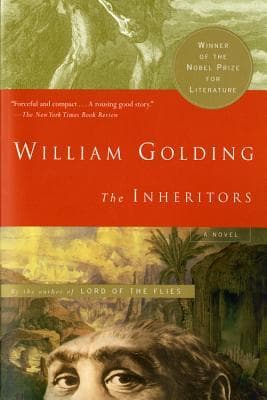
William Golding (1955)
Genre
Fantasy / Historical Fiction / Science Fiction
Reading Time
240 min
Key Themes
See below
Sign in to track this book
The last Neanderthals live in a changing world of strange sounds and violent newcomers, unknowingly facing the start of a new, terrifying age that will end their existence.
The People, a small Neanderthal group including Lok, Fa, Liku, Ha, Nil, Mal, and their Old Woman, live a simple, shared life. Instinct and the Old Woman's wisdom guide them. They are happy with their seasonal moves, gathering food, and sharing thoughts through their special, empathetic 'newt' process. Their world has strong ties to nature and each other. But as they go back to their summer cave, Lok feels a change. Strange smells, sounds, and unfamiliar shapes start to appear in their peaceful valley. A fallen tree blocks their way, something that has never happened before. This suggests a problem bigger than any natural event they have known. Lok, with his sharp senses, notices these unsettling signs most, feeling a growing worry that his people do not fully grasp.
The People continue their journey, but the feeling of unease grows. While crossing a stream, the youngest, Liku, and the baby, Mal, play near the water. Suddenly, an unseen force takes them. The People are confused and scared; they do not know about intentional harm from another creature like themselves. They search hard, but their limited understanding stops them from seeing what truly happened. Lok's senses are overwhelmed by new, troubling smells—'the smell of the other'—and strange tracks that are not animal. Losing Liku and Mal is a deep shock. It brings a new, confusing kind of suffering and fear into their world. This is the first direct loss from the approaching 'new people'.
Lok and Fa, grieving and needing to understand, follow the strange tracks. They carefully go to a clearing and see an amazing sight: a group of 'new people,' Homo sapiens, unlike anything they have ever met. These beings have advanced tools like bows and arrows, fire, and strange, stiff shelters. Lok is fascinated and scared by their complex actions, loud laughter, odd rituals, and clear power. He tries to understand what they are doing, often misunderstanding their goals because of his own limited view of the world. They see the 'new people' eating meat, using fire to cook, and doing things that are completely foreign to the People's simple life. This confirms that a powerful, dangerous new species is in their territory.
The stress of the new surroundings and the shock of the children disappearing weigh on the Old Woman. Her wisdom, once a guide, is now not enough to understand the new threats. As the People try to make sense of the 'new people's' presence, the Old Woman, weak and without hope, dies. Her death is a heavy blow, as she was the memory and spiritual center of their group. With her gone, the People lose their main source of guidance and understanding, leaving Lok, Fa, Ha, and Nil even more open to harm and confused. The 'new people' are not just a physical threat, but a threat to their very existence, breaking down the Neanderthals' traditional way of life and their ability to handle change.
Lok, with his sharp senses and simple, literal mind, keeps watching the 'new people'. He tries to understand their actions, which often seem conflicting and cruel to him. He sees them hunt with better weapons, make fire when they want, and have complex social interactions he cannot grasp. He sees acts of violence, drunkenness, and sex that are foreign to his people's gentle ways. He is especially confused by their use of tools and their ability to change their environment so much. Despite his fear, a strange pull makes him go back to watch them, hoping to find a pattern or understanding that might explain their power and their threat. He even sees his lost Liku's anklet on one of the new people, a scary sign of their involvement.
While watching the 'new people', Ha, one of the remaining Neanderthals, gets caught in a trap. Lok and Fa watch in horror as Ha is taken back to the 'new people's' camp. He is tied up and held captive, treated in their strange and cruel way. This event shows the huge power difference between the two groups. The 'new people's' ability to trap and control one of the People is a terrifying show of their power and their lack of care for the Neanderthals. Ha's capture is a clear reminder that the 'new people' are not just different, but actively dangerous, and can cause suffering the People have never known.
Lok and Fa, desperate to save Ha, try a nighttime rescue. They go to the 'new people's' camp, but the Homo sapiens misunderstand their efforts. In the confusion, during a moment of drunken celebration, Ha is accidentally killed by one of his captors. The 'new people' react with a mix of confusion and not caring, not fully understanding what they have done. Lok and Fa are crushed by this further loss, confirming the 'new people's' deadly nature and their own lack of power. The event shows the huge gap in understanding between the two species, where one's casual violence is another's deep tragedy.
After Ha's death, the remaining People, Lok, Fa, and Nil, are more and more desperate. Nil, the last of the younger generation, gets separated from Lok and Fa. It is suggested he is hunted and killed by the 'new people'. The 'new people', having found the Neanderthals, start actively hunting them, seeing them as little more than animals or obstacles. Lok and Fa are forced to flee, constantly chased. Their world, once safe and predictable, has become a never-ending nightmare of running and fear. The 'new people's' organized hunting groups and better weapons make escape harder, showing the near end of the Neanderthal way of life.
The 'new people' use a new, destructive method: they set fire to the forest, creating a huge blaze that burns the Neanderthals' familiar land. The fire, a terrifying force to Lok and Fa, drives them toward the sea. They are trapped between the fire and the chase by the Homo sapiens, who now use their greater intelligence and tools to get rid of the remaining Neanderthals. The fire shows the destructive power of the 'new people' and their full control over nature, a sharp contrast to the People's balanced relationship with their environment. Lok and Fa's world is literally burning around them.
Cornered by the fire and the chasing 'new people' at the edge of a cliff over the sea, Fa, weak and tired, falls to her death. Lok is left completely alone, the last of his kind. He is overwhelmed by sadness and hopelessness, realizing his people are gone. He watches the 'new people' celebrating, their shapes dark against the burning land. His isolation is complete; no one is left to share a 'newt' with, no one to understand him. His world is destroyed, replaced by a new, harsh reality where his kind does not belong.
From his high spot, Lok watches the 'new people' in their boats, sailing into the future. He sees their leader, Marlan, and his pregnant mate, Vivi, who carries the next generation of Homo sapiens. He has a quick, almost seeing 'newt' vision of their future: their growing numbers, their control of the sea, their increasing power, and their full conquest of the world. He sees their ability to create and destroy, their complex feelings, and their final win. As the 'new people' sail out of sight, Lok stays on the cliff, a solitary reminder of a past era, his people's story over, while the earth's new inhabitants start their own, very different, journey.
The Protagonist
Lok begins as a contented member of his tribe and ends as the last, isolated survivor, having witnessed the complete annihilation of his people and the rise of a new species.
The Supporting
Fa experiences the gradual destruction of her world and the loss of her family, ultimately dying in despair.
The Supporting
She begins as the wise leader but succumbs to the stress of the changing world, dying and leaving her people rudderless.
The Supporting
Liku's brief existence is marked by innocence, ending abruptly as a victim of the encroaching 'new people'.
The Supporting
Ha is a victim of the 'new people's' aggression, his capture and death symbolizing the Neanderthals' inability to resist.
The Supporting
Nil represents the lost youth and future of the Neanderthals, perishing before he can fully mature.
The Antagonist
Marlan leads his tribe to victory over the Neanderthals, ensuring the survival and future dominance of his own species.
The Mentioned
Vivi is a static character, representing the fertile promise of the 'new people's' future.
The Supporting
Tuami's arc is static, serving as an embodiment of the 'new people's' developing spirituality and cunning.
The novel shows the sad end of the Neanderthals, represented by Lok's people, because of Homo sapiens. Their innocence, gentleness, and inability to understand bad intentions or complex ideas make them completely helpless. The 'new people' are a more advanced, yet brutal, kind of human whose existence leads to the Neanderthals' end. The story shows the unavoidable, often violent, way evolution works, where one species' win means another's loss. The constant deaths of Liku, Mal, Ha, Nil, Fa, and the Old Woman directly show this, ending with Lok's lonely survival.
“He was not afraid of the new people in the way that an animal is afraid of a man. He was afraid of them in the way that a man is afraid of a god.”
Golding explores what 'human' means by comparing the Neanderthals' gentle, shared life with the Homo sapiens' more complex, often violent, and technologically advanced society. The Neanderthals, with their empathy and lack of aggression, might be seen as more 'humane' in their interactions, but they are considered 'less evolved'. The 'new people' show both smart thinking and casual cruelty, showing the two sides of human nature. Their use of fire, weapons, and organized hunting, along with their laughter and rituals, paints a picture of early civilization built on controlling others and the environment.
“The new people had a fire that ate wood, and they made things from the wood, and they ate the things they made.”
A main theme is the big problem with communication and understanding between Neanderthals and Homo sapiens. The People talk through a kind of empathetic 'newt' or shared thought, which the 'new people' cannot understand. Lok, in turn, struggles to understand the complex language, facial expressions, and abstract actions of the Homo sapiens, often misreading what they mean. This lack of understanding makes the tragedy worse, as the 'new people' see the Neanderthals as animals, while Lok cannot grasp their bad intentions or advanced intelligence. This breakdown means living together is impossible, leading to fighting and destruction.
“It was not a thing that happened to them, but a thing that was done. The new people did it.”
The novel clearly contrasts the Neanderthals' reliance on instinct, tradition, and a deep connection to nature with the Homo sapiens' developing technology and intelligence. The 'new people' use fire, bows and arrows, and boats—tools that give them great power over their environment and other species. The Neanderthals, in contrast, have only basic tools and rely on their senses and shared memory. This difference in technology is a main reason for the Neanderthals' fall, as their instinctive wisdom is no match for the Homo sapiens' strategic planning and better weapons. This shows the shift in power in evolution.
“The new people had a stick that killed at a distance.”
The Neanderthals' valley first seems like a paradise, a peaceful life in harmony with nature. Their lives are simple, repeating, and free from bad intentions. The 'new people's' arrival breaks this ideal world, bringing fear, violence, and destruction. The Homo sapiens burning the forest literally destroys this paradise, forcing Lok and Fa to run. This theme looks at how progress, while bringing advancement for one species, often costs another a simpler, more balanced way of life. It shows the lasting impact of human expansion.
“The world was not a good place any more. It was full of new smells and new sounds, and the new people.”
Narrative filtered exclusively through the Neanderthal protagonist's senses and understanding.
The entire story is told from Lok's perspective, filtering all events through his Neanderthal senses, simple thought processes, and limited understanding of the world. This device immerses the reader in the Neanderthal experience, creating empathy and highlighting their innocence. It also creates dramatic irony, as the reader often understands the 'new people's' actions better than Lok does, emphasizing the communication barrier and the tragic inevitability of the Neanderthals' demise. This perspective makes the 'new people' seem alien and terrifying, just as they do to Lok.
The Neanderthals' unique form of non-verbal, empathetic communication.
The 'newt' is the Neanderthals' primary mode of communication, a form of shared thought or empathetic connection that transcends spoken language. It allows them to understand each other's feelings and simple intentions directly. This device underscores their communal nature and lack of individualistic malice. The loss of others means the loss of shared 'newts', culminating in Lok's ultimate isolation when there is no one left to 'newt' with. It highlights their difference from Homo sapiens, who rely on complex, abstract language, and contributes to the theme of communication breakdown.
Emphasis on primal senses to convey the Neanderthal experience.
Golding heavily uses sensory details, particularly smell, sight, and sound, to convey Lok's experience of the world. Lok's acute sense of smell is often the first indicator of danger or the presence of the 'new people'. This device grounds the narrative in the Neanderthals' primal, instinctual reality and emphasizes their deep connection to their environment. It allows the reader to experience the world as Lok does, making the 'new people's' strange smells and loud sounds particularly jarring and threatening, contributing to the sense of unease and the impending doom.
Symbol of destruction, technology, and the end of a natural world.
Fire is a powerful symbol in the novel. For the Neanderthals, fire is a terrifying, uncontrollable force of nature. For the 'new people', it is a tool – for cooking, warmth, and ultimately, for warfare and destruction. The deliberate setting of the forest fire by the Homo sapiens to drive out the Neanderthals symbolizes their mastery over nature and their capacity for devastating, calculated destruction. It marks the literal burning away of the Neanderthals' world and the dawn of a new era dominated by human technology and control.
Symbol of progress, exploration, and the 'new people's' future dominance.
The boats of the 'new people' are a key symbol of their advanced technology, their ability to conquer new frontiers, and their inevitable future dominance. For Lok, the boats are incomprehensible objects that move on water without effort, representing a power beyond his understanding. In the novel's closing scene, the 'new people' sailing away in their boats signifies their successful migration, their ability to expand and populate the world, and the final, irreversible departure from the Neanderthals' era, leaving Lok as the sole relic of a bygone age.
“They were not aware that they were a people; they were the people.”
— Describing the Neanderthals' simple, unified existence before encountering Homo sapiens.
“The world was a place of voices, and the voices were the things themselves.”
— Reflecting the Neanderthals' animistic perception of their environment.
“They had no words for evil, only for things that were not understood.”
— Highlighting the Neanderthals' lack of moral complexity compared to the newcomers.
“The new people were like a river that had burst its banks, flooding the world with strangeness.”
— Describing the overwhelming and disruptive arrival of Homo sapiens.
“He did not think; he knew.”
— Illustrating the intuitive, non-analytical mindset of the Neanderthal protagonist, Lok.
“They were the inheritors, and they did not know what they had inherited.”
— Commenting on the Neanderthals' passive role in the face of evolutionary displacement.
“The fire was a red flower in the night, and they were its petals.”
— Depicting the Neanderthals' communal and reverent relationship with fire.
“They could not imagine a world without themselves in it.”
— Showing the Neanderthals' limited perspective on existence and extinction.
“The new people had words that cut like knives, separating thing from thing.”
— Contrasting the abstract, divisive language of Homo sapiens with Neanderthal unity.
“They lived in a web of kindness, an invisible net of mutual care.”
— Describing the empathetic and cooperative social structure of the Neanderthals.
“The world was shrinking, and they were being pushed to the edge of it.”
— Symbolizing the Neanderthals' gradual displacement by the advancing Homo sapiens.
“They had no need for gods; the world was enough.”
— Emphasizing the Neanderthals' spiritual connection to the natural world without religion.
“The new people carried death in their hands like a gift.”
— Critiquing the destructive capabilities and intentions of Homo sapiens.
“They were a dream that the world was forgetting.”
— Poetically describing the fading existence of the Neanderthals.
Ready to see how well you understood this book? Take our interactive quiz with 10 questions.
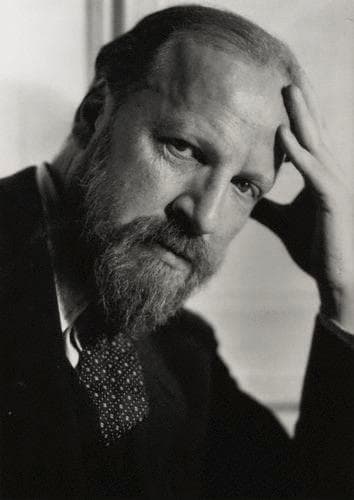
Sir William Gerald Golding was a British novelist, playwright, and poet. Best known for his debut novel Lord of the Flies (1954), he published another twelve volumes of fiction in his lifetime. In 1980, he was awarded the Booker Prize for Rites of Passage, the first novel in what became his sea trilogy, To the Ends of the Earth. He was awarded the 1983 Nobel Prize in Literature.







