“The revolution is also a house, a place where people can live with dignity.”
— Lavinia reflects on the goals of the revolution.

Genre
Historical Fiction
Reading Time
550 min
Key Themes
See below
Sign in to track this book
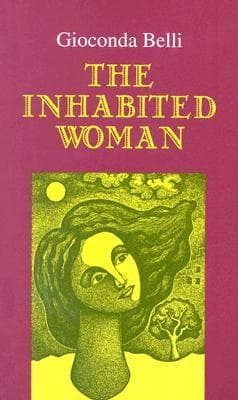
A sheltered modern woman, haunted by an ancient warrior's spirit, is pulled into a dangerous fight for freedom against a brutal dictator, discovering courage and love.
Lavinia Alarcón, a young architect educated in Europe, returns to her fictional Central American homeland, Faguas, which General Somoza rules. She gets a job at her uncle's architecture firm, where she meets Felipe Iturbe, a charismatic and politically active lawyer. At first, Lavinia cares more about her career and personal freedom, but Felipe's talks about the country's injustices and the need for revolution start to interest her. She is drawn to his idealism, which differs from her own somewhat detached life. Their relationship grows quickly, mixing personal attraction with shared interest in politics.
Lavinia moves into a new apartment with an old orange tree in its courtyard. She doesn't know this tree is a sacred site, a 'mother tree' where the spirit of Itzá, an indigenous woman warrior from centuries past, lives. Itzá's spirit, having seen her people's struggles, has been waiting for someone to continue her fight. Lavinia starts to feel strange sensations and have vivid dreams, feeling a connection to the tree and a growing unrest within herself. These subtle changes mark the beginning of Itzá's spirit merging with Lavinia's mind, a process that will change her future.
As Lavinia and Felipe's relationship deepens, Felipe tells her he is involved with an underground revolutionary movement, the Frente Sandinista de Liberación Nacional (FSLN). He carefully invites Lavinia to join, seeing her intelligence and growing political awareness. Despite her initial fears, Lavinia agrees, driven by her love for Felipe and a growing sense of responsibility to her country. Her first tasks are small, like communication and safe houses, but they show her the dangers of secret operations. This commitment is a big turning point, pulling her from her sheltered life into the heart of the resistance.
As Lavinia gets more involved in the revolution, Itzá's spirit fully integrates with her. Lavinia starts to experience vivid memories from Itzá's life: her love for her warrior husband, Yarince; the brutal Spanish conquest; and her fight against the invaders. These ancestral memories feel like real experiences, giving Lavinia Itzá's courage, resilience, and commitment to freedom. She begins to see the current struggles against the dictatorship through Itzá's historical fight against oppression, strengthening her resolve and connecting her personal struggle to a larger, timeless battle for justice.
Lavinia's involvement in the FSLN increases. She moves from simple messenger duties to more critical and dangerous assignments, including transporting weapons and helping with planning. Her architectural skills prove useful in understanding infrastructure for operations. The risks are huge, and she sees the harsh realities of the struggle, including the arrests and deaths of comrades. Despite the fear, Itzá's warrior spirit gives Lavinia courage, letting her face these challenges with a determination she never knew she had. Her transformation from a sheltered architect to a committed revolutionary is now almost complete.
The revolution demands personal sacrifices from Lavinia. She endures long separations from Felipe, and their relationship is constantly strained by the pressures of their secret work. The hardest blow is losing close comrades, whose deaths show the brutal cost of their fight. Lavinia deals with grief, fear, and moments of doubt, but Itzá's spirit reminds her of the ongoing struggle and the need for perseverance. These experiences harden her resolve, changing her from an idealistic participant into a seasoned revolutionary who understands the real price of freedom.
The Somoza dictatorship increases its repressive actions against the growing revolutionary movement. State security forces carry out widespread arrests, torture, and killings. Lavinia and her comrades are constantly watched, and their safe houses are often raided. The regime's brutality is shown through vivid accounts of its victims, emphasizing the urgent need for the revolution. This increased oppression further strengthens Lavinia's commitment, as she sees firsthand the atrocities committed by the government, reinforcing her belief that armed struggle is the only path to liberation.
Lavinia takes part in several key operations, including a daring bank robbery to fund the movement and a complex plan to rescue political prisoners. These actions put her in direct confrontation with the regime's forces, testing her courage and strategic thinking. Itzá's wisdom and warrior instincts guide Lavinia through these dangerous moments, helping her act decisively under extreme pressure. she learns to handle weapons, navigate dangerous urban environments, and make life-or-death decisions, fully embracing her role as a combatant in the fight for Faguas's freedom.
Lavinia and Felipe's love story happens alongside the revolution, constantly challenged by their shared commitment to the cause. Their intimate moments are brief and precious, often overshadowed by the dangers they face and the sacrifices they must make. While their love strengthens their resolve, it also creates vulnerabilities. They deal with the tension between their personal desires and their revolutionary duties, understanding that the revolution demands their ultimate loyalty, even at the cost of their individual happiness. Their relationship becomes a symbol of the personal sacrifices inherent in the struggle for collective liberation.
The story builds toward the final offensive, a period of intense fighting as the FSLN makes its decisive push against the Somoza regime. Lavinia is fully involved in the urban guerrilla warfare, fighting with her comrades. The battle is fierce, marked by both victories and devastating losses. While the novel doesn't explicitly detail the regime's fall, it ends with a sense of the revolution's overwhelming momentum and the changes it has brought about in Lavinia. She emerges from the struggle forever changed, a survivor and a warrior, carrying Itzá's legacy and the scars of her own fight.
The Protagonist
Lavinia transforms from a self-involved, apolitical professional into a courageous, committed revolutionary, guided by love and an ancestral spirit.
The Supporting/Spiritual Protagonist
Itzá's spirit finds its purpose through Lavinia, continuing her fight for freedom across centuries.
The Supporting/Love Interest
Felipe remains a steadfast revolutionary, serving as both Lavinia's love interest and a catalyst for her political awakening.
The Antagonist
His oppressive rule drives the central conflict, ultimately facing the revolutionary forces.
The Mentioned/Supporting
Yarince's memory serves as a foundational inspiration for Itzá's and Lavinia's fight.
The Supporting
Ricardo remains a loyal and instrumental member of the revolutionary movement.
The Supporting
Uncle Marcos remains mostly static, embodying the status quo against which Lavinia rebels.
The main theme is the struggle for national liberation against an oppressive dictatorship. The novel explores the reasons, sacrifices, and moral complexities of revolutionary movements. It highlights the desire for freedom and justice, and the personal change individuals experience when they commit to such a cause. Lavinia's journey from an architect to a dedicated combatant shows the impact of revolutionary ideals, connecting her modern struggle to Itzá's ancient fight against colonialism. The story emphasizes that true liberation requires active participation and great personal cost.
“To be free, one must fight. To be free, one must sacrifice everything.”
The novel explores female empowerment and the breaking of traditional gender roles. Lavinia, as a modern, educated woman, already challenges societal expectations, but Itzá's spirit increases this. Itzá, a pre-colonial warrior, embodies fierce female strength, inspiring Lavinia to take on active, dangerous roles in the revolution, roles traditionally for men. The book shows women not just as supporters, but as active participants and leaders in the fight for freedom, showing their courage, intelligence, and leadership in both love and war.
“A woman's strength is not just in giving life, but in defending it with equal passion.”
A core theme is the spiritual and ancestral connection that crosses time. Itzá's spirit inhabiting Lavinia links the present-day revolutionary struggle to the historical resistance of indigenous peoples against colonial oppression. This connection suggests that the fight for justice is an ongoing battle, with past struggles informing and empowering present ones. It highlights the idea that history is not just events but a living force that can guide individuals, providing strength and purpose from past generations. The orange tree is a powerful symbol of this lasting link.
“The past does not die; it sleeps, waiting to awaken in those who are ready to hear its call.”
The novel examines the relationship between love and sacrifice in revolution. Lavinia's love for Felipe is a main reason for her involvement, but this love is constantly tested by the demands of their shared cause. It highlights how personal relationships are both strengthened and strained by commitment to a greater ideal. The story explores the pain of separation, the fear of loss, and the willingness to sacrifice personal happiness, and even life, for collective liberation. It compares individual desire with revolutionary duty, showing love as a powerful, yet often painful, motivator.
“Our love was not just ours; it belonged to the revolution, a fuel for the fire.”
Lavinia's journey is one of identity and transformation. She begins as a detached individual, defined by her modern education and career goals. Itzá's spirit inhabiting her, combined with her direct involvement in the revolution, forces her to shed her old self and form a new identity as a warrior and activist. This change is not easy, as she deals with fear, doubt, and the blurring of her own identity with Itzá's. Ultimately, she becomes a fully realized, empowered woman who has integrated her past and present selves into a force for change.
“I was no longer just Lavinia; I was a vessel, a voice, a sword for all those who had fought before me.”
The blending of realistic narrative with supernatural elements, particularly the spirit possession
Magical realism is central to the novel, most notably through the spiritual possession of Lavinia by Itzá. This supernatural element is presented as a natural, albeit extraordinary, part of the reality of Faguas, rather than an anomaly. It allows for the seamless integration of historical memory and ancestral wisdom into the contemporary political struggle. The orange tree, as a sacred site, further grounds this magical element within the natural world, making the spiritual connection feel organic to the setting and the characters' experiences.
The simultaneous unfolding of Lavinia's modern story and Itzá's ancient memories
The novel employs parallel narratives by intertwining Lavinia's present-day revolutionary struggle with Itzá's memories of the Spanish conquest. This device highlights the cyclical nature of oppression and resistance, suggesting that the modern dictatorship is a continuation of historical injustices. By experiencing Itzá's past, Lavinia gains a deeper understanding and resolve for her present fight, making the historical context a living, breathing part of her own identity and motivation. It emphasizes the idea that history is not distant but actively shapes the present.
A sacred tree that acts as a conduit for ancestral spirits and a symbol of enduring life
The ancient orange tree in Lavinia's courtyard serves as a powerful symbol and a crucial plot device. It is the physical location where Itzá's spirit resides and the conduit through which she enters Lavinia. The tree represents deep roots, ancestral memory, and the enduring spirit of the land and its people. Its continuous cycle of life and fruit-bearing symbolizes hope, renewal, and the persistent possibility of growth and resistance even in harsh conditions. It grounds the magical realism in a tangible, natural element.
The narrative voice shifts between Lavinia's and Itzá's consciousness
While primarily told from Lavinia's perspective, the narrative effectively incorporates Itzá's consciousness, often blurring the lines between their thoughts and experiences. This dual perspective allows the reader to intimately understand both Lavinia's modern struggles and Itzá's ancient pain and wisdom. It enhances the theme of spiritual connection and transformation, as the reader witnesses the merging of two distinct identities into a single, powerful voice for justice. This technique deepens the emotional and historical resonance of the story.
“The revolution is also a house, a place where people can live with dignity.”
— Lavinia reflects on the goals of the revolution.
“To be a woman in this country is to be a rebel just by existing.”
— Lavinia contemplates the challenges and inherent defiance of women in her society.
“Love, like revolution, demands everything, risks everything, and transforms everything.”
— Lavinia draws a parallel between her personal relationships and her political commitment.
“The past is not dead. It is not even past. We carry it within us, and it continues to shape our present.”
— It's a reflection on the lingering impact of history and personal experiences.
“Freedom is not given; it is taken.”
— A revolutionary principle discussed among the militants.
“There are wounds that never show on the body that are deeper and more hurtful than anything that bleeds.”
— Lavinia considers the psychological scars of oppression and injustice.
“Hope is a dangerous thing, but it is also the only thing that keeps us alive.”
— Amidst despair, the characters cling to hope for a better future.
“A country is not just its land, but its people, their dreams, and their struggles.”
— A broader definition of nationhood that encompasses human experience.
“The greatest prison is a mind closed to change.”
— A commentary on intellectual rigidity and resistance to progress.
“Sometimes, the most revolutionary act is to simply be yourself, fully and unapologetically.”
— Lavinia finds strength in her authentic self amidst the demands of her political life.
“The stories of those who came before us are not just history; they are a living current that flows through our veins.”
— It highlights the ancestral connection and the continuation of struggles and dreams.
“To fight for justice is to believe in the possibility of a world where justice can exist.”
— A foundational belief that motivates the characters' activism.
“Silence can be a weapon, but it can also be a cage.”
— Lavinia reflects on the power and peril of remaining silent in the face of injustice.
“The heart of a woman holds the world, its sorrows and its fierce, unwavering dreams.”
— A poetic description of the strength and emotional depth of women.
Ready to see how well you understood this book? Take our interactive quiz with 10 questions.

Biography coming soon.







