“The painting was a portal to another world, a window into the soul of the artist.”
— Annie's initial reaction to seeing the Chardin painting.

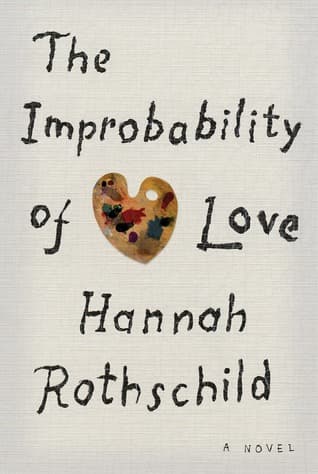
Hannah Rothschild (2001)
Genre
Historical Fiction / Creativity / Mystery / Romance
Reading Time
10-12 hours
Key Themes
See below
Sign in to track this book
A lovelorn chef finds a lost 18th-century masterpiece in a junk shop, starting a high-stakes treasure hunt through London's art world and forcing her to confront its secrets and her own capacity for love.
Annie McDee, a chef recovering from a breakup, enters a dusty London junk shop looking for a gift for her new, emotionally distant boyfriend, Jesse. Among forgotten items, a dirty oil painting catches her eye. It shows a woman in a blue dress with a small dog, and despite its poor state, Annie feels a connection to it. She buys it for seventy-five pounds, unaware she has a lost masterpiece. She takes it to her small flat above a restaurant, planning to clean it, but its true importance remains hidden.
Chloë, Annie's best friend and an art history student, visits Annie's flat and is immediately drawn to the painting. Despite its dirt, Chloë senses something unusual and, after some research, suggests it might be a significant work, perhaps a lost masterpiece by Jean-Antoine Watteau. This news excites and disbelieves Annie. Meanwhile, Evie, the junk shop owner, begins to regret her sale, hinting the painting was once very important, which increases Annie's suspicion about its true value.
As Chloë continues her research, news of a possible Watteau resurfacing spreads through the competitive London art world. Bartholomew, a cunning art dealer, quickly hears the rumor and wants to acquire the painting, believing it to be 'The Improbability of Love,' a legendary lost work. Other powerful figures, including the wealthy Russian oligarch Vladmir and the avaricious Sheikha al-Hamad, also learn about the painting, each with their own reasons for wanting it. Annie, still largely unaware of the art world's harsh nature, feels increasingly alone and vulnerable.
The story sometimes shifts to the painting's viewpoint, which tells its own long history. It describes its creation by Watteau in 18th-century France, its journey through various aristocratic owners, and its experiences during key moments in European history, including the French Revolution and the World Wars. Through its 'memories,' the painting reveals the lives and loves of its former owners, their passions, betrayals, and the impact it had on them. This unique storytelling gives historical context and deepens the mystery of its disappearance and reappearance.
Bartholomew increases his efforts to get the painting, using manipulative tactics and veiled threats. He sends his assistant, Ursula, to befriend Annie. Annie, overwhelmed by the sudden attention and the painting's rising value, becomes more anxious. Her relationship with Jesse, already weak, breaks under the stress, as he cannot support her. She finds comfort and connection with Ben, a kind art restorer Chloë recommends to examine the painting. Annie develops a slow romantic interest in Ben.
Ben begins the careful process of cleaning and restoring the painting. As layers of grime are removed, the vibrant colors and details of Watteau's original work are revealed. This restoration not only makes the painting more beautiful but also provides important evidence for its authenticity. During this time, Annie spends more time with Ben, finding his quiet passion for art a refreshing change from the greed of the art dealers. Their bond grows, and Annie starts to consider a new relationship.
Despite the pressure and the chance of a private sale, Annie decides to send the painting to a prestigious auction house, hoping for transparency and a fair valuation. This decision puts her directly against Bartholomew and other powerful collectors, who will do anything to get the masterpiece. She learns about the competitive world of auctions, where provenance, attribution, and market manipulation are important. Annie deals with the moral implications of selling such a historically important piece and how it will affect her life.
Through Chloë's research and Ben's restoration work, a key piece of evidence is found that clearly links Annie's painting to 'The Improbability of Love.' This confirms its attribution to Watteau and its status as a lost masterpiece. The art world becomes frantic, with the auction house expecting a record sale. However, this also increases the schemes of Bartholomew and his rivals, who now see the painting as an even more valuable prize, leading to a climax of deception and intrigue.
The auction day arrives, full of tension and high stakes. The bidding is fierce, with Bartholomew, Sheikha al-Hamad, and Vladimir all wanting the painting. In a dramatic ending, 'The Improbability of Love' sells for an enormous sum. While Annie becomes wealthy overnight, she also feels a sense of loss, realizing that true happiness does not come from material possessions. The sale also shows the true nature of many characters, revealing their greed. Annie must now deal with her new reality and decide what truly matters to her.
After the auction, Annie realizes that her true happiness is not in the chaotic art world but in real human connection. She chooses to be with Ben, who values her for who she is, not for the painting she once owned. She decides to use her new wealth to follow her passion for cooking and open her own restaurant, creating a place to share her love for food. Annie finds peace and happiness, having learned to open herself to the 'improbability of love' in both art and life, and embraces a future defined by her own choices and genuine affection.
The Protagonist
Annie transforms from a timid, lovelorn woman into a confident, self-assured individual who finds love and purpose on her own terms.
The Central Object/Narrator
The painting's 'arc' is its journey from obscurity and neglect back into the spotlight, reclaiming its rightful place in art history.
The Antagonist
Bartholomew remains largely unchanged, driven by his avarice, ultimately failing to secure the painting despite his elaborate schemes.
The Supporting
Chloë gains valuable experience and recognition within the art world, furthering her career ambitions.
The Supporting/Love Interest
Ben's arc is tied to Annie's, as he helps her discover the painting's true identity and opens her heart to love again.
The Supporting
Evie provides a historical link to the painting's past but does not undergo significant personal change.
The Supporting/Antagonist
Vladimir's pursuit of the painting highlights the global reach and competitive nature of high-stakes art collecting.
The Supporting/Antagonist
Sheikha al-Hamad's presence underscores the international competition for rare art, but her personal arc is not central.
The novel explores the many sides of art's value, comparing its monetary worth with its emotional and historical importance. While characters like Bartholomew and Vladimir see the painting as a way to gain status and wealth, Annie and Ben appreciate its beauty, craftsmanship, and the stories it tells. The painting's narration highlights its lasting power to inspire and reflect humanity, going beyond its price. The theme asks readers to consider whether art should be owned or simply appreciated, and if its true value can ever be measured, as seen in the dramatic auction where huge wealth is set against a humble, heartfelt connection.
““I am a painting. I have seen more of life than any human. I have witnessed love and loss, triumph and despair, beauty and ugliness. And I have learned that the true value of art is not in its price, but in its ability to tell a story, to connect us to the past, and to remind us of the enduring beauty of the human spirit.””
At its core, 'The Improbability of Love' is a love story, not just between Annie and Ben, but also between people and art. Annie's journey begins with heartbreak and a reluctance to love again, much like the painting's journey from being unknown. As she connects with the painting, she slowly opens up to Ben, finding real connection. The title, 'The Improbability of Love,' refers to how rare and precious true love is, whether romantic or artistic. The novel suggests that finding and embracing love, in all its forms, is a profound experience, more fulfilling than money or social status.
““Love, like art, is an improbable thing. It appears when least expected, flourishes in the most unlikely places, and changes everything.””
Annie's accidental discovery of the painting helps her transform. At first, she is defined by her past relationship and perceived ordinariness, but she is thrust into a world that challenges her assumptions and forces her to face her strengths and weaknesses. Through her interactions with the art world's characters and her growing understanding of the painting's history, Annie begins to assert herself, trust her instincts, and define her own values. She ultimately discovers her own power and chooses a path that aligns with her true self, rather than being swayed by outside pressures or the appeal of wealth.
““Sometimes, it takes finding something extraordinary to finally see yourself.””
The novel offers a critical look into the glamorous, rich, and often corrupt world of high-stakes art. It reveals the greed, snobbery, and ruthless ambition hidden beneath the surface of sophistication. Characters like Bartholomew, Vladimir, and Sheikha al-Hamad represent the commercial and power-driven aspects, where provenance can be faked, attributions manipulated, and fortunes made or lost on a single painting. The story highlights the clear difference between those who truly appreciate art and those who use it for profit or prestige, showing the moral complexities in this exclusive world.
““The art world is a gilded cage, beautiful on the outside, but filled with predators within.””
The painting itself narrates sections of the story, revealing its history.
This unique device allows 'The Improbability of Love' to tell its own story, offering a first-person perspective from the object at the heart of the plot. The painting recounts its creation by Watteau and its journey through centuries of owners and historical events. This technique provides rich historical context, reveals the intimate lives of its previous custodians, and offers a detached, philosophical commentary on human nature. It also builds suspense by gradually unveiling clues about its identity and past, engaging the reader in a deeper connection with the artwork itself.
The central mystery revolves around the painting's identity and lost history.
The entire plot is driven by the mystery of the painting's true identity and its long-lost provenance. Annie, Chloë, and Ben embark on a detective-like quest to uncover its past, piecing together clues, researching historical records, and examining artistic details. This device creates suspense and intrigue, as the characters (and the reader) are constantly trying to authenticate the artwork and understand its journey. The gradual revelation of its history, coupled with the efforts of those trying to steal or discredit it, propels the narrative forward.
The novel employs humor and exaggeration to critique the art market.
Rothschild uses satire to expose and critique the excesses, absurdities, and moral failings of the high-stakes art world. Characters like Bartholomew, with his ruthless ambition, and the eccentric collectors, with their insatiable desires, are exaggerated portrayals that highlight the greed, snobbery, and sometimes outright corruption prevalent in the industry. This satirical tone provides comic relief while simultaneously delivering sharp social commentary on wealth, class, and the commodification of culture, contrasting with Annie's more genuine and less jaded perspective.
Characters are strategically paired to highlight contrasting traits and values.
The novel effectively uses foil characters to emphasize key themes and character developments. Jesse, Annie's emotionally unavailable boyfriend, serves as a foil to Ben, who is kind, supportive, and genuinely interested in Annie. Bartholomew, the avaricious art dealer, stands in stark contrast to Annie's innocent appreciation for art and Ben's ethical approach to restoration. These pairings highlight the novel's central conflicts between greed and integrity, superficiality and genuine connection, and ultimately help define Annie's journey of self-discovery and her evolving values.
“The painting was a portal to another world, a window into the soul of the artist.”
— Annie's initial reaction to seeing the Chardin painting.
“Love, like art, is often found in the most unexpected places.”
— A recurring theme as Annie navigates her personal life and the art world.
“Every brushstroke tells a story, if only you know how to listen.”
— Annie's growing understanding of art history and technique.
“The art market is a jungle, and only the fittest (and most ruthless) survive.”
— Observations on the cutthroat nature of art dealing and collecting.
“To truly appreciate art, you must allow it to speak to you, not just look at it.”
— A lesson Annie learns about engaging with masterpieces.
“Sometimes the greatest treasures are hidden in plain sight, waiting to be rediscovered.”
— Referring to the Chardin painting's true identity.
“The past is never truly gone; it echoes in the present, influencing our choices.”
— The historical threads of the painting's journey.
“Creativity is not just about making something new, but about seeing the familiar with fresh eyes.”
— Annie's journey as an aspiring chef and her connection to art.
“A good meal, like a good painting, can nourish the soul as well as the body.”
— Annie's passion for cooking juxtaposed with her love for art.
“Beauty can be a dangerous thing, attracting both admiration and avarice.”
— The perils faced by the valuable painting.
“The true value of art is not its price tag, but the emotion it evokes.”
— A reflection on the commercial versus intrinsic worth of art.
“Mystery is often just a puzzle waiting for the right person to solve it.”
— Annie's role in uncovering the painting's secrets.
“Even in the darkest of times, art offers a glimmer of hope and connection.”
— The solace and inspiration art provides throughout the narrative.
“Sometimes, the most improbable things are the ones that are meant to be.”
— Reflecting on the unlikely discovery and events surrounding the painting.
Ready to see how well you understood this book? Take our interactive quiz with 10 questions.

Biography coming soon.







