“The mind is its own place, and in itself can make a heaven of hell, a hell of heaven.”
— A philosophical musing on the power of perspective.

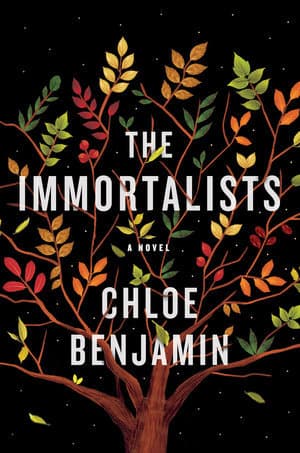
Chloe Benjamin (2018)
Genre
Literary Fiction / Fantasy / Historical Fiction
Reading Time
700 min
Key Themes
See below
Sign in to track this book
In 1969, four New York City siblings learn their death dates from a psychic, which shapes their paths through a world of magic, science, love, and loss, as they consider destiny versus choice over the next five decades.
In the summer of 1969, in New York City's Lower East Side, the four Gold siblings (Varya, Daniel, Klara, and Simon) hear rumors of a traveling Romani fortune teller. Curious about their futures, they secretly visit her tent. The psychic, a stern woman, tells each child their exact death date. This experience affects them deeply, though they react differently. Simon, the youngest, is shaken but curious. Klara, the dreamer, seems to enjoy the theatricality. Daniel, the responsible eldest, is skeptical but disturbed. Varya, the most practical, tries to dismiss it as superstition but cannot forget the unsettling information.
Simon Gold, told he will die young, goes against his family's expectations and moves to San Francisco in the 1970s. He embraces his homosexuality, which he felt he couldn't express in New York. Simon dedicates himself to dance, finding belonging in the city's gay community. He falls in love with Robert, a fellow dancer. Together they experience the joy and freedom of a life lived without reservation. Simon lives with urgency, determined to experience as much as possible, as if racing against his predicted death date. His life includes parties, artistic expression, and personal connections.
Klara Gold, affected by her death date and artistic nature, runs away to become a magician. She settles in Las Vegas, where she develops a successful act with her husband, Raj. Klara's magic is about creating an immersive experience, a world where the audience can believe in the impossible. She is interested in illusion, seeing it as a way to control reality and perhaps defy her fate. Her act often includes elements of mortality and the unknown, making her performances captivating and unsettling. She struggles with mental health, finding comfort and escape in her elaborate illusions.
Daniel Gold, the eldest brother, deals with the fortune teller's prophecy by seeking a life of order and control. He becomes a military doctor, a path that offers structure and purpose. After 9/11, he is deployed and sees life's fragility firsthand. Daniel marries Pearl and tries to build a conventional, secure life, but the knowledge of his death date influences his decisions and anxieties. He feels he is running out of time and fears illness and death, which he tries to fight through his medical profession and strict routine.
Varya Gold, the most intellectual and introverted sibling, responds to her death prophecy by focusing on scientific research, specifically longevity and the biology of aging. She becomes a leading scientist, working with rhesus macaques in a secluded lab, hoping to discover secrets to extended life. Varya lives an austere, isolated existence, driven by a desire to understand and potentially overcome mortality. Her work becomes her entire world. She avoids close personal relationships, believing they distract from her goal. She has obsessive-compulsive tendencies and fears contamination and illness.
Throughout their lives, the Gold siblings' predicted death dates are a silent, powerful force. Simon lives with abandon, embracing every experience. Klara channels her fears into her magical performances, creating her own world. Daniel seeks to control the uncontrollable, finding comfort in structure and medical certainty. Varya dedicates herself to scientific exploration, trying to defy mortality. The story shows how the prophecy, whether believed as destiny or dismissed as superstition, influences their choices, relationships, and internal struggles. It demonstrates the psychological impact of knowing (or thinking you know) your end.
As years pass, the siblings face various trials. Simon experiences the devastating AIDS epidemic, losing many friends and his beloved Robert. Klara battles mental health issues, and the strains of her profession and personal life take their toll. Daniel struggles with the ethical dilemmas of his military service and family pressures, feeling disconnected. Varya's isolation deepens, and she faces professional setbacks and loneliness. Each sibling, in their own way, confronts the consequences of their life choices and the pain of loss, often reflecting on whether their fates were truly predetermined.
Despite their different lives, the surviving Gold siblings sometimes try to reconnect. After Simon's death, Klara, Daniel, and Varya must confront their shared past and the prophecy's impact. These reunions are often filled with unspoken tensions and misunderstandings, as each sibling has lived a life uniquely shaped by their interpretation of the fortune teller's words. They deal with guilt, regret, and the question of whether their choices were truly their own, or merely steps towards an inescapable destiny. The family bond, though strained, remains a powerful connection.
The novel explores the theme of belief, not just in the fortune teller's prophecy, but in the power of stories we construct for ourselves. Simon believed in living fully, Klara in illusion, Daniel in order and control, and Varya in scientific truth. Each sibling's life shows how deeply held beliefs, rational or irrational, can shape one's path and perception of reality. The book leaves open whether the prophecies were self-fulfilling or truly predestined. Instead, it emphasizes the profound psychological impact of such knowledge and the choices made in its shadow.
As the story ends, the fortune teller's predictions' ultimate truth remains an open question. The book does not definitively confirm whether the siblings' deaths occur exactly as foretold, or if their lives were simply shaped by their belief in the prophecy, leading them down paths that aligned with those predictions. This ambiguity is central to the novel's message, emphasizing the interplay between free will and destiny. The focus shifts from the literal truth of the prophecy to its profound psychological and emotional impact on each character, leaving the reader to consider fate, choice, and the stories we tell ourselves about our lives.
The Protagonist
Varya starts as a driven, isolated scientist seeking to control mortality and gradually learns to confront her fears and embrace human connection, finding a different kind of fulfillment.
The Protagonist
Daniel begins seeking control and certainty through medicine and a conventional life but ultimately confronts the limits of his ability to control fate, finding a fragile peace.
The Protagonist
Klara embraces illusion to cope with her fate, eventually facing the realities of her mental health and the limitations of her magic, seeking a more authentic connection with her art and self.
The Protagonist
Simon lives a life of passionate self-discovery and love, ultimately facing the tragic reality of the AIDS epidemic with courage and a desire to leave a legacy of joy.
The Supporting
The fortune teller's impact is immediate and lasting, as her prophecy sets the stage for the entire novel's exploration of destiny and choice, without undergoing personal development herself.
The Supporting
Robert's character arc is tied to Simon's, representing the joy and tragic loss experienced within the gay community during the AIDS epidemic.
The Supporting
Raj provides a consistent, supportive presence for Klara, demonstrating the challenges and endurance of love in the face of her mental health struggles and artistic obsessions.
The Supporting
Pearl attempts to build a stable life with Daniel, navigating the challenges of his emotional detachment and the unspoken anxieties that permeate their relationship.
The novel's main theme explores fate versus individual choice. The fortune teller's prophecy acts as a catalyst, but the story questions whether the siblings' lives are truly predestined or if their belief in the prophecy leads them to make choices that fulfill it. Simon lives as if every day is his last. Klara creates her own reality. Daniel seeks to control his fate. Varya tries to scientifically defy it. The ambiguity around the prophecy's truth highlights the psychological power of belief and the tension between what is fated and what is chosen. For example, Simon's embrace of a hedonistic lifestyle might be a direct response to his short lifespan, or a choice he would have made anyway, intensified by the prophecy.
“What if the fortune teller had been wrong? What if, in fact, she had merely given them a story to which they were now irrevocably bound?”
The novel shows how stories—both those we are told and those we tell ourselves—shape our identities and realities. The fortune teller's story becomes the founding myth for the Gold siblings, influencing their entire lives. Klara, as a magician, creates illusions and narratives for her audience, blurring the lines between real and imagined. Simon lives his own story. Daniel seeks a conventional narrative. Varya tries to rewrite the story of human mortality. The book suggests that belief, whether in magic or science, can be a powerful force in shaping one's path and perception, often more influential than objective truth.
“Perhaps a life is a story, and a story is a life, and the only way to make sense of it all is to find a meaning within the pages, even if it's one you've invented yourself.”
Each Gold sibling deals with the inevitability of death in unique ways, driven by the knowledge of their predicted end dates. Simon lives with urgency, embracing life fully before his predicted early death. Klara uses illusion to escape the harsh realities of mortality. Daniel seeks control through medicine and order, trying to outwit death. Varya dedicates her life to scientific research, aiming to extend life itself. The novel also explores the impact of loss, particularly Simon's experience during the AIDS epidemic and his siblings' grief, showing how individuals confront and process the universal experience of mortality.
“Death was not a single event, but a series of small diminutions, a slow unraveling.”
Despite their different paths and coping mechanisms, the Gold siblings remain linked by their shared childhood experience and the secret of the fortune teller. The novel explores the complexities of sibling relationships—love, rivalry, misunderstanding, and lasting connection. While they often drift apart and struggle to understand each other's choices, an underlying pull draws them back together, especially in times of crisis or reflection. Their shared history and unique knowledge create a bond that transcends their individual lives, even when they feel disconnected.
“They were four points on a compass, each pulling in a different direction, yet always oriented by the same true north.”
Faced with the knowledge of their death dates, each sibling searches for meaning and purpose. Simon finds it in passionate self-expression and love. Klara seeks it in creating beauty and illusion. Daniel pursues it through service and a stable, ordered life. Varya finds her purpose in scientific knowledge and the potential to extend human life. The novel suggests that awareness of finitude can motivate individuals to define what truly matters to them and how they wish to spend their limited time.
“To live was to choose, and to choose was to define yourself.”
The central inciting incident that reveals each sibling's death date.
This device is the core of the novel, acting as the inciting incident that sets the entire plot in motion. The fortune teller's predictions about the Gold siblings' death dates create the central tension and drive each character's subsequent life choices. It functions as a powerful psychological catalyst, forcing each sibling to confront their mortality and shape their lives in response. The ambiguity of whether the prophecies are truly fated or self-fulfilling is crucial, allowing the novel to explore themes of destiny, free will, and the power of belief.
The novel follows each sibling's life sequentially, chapter by chapter.
The book employs a parallel narrative structure, dedicating distinct sections or chapters to each of the four Gold siblings in chronological order. This allows the reader to delve deeply into each character's individual journey, showcasing how their unique personalities and interpretations of the prophecy lead them down vastly different paths. This structure highlights the contrasts and similarities in their experiences, emphasizing the diverse ways humans cope with existential knowledge, while still maintaining the overarching thread of their shared family history.
Klara's magic and Varya's science represent different approaches to reality and control.
Klara's career as a magician and Varya's work as a longevity scientist serve as powerful symbolic foils. Klara's magic represents the human desire to create illusions, escape reality, and control perception, blurring the lines between what is real and what is imagined. Varya's science, conversely, represents the pursuit of objective truth, control over biological processes, and the attempt to conquer death through rational means. These two devices symbolize humanity's contrasting approaches to understanding and coping with the unknown, particularly mortality, and highlight the novel's exploration of belief systems.
The story is set against significant historical periods and events.
The novel uses specific historical periods—the Lower East Side in 1969, San Francisco's gay liberation movement and the AIDS epidemic in the 70s/80s, post-9/11 military service, and contemporary scientific research—as a backdrop for the characters' lives. These contexts are not merely settings but actively shape the characters' experiences, opportunities, and challenges. For example, Simon's story is inextricably linked to the AIDS crisis, and Daniel's to the post-9/11 world, grounding their personal journeys within broader societal transformations and demonstrating how external forces intersect with individual destinies.
“The mind is its own place, and in itself can make a heaven of hell, a hell of heaven.”
— A philosophical musing on the power of perspective.
“Perhaps there is no such thing as fate, only the choices we make and the consequences that follow.”
— A reflection on free will versus predestination.
“We are all just stories in the end, make sure yours is a good one.”
— A poignant thought on legacy and living a meaningful life.
“To live is to suffer, to survive is to find some meaning in the suffering.”
— A stoic observation on human existence and resilience.
“The only way to make sense out of change is to plunge into it, move with it, and join the dance.”
— An embrace of change and adaptability.
“Memory is a stranger. It lives in you, but not in your control.”
— A reflection on the elusive and independent nature of memory.
“There are some things you can't unsee, some things you can't unhear, and some things you can't unfeel.”
— An acknowledgment of indelible experiences and their lasting impact.
“Every life is a series of choices, and every choice ripples outwards, affecting everything that follows.”
— Emphasizing the interconnectedness of decisions and their consequences.
“Hope is a thing with feathers—that perches in the soul—and sings the tune without the words—and never stops—at all.”
— A poetic description of the enduring nature of hope.
“The future is a foreign country; they do things differently there.”
— A cautionary thought about the unpredictability of the future.
“To be human is to be caught between the past and the future, forever yearning for what was and what might be.”
— A contemplation of the human condition, caught between memory and aspiration.
“Love is not a state of perfect grace. It is a state of grace under duress.”
— A realistic view of love, acknowledging its challenges and resilience.
“Sometimes the greatest act of courage is to simply keep going, to put one foot in front of the other, even when you feel like you can't.”
— A simple yet profound definition of courage in the face of adversity.
“Life is a journey, not a destination. Enjoy the ride.”
— A reminder to appreciate the process of living rather than solely focusing on outcomes.
Ready to see how well you understood this book? Take our interactive quiz with 10 questions.

Chloe Benjamin is a fiction author celebrated for her novel, The Immortalists. This book, which explores themes of fate and mortality, received widespread critical acclaim and became a New York Times bestseller. Benjamin's writing is known for its imaginative concepts and compelling character development.







