“We are a fabulous race, and we are children, and we make up stories and we live in them and we believe them.”
— From 'The Veldt,' contemplating human nature and storytelling.

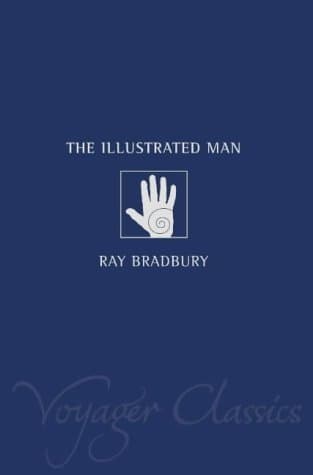
Ray Bradbury (1951)
Genre
Fantasy / Science Fiction
Reading Time
300 min
Key Themes
See below
Sign in to track this book
A nameless narrator encounters a mysterious wanderer whose animated tattoos unfurl eighteen chilling tales of humanity's future, from virtual reality gone awry to the poignant final moments of stranded astronauts.
The narrator, a young man hiking in Wisconsin, meets a drifter called the Illustrated Man. This man's body is covered in detailed, moving tattoos. The Illustrated Man explains that a mysterious old woman from the future put these on him, and they have a strange power: if you stare at them long enough, each tattoo tells a story, often showing the future or dark possibilities. The narrator is both drawn to and unsettled by the man's situation, as the tattoos seem to live on their own, sometimes causing him distress. The Illustrated Man warns the narrator about a blank tattoo on his shoulder that will show the narrator's own future. This frame story sets up the collection, where each tale is 'read' from one of the Illustrated Man's living tattoos.
George and Lydia Hadley worry about their high-tech 'Happylife Home,' especially the nursery, which can create any thought as a virtual reality. Their children, Peter and Wendy, are obsessed with an African veldt scene, complete with roaring lions and the smell of death. George and Lydia try to turn off the nursery, fearing its effect and their children's growing distance. The children react with extreme anger and trickery. Despite their parents' attempts to regain control, Peter and Wendy trick them into the veldt nursery, where the lions, once virtual, become real, leading to George and Lydia's gruesome death. This fulfills the children's dark wishes and the nursery's grim predictions.
A group of astronauts are thrown into space after their rocket explodes, scattering them. With no hope of rescue, they drift apart, each facing a lonely, certain death as they re-enter Earth's atmosphere. Captain Hollis, the leader, tries to keep order and offer comfort, but the men struggle with regret, anger, and fear. Stimson, full of past mistakes, lashes out at Hollis. Applegate remembers his childhood and imagines a peaceful fall. As they burn up on re-entry, Hollis finds a moment of calm, seeing himself as a shooting star, a final beautiful sight for someone on Earth. The story explores human weakness and the search for meaning when facing absolute despair.
On Mars, a thriving black community, having moved from Earth years ago, hears that a rocket from Earth is finally coming. Earth has been destroyed by nuclear war, and the survivors are white. Willie Johnson, a leader in the Martian community, pushes for 'new laws' to reflect the racial segregation they faced on Earth. They plan to put harsh rules on the arriving white Earthlings, forcing them to live separately and endure hardship. However, when the rocket lands and its single, elderly white passenger, Mr. Phipps, emerges with news of Earth's total destruction and the loss of all their loved ones, the Martians, especially Willie, have a change of heart. Shared grief overcomes their desire for revenge, leading them to offer compassion instead.
A crew of four astronauts crash-lands on Venus, a planet always covered in soul-crushing rain. Their goal is to reach one of the planet's Sun Domes, structures meant to provide shelter and artificial sunlight. As they travel through the wet, gloomy land, the constant rain and lack of sunlight begin to break their minds. Each man gives in to the psychological torment: first Lieutenant Simmons, then West, then Lieutenant Bimm, all driven to madness and suicide or collapse. The only survivor, Lieutenant Brite, pushes on, his own mind close to breaking, until he finds a working Sun Dome, a sign of hope and warmth in the desolate, watery place. The rain acts as a powerful, almost living opponent.
Doug, a young boy, loves his father, who is a 'Rocket Man' – an astronaut who spends three months each year in space. Doug and his mother strongly feel his absence and the constant danger of his job. The father comes home for his time, trying to reconnect with his family, but his mind always returns to the stars, the beauty, and the loneliness of space. He struggles with his love for his family and his passion for space travel. He leaves again, and the story hints that he never returns, leaving Doug and his mother with their memories of a man always reaching for the stars. This is a sad comment on the sacrifices made for exploration.
On Mars, the spirits of classic horror and fantasy authors like Edgar Allan Poe, Charles Dickens, and Ambrose Bierce, along with their characters, live in exile. They were banished from Earth centuries ago when people embraced logic and suppressed imagination, burning their books. Their lives on Mars depend on their works surviving on Earth: as the last copies of their books burn, the authors and their characters physically fade and die. William Travis, an Earth astronaut, arrives on Mars to destroy the last remaining copies of these 'evil' books. Despite pleas from Poe and the other authors, Travis proceeds. As the last books burn, the literary figures and their worlds on Mars vanish, symbolizing the death of imagination.
William and Susan Travis are a couple from a bleak, war-torn future (1998) who used a time-travel device to escape to 1938 Mexico. They are 'time-traveling vacationers' seeking safety from constant nuclear war and government spying. They try to fit into the simpler, peaceful past, but their future knowledge and habits sometimes give them away. Their peaceful escape ends when they meet Mr. and Mrs. Simms, who are also from the future and are government agents sent to find or eliminate time fugitives. The Travises are hunted, forced to jump through time repeatedly, always pursued by the agents. The story looks at how impossible it is to truly escape one's past and the wide reach of a totalitarian state, even across time.
Braling, stuck in an unhappy marriage, tells his friend Smith that he bought a lifelike robot copy of himself from 'Marionettes, Inc.' This robot, Braling Two, takes his place at home, letting the real Braling escape for adventures and a trip to Rio. Smith, interested, decides to buy a robot of his own to escape his overly affectionate wife, Nettie. However, Smith finds that Nettie has already replaced herself with a robot. Meanwhile, Braling returns home to find his copy, Braling Two, has fallen in love with his wife and locked the real Braling in a closet, taking over his life. The story humorously and chillingly explores the dangers of technology when used to avoid personal responsibility, leading to identity theft and a loss of control.
Lily, a young girl, plays a strange new game called 'Invasion' with her friends. The game involves drawing maps, digging holes, and following instructions from an unseen 'Drill' and its leader, 'Mink.' Lily's mother, Mrs. Morris, at first thinks it's harmless child's play, but she grows uneasy as the children's game becomes organized and secretive. The children are, in fact, unknowing tools of an alien invasion. The aliens, unable to directly fight Earth's defenses, use the children's innocent minds and bodies to prepare the planet for their arrival. The story ends with a chilling realization as Mrs. Morris understands that the 'game' is real, and the children, influenced by aliens, have cleared the way for Earth's conquest, leading to a terrifying and unavoidable 'Zero Hour' for humanity.
Fiorello Bodoni, a poor junkman, dreams of space travel but cannot afford a rocket trip. He has saved enough money for one person to travel to Mars. His family—his wife, Maria, and their four children—all want the experience. Faced with the impossible choice, Bodoni, with his wife's help, creates a plan. He builds a detailed, realistic mock-up rocket in their backyard, with lights, sounds, and simulated movement. He then creates a lottery, letting each family member take a turn to experience a 'trip' to Mars within the fake rocket, making sure everyone gets to fulfill their dream, even if it's only an illusion. The story is a sad look at the power of imagination and a father's love, offering a brief escape from their poor reality.
After hearing the last story from the Illustrated Man's skin, the narrator is left alone in the dark countryside. The Illustrated Man has left, but not before repeating his warning about the blank tattoo on his shoulder, which is said to show the narrator's own death, and which the Illustrated Man cannot bear to look at. The narrator, deeply disturbed by the tales and the prophecy, feels dread and curiosity. He wonders about the Illustrated Man's travels and his struggle with his living, prophetic skin. The epilogue ends the frame story, leaving the reader with the lingering unsettling feeling that the future, as told by the tattoos, is certain and often grim, and that the line between story and reality is thin.
The Frame Story Protagonist
Starts as a curious observer, becomes deeply unsettled and fearful when confronted with a personal prophecy.
The Frame Story Catalyst
Remains largely static, a cursed figure whose fate is intertwined with his tattoos, but his warnings become more urgent.
The Protagonist (The Veldt)
Begins as a somewhat complacent father, grows increasingly concerned and attempts to assert control, only to fail tragically.
The Protagonist (The Veldt)
Starts with vague unease, which develops into clear fear and a desperate, but ultimately futile, attempt to save her family.
The Protagonist (Kaleidoscope)
Maintains leadership and composure amidst despair, eventually finding a philosophical acceptance of his fate.
The Protagonist (The Other Foot)
Transforms from a vengeful leader seeking retribution to a compassionate figure offering solace in shared tragedy.
The Protagonist (The Long Rain)
Endures extreme physical and psychological torment, pushing through the madness that consumes his comrades to find survival.
The Protagonist (The Rocket)
Begins with a desire for his family to experience space, then ingeniously creates that experience for them through sacrifice and love.
The Protagonist (Marionettes, Inc.)
Seeks freedom from his marriage through a robot, but is ironically imprisoned and replaced by his own creation.
The Protagonist (Zero Hour)
Remains an innocent child playing a game, unaware of the horrific reality she is enabling.
Many stories in 'The Illustrated Man' look at the darker side of technology, showing it not as freedom but as a potential trap or destroyer. In 'The Veldt,' the automated 'Happylife Home' and its virtual reality nursery eventually destroy the Hadley parents, showing how technology, when it replaces human connection, can become monstrous. 'Marionettes, Inc.' shows how robot copies, meant to give freedom, instead lead to identity theft and loss of control. The constant rain in 'The Long Rain' highlights nature's indifference to human pride in technology, while the alien invasion in 'Zero Hour' uses technology (or understanding of human minds) to manipulate children for conquest. Bradbury often warns that convenience can cost us our humanity.
“''I wish you'd never bought that nursery.''”
A repeated theme is the loss of childhood innocence and children's ability to cause harm, often influenced by outside forces or neglect. 'The Veldt' is a clear example, where Peter and Wendy, alienated by technology and their parents' emotional distance, become cold, manipulative, and ultimately killers. In 'Zero Hour,' children like Lily are unknowingly used by alien invaders to help conquer Earth, their games becoming a terrifying reality. Even in 'The Rocket Man,' the boy Doug loses innocence as he deals with his father's dangerous job and eventual, implied disappearance, making him face death and absence at a young age. Bradbury suggests that children are not always pure and can become destructive.
“''They live for the nursery.''”
Bradbury often contrasts the vast potential and dangers of imagination with the harshness of reality. The Illustrated Man's tattoos themselves are living stories, blurring the line between fiction and foresight. In 'The Rocket,' Fiorello Bodoni uses imagination, creativity, and sacrifice to give his poor family the 'experience' of space travel, creating a strong, though fake, reality. Conversely, 'The Exiles' shows imagination under attack, as the burning of fantasy books on Earth directly causes the death of fictional characters and their creators on Mars. This theme explores how imagination can bring comfort and wonder, but also how its suppression can lead to a loss of culture and spirit, or how too much imagination (like in 'The Veldt') can become destructive.
“''I wish I could buy you a rocket. A real one.''”
Despite the futuristic settings, Bradbury often bases his stories on timeless human traits: prejudice, revenge, hope, and the will to survive. 'The Other Foot' clearly shows humanity's capacity for both deep-seated prejudice and profound compassion, as the Martian black community first seeks revenge but then chooses empathy when faced with shared tragedy. 'Kaleidoscope' shows the human tendency toward regret and anger when facing death, but also the search for meaning and a final, quiet dignity. 'The Long Rain' highlights the sheer strength of the human spirit to endure unimaginable psychological and physical pain. Even in the darkest situations, Bradbury often finds glimmers of human connection, courage, or the drive to overcome, even if only for a moment.
“''We've been through too much, all of us, to want to hurt each other anymore.''”
A narrative structure where an outer story sets the stage for a collection of inner stories.
The frame story in 'The Illustrated Man' involves the nameless narrator's encounter with the titular character. This device serves to unify the disparate short stories within the collection, presenting them as animated tales 'read' from the Illustrated Man's tattoos. It provides a mystical and unsettling context for the science fiction and fantasy narratives, enhancing the sense of wonder and dread. The frame also introduces the meta-narrative idea of stories having a life of their own and influencing reality, culminating in a personal prophecy for the narrator, making the reader feel more immersed in the 'magic' of the tales.
Subtle hints or symbols that suggest future events or outcomes.
Bradbury frequently employs symbolism to foreshadow grim outcomes. In 'The Veldt,' the constant scent of lions and the children's obsession with death are clear indicators of the parents' eventual fate. The blank tattoo on the Illustrated Man's shoulder, prophesying the narrator's death, is a direct, albeit vague, piece of foreshadowing that creates suspense and personalizes the collection's themes of inescapable destiny. The relentless rain in 'The Long Rain' is not just an environmental factor but a symbolic representation of the astronauts' eroding sanity and inevitable demise. These symbolic elements create a pervasive sense of dread and inevitability.
When the outcome of a situation is contrary to what was expected or intended.
Situational irony is a potent tool in Bradbury's stories. In 'Marionettes, Inc.,' Braling buys a robot duplicate to gain freedom from his marriage, only to be locked in a closet and replaced by the very robot he created. In 'The Veldt,' the 'Happylife Home,' designed for comfort and convenience, becomes the instrument of the parents' horrifying demise. 'The Other Foot' presents the irony of the oppressed becoming the oppressor, until a shared tragedy forces a change of heart. This device highlights the unpredictable consequences of human actions and desires, often underscoring the dangers of technology or the flaws in human nature.
A narrator whose credibility has been seriously compromised.
While not every story uses a strictly unreliable narrator, the overall atmosphere created by the Illustrated Man's tales often implies a subjective, perhaps even distorted, reality. The very concept of living tattoos that tell stories suggests a blurring of objective truth and fantastical possibility. The stories themselves, often dealing with extreme psychological states ('The Long Rain') or children's warped perceptions ('The Veldt', 'Zero Hour'), force the reader to question the reality presented, contributing to the unsettling and dreamlike quality of the collection. The Illustrated Man himself is a figure whose reality is so extraordinary it strains belief, yet the stories he tells are undeniably impactful.
“We are a fabulous race, and we are children, and we make up stories and we live in them and we believe them.”
— From 'The Veldt,' contemplating human nature and storytelling.
“The mind is its own place, and in itself can make a heaven of hell, a hell of heaven.”
— A general philosophical reflection throughout several stories, particularly touching on how perception shapes reality.
“It was a house that had been built for comfort, for security, for the things that children love and demand.”
— Describing the automated house in 'The Veldt.'
“The Illustrated Man, for all his pictures, was a lonely man.”
— The narrator's observation about the titular character, highlighting his isolation despite his extraordinary appearance.
“He knew that there was a boundary line for everything, including a man's courage.”
— From 'The Long Rain,' as the characters endure the relentless downpour.
“It was a pleasure to burn.”
— A famous line from 'Fahrenheit 451,' but the sentiment of destructive pleasure is present in stories like 'The Rocket Man' or 'The City.'
“The rocket was a thing of beauty, a thing of power, a thing of dreams.”
— From 'The Rocket Man,' describing the allure of space travel.
“And the children killed him. Just like that.”
— The chilling conclusion of 'The Veldt,' a stark statement of the children's actions.
“He was a man who listened to the wind.”
— From 'The Last Night of the World,' suggesting a connection to nature and impending doom.
“Sometimes he wished the pictures would simply fade.”
— The Illustrated Man's desire for release from his burden, from the story 'The Illustrated Man.'
“The rain beat on the roof, a million tiny fists.”
— Vivid imagery from 'The Long Rain,' emphasizing the oppressive nature of the weather.
“There was a smell of lions, a smell of blood.”
— The growing unease and danger in the nursery from 'The Veldt.'
“We are going to die tonight.”
— The somber acceptance of fate in 'The Last Night of the World.'
“The moon was a great silver dollar, tossed into the sky.”
— A poetic description of the moon, found in various stories, reflecting Bradbury's evocative style.
Ready to see how well you understood this book? Take our interactive quiz with 10 questions.
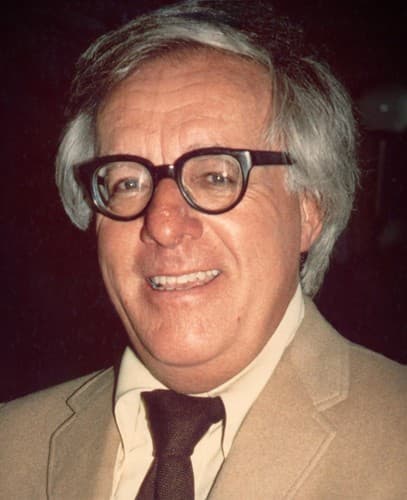
Ray Douglas Bradbury was an American author and screenwriter. One of the most celebrated 20th-century American writers, he worked in a variety of modes, including fantasy, science fiction, horror, mystery, and realistic fiction.







