“The sea, I soon learned, was a cruel mistress, giving with one hand and taking with the other.”
— Reflecting on the unpredictable nature of the ocean early in his ordeal.

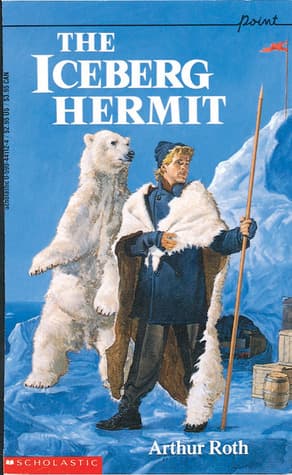
Arthur J. Roth (1974)
Genre
Children's / Historical Fiction / Mystery / Young Adult
Reading Time
240 min
Key Themes
See below
Sign in to track this book
Adrift in the 18th-century Arctic, a shipwrecked teen forges an unbreakable bond with an orphaned polar bear cub, battling the unforgiving ice and his own dwindling hope for survival.
In 1757, seventeen-year-old Allan Gordon, a cabin boy aboard the whaler 'The Bonnie Mary,' is swept overboard during a violent storm in the Arctic. He clings to a floating piece of wreckage, eventually finding himself stranded on a massive iceberg. His initial despair lessens with the discovery of a small, orphaned polar bear cub, whose mother was likely killed by whalers. Allan, remembering the bear's mother, takes pity on the cub and decides to care for it, naming him 'Wee Jimmie.' This unlikely friendship becomes Allan's only comfort and hope in the vast, desolate Arctic wilderness, as he faces his isolation and the immediate need for food and shelter.
Allan quickly understands how serious his situation is. He builds a simple shelter from ice and snow, using his limited knowledge and skills. He and Wee Jimmie learn to hunt seals and fish, which they need to survive. Allan develops a deep connection with the cub, relying on him for warmth and companionship, while Wee Jimmie depends on Allan for food and protection. Their days are a constant struggle against the weather, hunger, and the mental strain of isolation. Allan carefully records his experiences in a journal he salvaged, detailing their daily routines, observations of the Arctic wildlife, and his fading hope of rescue. He also makes a crude calendar to keep track of the days and seasons.
Months pass into a year, and Allan experiences the full cycle of Arctic seasons. The winter brings extreme cold and darkness, testing his endurance. He learns to fish through ice holes and hunt larger seals. Wee Jimmie, no longer a cub, grows into a large adult polar bear; his hunting skills are very helpful. Despite his size and power, Wee Jimmie remains loyal and affectionate towards Allan, never showing aggression. Their bond grows, changing from a boy and his pet into a unique partnership of two survivors. Allan continues to carefully document his thoughts and observations in his journal, which becomes his most important possession and a record of his sanity.
One day, while exploring a newly joined section of iceberg, Allan finds the remains of another shipwrecked vessel, the 'Alert.' Inside the ice-encased cabin, he finds the skeletal remains of a man, likely the captain, clutching a valuable brass compass. The sight is a stark reminder of his own uncertain existence but also gives him a new purpose. He carefully takes the compass, seeing its potential value if he ever returns to civilization. The discovery of the 'Alert' also gives him access to some salvageable wood and other materials, improving his living conditions slightly and giving him a renewed, though faint, glimmer of hope.
Among the wreckage of the 'Alert,' Allan uncovers a sealed bottle containing a cryptic message. The message, written by a previous castaway named 'J.M.,' speaks of a hidden treasure — 'the great pearl of the Arctic' — and hints at its location near a distinctive rock formation. This discovery ignites a spark of adventure and a new focus for Allan, distracting him from his monotonous existence. He studies the vague clues, wondering about J.M.'s identity and the nature of this legendary pearl. The message, while offering an intriguing mystery, also shows that others have faced similar fates in these unforgiving waters.
Driven by the lure of the treasure and the need for a purpose beyond just surviving, Allan works to decipher J.M.'s clues. He interprets 'the great pearl' not as a literal pearl but as a valuable walrus tusk, known for its ivory. With Wee Jimmie by his side, Allan begins to explore the vast iceberg and its surroundings more actively. Their search leads them to new dangers, including treacherous ice formations and aggressive walruses. Wee Jimmie's strength and hunting prowess are very helpful in these challenges, strengthening their shared relationship. Allan's journal entries change, reflecting his growing interest in the quest and the hope it represents.
After persistent searching and following the clues, Allan and Wee Jimmie finally find the 'great pearl of the Arctic.' It is not a single pearl, but a hidden cache of ancient, perfectly preserved walrus ivory, likely gathered over generations by a polar bear or a human trapper. The discovery is exciting, proving J.M.'s message and Allan's perseverance. He realizes the immense value of the ivory, understanding that if he ever makes it back to civilization, this treasure could secure his future. The ivory is too heavy to move easily, so Allan marks its location carefully, planning how he might eventually transport it.
As more years go by, Allan’s isolation deepens, but his resilience grows. He is no longer just surviving; he has made a life for himself on the iceberg. Wee Jimmie is now a magnificent, fully grown polar bear, a silent, powerful guardian and companion. Their communication is almost telepathic, a sign of their deep bond. Allan continues to write in his journal, detailing the passage of time, the changes in the Arctic, and his unwavering hope for rescue. He often thinks about his past life and dreams of returning home, but the Arctic has become his world, and Wee Jimmie his family. He has learned to read the ice and the weather like a native.
After seven long years of solitude, a miraculous sight appears on the horizon: a whaling ship. Allan's heart leaps with disbelief and overwhelming joy. He frantically tries to signal the ship, waving makeshift flags and shouting, though he knows the distance is too great. Wee Jimmie, sensing Allan's excitement, watches intently. The ship is his only chance of returning to the world he once knew. Allan is desperate as he watches the vessel, fearing it will pass by without noticing him. He must find a way to make his presence known before this opportunity vanishes.
Through determination, Allan manages to attract the attention of the whaling ship, 'The Sea Serpent.' The crew is astonished to find a man, gaunt but alive, accompanied by a massive polar bear. Allan is brought aboard, weak but overjoyed to be rescued. However, the emotional reunion is bittersweet. He must make the agonizing decision of leaving Wee Jimmie behind. He knows Wee Jimmie, now a wild animal, cannot survive on a ship or in civilization. With a heavy heart, Allan bids a tearful farewell to his loyal companion, watching as Wee Jimmie retreats into the ice. The captain of 'The Sea Serpent' listens to Allan's incredible story, hardly believing the tale of the 'Iceberg Hermit.'
Allan eventually returns to Scotland, a changed man. His story of survival, the 'Alert's' compass, and the tale of the hidden walrus ivory captivate the public. The captain of 'The Sea Serpent' helps him retrieve the ivory cache, which is very valuable. Allan uses the wealth to establish a comfortable life for himself. He publishes his journal, sharing his seven-year ordeal and the deep bond he shared with Wee Jimmie, becoming a celebrated figure. Though he never forgets the Arctic or his loyal polar bear, Allan embraces his new life, forever marked by his time as the 'Iceberg Hermit.'
The Protagonist
From a terrified shipwreck survivor, Allan transforms into a self-sufficient, wise, and resilient individual, deeply connected to the natural world.
The Supporting
Wee Jimmie matures from a helpless cub into a powerful, independent polar bear, always remaining loyal to Allan.
The Mentioned
His story is already complete, serving as a catalyst for Allan's journey.
The Mentioned
Not applicable, as he is only present at the beginning of the story.
The Supporting
No significant arc, serves as a catalyst for Allan's rescue and return.
The Mentioned
Not applicable; its purpose is symbolic and a plot device.
The core theme is Allan's struggle for survival against the brutal Arctic environment. From finding food and shelter to enduring extreme cold and isolation, his endurance is constantly tested. His ability to adapt, learn new skills, and maintain hope in the face of overwhelming odds shows the human spirit. The book carefully details the practical aspects of survival, such as hunting, crafting tools, and tracking time, showing how resourcefulness and determination are key to enduring the impossible.
“Days turned into weeks, weeks into months, and still, the vast, white silence was his only companion, yet hope, a stubborn ember, refused to die.”
The unusual relationship between Allan and Wee Jimmie is central to the story. Their bond goes beyond species, becoming a source of mutual support, companionship, and even love. Wee Jimmie is not just a pet but a partner in survival, providing warmth, protection, and hunting assistance. Allan, in turn, cares for the bear, showing compassion and respect for the natural world. This unique friendship is important for Allan's mental and emotional well-being, preventing him from succumbing to despair and showing the deep connections possible between humans and animals.
“Wee Jimmie, his only friend in this desolate world, was more than just a bear; he was family.”
The theme of isolation explores the psychological cost of being utterly alone for years in a vast, empty place. Allan's journal entries show his internal struggle to maintain his sanity, to remember his past, and to hold onto hope. Wee Jimmie's presence helps combat loneliness. The story looks at how a human mind copes with no other human interaction, finding meaning in routine, observation, and working towards a goal (the treasure). It shows the importance of purpose and connection, even if that connection is with an animal.
“The silence was so profound it often felt like a physical presence, pressing in, threatening to consume his very thoughts.”
Beyond just surviving, Allan's journey has a sense of adventure and discovery. His exploration of the iceberg, the finding of the 'Alert,' and the quest for J.M.'s 'great pearl' give him purpose and drive beyond basic needs. These discoveries offer him hope, distract him from despair, and add layers of mystery and excitement to his otherwise monotonous existence. The pursuit of the unknown and the solving of clues turn his ordeal into a personal journey, showing humanity's desire to explore and uncover secrets.
“The message in the bottle was a lifeline, a whisper from another soul, and a promise of something more than just endless days of survival.”
A written record of Allan's experiences, thoughts, and observations.
Allan's journal serves as a crucial plot device, providing direct insight into his thoughts, fears, and observations, making the narrative deeply personal and authentic. It acts as a timeline, marking the passage of days, months, and years, and documents his evolving skills and mental state. The journal is also a means for Allan to maintain his sanity, a way to externalize his experiences and prevent himself from losing touch with reality. It offers a reliable, first-person account of his incredible ordeal, making the story feel immediate and compelling.
A companion and symbol of the Arctic's dual nature.
Wee Jimmie is more than just a character; he functions as a multifaceted plot device. He is Allan's primary companion, preventing complete isolation and providing crucial assistance in hunting and protection. Symbolically, he represents the wild, untamed beauty and danger of the Arctic, yet also its capacity for unexpected companionship. His growth mirrors Allan's own journey of adaptation. His presence creates unique challenges and opportunities, driving parts of the plot, such as hunting expeditions and the emotional arc of their eventual separation.
A cryptic clue from a past castaway, leading to a hidden treasure.
The message in a bottle, left by the mysterious J.M., is a classic plot device that introduces an element of mystery and adventure. It provides Allan with a new purpose beyond mere survival, giving him a concrete goal to pursue. The clues within the message drive a significant portion of the mid-story plot, leading to the discovery of the walrus ivory. It also serves to connect Allan to another human experience of isolation, even if only indirectly, offering a psychological lifeline and a distraction from despair.
A discovery that provides resources and a link to other castaways.
The discovery of the 'Alert' serves several purposes. It provides Allan with valuable salvageable materials, offering practical aid in his survival. More significantly, it provides the compass, a tangible link to civilization, and the message in a bottle, which propels the treasure hunt subplot. The skeleton within is a stark reminder of the dangers of the Arctic and the fate Allan narrowly avoided, intensifying the stakes of his own survival story. It grounds the narrative in a sense of realism and historical context.
“The sea, I soon learned, was a cruel mistress, giving with one hand and taking with the other.”
— Reflecting on the unpredictable nature of the ocean early in his ordeal.
“Hope, like a tiny spark, can keep a man alive in the darkest of nights.”
— Considering his mental state during prolonged isolation.
“A man's greatest enemy is often his own mind, when left to wander in despair.”
— Struggling with loneliness and the psychological toll of being stranded.
“The silence was so profound, it almost had a sound of its own, a deep, resonant hum.”
— Describing the overwhelming quiet of the remote Arctic environment.
“Every sunrise was a victory, every sunset a reminder of another day endured.”
— Marking the passage of time and his determination to survive.
“I learned to read the ice as a sailor reads the stars, for it held both promise and peril.”
— Developing essential skills for navigating and surviving in the icy landscape.
“The greatest wealth, I discovered, was not gold or jewels, but the warmth of a fire and a full belly.”
— Reflecting on changed priorities and values in his desperate situation.
“Fear can be a useful companion, if it sharpens your senses and quickens your wit, but never let it master you.”
— Advising himself on managing fear in dangerous situations.
“Even in the most desolate places, life finds a way to cling on, a testament to its stubborn will.”
— Observing the resilience of nature in the harsh Arctic.
“The taste of fresh water, a simple thing, became a luxury beyond measure.”
— Appreciating basic necessities that were once taken for granted.
“My journal became my only confidant, a silent listener to my deepest fears and fleeting hopes.”
— Detailing the importance of his journal for maintaining sanity and documenting his experience.
“The past was a distant shore, and the future an uncharted sea; only the present moment truly existed.”
— Focusing on living in the present to cope with his predicament.
“A man adrift is not truly lost until he gives up the fight within himself.”
— Emphasizing the internal battle for survival and the importance of not losing hope.
“The stars, so cold and distant, were yet a comforting presence, ancient witnesses to my solitude.”
— Finding a strange solace in the vastness of the night sky.
Ready to see how well you understood this book? Take our interactive quiz with 10 questions.

Dan Gemeinhart
4.5

Kate O'Hearn
4.4

Jeanne Birdsall
4.4

Jen Wang
4.4

Wendelin Van Draanen
4.3

John Marsden
4.3

Chris Van Allsburg
4.3
Jennifer A. Nielsen
4.2