“The wind howled a mournful tune, rattling the windows in their frames, a sound that had become as familiar as the beating of her own heart.”
— Sarah reflecting on the isolated life in the house on the island.

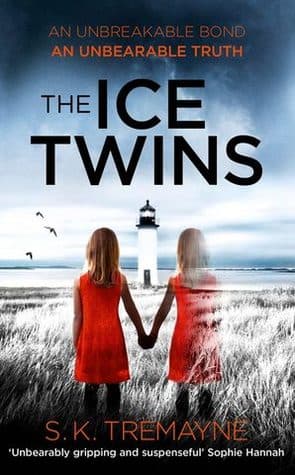
S.K. Tremayne (2015)
Genre
Thriller / Mystery
Reading Time
7-8 hours
Key Themes
See below
Sign in to track this book
On a remote Scottish island, a grieving mother's sanity unravels as her surviving identical twin claims to be the one who died, forcing her to confront the chilling possibility that she buried the wrong daughter.
A year after the tragic death of their identical twin daughter, Lydia, in a fall from a window, Sarah and Angus Moorcraft decide to move their surviving daughter, Kirstie, from London to Eilean Torran. This remote, windswept island off the coast of Scotland is home to a dilapidated lighthouse keeper's cottage, inherited by Angus from his grandmother. Sarah hopes the isolation and change of scenery will help them all heal from their grief and the strain on their marriage. However, the move is tense; Angus is often distant, and Sarah struggles with guilt and the constant reminder of Lydia's absence.
Soon after arriving on Eilean Torran, Kirstie, the surviving twin, starts acting strangely. She insists to Sarah that there has been a mistake, and that she is, in fact, Lydia. This claim shatters Sarah's fragile peace, bringing back the trauma of Lydia's death and making her question everything she thought she knew. Sarah tries to dismiss it as a child's coping mechanism or a morbid game. But Kirstie's insistence, along with her knowledge of specific details only Lydia would know, begins to plant a terrifying seed of doubt in Sarah's mind. Angus, initially dismissive, grows frustrated by Sarah's increasing obsession with the possibility.
As the harsh Scottish winter begins, Angus, a marine biologist, is called away for extended periods for his work. This leaves Sarah and the unsettling twin isolated in the remote cottage. Sarah's mental state quickly worsens under the strain. She finds herself constantly watching her daughter, searching for clues to her true identity. The island's desolate beauty starts to feel oppressive, and the constant wind and crashing waves mirror her inner turmoil. She experiences vivid flashbacks and nightmares about the day Lydia died, further blurring the lines between reality and her increasingly fractured perception.
Driven by Kirstie's persistent claims, Sarah begins to obsessively review old photographs and videos of the twins, trying to find definitive proof of who is who. She recalls specific traits, habits, and even the nuances of their personalities, but their identical nature makes identification incredibly difficult. Her memories of the day Lydia died are fragmented and unreliable, clouded by shock and grief. This intense scrutiny, instead of providing clarity, only deepens her confusion and paranoia, making her question her own sanity and memory, especially because the girls had often swapped identities as a game.
While exploring the old cottage, Sarah discovers a hidden compartment containing journals and personal effects belonging to Angus's grandmother, Elspeth. The journals detail Elspeth's life on the island, her struggles, and local folklore. Sarah also finds a collection of taxidermied birds and other unusual items. These discoveries, instead of distracting her, seem to amplify the eerie atmosphere of the island and the house. Elspeth's writings occasionally hint at mental instability and a deep attachment to the island, making Sarah wonder about the hereditary nature of such traits and their potential impact on Angus.
The twin's behavior becomes more disturbing. She talks to an imaginary friend, draws unsettling pictures, and sometimes shows a chilling detachment. Sarah observes her daughter engaging in secretive behavior, and her insistence on being Lydia becomes more aggressive, almost manipulative. Sarah's attempts to discuss these concerns with Angus are met with dismissal or anger, further isolating her. The child's actions, combined with Sarah's own deteriorating mental state, create unbearable tension within the small cottage, making Sarah fear for both her daughter's well-being and her own.
A ferocious winter storm descends upon Eilean Torran, cutting off all communication and travel to the mainland. With Angus away, Sarah and the twin are completely isolated. The relentless wind and waves batter the cottage, creating a terrifying and claustrophobic environment. The storm mirrors Sarah's escalating internal turmoil, as her grip on reality loosens further. Power outages and the sounds of the storm amplify her fears, making her vulnerable to her own increasingly vivid and disturbing hallucinations and memories of the past.
During the height of the storm, driven to desperation, Sarah confronts the twin, demanding to know the truth. Under intense pressure, the twin finally confesses what happened on the day Lydia died. She reveals that they had been playing their usual identity-swapping game, and it was *Kirstie* who fell from the window, not Lydia. This revelation upends Sarah's entire understanding of the past year and the identity of her surviving daughter. The shock is immense, as Sarah grapples with the implications of this long-held secret and the trauma it has caused.
The twin, now confirmed as Lydia, recounts the full, horrifying details of the accident. She explains that Kirstie fell from the window after a playful squabble turned serious. In a moment of panic and terror, and fearing punishment, Lydia, the surviving twin, decided to pretend she was Kirstie. She had swapped clothes with her dead sister and manipulated the scene to make it appear that Lydia was the one who had died. This calculated deception, born of a child's fear, had been maintained for a year, fueled by the parents' grief and their unwitting complicity in the misidentification.
As the storm subsides, Angus returns to find a devastated Sarah, who relays Lydia's confession. The truth shatters Angus, revealing the extent of his wife's mental breakdown and the profound deception. The family must confront the terrible reality of their loss and the identity of their surviving child. The revelation brings a new wave of grief and guilt, forcing Sarah and Angus to re-evaluate their entire relationship and their roles in the tragedy. The future for the Moorcrafts, especially for Lydia, remains uncertain as they face the daunting task of healing and rebuilding their lives with this devastating truth.
The Protagonist
Sarah's arc is one of profound psychological deterioration and eventual, painful enlightenment, as she navigates her grief to uncover a devastating truth.
The Supporting
Angus's arc reveals his emotional detachment and denial, culminating in a devastating confrontation with the truth he tried to avoid.
The Protagonist/Antagonist
The twin's arc is a slow reveal of her true identity and the traumatic circumstances that led to her deception, forcing her to confront the consequences of her actions.
The Mentioned
The deceased twin's arc is revealed retrospectively, as the true nature of her death and identity are uncovered.
The Mentioned
Elspeth's story is revealed through her journals, offering a historical backdrop and thematic resonance rather than a personal arc.
The novel explores the destructive power of unresolved grief and trauma. Sarah's inability to process Lydia's death, coupled with her guilt, makes her vulnerable to psychological collapse. The move to the isolated island, meant to help heal, instead increases her internal suffering, seen in her vivid nightmares and hallucinations. The entire family is broken by the initial tragedy, showing how trauma can warp perception and relationships, leading to further deception and pain. The story highlights the lasting and complex effects of loss.
“Grief is a house of mirrors. Every surface reflects your sadness. Every window shows you what you've lost.”
A central theme is the fluid and deceptive nature of identity, especially with identical twins. The twins' childhood game of swapping identities becomes a terrifying reality after Kirstie's death, as Lydia maintains the deception for a year. This forces Sarah to question her basic understanding of her own child and her memories. The book explores how easily identity can be mistaken, manipulated, and even lost, not just by others but by the individual themselves, as Lydia internalizes her assumed role to some extent. It challenges the reader to consider what truly defines a person beyond their name.
“How could I have lived with her for a year, bathed her, dressed her, read her stories, and not known who she was?”
The remote setting of Eilean Torran is not just a backdrop but an active force in the narrative, significantly contributing to Sarah's descent into madness. The physical isolation from the mainland mirrors her emotional and psychological isolation from Angus and from reality. The relentless storms, the desolate landscape, and the eerie cottage amplify her paranoia and hallucinations. The theme explores how extreme isolation can erode one's sanity, blurring the lines between what is real and what is a product of a tormented mind, as seen in Sarah's increasing inability to trust her own perceptions.
“The island was a cage, the sea a moat, and I was trapped inside with a child who might not be my child.”
Sarah is consumed by a deep sense of parental guilt, not only over Lydia's death but also her perceived failure to recognize her own surviving daughter. This guilt fuels her desperate search for the truth, even as it drives her to the brink. Angus also carries guilt for his emotional distance and dismissiveness of Sarah's concerns. The novel examines the immense pressure and responsibility of parenthood, and how a moment of inattention or a child's innocent game can lead to catastrophic consequences and a lifetime of self-reproach. It highlights the vulnerability of children and the lasting impact of parental mistakes.
“Every parent has moments of distraction, moments when you look away. But what if one of those moments costs you everything?”
Sarah's deteriorating mental state makes her perspective untrustworthy.
Sarah Moorcraft serves as the primary unreliable narrator. Her profound grief, trauma, and the isolated setting cause her to experience hallucinations, fragmented memories, and paranoia. This makes the reader constantly question the veracity of her observations and conclusions, particularly regarding her daughter's identity. The device effectively heightens the suspense and psychological tension, as the reader is forced to piece together the truth alongside Sarah, never quite sure what is real and what is a product of her unraveling mind.
Subtle hints and eerie details hint at the devastating twist.
The novel employs subtle foreshadowing throughout, often through the twin's unsettling behavior, Sarah's fragmented memories, and even the island's folklore. For instance, the twins' habit of swapping identities as a game is mentioned early on, setting the stage for the later revelation. The eerie atmosphere of the island and the old cottage, along with Elspeth's journals, hint at hidden truths and potential madness. These clues, seemingly innocuous at first, gain profound significance upon the final revelation, making the twist both shocking and retrospectively logical.
The remote, harsh Scottish island amplifies the psychological torment.
The island of Eilean Torran is more than just a backdrop; it acts as a character, actively influencing the plot and the characters' psychological states. Its extreme isolation, the relentless winter storms, the desolate landscape, and the dilapidated cottage contribute to Sarah's increasing paranoia and sense of entrapment. The harsh environment mirrors the internal turmoil of the characters, intensifying their grief, fear, and mental fragility. It creates a claustrophobic and oppressive atmosphere that escalates the psychological horror, making escape from the truth as difficult as escape from the island itself.
Clues are presented to mislead the reader about the true nature of the mystery.
The primary red herring is the initial assumption, shared by Sarah and the reader, that the surviving twin is Kirstie and that Lydia is the one who died. The novel presents numerous 'clues' that seem to confirm this, such as Sarah's attempts to identify specific traits of Kirstie. This misdirection is crucial to the plot's central twist. The narrative skillfully plays on the reader's expectations and the inherent difficulty in distinguishing identical twins, leading them down a path of increasing doubt about Kirstie's claims, only to reveal that the initial premise was flawed from the beginning.
“The wind howled a mournful tune, rattling the windows in their frames, a sound that had become as familiar as the beating of her own heart.”
— Sarah reflecting on the isolated life in the house on the island.
“She looked at Kirstie, then at Lydia. Two girls, so alike, yet one was gone. And the one who remained was a stranger.”
— Sarah observing her surviving daughter, feeling a profound sense of loss and confusion.
“Memory is a treacherous thing. It plays tricks, distorts the past, makes you believe things that never happened.”
— Sarah grappling with her own recollections and the unreliable nature of memory.
“The house was a mausoleum of memories, each room holding an echo of the life they had once shared, a life now fractured beyond repair.”
— Sarah's perception of the family home after the tragedy.
“He saw the shadow in her eyes, the lingering doubt, the way she clutched at the fragments of her sanity.”
— Angus observing Sarah's deteriorating mental state.
“The sea, always the sea. It took, and it gave nothing back but cold, empty promises.”
— Sarah's grim view of the ocean surrounding their island home.
“How do you tell the difference when they were identical? How do you know which one is truly yours?”
— Sarah's agonizing question about her twin daughters' identities.
“The silence in the house was a living thing, heavy and oppressive, filled with unspoken words and unaddressed fears.”
— The atmosphere within the family home, burdened by grief and secrets.
“Every secret has a life of its own, growing in the dark until it consumes everything.”
— A reflection on the destructive nature of hidden truths.
“She felt like she was walking on a thin sheet of ice, knowing any moment it could crack and send her plunging into the freezing depths.”
— Sarah's precarious mental and emotional state.
“Grief wasn't a journey with a destination; it was a labyrinth, winding and endless, with no clear path out.”
— Sarah's understanding of her ongoing struggle with grief.
“Sometimes, the truth is not what you want it to be. Sometimes, it's far more brutal.”
— A realization about the painful nature of uncovering the truth.
“The past isn't dead. It's not even past. It's here, in this house, in these walls, in us.”
— Sarah's feeling that the past continues to haunt and influence their present.
Ready to see how well you understood this book? Take our interactive quiz with 10 questions.

Biography coming soon.







