“The past is like a ghost, it follows you everywhere.”
— Joona Linna reflecting on the lingering impact of past events on people's lives and investigations.

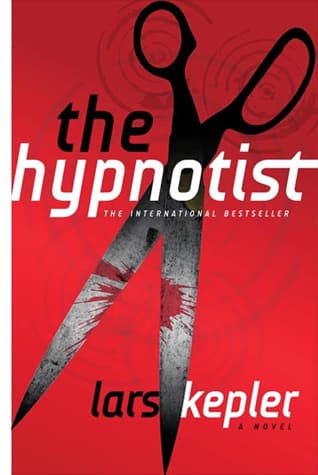
Lars Kepler (2009)
Genre
Thriller / Mystery
Reading Time
10-12 hours
Key Themes
See below
Sign in to track this book
A detective's desperate gamble to hypnotize a traumatized boy, the only survivor of a brutal triple murder, awakens terrifying secrets that shatter the hypnotist's own past.
In the Stockholm suburb of Tumba, the Ek family is found brutally murdered. Father Karl, mother Petra, and their young daughter are dead, stabbed over a hundred times. Their teenage son, Josef, is discovered barely alive, suffering from severe stab wounds and in shock, unable to communicate. Detective Inspector Joona Linna of the National Criminal Police is called to the scene. The sheer brutality and specific nature of the wounds suggest a deeply personal motive. Joona quickly realizes that Josef is the only potential witness, but his catatonic state presents a significant challenge to the investigation.
Facing a dead end with Josef's condition, Joona Linna makes the controversial decision to consult Erik Maria Bark, a psychotherapist and former hypnotist who stopped practicing after a past scandal. Erik is initially reluctant, having sworn off hypnotism due to its ethical complexities and personal trauma. However, Joona's persistence and the urgency of the case – with a killer still at large – eventually convince Erik to meet Josef. Erik's wife, Simone, and their son, Benjamin, are unaware of Erik's past with hypnotism and his current dilemma.
Erik Maria Bark, against his better judgment, hypnotizes Josef Ek in the hospital. Under hypnosis, Josef's memory of the horrific night resurfaces. He describes a terrifying figure, a man with a distinctive scar and a chilling presence, who was responsible for the murders. Josef identifies the killer as Jurek Walter, a notorious serial killer whom Joona Linna had previously investigated and believed to be dead or imprisoned. This revelation sends shockwaves through the investigation, as Jurek Walter's methods align perfectly with the Tumba massacre.
Shortly after Erik hypnotizes Josef, his ten-year-old son, Benjamin, is abducted from his home. The kidnapping appears to be a direct consequence of Erik's involvement in the Ek case and his use of hypnotism. The abductor leaves no ransom note, only cryptic clues that suggest a personal vendetta against Erik. This event plunges Erik and Simone into a desperate search for their son, forcing Erik to confront his past and the dangerous consequences of his choices. Joona Linna, now deeply involved, realizes the two cases are connected.
As the investigation into Benjamin's disappearance intensifies, Erik is forced to reveal his traumatic past connection to Jurek Walter. Years ago, Erik had hypnotized a young boy named Mikael, who had witnessed his family's murder by Jurek. Erik's unethical handling of Mikael's memories under hypnosis led to a devastating outcome, causing Mikael to become deeply disturbed and eventually leading to Erik abandoning his practice. This past failure haunts Erik and fuels his determination to save Benjamin, knowing Jurek's capacity for cruelty.
With Jurek Walter identified as the primary suspect in both the Ek murders and Benjamin's abduction, Joona Linna mobilizes his team. Jurek is a master manipulator, intelligent and incredibly dangerous, known for leaving no trace. Joona and Erik follow a trail of fragmented clues, revisiting old cases and piecing together Jurek's psychological profile. The hunt becomes increasingly personal for Joona, who has a history with Jurek, and for Erik, whose son's life hangs in the balance. They realize Jurek is playing a twisted game with them.
The police bring in a psychologist, Daniella, to help understand Jurek's motivations and methods. She reveals that Jurek often targets families and manipulates his victims psychologically. Simultaneously, Erik is forced to reconnect with Mikael, the boy he had hypnotized years ago, who is now an adult in a psychiatric institution. Mikael's fragmented memories and disturbed state offer crucial, albeit terrifying, insights into Jurek's past actions and potential hideouts, revealing Jurek's systematic approach to tormenting his victims and their families.
As the investigation progresses, a shocking truth emerges: Erik's wife, Simone, has a hidden past connection to Jurek Walter. It is revealed that Simone is Jurek's sister, Nicole. She had escaped from Jurek's influence years ago and built a new life, suppressing her traumatic past. Jurek's targeting of Erik's family is not random; it is a meticulously planned revenge against Simone for abandoning him and a way to reassert his control over her, using Benjamin as leverage. This revelation shatters Erik's perception of his wife and their life together.
Armed with the knowledge of Simone's true identity and Jurek's motives, Joona Linna and Erik Maria Bark meticulously plan a rescue operation for Benjamin. They track Jurek to a remote, isolated location, a dark and foreboding house where Jurek has been holding Benjamin captive. The stakes are incredibly high, as Jurek is known for his elaborate traps and his willingness to kill. The team must navigate Jurek's psychological warfare and physical defenses to reach Benjamin before it is too late.
Joona Linna and Erik confront Jurek Walter in a tense and brutal showdown. Jurek, seemingly unkillable, proves to be a formidable adversary, but Joona ultimately manages to subdue him, though not without significant risk and injury. Benjamin is rescued, traumatized but alive. In the aftermath, the Ek family's killer is identified as Mikael, manipulated by Jurek, who had orchestrated the entire series of events. Erik and Simone must now grapple with the profound trauma and the revelations about their past, attempting to rebuild their shattered lives and heal as a family.
The Protagonist
Joona's arc involves a relentless pursuit of justice that forces him to confront his own past and the depths of human evil, reaffirming his commitment to his work despite personal costs.
The Protagonist
Erik's arc is one of reluctant redemption, as he confronts his past trauma and ethical dilemmas to save his son, ultimately finding a fragile path towards healing.
The Supporting
Simone's arc involves the traumatic unearthing of her true identity and past, forcing her to confront her deepest fears and fight for her family's survival.
The Supporting
Benjamin's arc is one of profound victimization and survival, highlighting the devastating impact of Jurek's cruelty.
The Antagonist
Jurek's arc is consistent in his malevolence, serving as a persistent, almost supernatural force of evil that continually challenges the protagonists.
The Supporting
Josef's arc is limited but pivotal, serving as the initial catalyst for the story's events through his traumatic experience and hypnotic testimony.
The Supporting
Mikael's arc tragically demonstrates the long-term psychological damage of trauma and manipulation, revealing him as a pawn in Jurek's larger game.
The Supporting
Daniella provides professional support and expertise, her arc remaining consistent as an aid to the main investigation.
The novel explores how past traumas, personal and inherited, shape characters' present actions and destinies. Erik Maria Bark is haunted by a past ethical transgression involving hypnotism, which directly leads to Benjamin's abduction. Simone's entire life is built on suppressing her traumatic past as Jurek Walter's sister, a past that inevitably catches up to her. Joona Linna's relentless pursuit of justice is fueled by past failures and the memory of other victims. Jurek Walter's actions are themselves a twisted form of revenge stemming from his own perceived past grievances. The Tumba massacre is merely the latest manifestation of a cycle of violence rooted in unaddressed histories.
““The past is never dead. It’s not even past.””
The story constantly grapples with the moral boundaries of law enforcement and therapy. Erik's decision to use hypnotism on Josef, despite his vow against it, is the central ethical question that drives the plot. This act, while yielding crucial information, also directly triggers the danger to his family. Joona Linna often operates on the fringes of acceptable procedure, driven by an unwavering belief in achieving justice, even if it means bending rules. The novel questions whether the ends justify the means when lives are at stake, particularly when dealing with a villain as extreme as Jurek Walter, who preys on psychological vulnerabilities.
““Sometimes you have to break the rules to save lives. But at what cost?””
Jurek Walter embodies manipulative evil. He does not just kill; he psychologically torments and controls his victims, turning them into extensions of his will (as seen with Mikael). The novel explores the chilling capacity of one individual to orchestrate widespread suffering through psychological manipulation and long-term planning. Jurek's ability to remain elusive and seemingly anticipate every move highlights his intellectual prowess and deeply disturbed nature. His desire for control and revenge is absolute, making him a terrifying and almost supernatural force that challenges the protagonists' understanding of human depravity.
““He doesn't just kill, he reconstructs reality. He makes you doubt everything.””
At its heart, the novel is a story about the fierce protective instincts of family. Erik's desperate fight to save Benjamin, even at the cost of confronting his darkest fears and reliving his past, shows the strength of paternal love. Simone's history, though hidden, is driven by a desire to escape her monstrous brother and build a safe family for herself. The Ek family's brutal murder highlights the vulnerability of these bonds, while the subsequent investigation becomes a race against time to prevent further family destruction. The sacrifices made by Erik and Simone show the importance of these relationships in the face of overwhelming evil.
““There is no limit to what a parent will do to protect their child.””
A forbidden psychological tool that unlocks hidden truths and unleashes danger.
Hypnotism serves as the central plot device, both as a means of revelation and a catalyst for conflict. Erik Maria Bark's use of hypnotism on Josef Ek is the only way to gain information about the Tumba massacre, directly identifying the killer, Jurek Walter. However, this act also breaches Erik's self-imposed ethical boundaries and directly triggers Jurek's revenge, leading to Benjamin's abduction. The device highlights the power of the subconscious mind and the dangerous consequences of tampering with it, especially when dealing with deeply repressed trauma.
Characters' perceptions and recollections are frequently distorted or incomplete.
The novel frequently employs unreliable memory, particularly through Erik's past experiences with Mikael and Simone's repressed history. Josef's hypnotic testimony, while crucial, is a fragmented and emotionally charged recollection. Erik himself struggles with his past actions and the consequences of his hypnotism. Simone's entire identity is built on a fabricated memory, concealing her true relationship with Jurek. This device creates suspense and forces the reader to question what is real, mirroring the characters' own struggles with truth and deception.
A villain who controls events and people from the shadows, making him seem omniscient.
Jurek Walter functions as a master manipulator, orchestrating complex schemes and exploiting the weaknesses of others. He doesn't just commit crimes; he designs elaborate psychological traps, using individuals like Mikael as pawns and playing a long game of revenge. His ability to anticipate moves, leave cryptic clues, and evade capture creates a sense of dread and helplessness for the protagonists. This device elevates the stakes, making the hunt for him a battle of wits rather than just a physical pursuit.
The urgent race against time to save a kidnapped child.
The abduction of Benjamin Bark immediately introduces a strong ticking clock element. The longer Benjamin is missing, the greater the danger to his life, creating immense pressure on Erik and Joona. This urgency drives the narrative forward, accelerating the investigation and forcing characters to make difficult decisions under extreme duress. The ticking clock heightens the tension, making every clue and every lead critical in the desperate race against Jurek Walter's sinister plans.
“The past is like a ghost, it follows you everywhere.”
— Joona Linna reflecting on the lingering impact of past events on people's lives and investigations.
“Everyone has a secret. Some are just better at keeping them.”
— Exploring the hidden lives and motivations of the characters, a recurring theme in the investigation.
“Fear is a powerful weapon. It can make people do terrible things, and it can make them confess to things they didn't do.”
— Discussing the psychological manipulation involved in interrogation and the impact of terror.
“The truth is rarely simple. It's often buried under layers of lies and misunderstandings.”
— Joona Linna's perspective on the complexity of unraveling a criminal case.
“Sometimes, the monster isn't under the bed. It's in the mirror.”
— A reflection on the potential for evil within seemingly ordinary people, or the protagonists themselves.
“Hypnosis doesn't make you do anything you wouldn't do anyway. It just lowers your inhibitions.”
— Explaining the limitations and power of hypnosis in the context of the plot.
“The most dangerous lies are the ones you tell yourself.”
— Exploring self-deception and its consequences for the characters.
“In the dark, everything looks different. Shapes distort, shadows move.”
— Describing the unsettling atmosphere and the unreliable nature of perception.
“A good detective doesn't just look for clues; they look for patterns.”
— Joona Linna's methodology in solving complex cases.
“Grief can be a powerful motivator, distorting reality and driving people to extremes.”
— Understanding the emotional toll and its impact on the actions of victims and perpetrators.
“The human mind is a labyrinth, full of hidden passages and dead ends.”
— Emphasizing the complexity of the human psyche, particularly when dealing with trauma and memory.
“Sometimes, doing nothing is the hardest thing to do, even when it's the right thing.”
— A character struggling with the moral dilemma of intervention versus observation.
“Every family has its demons. Some just keep them locked up better than others.”
— Highlighting the dysfunctional aspects and hidden histories within families.
Ready to see how well you understood this book? Take our interactive quiz with 10 questions.

Biography coming soon.







